
I often turn to canvas painting when I need a quiet way to relax after a long day.
My favorite approach is keeping things simple so it stays enjoyable rather than stressful.
I have put together a list of ideas that have worked well for me over the years.
These are all basic enough for anyone to try without much experience.
I hope you find something here that fits your own routine.
Sunset Landscape with Reflective Water
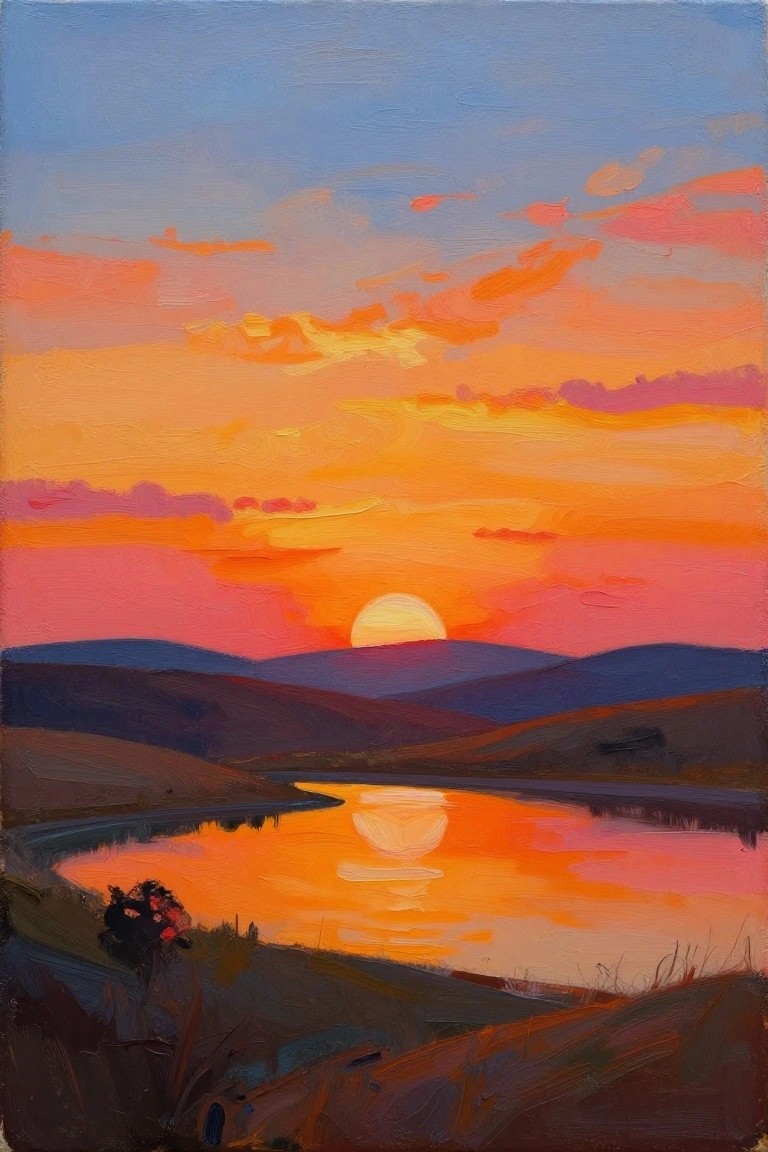
A sunset landscape idea centers on a low sun positioned behind layered hills with its light mirrored in a curving stretch of water. The composition works through strong horizontal bands of color that move from deep blue at the top into warm oranges and pinks near the horizon. Broad, simplified shapes for the hills and water keep the focus on the color transition rather than small details.
The composition does a lot of the work here by letting the reflection carry the main color story. This kind of scene is easy to adapt by changing the sky colors to match a different time of day or by flattening the hills into a single dark band for a faster version. The simple shapes help this feel more approachable for practice pieces or small canvases meant for wall decor. For Pinterest, the high-contrast warm palette tends to catch attention quickly in feeds.
Full Moon Over Ocean Waves
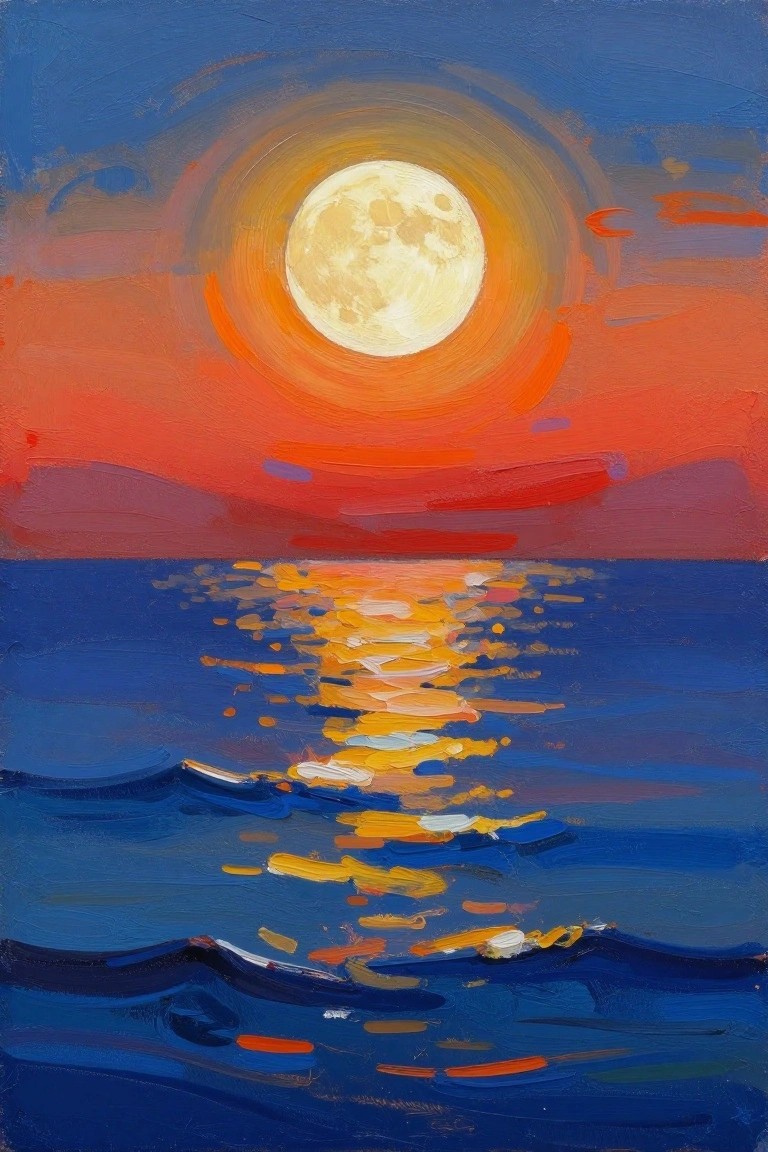
A full moon centered in a glowing sky above the ocean creates a simple but strong focal point for a landscape painting. The idea uses a large circular shape against horizontal bands of sky and water, with the moon’s reflection broken into streaks across the waves. This approach works well as a celestial seascape because the limited shapes let the color contrast carry the composition.
What makes this idea useful is how the bold moon shape gives instant impact without requiring intricate details. The color palette can be swapped for different times of day or simplified to fewer tones if you want a faster session. For practice, the horizontal layout helps you work on blending and loose brushwork at the same time. This kind of subject also translates easily to different canvas sizes for wall pieces.
Eucalyptus Branch in Layered Greens
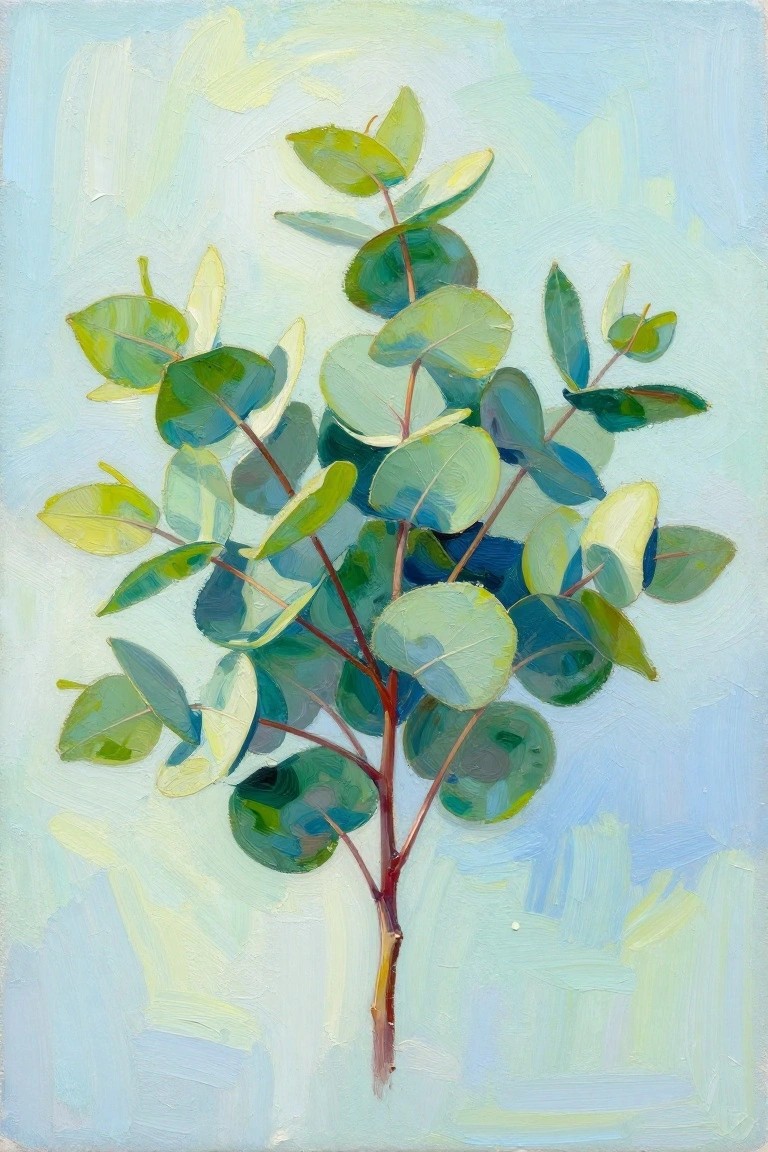
A eucalyptus branch painting centers on a single stem with multiple smaller branches holding rounded leaves. The idea uses overlapping leaf shapes in different greens and blue tones to create depth while keeping the overall form simple and natural. A soft blue background lets the leaves stand out without competing elements.
What makes this idea useful is how the round leaf shapes stay easy to paint even if your brushwork stays loose. You can shift the greens toward warmer or cooler tones depending on the look you want or swap the background for a different wall color. This kind of subject works especially well for quick practice sessions or small canvases meant for shelves and desks.
Lavender Rows Leading to a Sunset Horizon
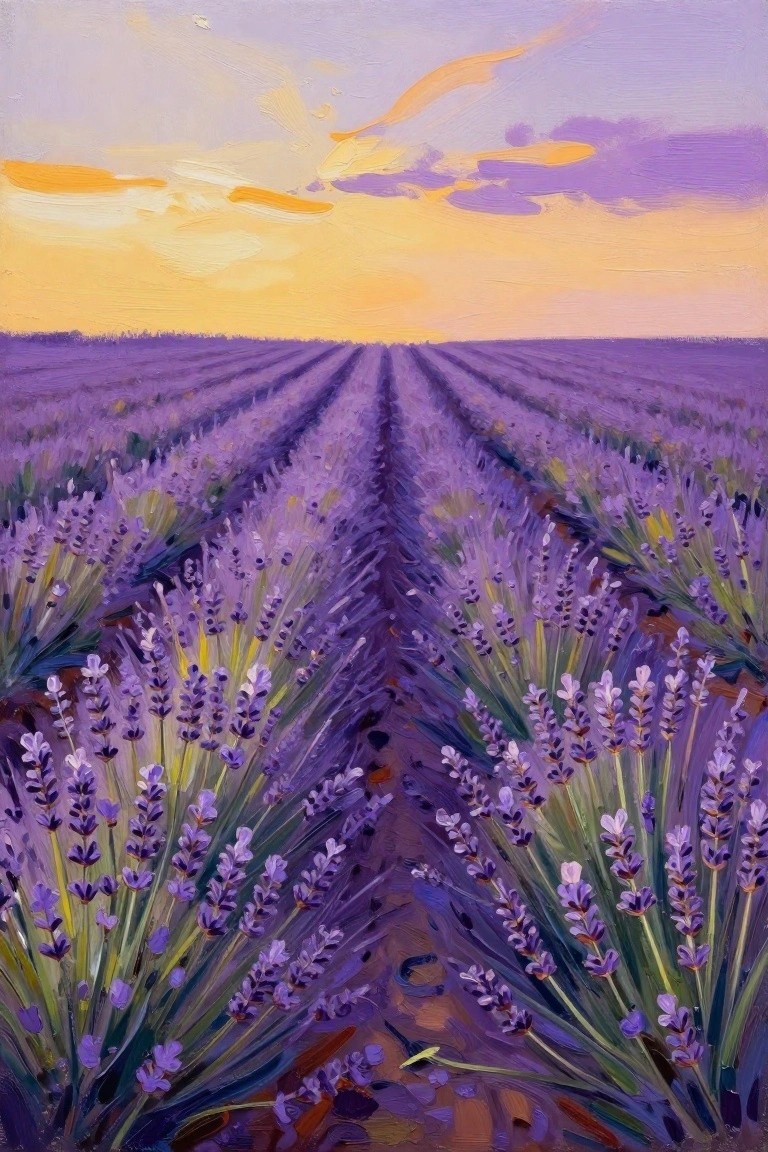
A landscape idea built around rows of lavender uses converging lines to pull the eye straight back to the horizon. The main subject is a field of flowers treated as repeating vertical shapes rather than individual blooms, set against a simple sky split between warm yellow-orange and cooler purple. The color contrast between the lavender tones and the sunset background keeps the composition balanced while the loose brushwork supplies texture without extra detail.
The composition does a lot of the work here by creating instant depth through the rows, so the idea stays approachable even if your perspective skills are still developing. You can easily adapt the scale by cropping the view tighter or stretching the sky for a wider canvas. For wall pieces, the strong lines and limited palette make this subject quick to paint and easy to match with existing decor.
Mountain Peaks at Sunset
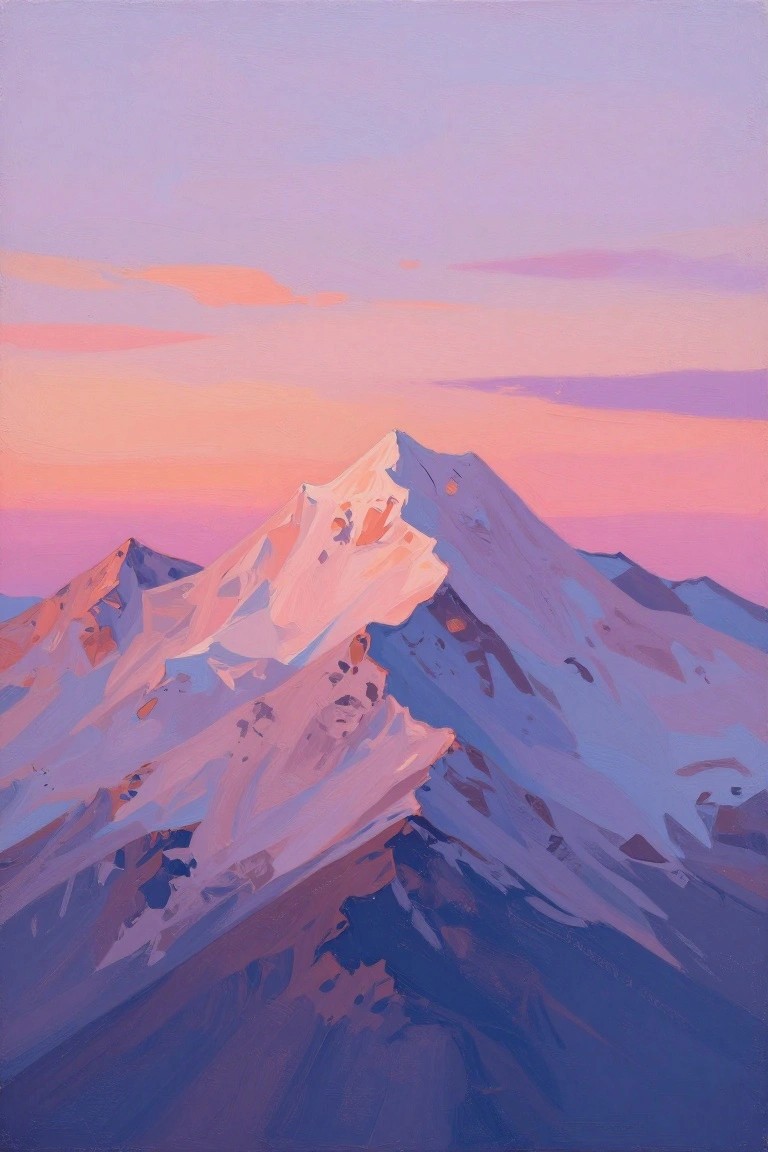
A landscape painting of rugged mountain peaks works well when the focus stays on simplified shapes and a warm-to-cool color shift. Broad brushstrokes define the snow-covered ridges while the sky moves through layers of pink, orange, and purple. This approach keeps the composition balanced by letting the sky dominate the upper half and the mountains create strong diagonal lines below.
The color palette makes this easy to adapt because you only need a few mixes to shift from warm foreground highlights to cooler shadows. You can paint it on a smaller canvas to practice large shapes without much detail, or stretch the sky higher if you want more space for color blending. For wall art, the bold silhouettes stand out even from a distance, and the same structure can be changed by swapping the sunset tones for cooler blues if you want a different season.
Balanced Stone Stack on a Beach
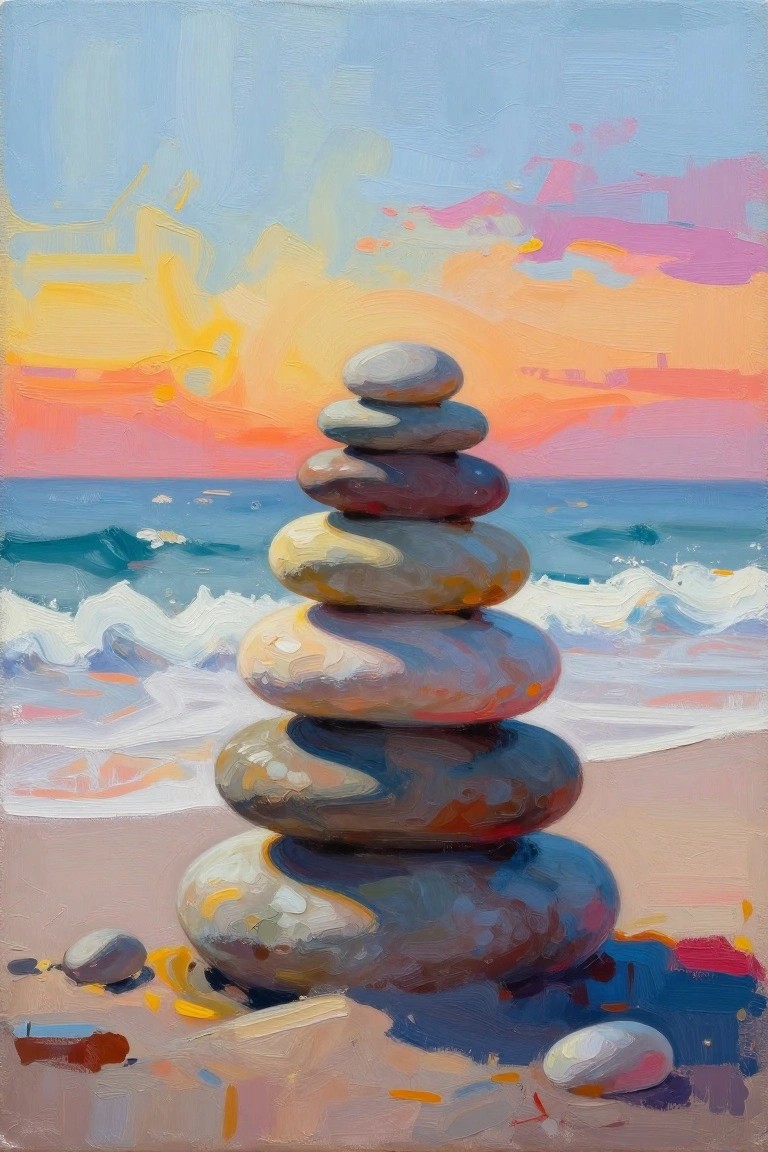
A stack of smooth, rounded stones forms the main subject in a coastal scene painting. This idea falls into the still life category with landscape elements, where the vertical arrangement of the rocks creates a clear focal point against the horizontal lines of the ocean and sky. The warm sunset colors in the background contrast with the darker, varied tones of the stones and water, which helps the composition feel balanced without needing extra details.
The composition does a lot of the work here because the central stack stands out clearly against the softer background. You can adapt the colors to match a real location or simplify the sky to just a few blended hues. For wall art this kind of subject fits well in modern spaces and can be scaled to any canvas size without needing fine details.
Crescent Moon Over Pine Trees
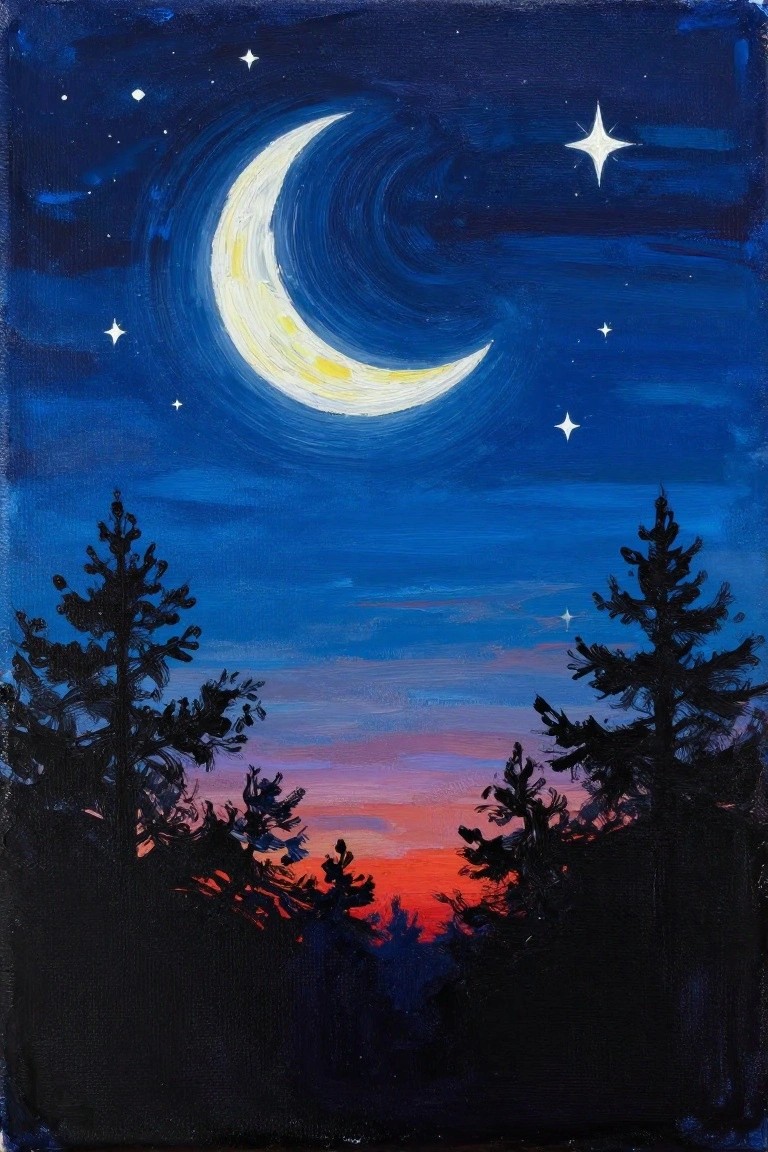
A night sky landscape centers on a large crescent moon with scattered stars above a line of dark pine tree silhouettes. The idea relies on a simple gradient sky that shifts from deep blue at the top to warmer red-orange tones near the horizon, letting the moon and trees stand out through contrast. This type of painting falls into the landscape category and works by keeping the foreground minimal so the sky becomes the main focus.
The composition does a lot of the work here because the tree shapes can be blocked in quickly with one color and still look finished. A painting like this works especially well for smaller canvases where you want to practice blending without getting lost in details. You could change the moon to a full circle or adjust the horizon colors to match different times of year while keeping the same basic layout. For wall art, something like this stands out on Pinterest because the bold moon shape reads clearly even in a thumbnail.
Orange Still Life with Cut Fruit
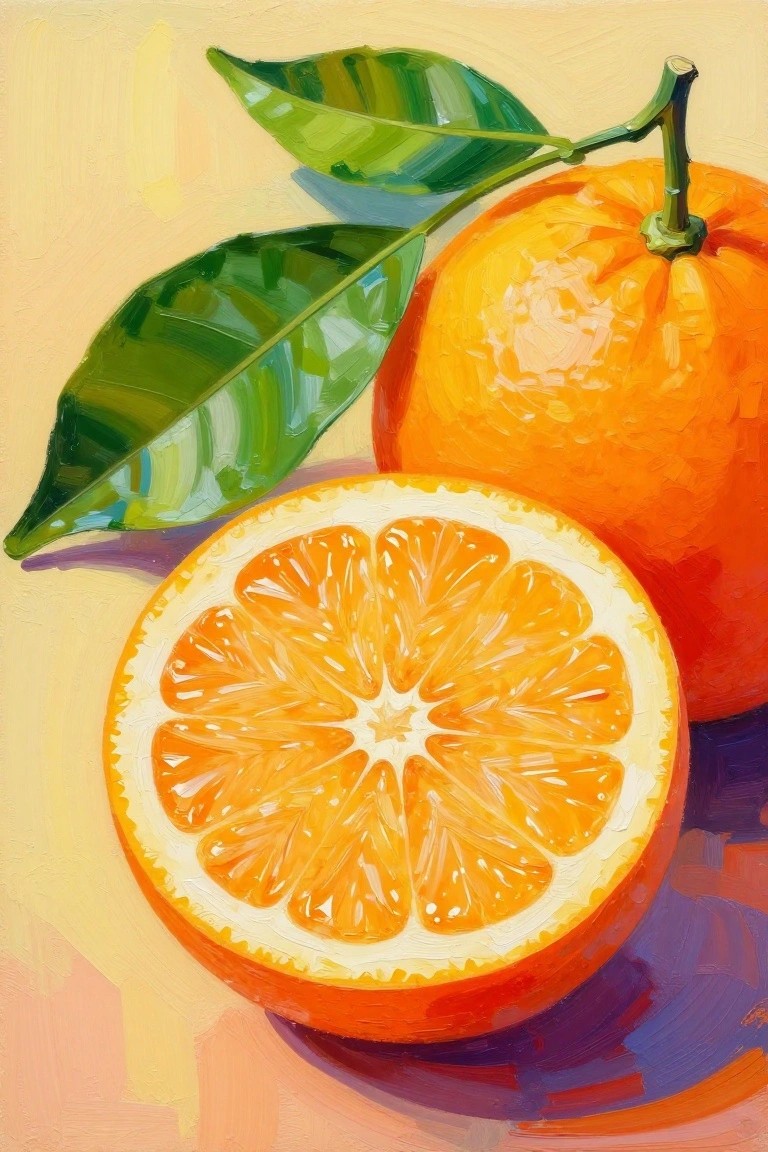
A still life painting idea built around oranges works by showing one whole fruit next to a halved one so the viewer sees both the outer shape and the inside segments. This approach fits the food or still life category and keeps the composition balanced by placing the sliced orange forward and the whole orange slightly behind with a few leaves for color contrast. The visible brushwork and warm orange tones against a soft background help the shapes stand out without needing extra elements.
What makes this idea useful is that it relies on everyday fruit you can buy or photograph quickly for reference. The limited color range of oranges and greens makes it simple to adjust by swapping in lemons or adding a second slice if you want variety. For practice, this kind of subject builds skill with round forms and edges while staying small enough to finish in one or two sessions.
Sunflower Floral Close-Up
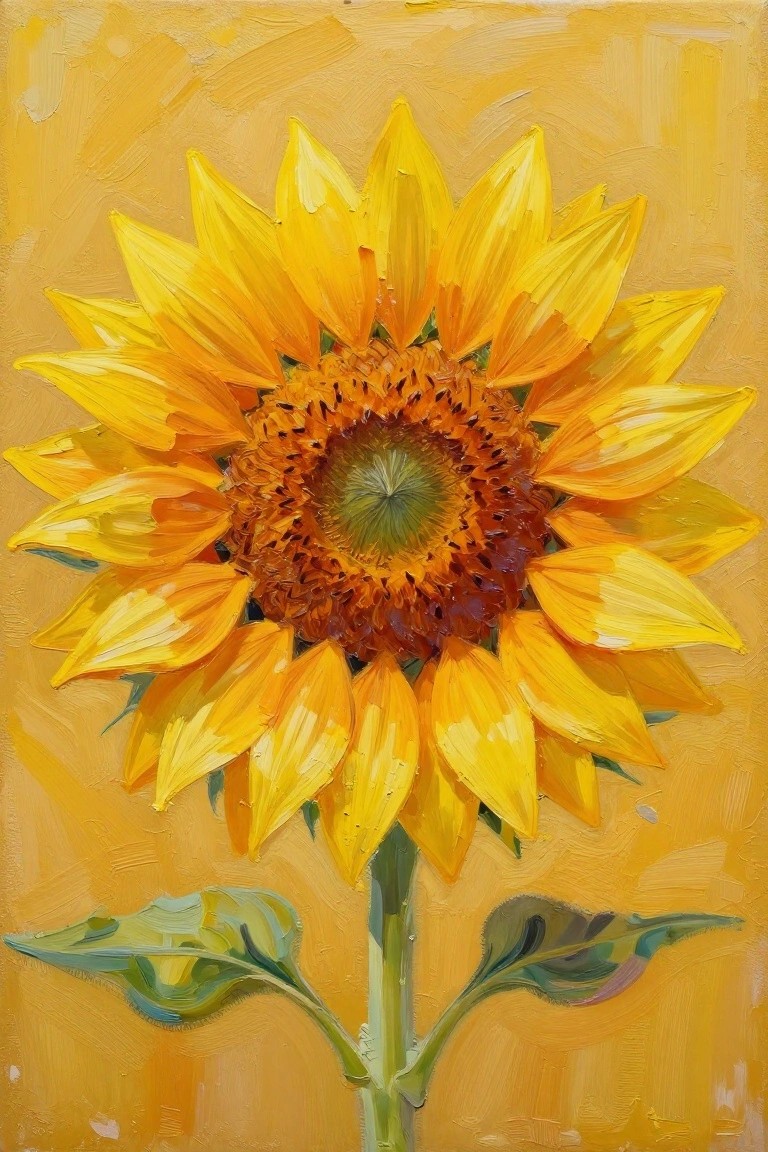
A single large sunflower makes a straightforward floral painting idea that relies on radiating petals around a textured center. The circular layout draws attention inward while the yellow petals stand out against a warm background that stays simple. This approach fits the floral category and works because the limited color range and clear shapes keep the focus on the flower without extra details.
What makes this idea useful is how the centered composition carries the painting with very little background work needed. You can change the petal angles slightly or swap in different yellow mixes to match your supplies. For wall art, the subject stays readable even on a smaller canvas and could be repeated with other blooms for a matching set. The same layout also works if you want to practice building texture only in the center while keeping the petals flatter.
Curling Ocean Wave
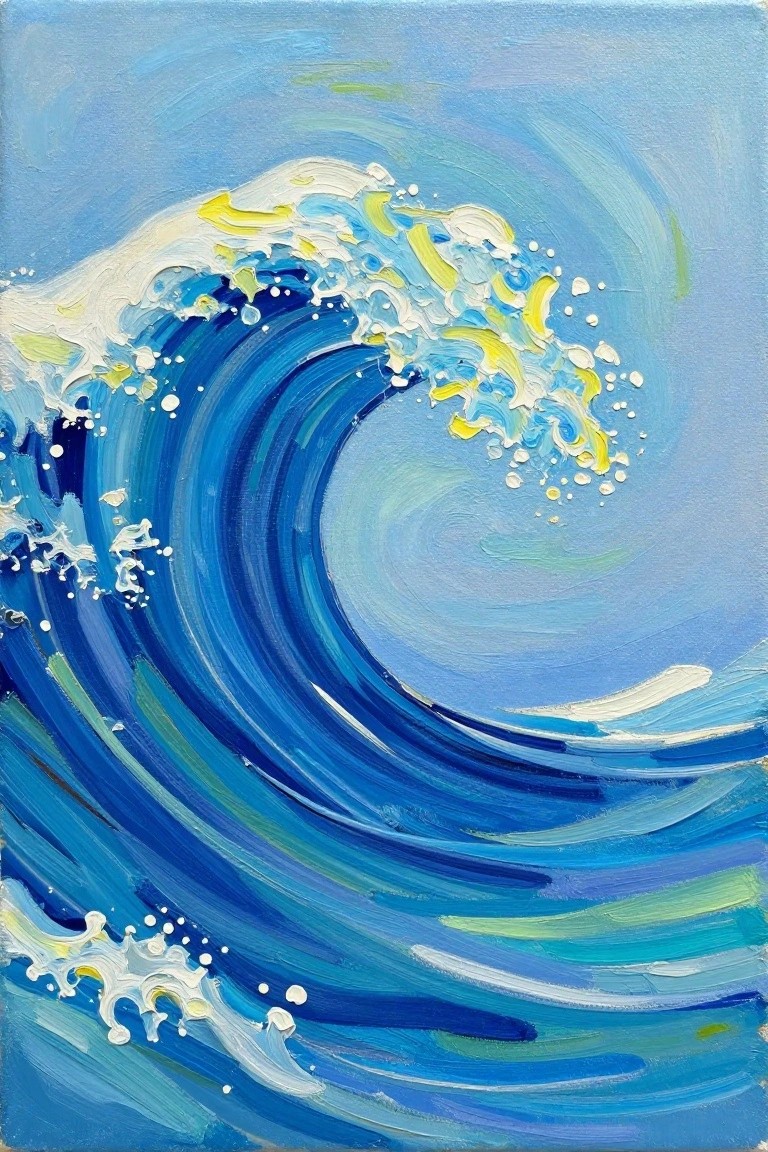
A curling wave seascape works well as a canvas idea because the main subject is a single large wave sweeping across the frame in strong curved strokes. The composition relies on layered blues for the water body with white and pale yellow accents placed along the crest and spray to show movement and foam. This approach fits the seascape category and keeps the focus on shape and directional brushwork rather than fine detail.
What makes this idea useful is that the curved layout already gives the painting structure so you can paint it on any size canvas without needing extra elements. You can shift the color mix toward deeper blues or add more scattered dots for foam to change the mood quickly. For wall pieces the diagonal sweep of the wave draws attention without requiring a busy background. The same wave shape can be simplified by using fewer color layers if you want a faster version.
Light-Filled Forest Landscape
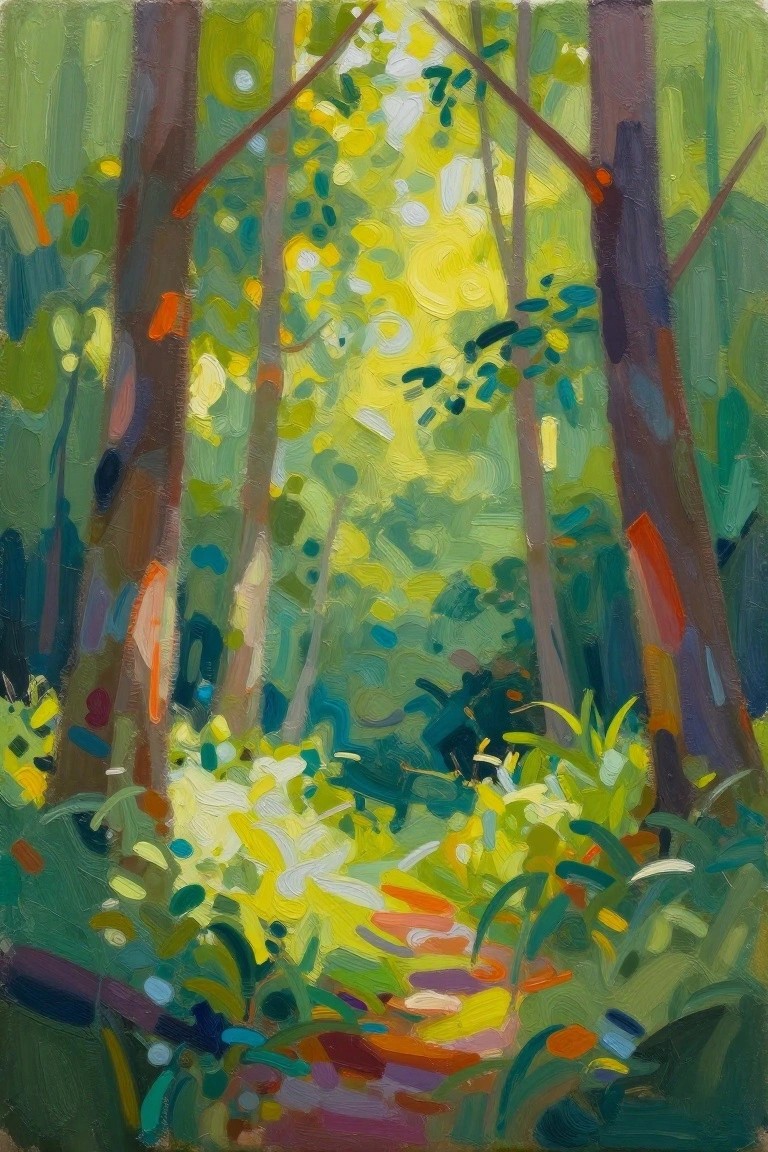
A forest landscape idea built around tall tree trunks and bright sunlight filtering through the canopy works well for canvas painting. The vertical lines of the trees give the composition clear structure while patches of yellow and white suggest light hitting the leaves and ground. This approach fits the landscape category and relies on color blocks and loose brushwork rather than precise outlines or fine details.
The composition does a lot of the work here because the trees already divide the space into interesting sections. You can adapt the palette by swapping in cooler tones for a different season or keeping the foreground simpler with fewer colors if you want a faster session. For wall art this kind of piece stands out on Pinterest because the light effects create depth without requiring advanced technique.
Pair of Koi Fish in a Pond
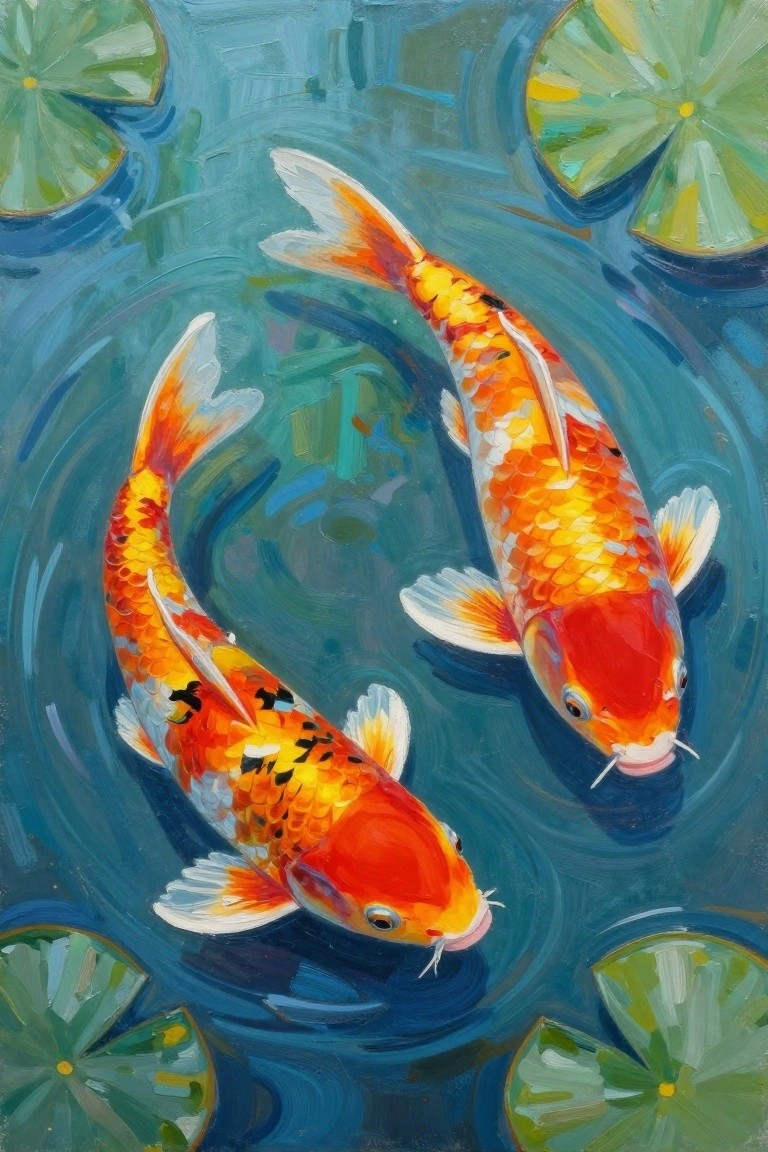
Koi fish work well as a painting subject because their bold orange, white, and red coloring contrasts cleanly with the surrounding blue water. The idea centers on two fish positioned in curved shapes that cross the canvas diagonally, with a few lily pads placed at the edges to balance the layout. This setup keeps the main focus on the fish while using simple overlapping shapes and a restricted color range that avoids complicated backgrounds.
The composition does a lot of the work here by letting the fish bodies create natural movement across the space. You can scale the fish up or down depending on your canvas size or swap in fewer lily pads if you want a simpler version. For practice, this subject helps with painting scales and suggesting water ripples through directional brushstrokes. A painting like this would stand out on Pinterest as a clear, colorful animal option that still leaves room for personal color tweaks.
Cliffside Sunset Landscape with Wildflowers
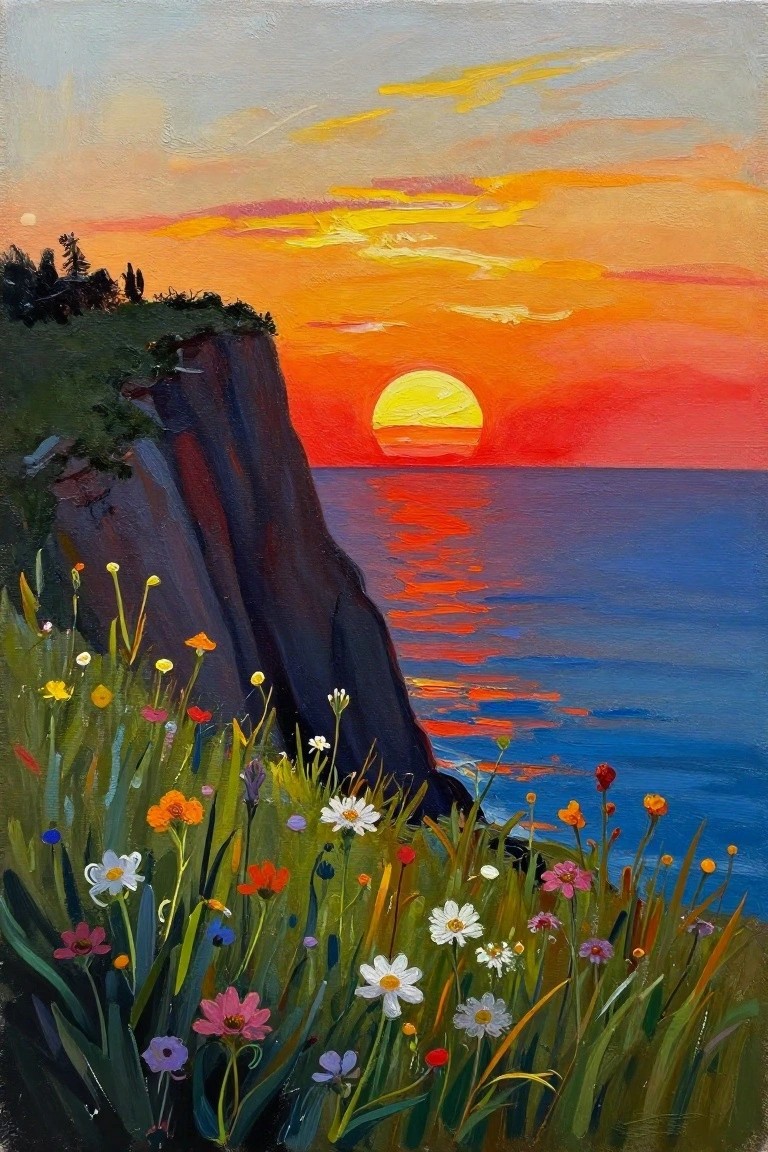
A coastal sunset scene pairs a glowing orange and red sky with a dark cliff rising from the water and a band of colorful wildflowers along the bottom edge. The main idea is a landscape that uses the horizon line and the reflection on the water to create a strong focal point while the flowers add a textured foreground layer. This approach fits a standard landscape category and works because the bold sky colors contrast with the darker cliff and cooler water tones.
What makes this idea useful is the built-in division of space that guides the eye without needing complex perspective. You can scale the cliff smaller or make the flower patch wider depending on your canvas size, and the sunset palette stays simple to mix with basic reds, oranges, and yellows. The same layout also adapts easily if you want to swap the flowers for different seasonal colors or crop the scene tighter for a vertical format. For wall art, the bright sky against the dark rock gives good contrast that reads clearly from a distance.
Abstract Sky with Bold Geometric Bursts
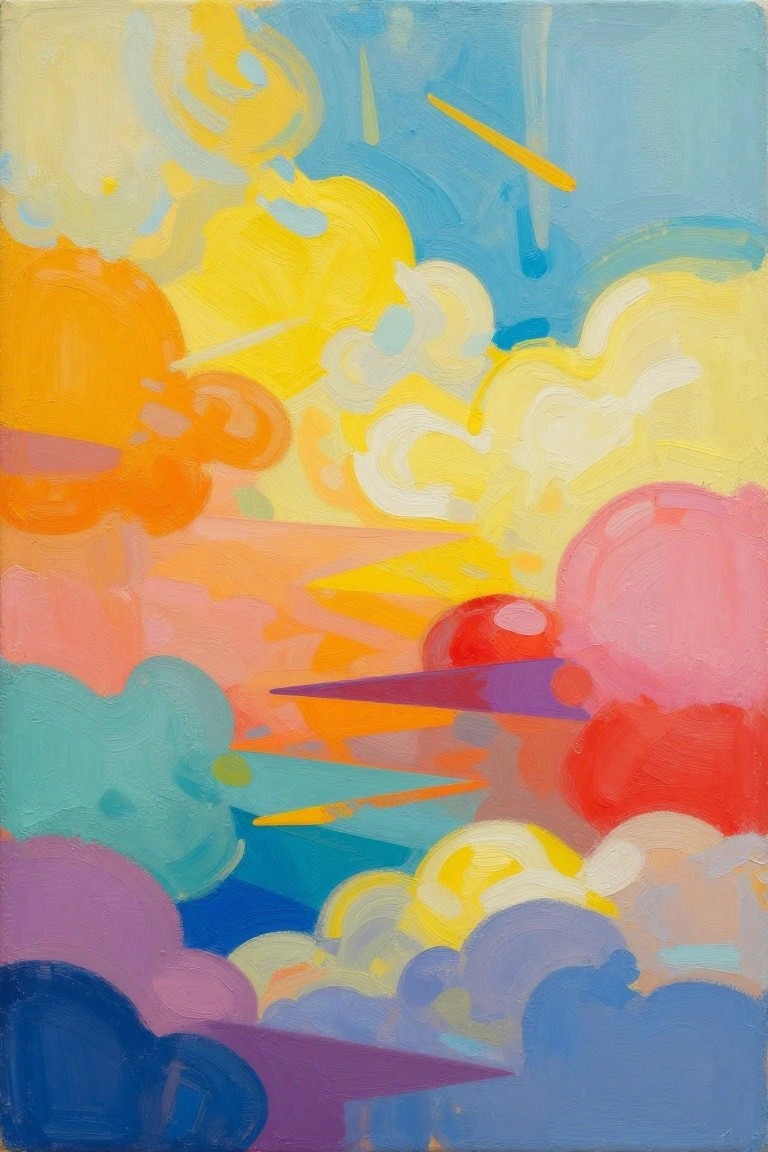
This painting idea centers on layering rounded cloud forms with sharp triangular rays and scattered circles to build an energetic abstract sky. The main appeal comes from using high-contrast color blocks in yellow, orange, pink, teal, and purple that push forward and recede to suggest depth without any realistic shading. It belongs in the abstract decorative category, where the goal is strong color impact through simple overlapping shapes rather than fine detail or representation.
What makes this idea useful is how easily the same layout can be recreated with different color combinations to match any room. The large shapes reduce the need for tiny brush control, so it serves as good practice for color mixing and edge control on a medium canvas. For wall pieces, the high saturation and diagonal movement help it read clearly from a distance. You could adapt it by swapping the triangles for softer curves or tightening the palette to just three hues for a calmer version.
Sunset Boat with Water Reflections
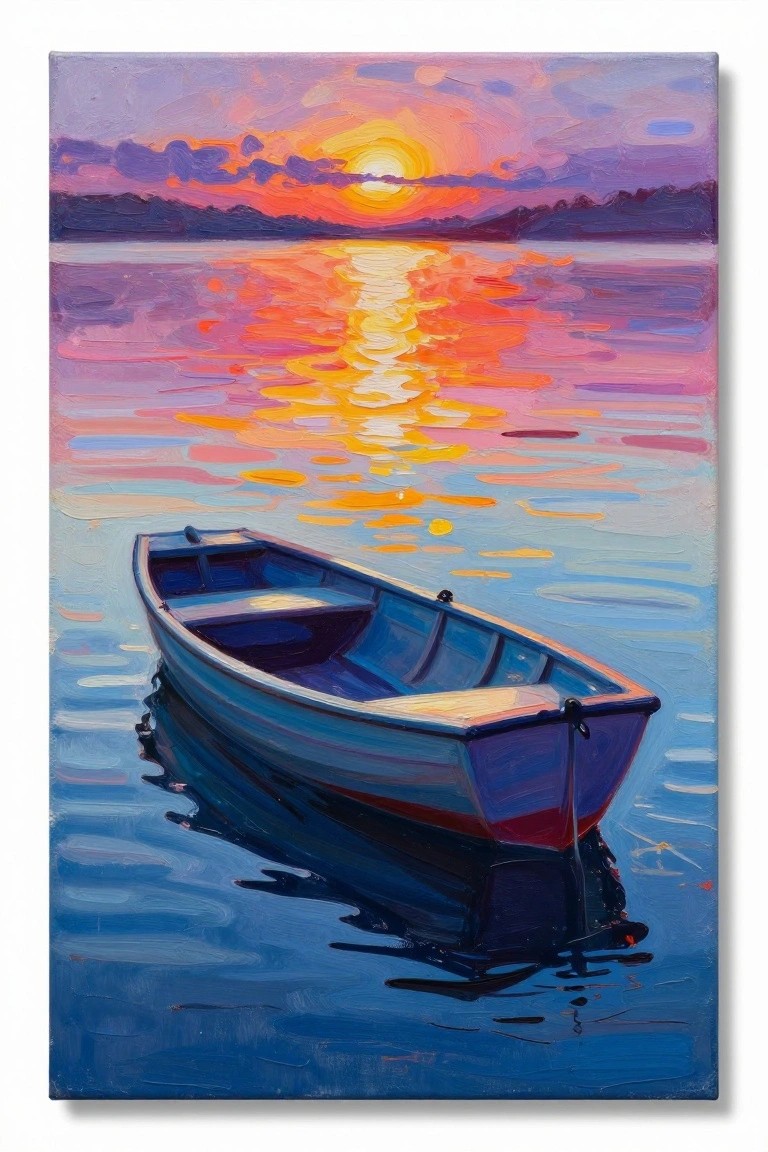
A small rowboat floating near the edge of calm water forms the core of this landscape idea. The painting focuses on the contrast between the solid boat shape and the long vertical reflection of the setting sun that runs down the middle of the water. Broad horizontal brushstrokes and a limited range of warm sky colors against cooler blues keep the scene readable while still showing movement in the water.
The composition does a lot of the work here because the boat sits low and off-center, leaving plenty of open water for the reflection to carry the main color story. You can swap the boat color, shorten the reflection, or replace the distant hills with a simple horizon line if you want a quicker version. This approach stands out on Pinterest for its clear focal point and easy-to-follow color blocks, so it adapts well for both first attempts at reflections and later experiments with different times of day.
Crescent Moon Over a Glowing Grass Field
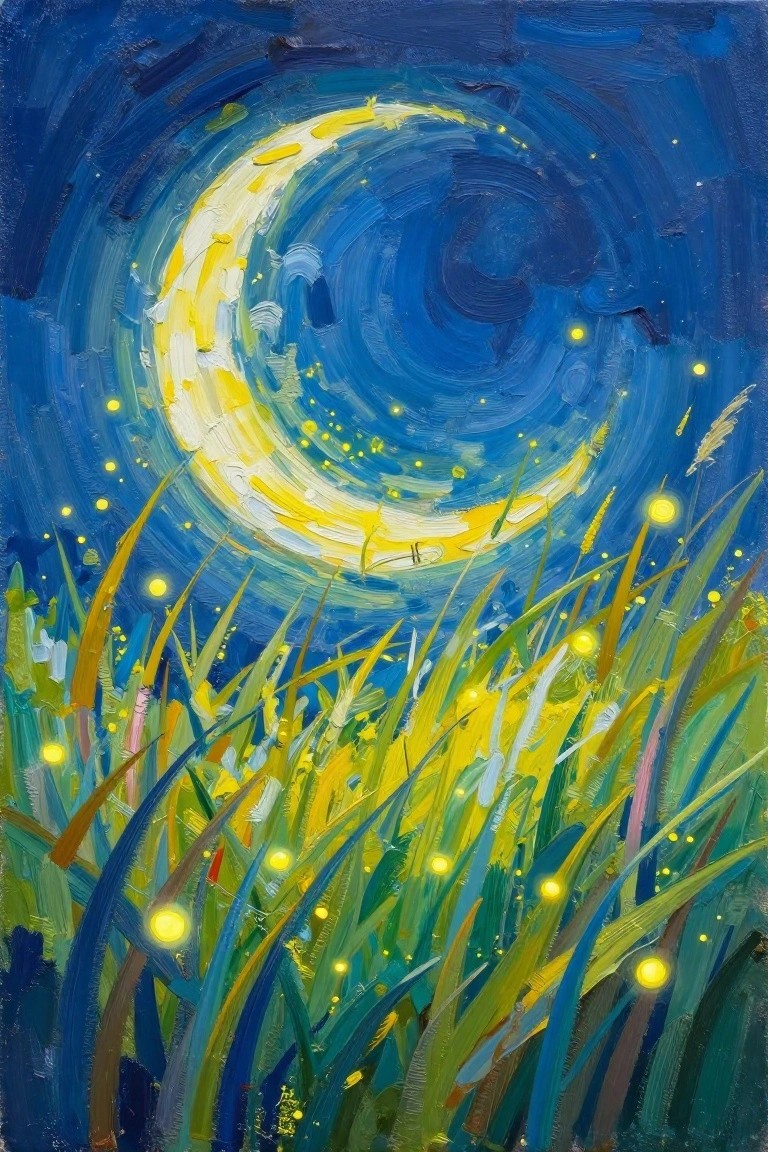
A night landscape idea centered on a large crescent moon set against a swirling blue sky with scattered stars works well as a simple canvas project. The vertical lines of tall grass in the foreground create contrast with the curved shapes above, while small glowing dots add points of light that tie the two areas together. This approach falls into landscape painting with an emphasis on color contrast and directional brushwork rather than fine detail.
The composition does a lot of the work here because the strong yellows against deep blues make the main shapes easy to block in quickly. You could adapt the idea by shortening the grass, changing the moon to a full circle, or reducing the number of light dots if you want a faster version. For wall art this kind of layout stands out on Pinterest since the high contrast and clear focal point read well even in a small thumbnail.
Monstera Leaf with Natural Splits
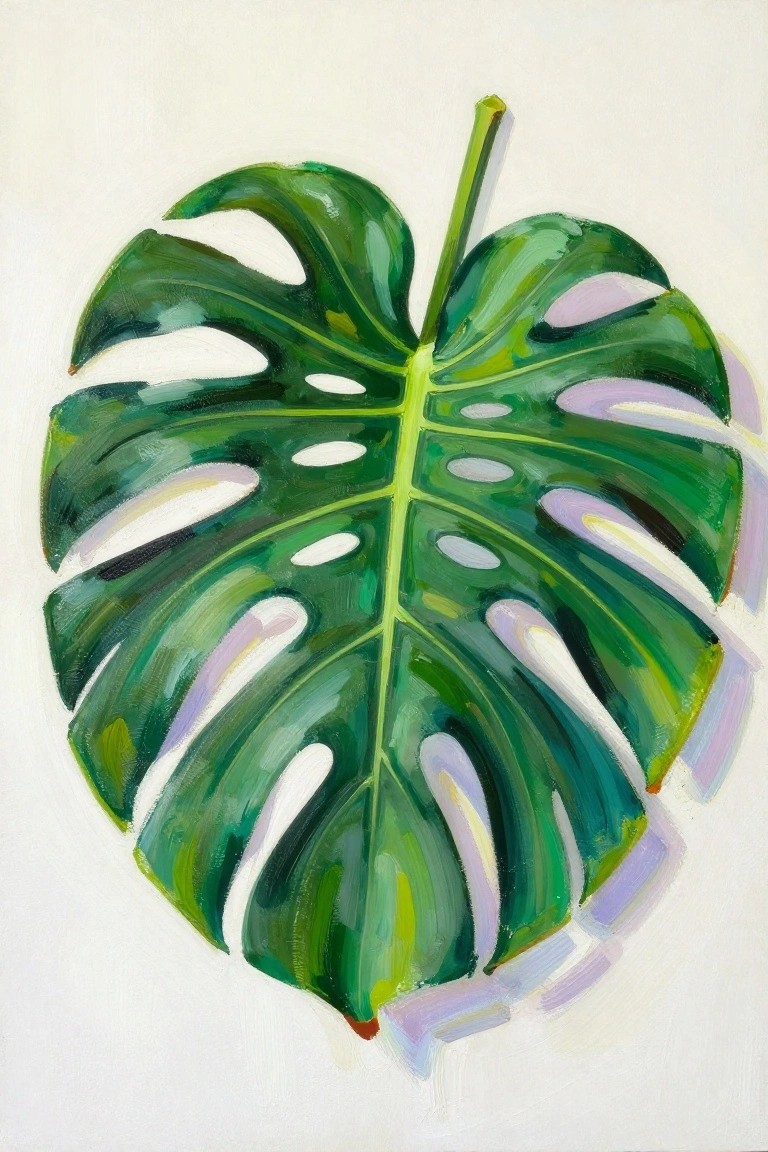
A single Monstera leaf forms the entire subject here. The painting idea focuses on building the leaf from overlapping green sections while leaving the characteristic holes and cuts as negative space. This approach keeps the composition balanced because the leaf fills the center without crowding the edges.
What makes this idea useful is how the leaf’s existing shapes reduce the need for extra planning. You can swap in different green mixes or change the canvas size to fit a smaller or larger frame. The same layout works as a standalone piece or as a base you can repeat with slight color shifts for a set of matching canvases.
Lone House in a Vibrant Sunset Landscape
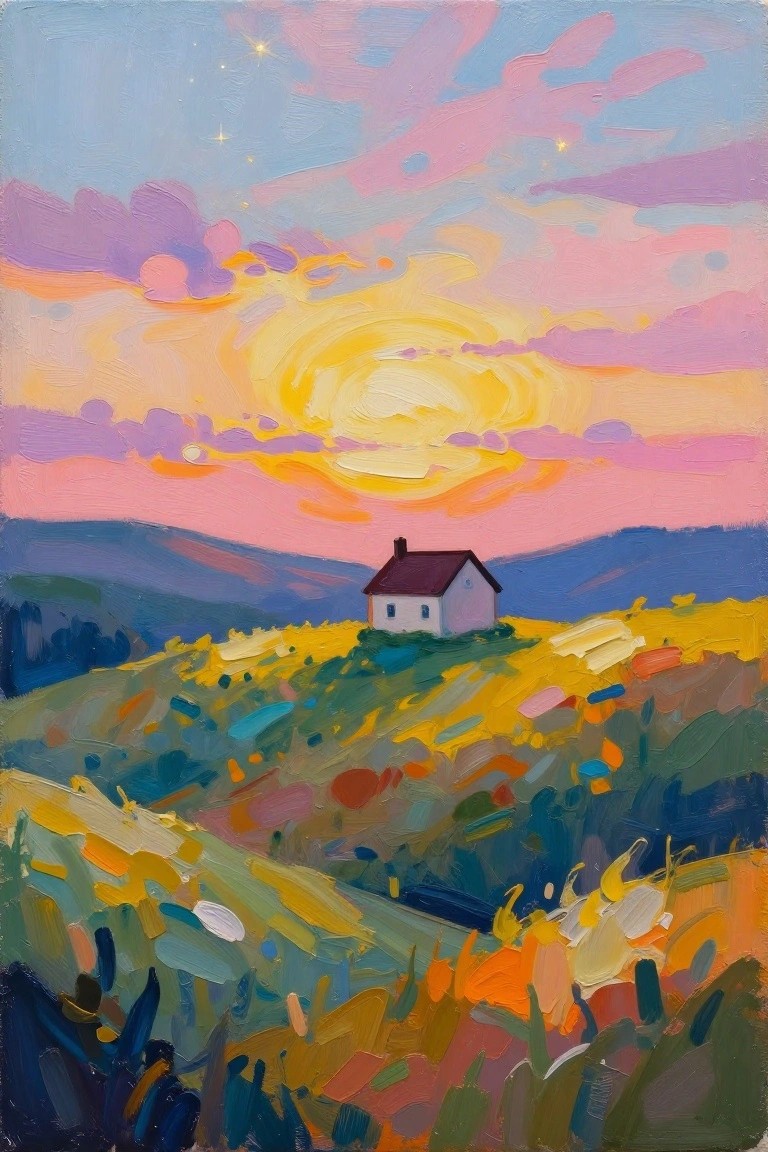
A landscape painting idea built around a single small house set against rolling fields works well when the sky takes center stage with bold swirling colors. The concept relies on loose brushwork and strong color blocks to create depth without needing fine details or complex shapes. This fits the landscape category and keeps the composition balanced by using the bright sky to draw the eye while the textured foreground adds interest.
The composition does a lot of the work here by keeping the house simple and centered against the dramatic sky. You can swap the sunset palette for softer dawn tones or cooler evening hues without changing the layout much. For practice this kind of scene helps with color blending and layering textures in the fields. It would also translate easily to a smaller canvas or a version with different foreground colors for variety.
Bold Three-Flower Bouquet on Neutral Ground
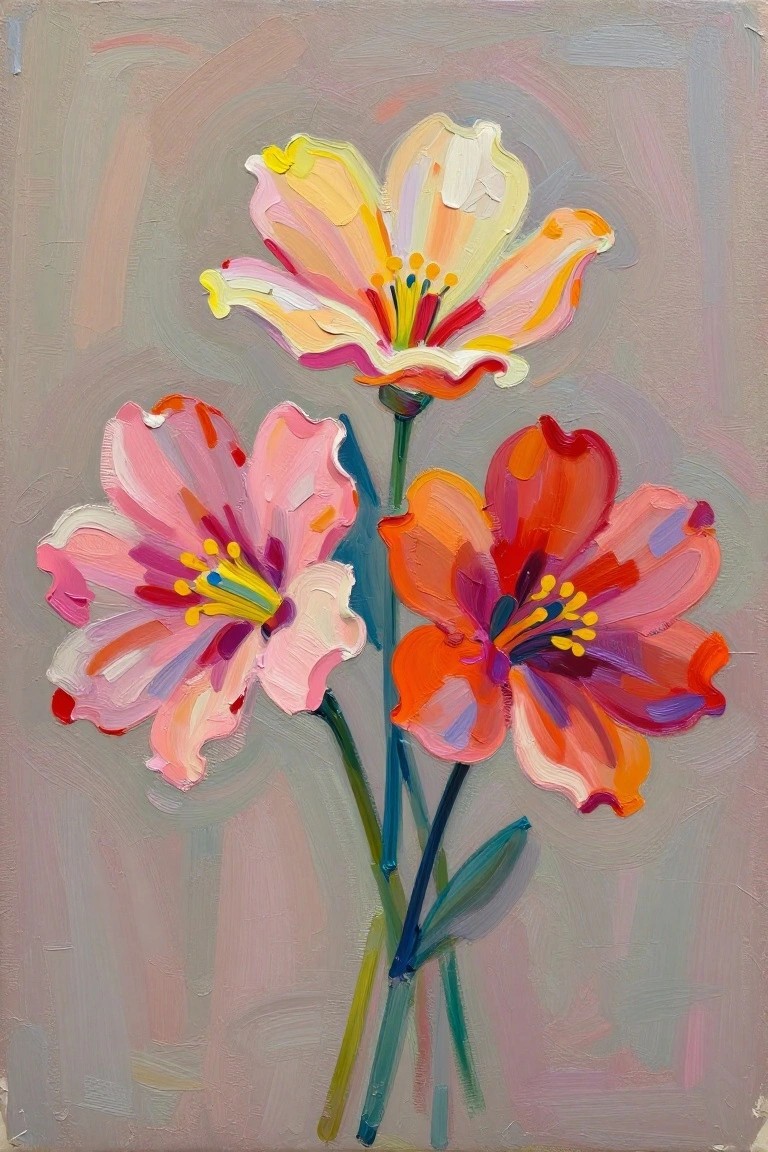
A floral painting idea built around three open blooms works well when you keep the focus on color contrast and simple placement. One flower sits higher on the canvas while the other two sit lower and slightly apart, creating an uneven triangle that fills the space without crowding. The top bloom uses pale yellows and pinks, and the lower pair shifts into stronger oranges and magentas, all set against a flat gray background that lets the petals stand out.
What makes this idea useful is how few elements you need to get a finished look. You can change the color mix on the lower flowers for a different season or mood while keeping the same stem angles and background. The loose brushwork also means you do not have to blend edges perfectly, so the same layout works for both a fast practice session and a finished wall piece. For Pinterest, the bright petals against the plain ground stand out in small thumbnails.
Sand Dunes with a Winding Footprint Path
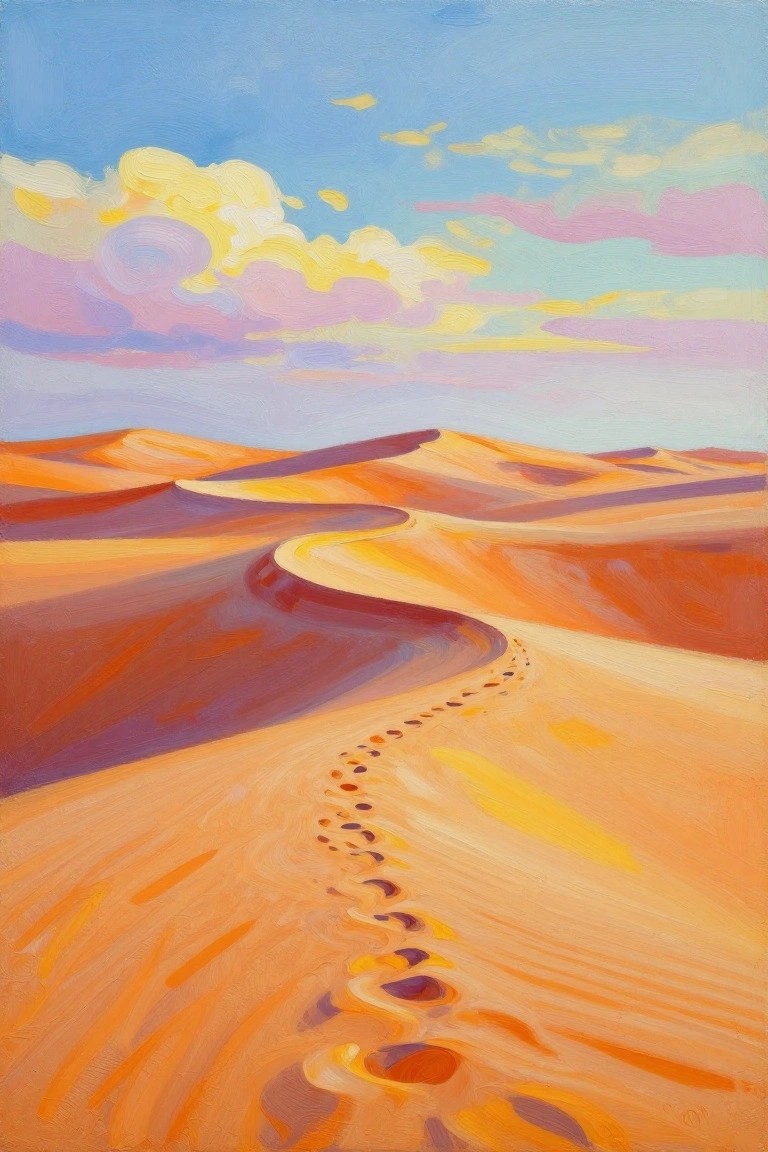
A desert landscape idea like this focuses on rolling sand dunes in warm oranges and reds, with a single curving path of footprints running from the foreground into the distance. The composition uses the path as a strong leading line that creates depth while the layered dunes and colorful sky keep the scene balanced. It fits the landscape category and works well because the flowing shapes and limited color range make the whole view easy to build without extra elements.
What makes this idea useful is how the footprints give the composition a built-in focal point that holds interest without needing fine detail. The warm dune colors can be swapped for cooler tones or a different sky palette to change the mood quickly. For practice, this kind of subject helps with brush control on curves and simple layering, and the horizontal format makes it easy to adapt for small canvases or larger wall pieces.
Frequently Asked Questions
What basic supplies will I need to try these simple canvas painting ideas? You can start with a few affordable items like pre-stretched canvases in small sizes, acrylic paints in basic colors, a couple of synthetic brushes, a palette for mixing, and water for cleaning. Add an old cloth or paper towels for wiping brushes and a cup for water. These supplies keep costs low while letting you focus on the relaxing process rather than shopping for extras.
How can I set up my space so the art session feels truly calming? Choose a quiet corner with good natural light or a soft lamp, and play gentle background music if it helps you unwind. Lay down a protective sheet on your table, keep a glass of water nearby, and set aside at least thirty minutes without phone notifications. Dimming overhead lights and arranging your paints in a neat row can make the whole experience feel more peaceful and intentional.
What should I do if I feel stuck or unsure which of the twenty ideas to pick first? Look at the list and choose based on the colors or shapes that appeal to you most right now, such as starting with a simple sky or abstract swirl instead of something more detailed. Begin with quick thumbnail sketches on paper to test the idea, then move to the canvas without pressure to finish perfectly. Many people find that picking one new idea each week keeps the sessions fresh and enjoyable.
How do I handle mistakes without losing the relaxing mood? Acrylic paint dries fast, so you can simply paint over small errors with a fresh layer or blend them into the background using a damp brush. Embrace imperfections as part of the creative process by turning a stray mark into a new element like a cloud or leaf. Taking a short break to stretch and breathe often helps you return with a calmer perspective.
Can these painting ideas work for people who have never painted before? Yes, the ideas focus on broad strokes, simple shapes, and minimal layers so beginners can follow along without prior skill. Start by practicing basic brush movements on scrap paper to build confidence, then apply the same loose approach on the canvas. Many find that the low-pressure style actually makes learning enjoyable rather than stressful.