
I started painting on canvas a few years ago as a way to relax after work.
Some of the first things I tried were too complicated and I got frustrated.
Over time I found a few easy ideas that actually turned out okay and kept me interested.
I put together this list of 21 projects that I think beginners might enjoy trying.
They are simple enough to finish in an afternoon but still look nice when done.
Sailboat Sunset Seascape
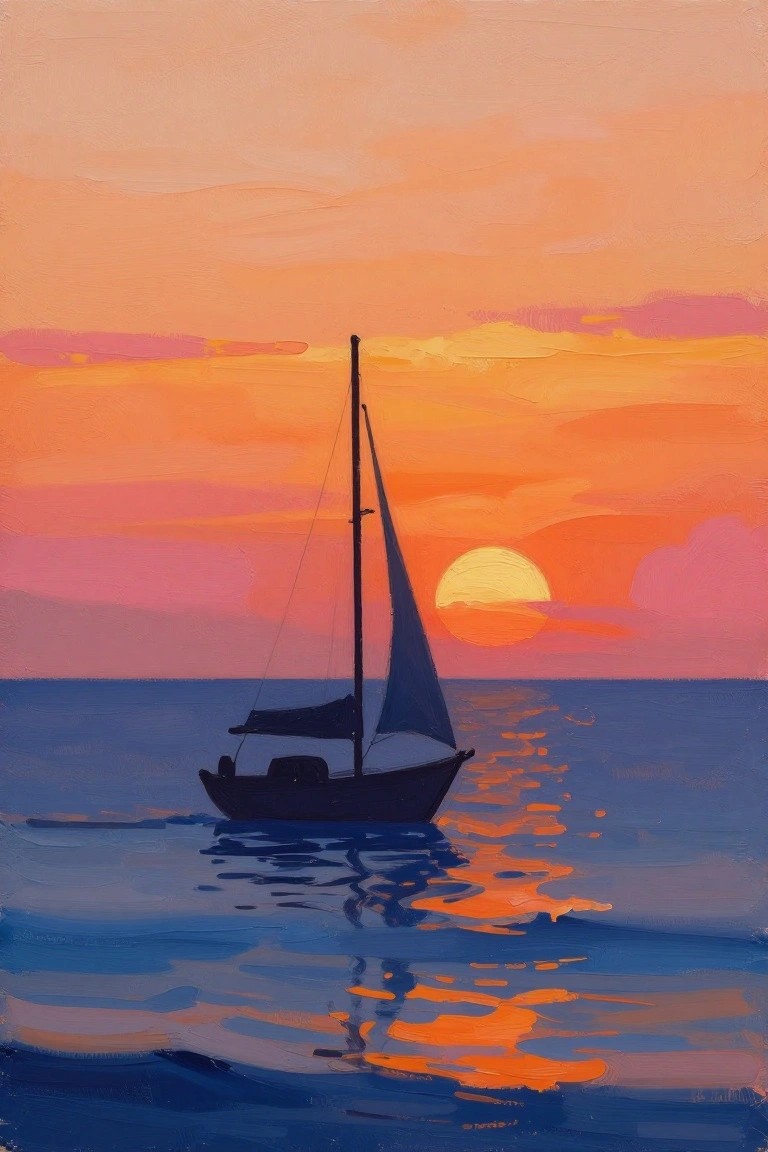
A sailboat silhouette against a layered sunset sky makes a strong landscape painting idea that relies on simple shapes and bold color contrast. The composition works because the dark boat and mast stand out against the warm sky while the sun reflection adds a natural focal line across the water. This type of scene fits the seascape category and uses horizontal bands of color to keep the eye moving from sky to horizon to foreground.
The composition does a lot of the work here since the boat shape and sky bands create instant structure without needing fine detail. You can easily adapt the palette by swapping the oranges and pinks for cooler tones or a different time of day. For wall art this idea scales well to different canvas sizes and still reads clearly from a distance. It would also be easy to personalize by changing the boat style or adding a second smaller sail in the distance.
Bold Flowers with Contrasting Centers
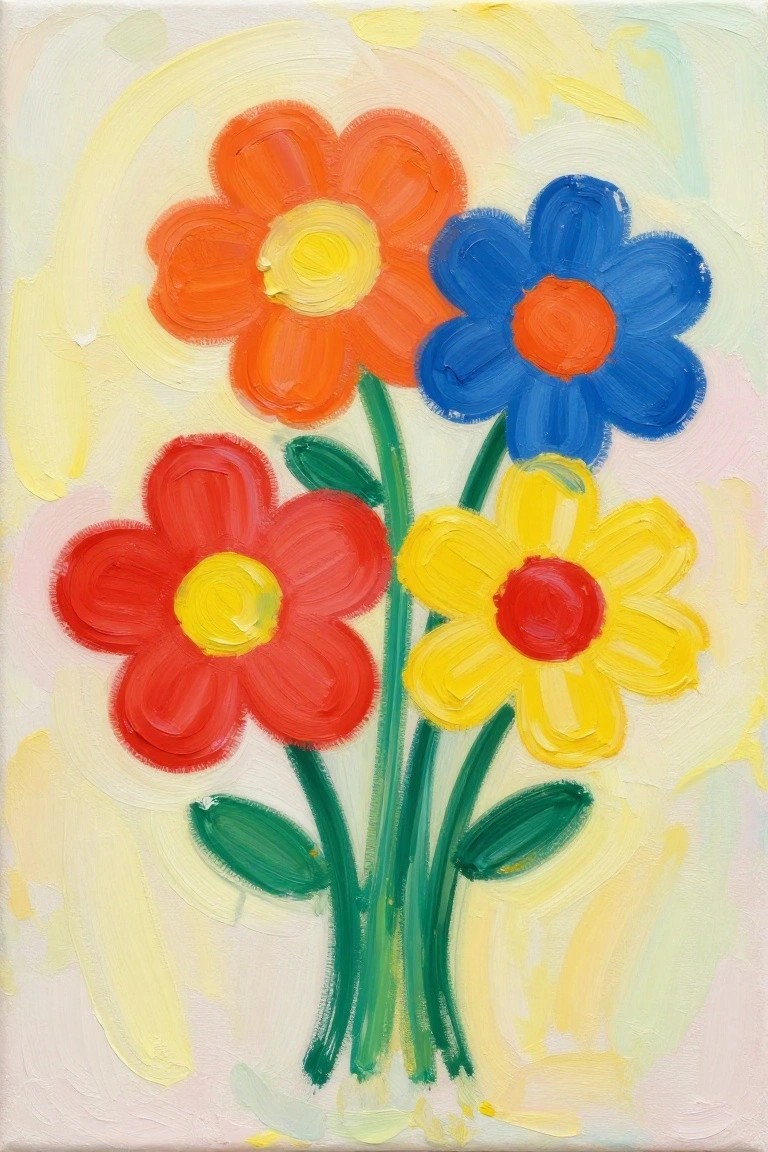
A floral painting idea that uses four simple blooms in orange, blue, red, and yellow, each finished with a solid contrasting center. The stems overlap at different angles to hold the group together, while the soft background lets the bright petals stand out. Thick brush marks add texture and keep the focus on shape rather than tiny details.
The composition does a lot of the work here by balancing the four flowers at varied heights. You can swap the color order, drop one bloom, or change the center colors to match a room or season. This kind of subject works especially well for practice because the shapes stay basic and the limited palette still feels lively.
Sunset Mountain Range Landscape
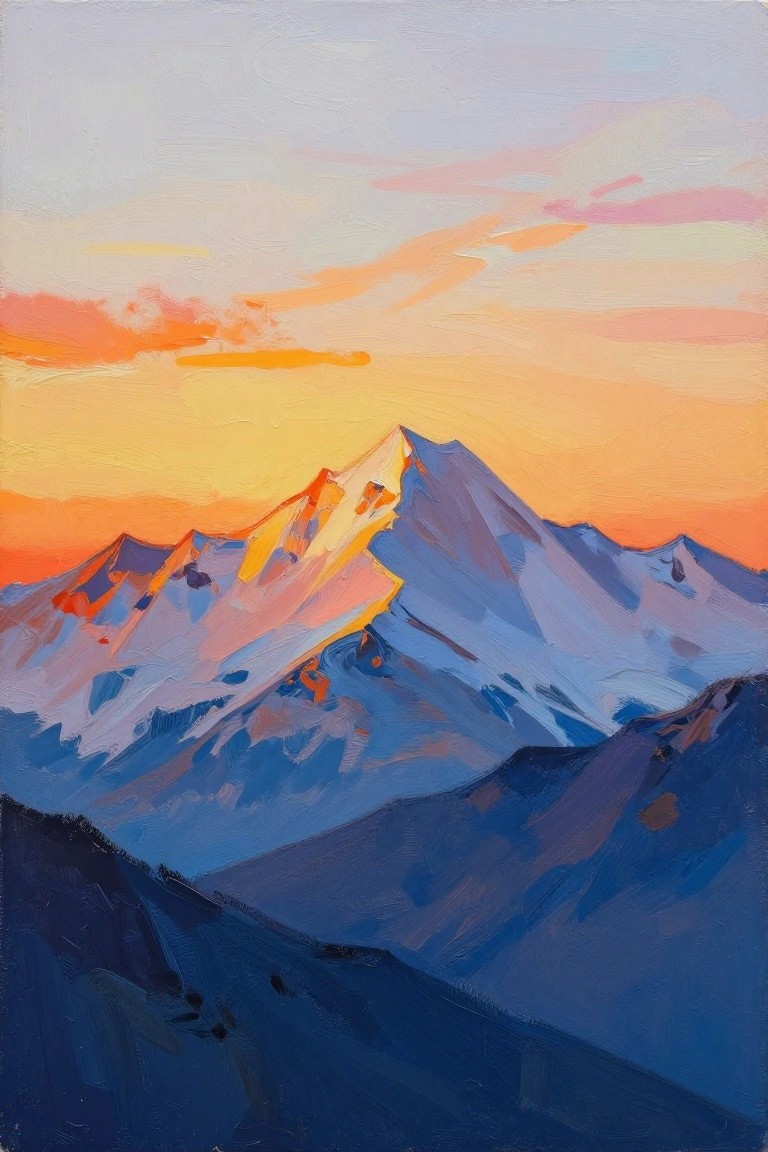
A mountain range at sunset works as a painting idea because the strong color contrast between a warm sky and cool peaks creates instant drama with minimal detail. Broad angular shapes and visible brushstrokes define the ridges and slopes while keeping the focus on the overall silhouette. This fits squarely into landscape painting and relies on simple color blocking rather than intricate textures.
The composition does a lot of the work here by letting the sky gradient push the mountains forward. You can swap the orange tones for softer pinks or deepen the blues to change the mood without redrawing the shapes. For wall art this kind of piece holds up well at larger sizes since the bold color split reads clearly from a distance. The same layout can be simplified further by reducing the number of peaks or adapted by adding a foreground tree line if you want more variation.
Sleeping Crescent Moon with Stars
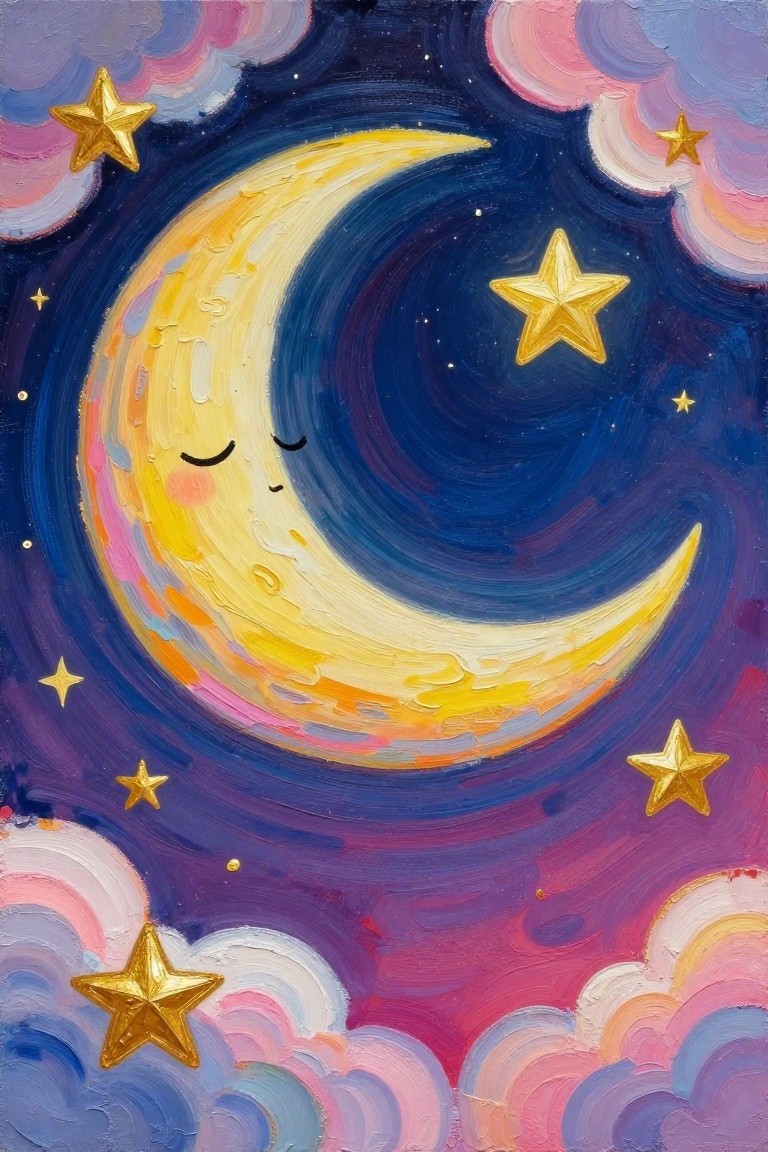
A crescent moon with a simple sleeping face serves as the main subject in this celestial scene. The idea combines bold curved shapes with scattered stars and soft cloud forms against a dark gradient background. This type of cute decorative painting works because the high-contrast yellow moon stands out clearly while the surrounding elements fill space without competing for attention.
The composition does a lot of the work here by using a few large shapes and a limited color palette that beginners can match easily. You can adapt it by changing the sky colors, resizing the stars, or swapping the cloud placement to fit different canvas sizes. For wall art this idea performs well on Pinterest because the glowing moon creates instant visual impact even in a small thumbnail. The same layout can be simplified further by reducing the number of stars or made more detailed by adding extra layers to the clouds.
Curled Fox in a Sunset Meadow
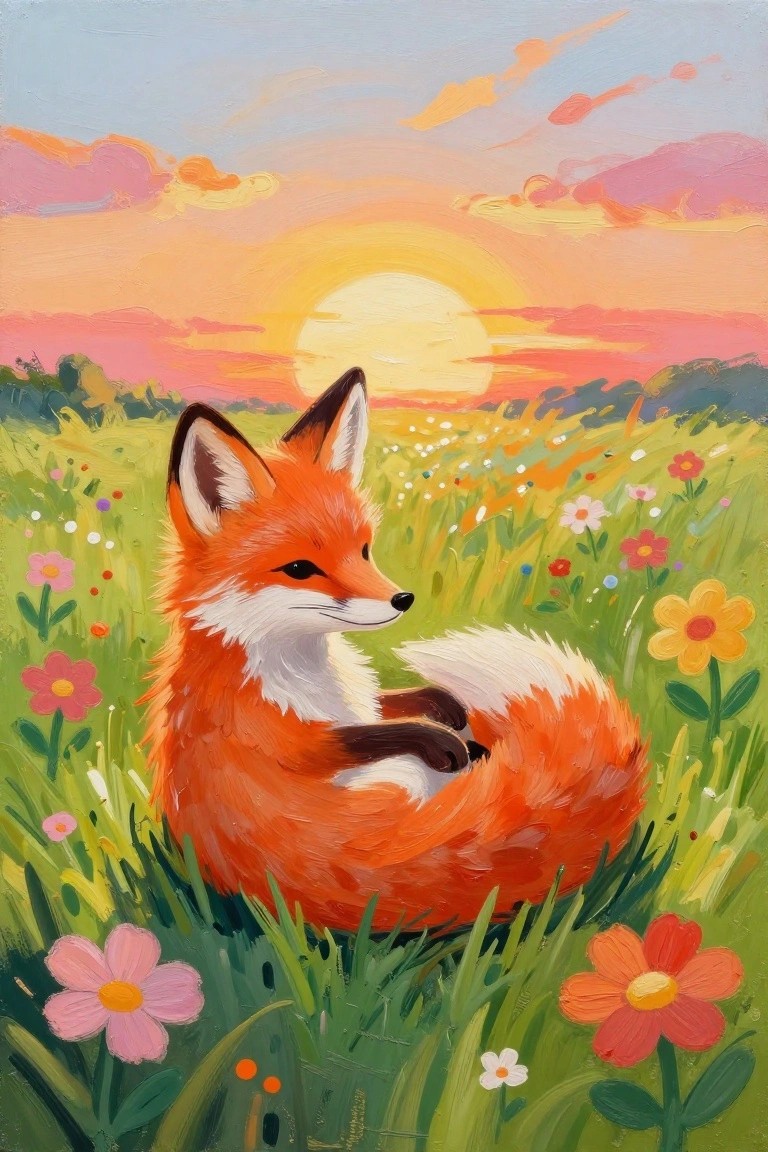
A curled fox in a flower-filled field works as a solid animal painting idea when set against a sunset sky. The composition places the fox low in the frame so the glowing horizon and open sky take up the top half, keeping the scene balanced. Scattered wildflowers and loose green brushstrokes fill the foreground without crowding the main subject.
The color palette makes this easy to adapt by shifting the sky from warm oranges to cooler tones or changing the flower colors to match a different season. You could simplify the grass texture to broader strokes for a faster version or keep the fox fur loose while adding just a few more flower shapes. For wall art the round shape of the fox against the wide field gives it a clean, finished look that works at different canvas sizes. This type of scene shows up well on Pinterest because it combines an animal with a simple landscape in one frame.
Overlapping Bright Circles Abstract
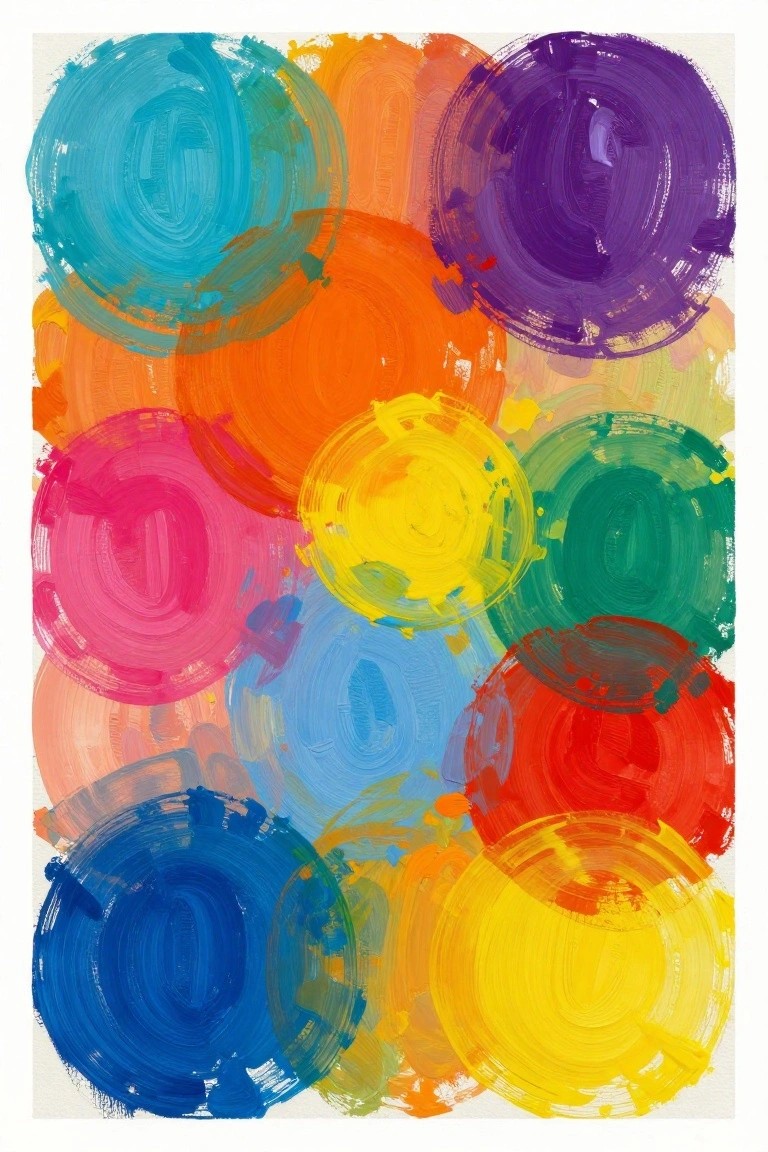
Overlapping circles in bold primary and secondary colors form a simple abstract idea that plays with movement and layering. The visible brushstrokes give each circle its own texture while the overlaps create natural color mixing without extra effort. A light background keeps the focus on the shapes and lets the colors pop.
The composition does a lot of the work here because the circles can be placed freely without needing perfect alignment. This approach works well for beginners who want to practice color placement and brush control while still ending up with something that looks intentional on a wall. You can easily change the palette to match a room or shrink the circles to fit a smaller canvas. For quick practice sessions it also serves as a low-pressure way to experiment with acrylics before moving on to more detailed subjects.
Bold Rainbow Landscape
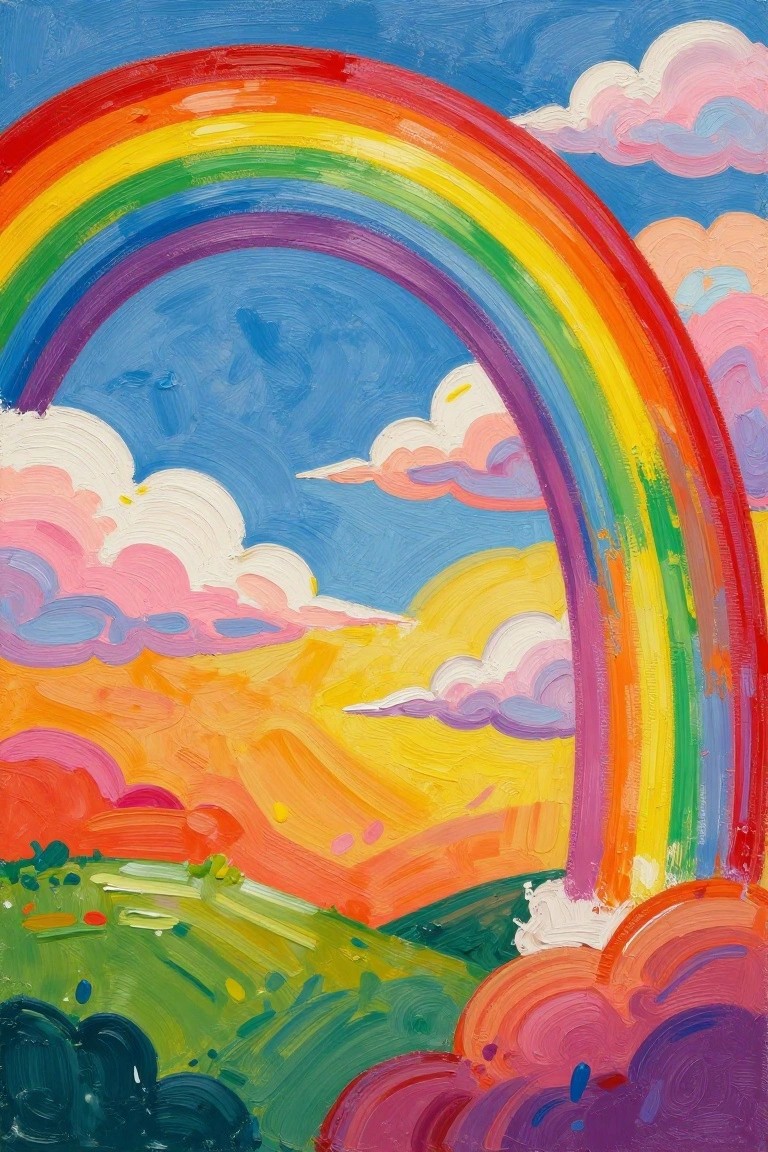
A rainbow landscape idea focuses on a wide arch of saturated colors stretching across the sky above rolling hills and scattered clouds. The composition works because the curved rainbow acts as a strong focal point while the layered clouds and hills below add depth without competing for attention. Bright color bands and visible brushstrokes give the scene energy and keep the overall layout simple to follow.
The composition does a lot of the work here since the rainbow shape guides the eye naturally across the canvas. You can adjust the hill colors or cloud placement to match the season or room decor, or reduce the number of color bands if you want a faster version. This kind of subject shows up well on Pinterest because the high-contrast colors stand out in small thumbnails.
Potted Cactus Still Life
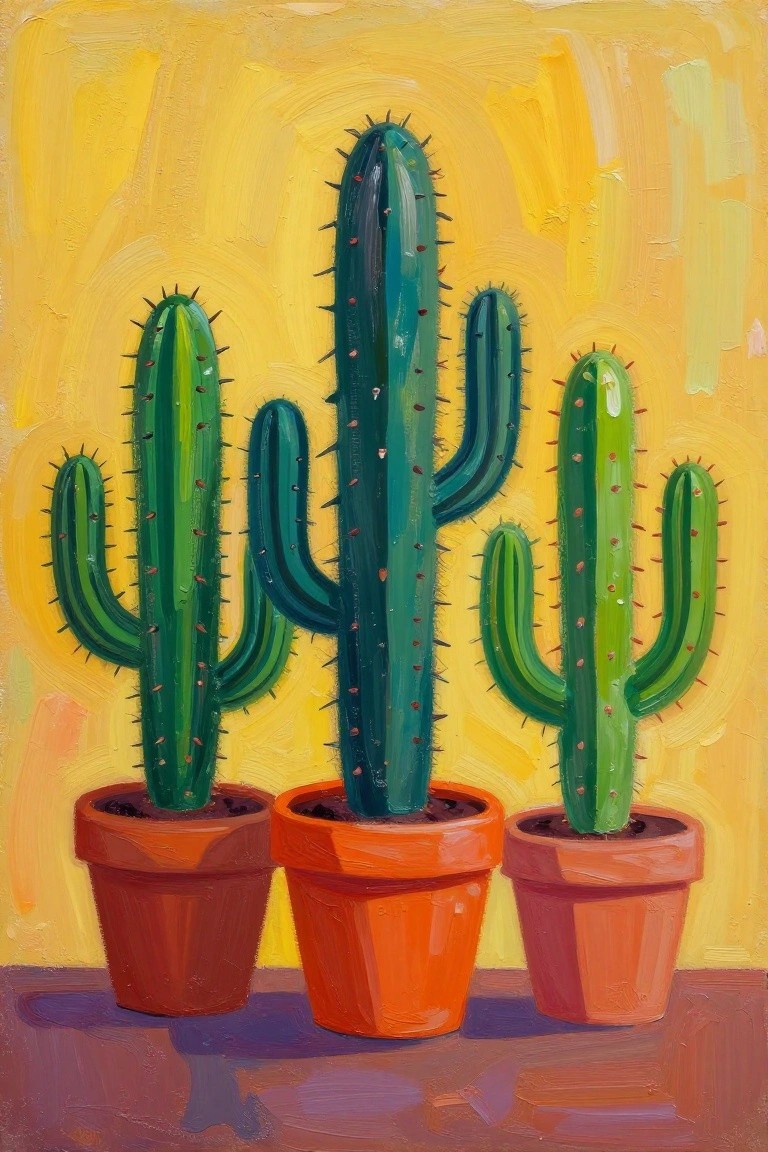
Cacti in terracotta pots work well as a still life subject because their upright shapes and minimal surface details let you focus on color blocks and edges. This version uses three plants of different heights set against a solid warm background so the composition stays balanced without extra elements. The strong contrast between the green forms and the orange pots makes the arrangement easy to read even with loose brushwork.
What makes this idea useful is how the limited number of shapes lets you practice proportion and spacing without getting overwhelmed. You can swap the background color or drop down to two pots if you want a quicker version for practice. For wall art, the high-contrast setup photographs cleanly and shows up well in small previews online.
Curling Wave Seascape
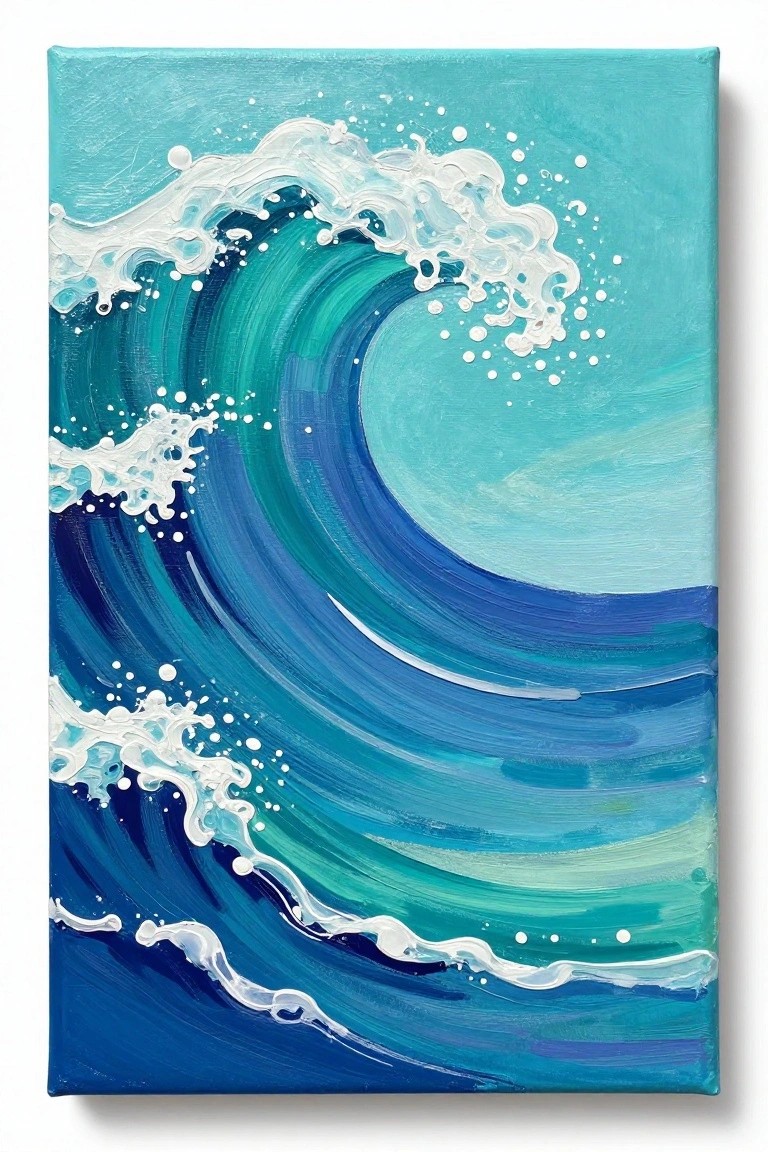
A curling ocean wave works well as a painting idea because the single curved form fills the canvas and creates built-in movement. The idea centers on a seascape with a color shift from deep blue at the base to lighter teal tones near the top, plus scattered white foam for contrast. This approach fits the landscape category and relies on broad brushstrokes and simple layering rather than many small elements.
The composition does a lot of the work here by keeping the focus on one large shape instead of multiple objects. You can change the color palette to match a room or shrink the wave to fit a smaller canvas if the full size feels too large at first. For practice this subject helps with blending and building foam layers without needing perfect realism, and the bold curve tends to stand out in search results for wave or ocean art.
Paint a Close-Up Sunflower Floral Study
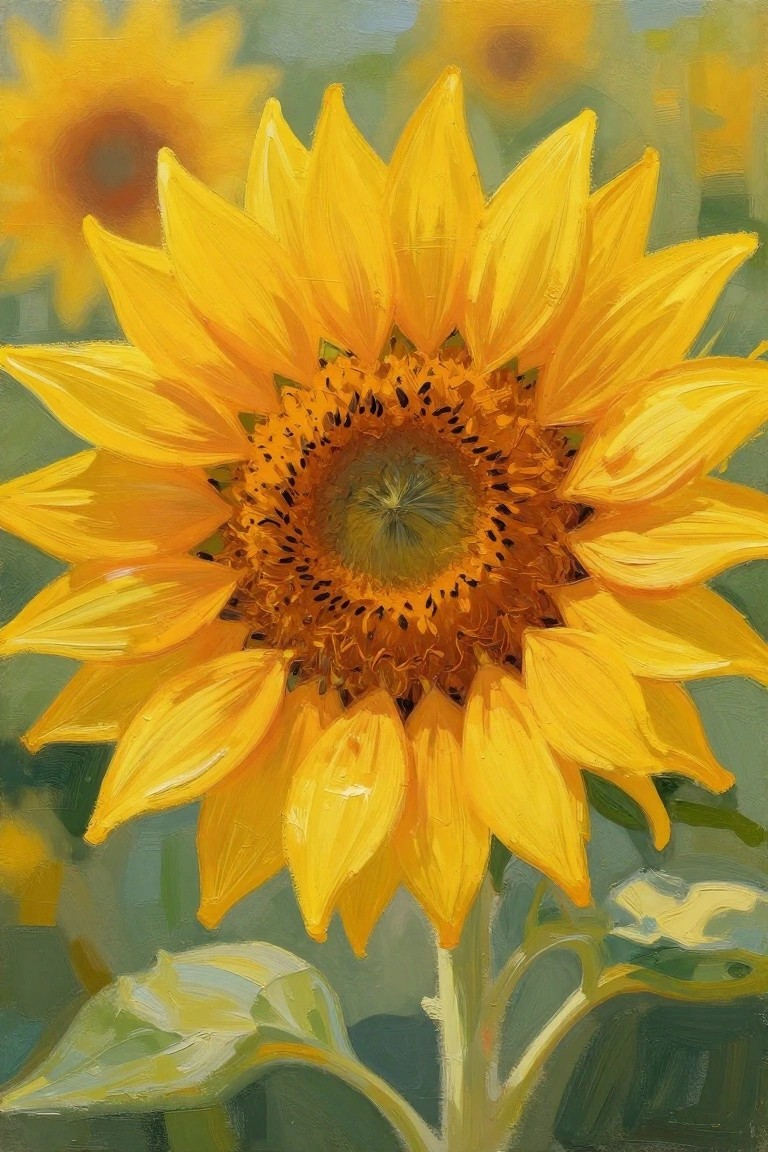
A sunflower close-up makes a strong floral painting idea because it uses one large bloom to fill most of the canvas. The petals radiate outward from a detailed center, creating a simple radial composition that stays easy to follow. A soft, low-contrast background keeps attention on the flower without adding extra elements.
What makes this idea useful is the limited palette of yellows, oranges, and greens that requires minimal color mixing. You can adjust the size by cropping tighter on the center or loosening the petal edges for a faster version. The bold shape also translates well to different canvas formats and works as a quick practice piece or a standalone wall piece.
Misty Forest Sunset Landscape
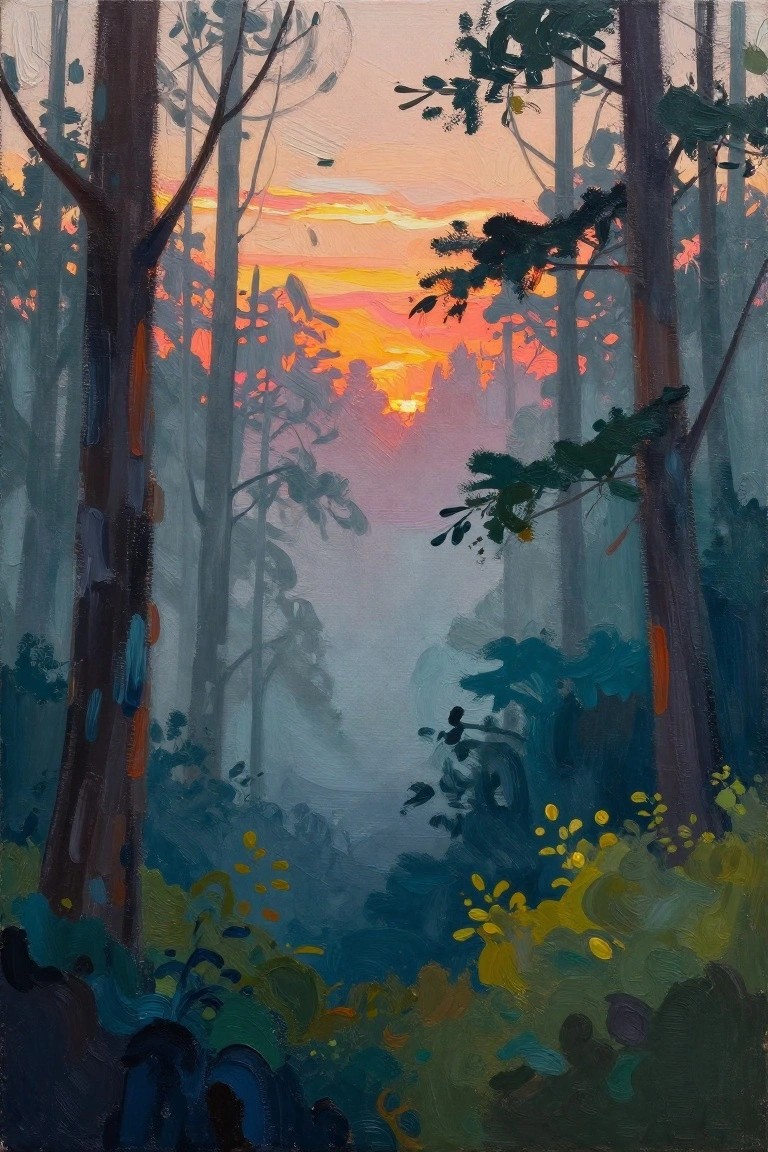
A sunset forest scene with tall trunks framing a bright horizon makes a solid landscape idea for canvas. The vertical tree shapes guide the eye toward the glowing center while the misty layers in the background create depth without extra detail. Warm sky tones against cooler foreground greens and blues keep the whole piece balanced and easy to read from a distance.
The composition does a lot of the work here since the light source naturally pulls focus. You can simplify the trees into loose vertical strokes and spend most of your time on the sky gradient and soft middle-ground haze. This kind of painting adapts well to different canvas sizes and works as quick practice for blending and color mixing. For wall pieces it stands out on Pinterest because the strong light contrast reads clearly even in small thumbnails.
Whale Spouting Water Over Bright Ocean Swirls
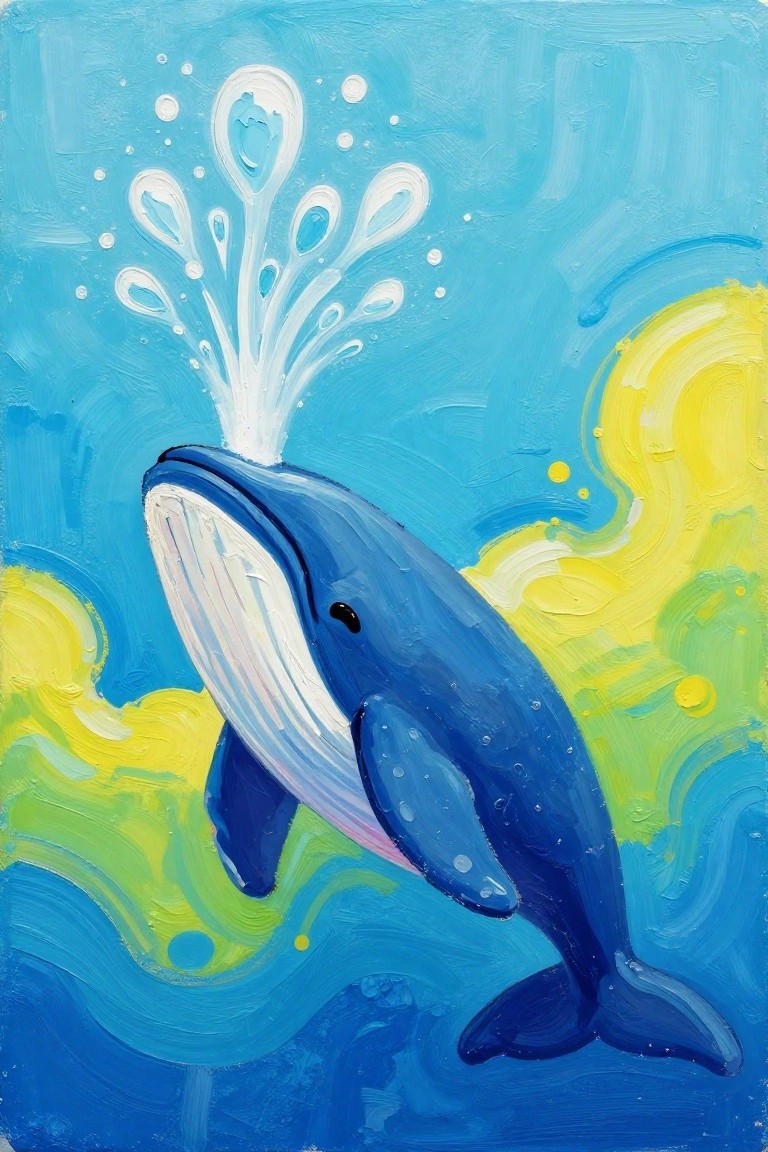
A whale with a tall water spout works as a clear animal painting idea that uses simple curved shapes for the body and fins. The composition angles the whale upward so the spout creates vertical movement while the background stays loose with broad wave forms in contrasting colors. This approach keeps the focus on one main subject without needing many small details.
What makes this idea useful is how the large whale shape can be blocked in first and then refined with just a few added strokes for the spout and belly highlights. The color palette mixes cool blues with warmer yellow and green accents, which you can swap out for whatever paints you already have on hand. This would be easy to turn into a vertical canvas piece or adjust the spout size to match different wall spaces. For practice, this kind of subject helps you work on basic animal proportions while still leaving room to play with background texture.
Moonlit Water Reflection Landscape
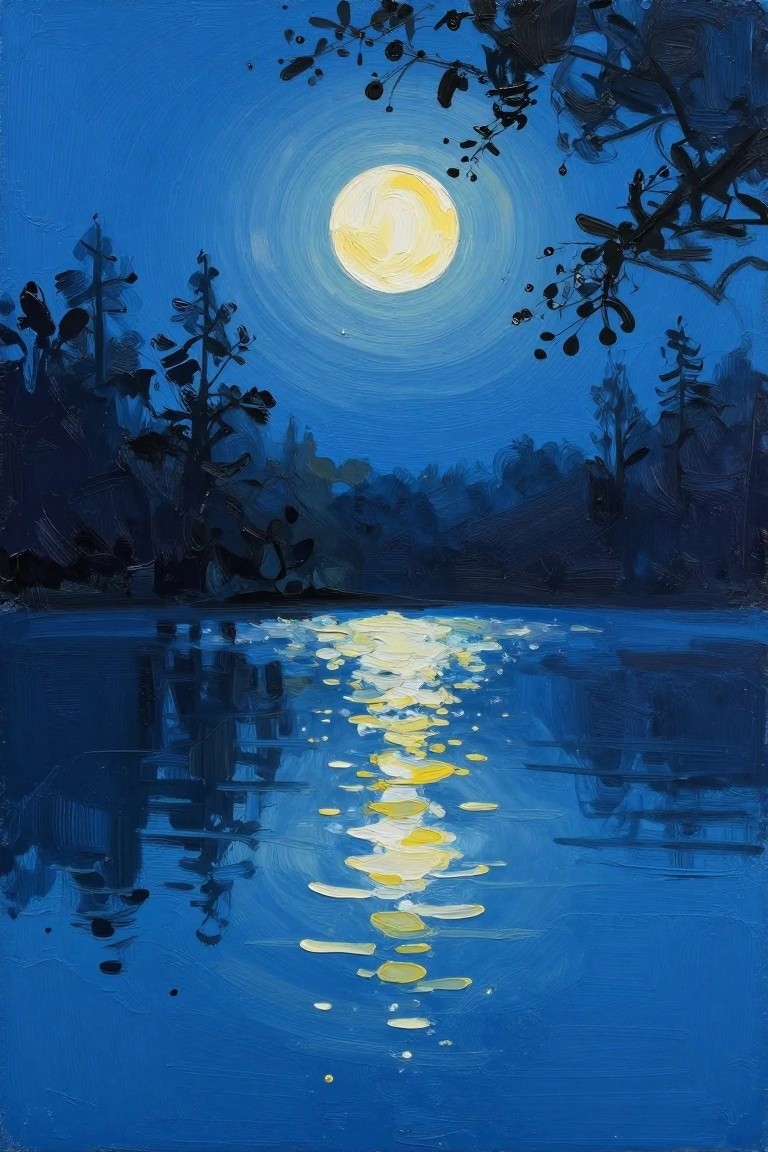
A moon reflection painting focuses on a bright circular moon set against a deep blue night sky, with its light stretching downward in broken yellow streaks across still water. The idea uses dark tree silhouettes on both sides to frame the scene and keep attention on the vertical path of light. This landscape approach works because the high contrast between the glowing shapes and the surrounding darkness gives the composition instant structure.
What makes this idea useful is how the simple color scheme of blues and yellows reduces the need for complex mixing. You can adjust the moon size or stretch the reflection to match a taller or wider canvas without changing the overall layout. The background trees can be kept loose or swapped for different shoreline shapes if you want a more open feel. For practice, this kind of subject helps you work on light placement and negative space at the same time.
Stacked Stone Still Life
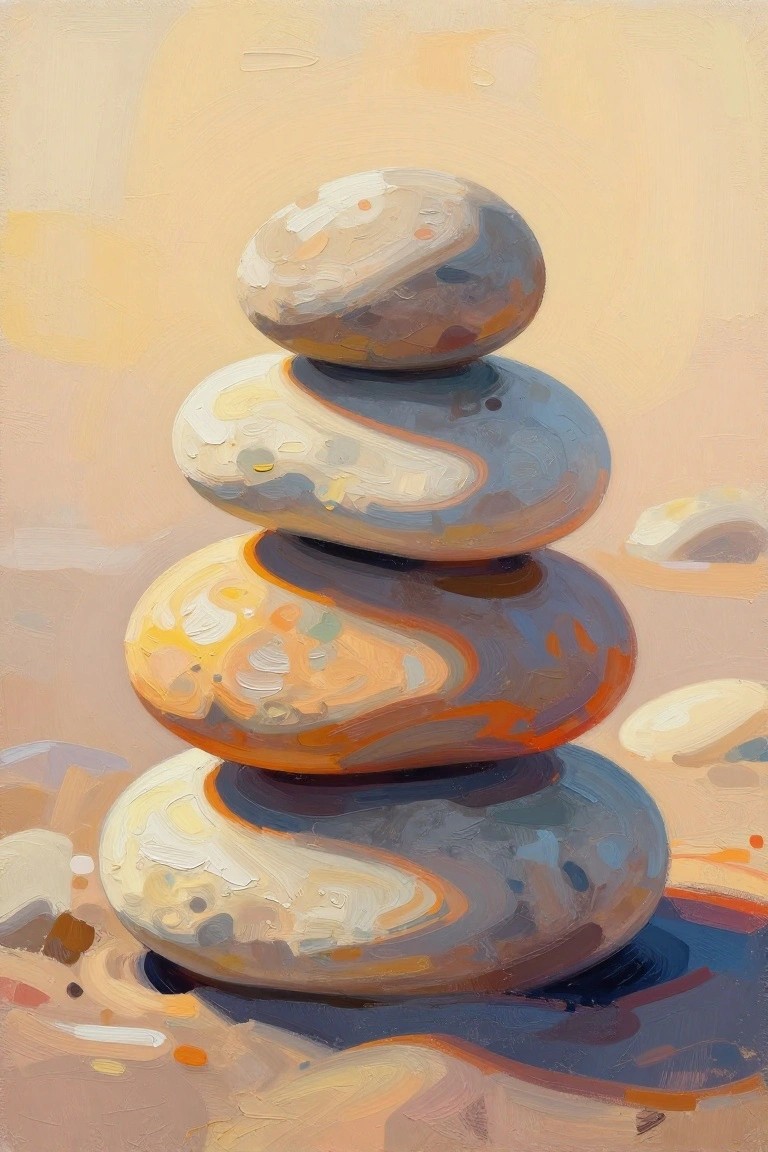
Stacked stones work well as a still life idea because the rounded shapes build upward in a simple tower that stays balanced on its own. The color shifts between creams, blues, and warm oranges keep each layer distinct while the soft background lets the stack hold the center without extra elements. Loose brushwork and blended edges show how texture can come from layering a few tones instead of adding fine detail.
What makes this idea useful is how easy it is to change the height or swap in different stone colors to fit the canvas size you have. A version with three stones takes less time while still keeping the same stacked look, and the vertical layout works on a narrow canvas for wall pieces. The limited palette also makes it simple to match paint you already own.
Colorful Balloon Bouquet
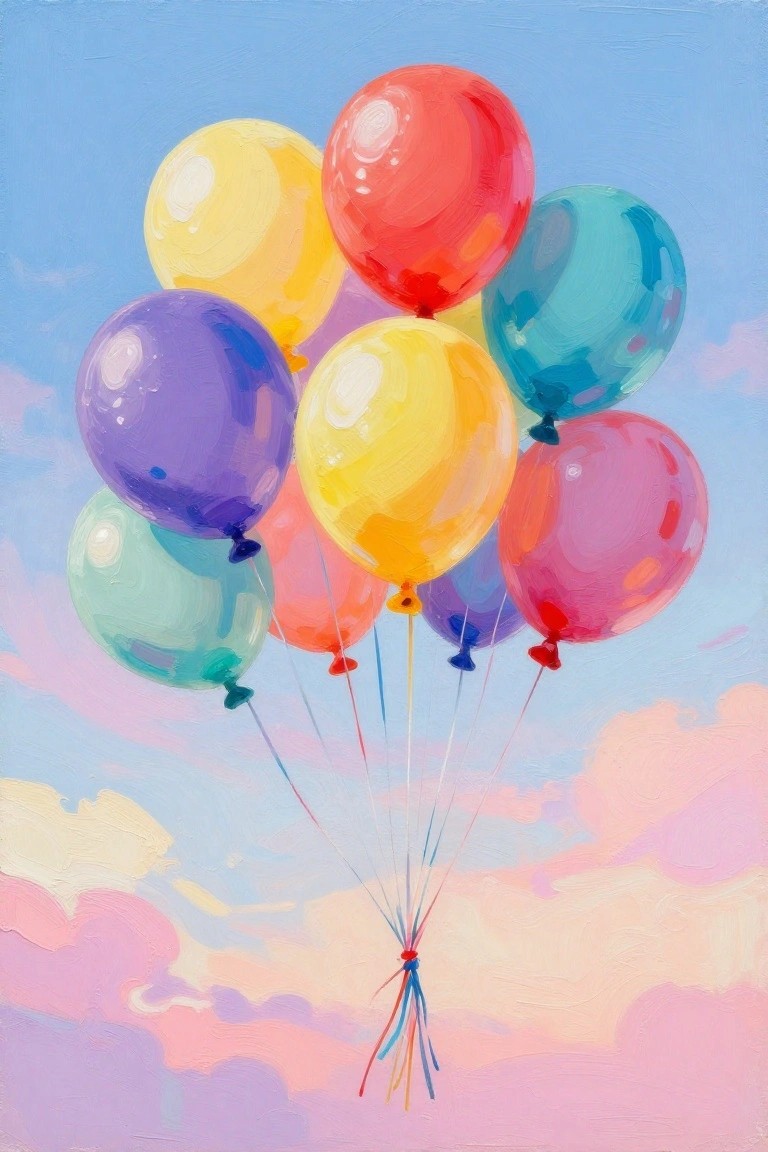
A cluster of round balloons in bold primary colors mixed with softer pastels makes a straightforward painting subject. The idea focuses on overlapping circles that vary slightly in size, with thin strings pulled together at the bottom to create a natural focal point. This setup works well because the bright shapes stand out against a simple sky background while the converging lines add direction without extra elements.
What makes this idea useful is how flexible the color choices are, so you can swap shades to fit a specific room or season. The tied strings give a clear structure that keeps the composition balanced even if you change the balloon count. For wall art, something like this works especially well at a medium size where the colors stay vibrant without needing fine details. You could adapt it by painting just the upper halves against a plain background or add a small hand at the bottom for a different version.
Colorful Village Houses
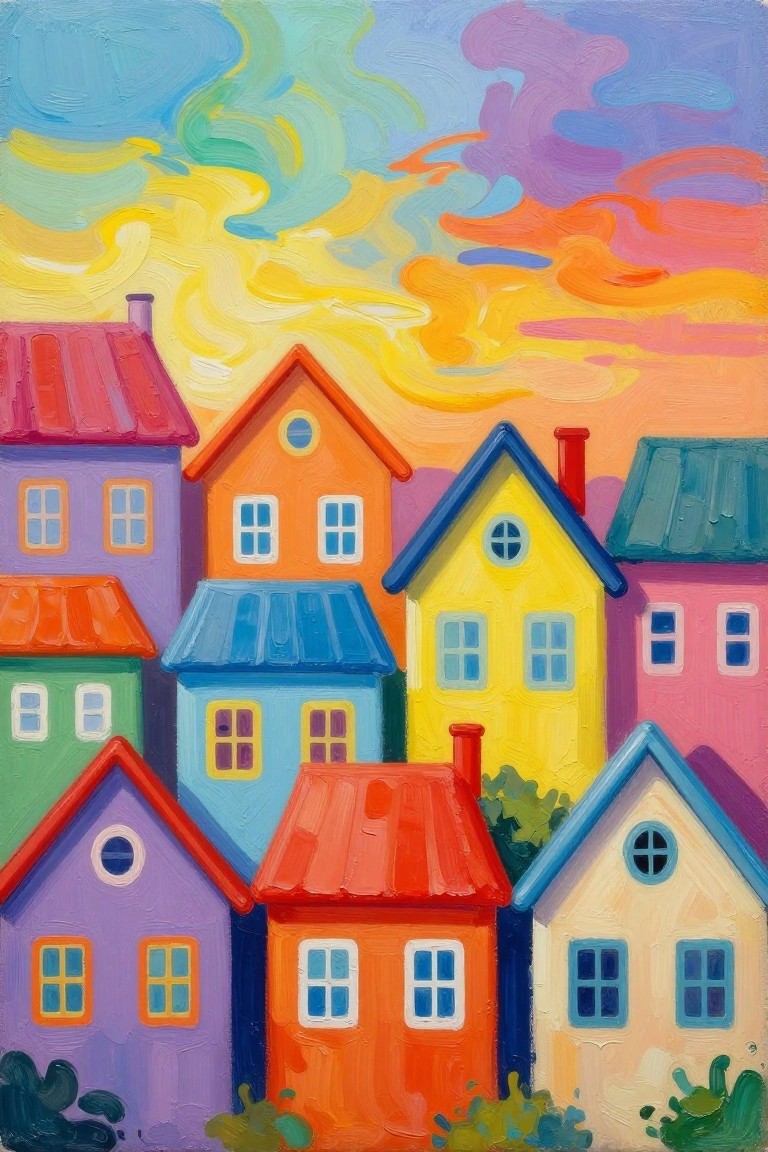
This painting idea uses a cluster of simple house shapes stacked at different heights to form a lively neighborhood view. Bold blocks of color on the walls and roofs create contrast while the loose sky brushwork adds movement without fine detail. The layout relies on overlapping forms and a bright palette to keep the eye moving across the canvas.
The composition does a lot of the work here by letting the shapes and color blocks carry the interest instead of tiny details. You can easily change the roof colors or swap the sky tones to fit whatever paint you already have on hand. For wall art this kind of scene stands out because the strong shapes read clearly from across a room. It also adapts well if you want to shrink it down to a smaller canvas or turn one or two houses into the full focus.
Bright Bird on a Branch
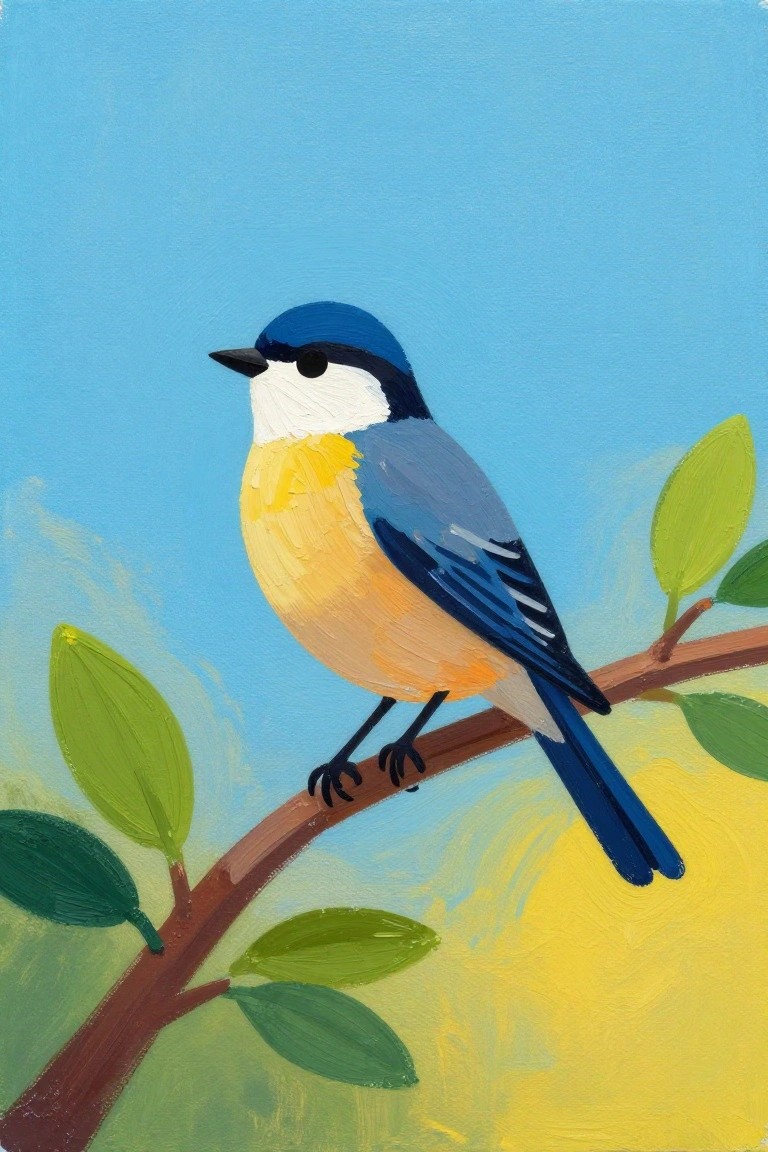
A single bird on a branch works as a simple animal painting that stays focused on one clear subject. The idea uses a plain sky background and a few leaves to keep the eye on the bird without adding extra elements. Strong color contrast between the yellow body, blue wings, and brown branch helps the shape stand out even with loose brushwork.
What makes this idea useful is how the limited background lets you finish the piece faster while still looking complete. You can swap the bird colors for a different species or change the leaf shapes to match what you have on hand. The same layout works on a smaller canvas if you want something quick for practice or a gift. For wall art, the clean silhouette makes it easy to spot in a feed and simple to repeat in different sizes.
Soft Pastel Cloudscape Painting
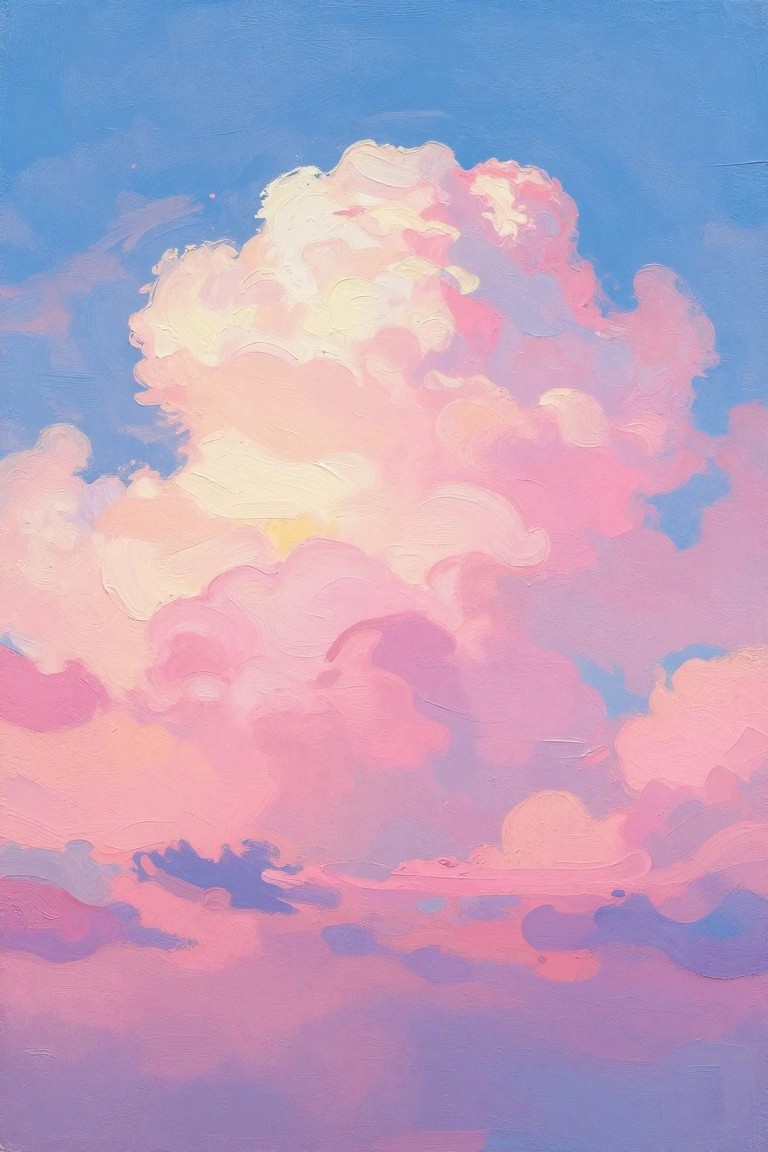
A sky-focused painting built around large, rounded cloud forms uses a limited palette of blues shifting into pinks and warm yellows. The idea relies on overlapping soft shapes and visible brushstrokes to create depth while keeping the overall layout simple and open. This approach sits comfortably in the landscape category but narrows the subject to just the sky.
The color transitions do most of the work here, so you can practice blending without needing fine detail or complex drawing. Try it on a medium canvas first, then repeat the same shapes in different sunset tones or crop the view tighter for a smaller study. The loose layout also makes it easy to finish quickly for practice or scale up for a larger decorative piece.
Autumn Maple Leaf with Loose Brushstrokes
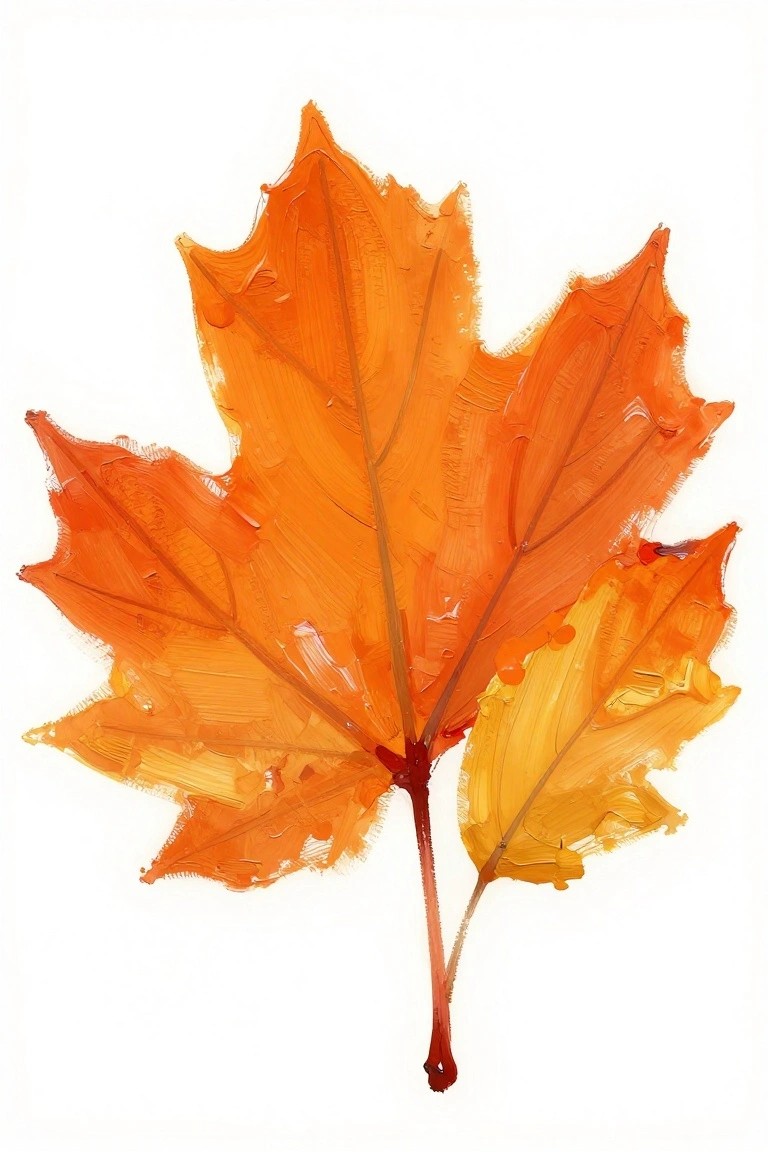
A maple leaf painted with bold, directional strokes works well as a seasonal canvas idea because the visible veins and color shifts from bright orange to soft yellow create natural depth. The single subject placed slightly off-center against a plain white background keeps the composition simple while still letting the brushwork show movement and texture. This type of painting fits into the seasonal or nature category since the focus stays on one clear form rather than a full scene.
What makes this idea useful is how easily the size and crop can be adjusted to match different canvas shapes without losing impact. The limited palette of oranges and yellows makes it a good choice for practicing color blending and edge control on a single subject. You could simplify it further by using fewer strokes or turn it into a small series by painting the same leaf in slightly different angles or color mixes. For Pinterest, a clean subject like this stands out because it reads clearly even in a small thumbnail.
Two Koi Fish in Swirling Water
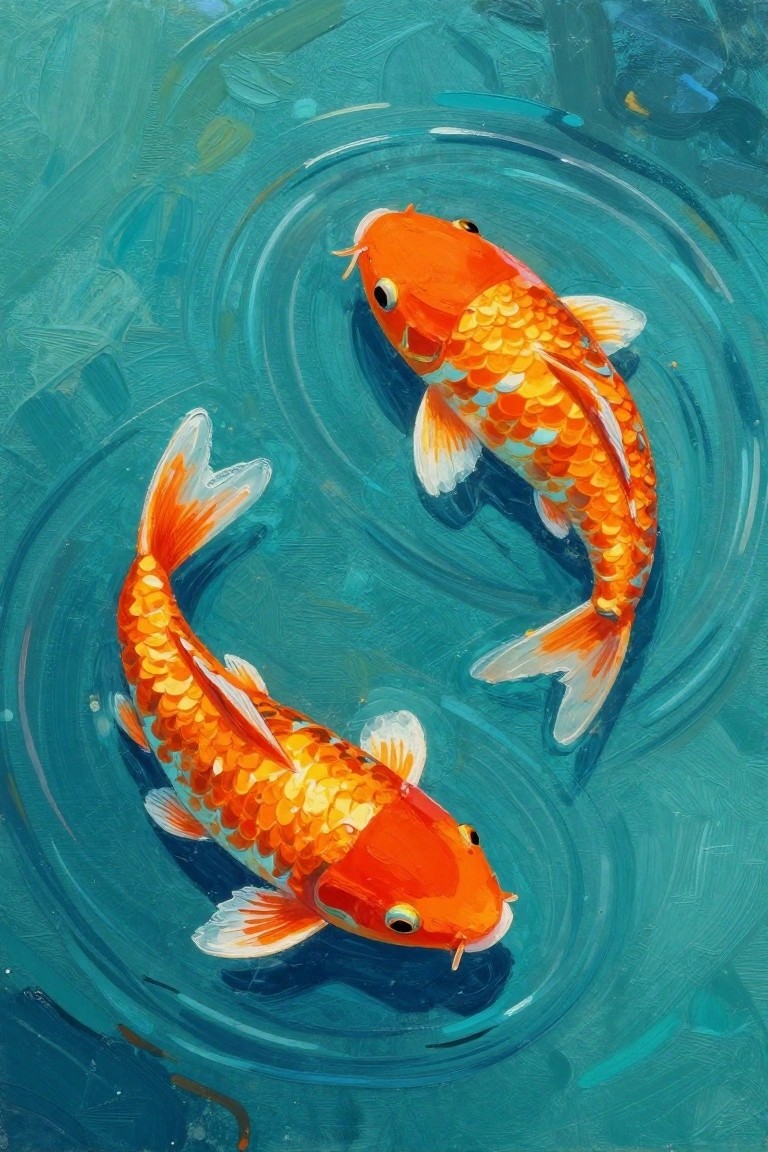
Painting two koi fish arranged in a loose circle against a teal background gives you a clear animal subject that stays focused on simple curved shapes and overlapping forms. The bright orange and white scales on the fish create strong contrast with the cooler water tones, while the ripple lines around them keep the composition balanced without adding extra objects. This approach works as an animal painting idea that relies on color placement and basic body outlines rather than fine details.
What makes this idea useful is how the curved layout lets you adjust the canvas size or fish count without changing the core structure. You can swap the background to a different shade of blue or green and still keep the same visual pull from the orange tones. For practice, this kind of subject helps you work on blending and edge control while staying easy to adapt for a square canvas that reads well online.
Vibrant Floral Wreath Circle
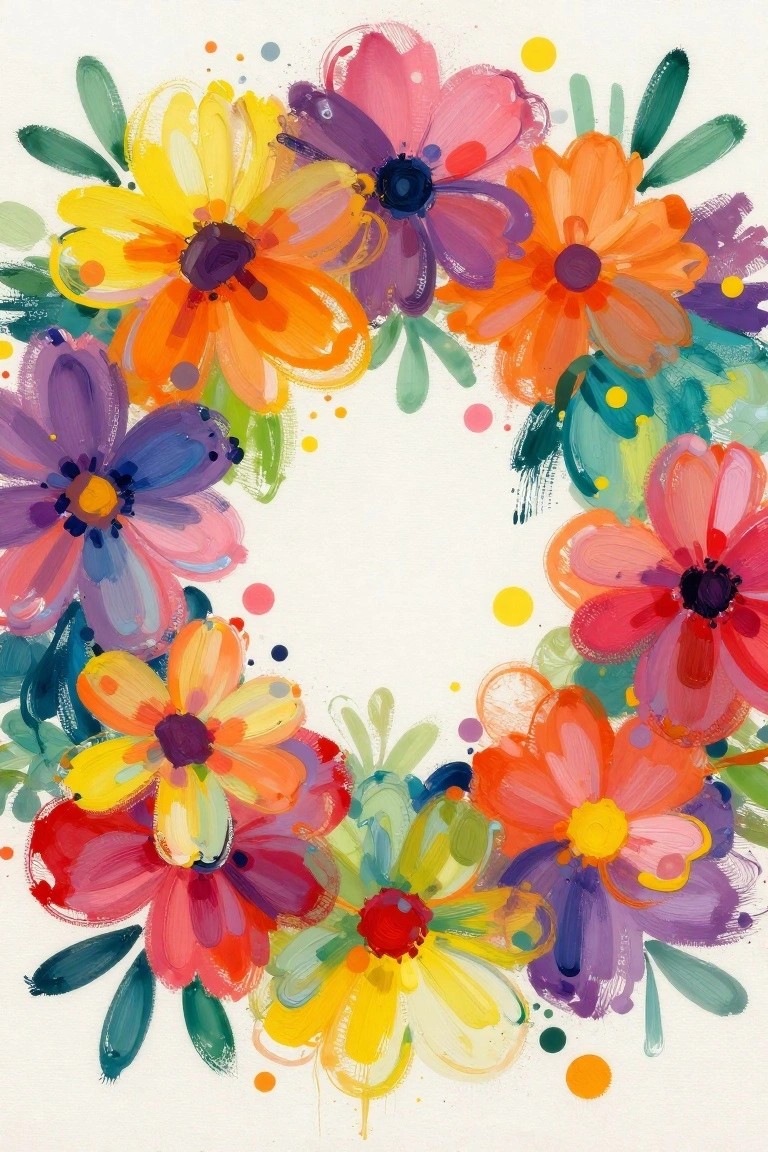
A circular wreath made from overlapping flowers in bright, mixed colors gives you a simple decorative painting idea that fills the canvas without covering the whole surface. The loose brushwork and varied petal shapes keep the focus on the ring of blooms while the open center creates natural balance and breathing room. This approach fits the floral category and works well when you want color without tight realism or lots of background detail.
The composition does a lot of the work here by letting you build the wreath one section at a time instead of planning a full scene. You can easily change the color palette to match a room or season, or scale the wreath smaller for a quicker session on a 12-by-12 canvas. For wall art, something like this stands out on Pinterest because the bold ring shape reads clearly even in a thumbnail.
Frequently Asked Questions
1. What basic supplies will I need to try these canvas painting ideas? You will need stretched canvases in a few sizes, acrylic paints in primary colors plus black and white, a set of synthetic brushes in round and flat shapes, a plastic palette or paper plate for mixing, a cup of water, and paper towels for cleanup. Start with an inexpensive beginner kit from a craft store to keep costs low while you experiment.
2. Do these ideas work if I have never painted before? Yes, every suggestion uses simple steps like tracing shapes, filling in sections with solid colors, or adding easy dots and lines. Begin with the most basic designs that require only two or three colors, and work on small canvases so mistakes feel less intimidating. Practice on cheap paper first to get comfortable with brush control.
3. How long should I let each layer dry before adding the next? Acrylic paint usually feels dry to the touch in 15 to 30 minutes, but wait at least an hour before painting over a large area to avoid lifting the layer underneath. If your room is humid, give it two hours. Quick drying is one reason acrylics suit beginners who want to finish a piece in a single session.
4. What can I do if the colors do not match the example in the article? Slight color differences are normal and often make your version more personal. Keep a small notebook of the paint brands and ratios you used so you can repeat successful mixes later. If a color looks too bright, tone it down by mixing in a tiny amount of its complementary color on the opposite side of the color wheel.
5. How do I store or display the finished paintings without damaging them? Let the canvas dry completely for at least 24 hours, then apply a thin coat of acrylic varnish for protection. Hang the piece with small sawtooth hangers on the back or lean it on a shelf. For storage, place paintings upright in a dust-free closet rather than stacking them, which can cause sticking or cracking.