
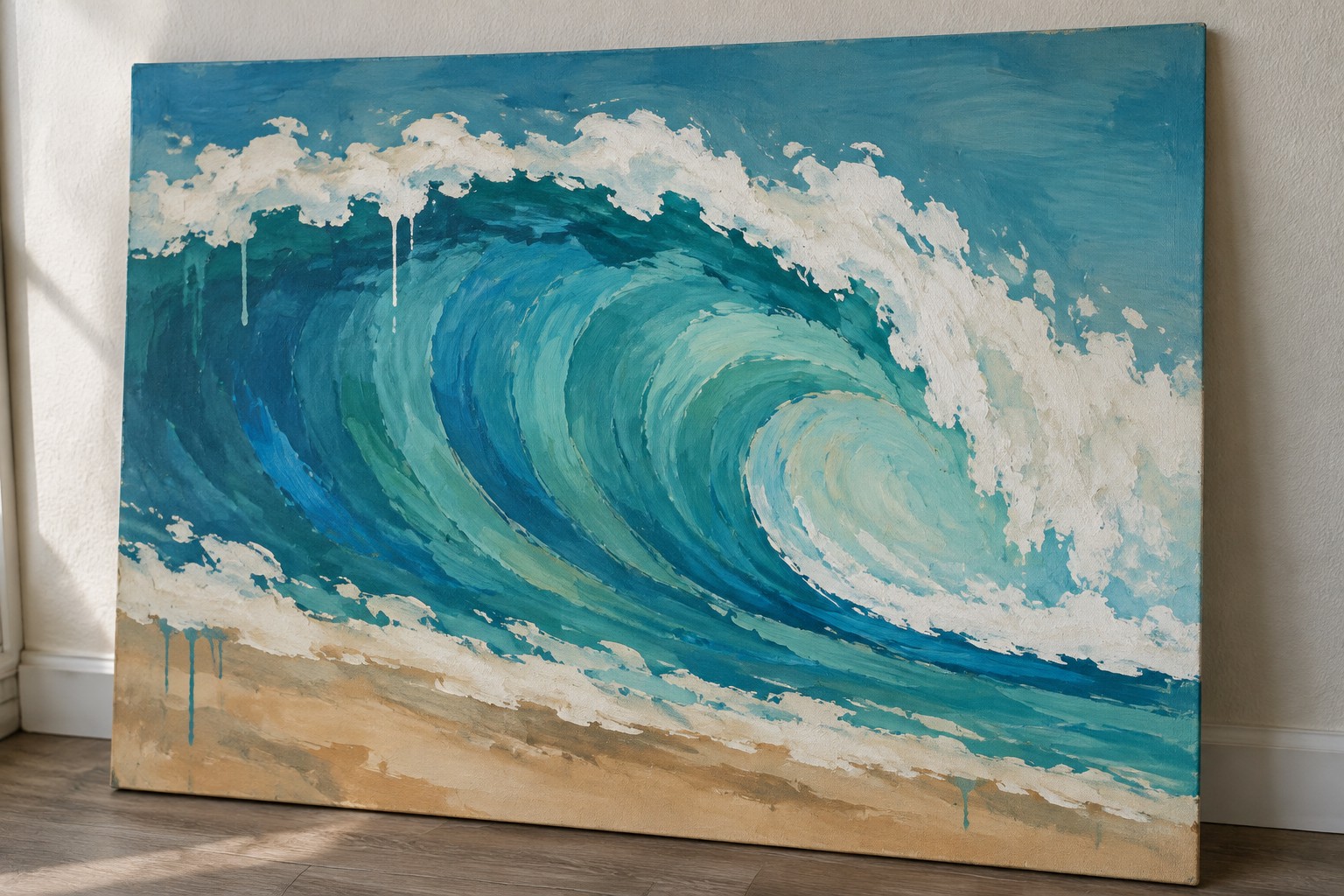
I like the way ocean themes can fit into different rooms.
Waves and coastal scenes give a mural a relaxed feel that works for many homes.
I checked out some ideas that focus on these elements.
They show different ways to paint the water and shorelines.
My favorite ones keep the details simple so they do not overwhelm the space.
Curling Wave Seascape with Sandy Base
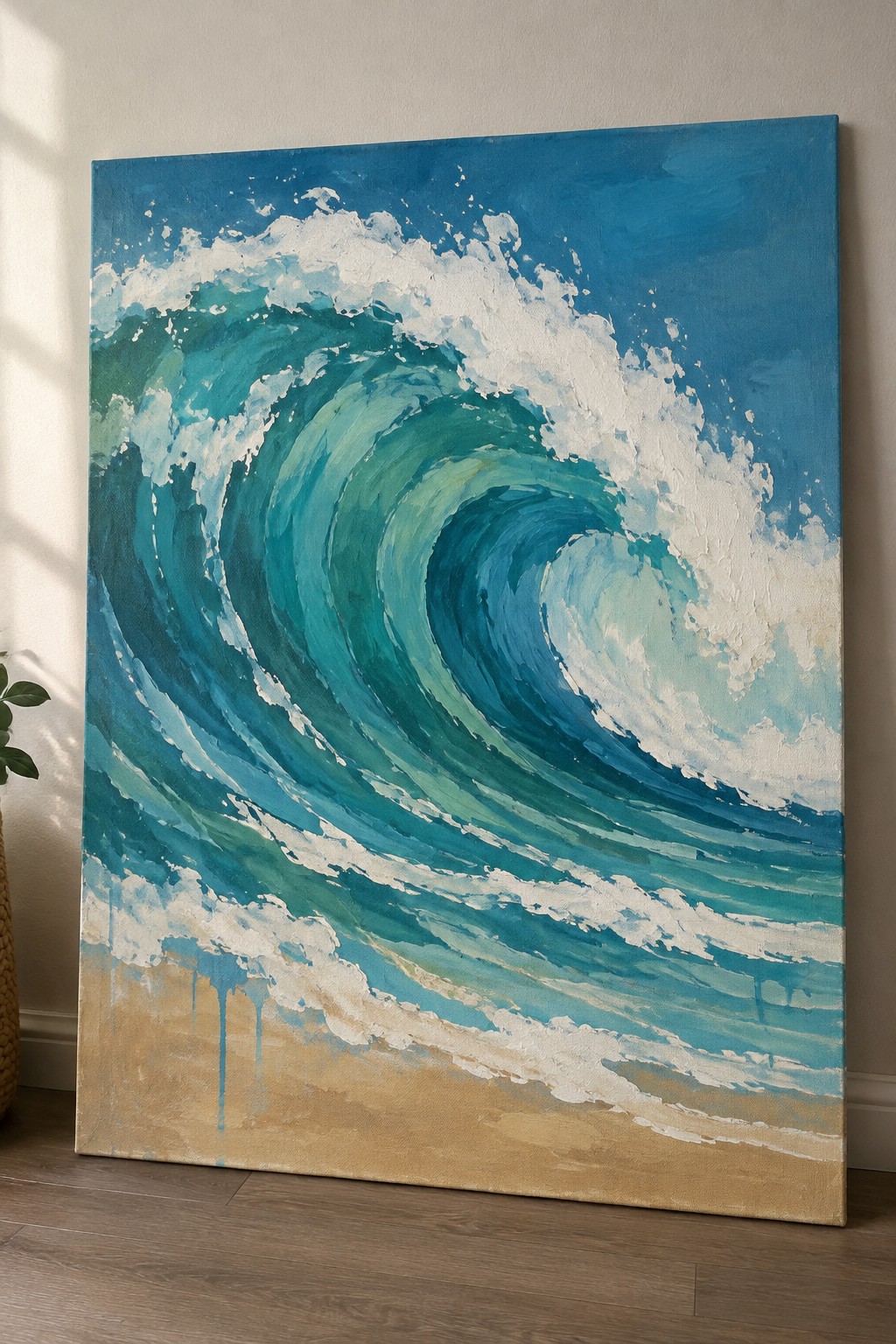
A large curling wave forms the core idea, shown as a seascape painting where the spiral motion of the water creates a strong central focus. The concept relies on layered blues and greens to build the wave’s depth while the white foam breaks up the surface and adds movement. This type of painting fits the ocean landscape category, where the composition uses the wave’s curve and color contrast to carry the piece without extra objects or figures.
What makes this idea useful is the clear structure that works at different sizes, from medium canvases to larger wall pieces. The sandy area at the bottom gives a simple way to anchor the wave and experiment with texture through drips or washes. The limited palette makes it easy to adapt by shifting the water tones or adjusting how much foam you add, and the strong curve helps the finished piece stand out in ocean-themed collections.
Tide Pools on a Rocky Coastline
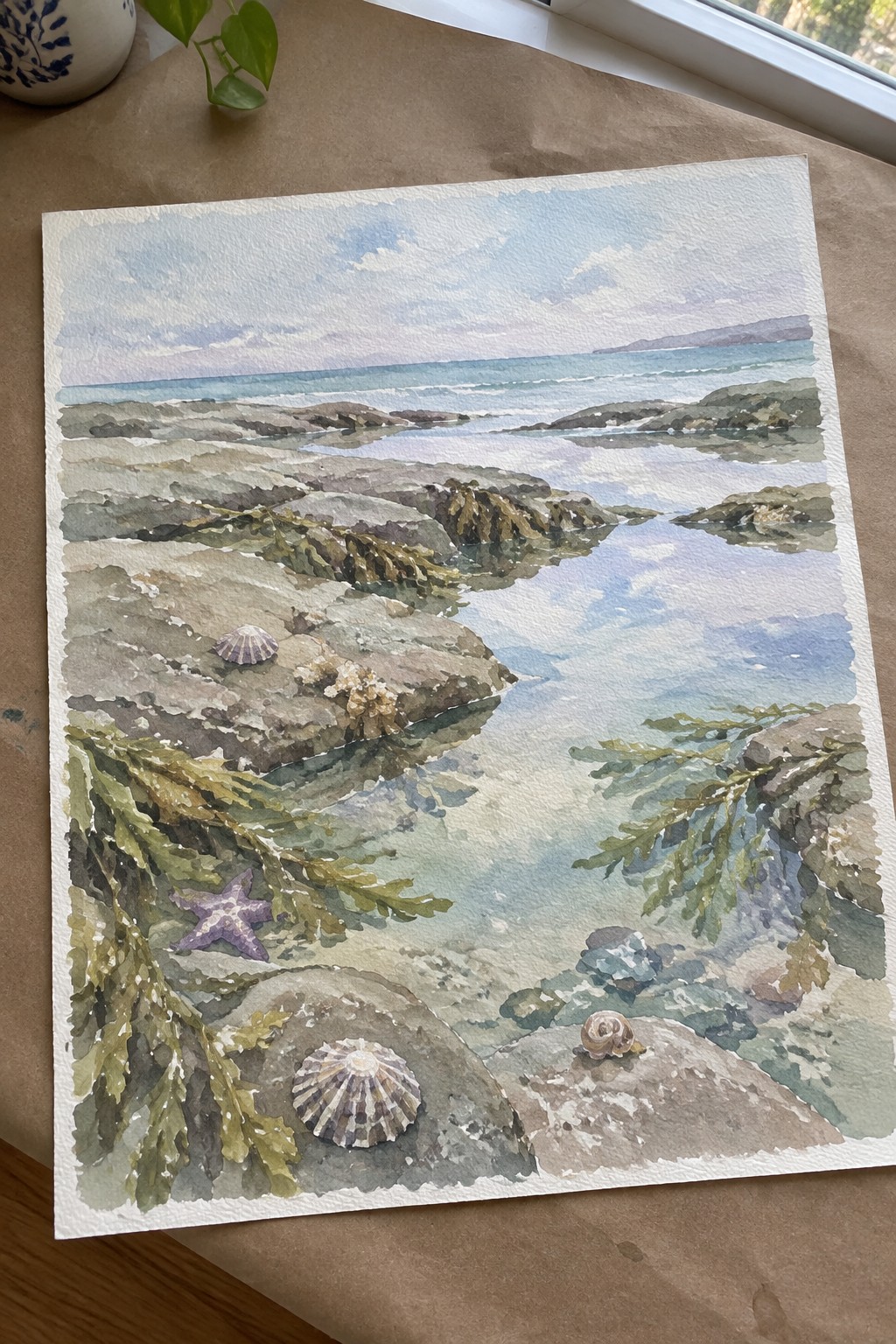
This painting idea focuses on a rocky shoreline where tide pools sit between layered stone formations, with the ocean visible beyond. The composition places detailed elements like shells, seaweed, and a starfish in the foreground to anchor the scene, while softer washes suggest water and distant waves. It works as a coastal landscape that relies on overlapping rock shapes and a muted blue-gray palette to create depth.
The composition does a lot of the work here by using the rocks as natural leading lines that move the eye toward the horizon. A painting like this works especially well for wall murals because the wide format fits standard mural proportions and the color scheme stays easy to adjust with just a few extra tones. You could simplify it by removing some foreground shells or extend it by adding more distant rock clusters if you want a larger piece.
Layered Wave Bands with Seagulls

A painting idea built around horizontal rows of stylized waves in changing colors creates a simple coastal pattern without needing perspective or depth. Each band uses the same curved shape but shifts hue from teal to yellow to coral to gray-blue, while small seagulls placed at intervals give the eye places to rest. The dotted highlights along each wave add texture and keep the rows distinct.
What makes this idea useful is how the repeating wave shape can be painted quickly once you have the curve down, making it easy to adjust width or height for different canvas sizes. The color changes let you use up leftover paints or match a room without buying new supplies. For practice, this kind of subject works well because the pattern hides small mistakes in line weight while still looking intentional on a wall.
Wave Shapes Framing a Coastal House
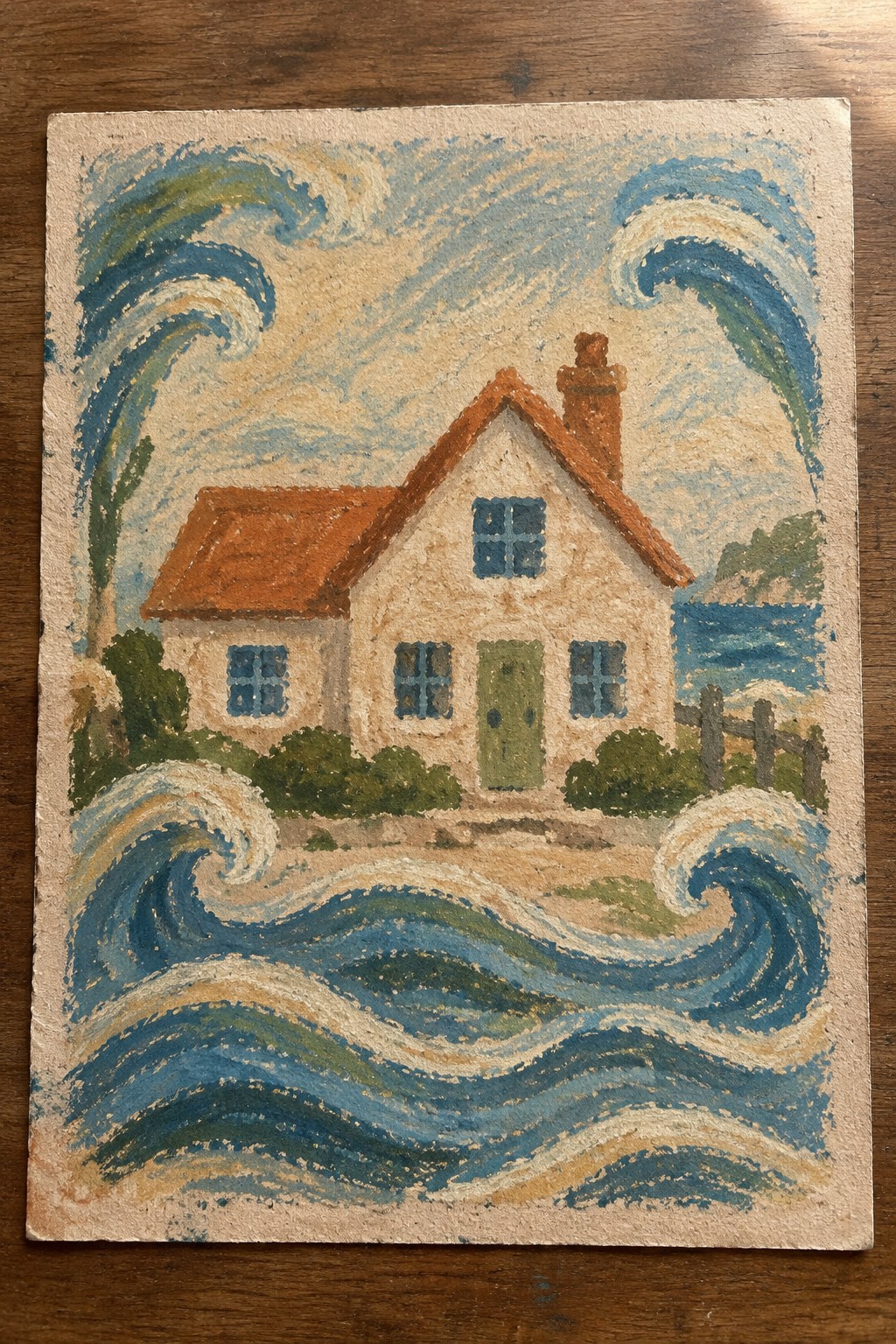
A coastal landscape idea that places a simple house between large curving waves in the foreground and matching wave forms in the sky creates a unified ocean scene. The repeated wave shapes link the upper and lower parts of the composition while the house sits in the middle as a stable rectangular anchor. This approach fits decorative ocean wall art because the strong curves and limited color range keep the focus on movement without needing many small details.
The composition does a lot of the work here by using the same wave motif in two different areas to create balance. You can adapt the idea by changing the house colors or stretching the wave curves to fit a wider wall space. For practice, starting with the big wave outlines before adding the house makes the layout easier to control. This kind of subject stands out on Pinterest because the bold curves read clearly even in a small thumbnail.
Sunset Cliff View with Rolling Waves and Boat

A coastal sunset landscape works well when the main focus stays on layered waves leading toward a distant horizon. The idea pairs a dark cliff mass on the left with a bright sky and water reflection on the right, letting the small boat serve as a simple focal point. This approach uses a warm orange and pink palette against deep blue waves to keep the composition balanced and easy to read from a distance.
The color palette makes this easy to adapt because the strong contrast between sky and water holds up even if you simplify the wave lines. You could crop the cliff or move the boat farther out to fit different wall widths. For wall art, this kind of scene stands out on Pinterest because the sunset tones draw attention without needing extra detail.
Curling Wave with Shell Cluster
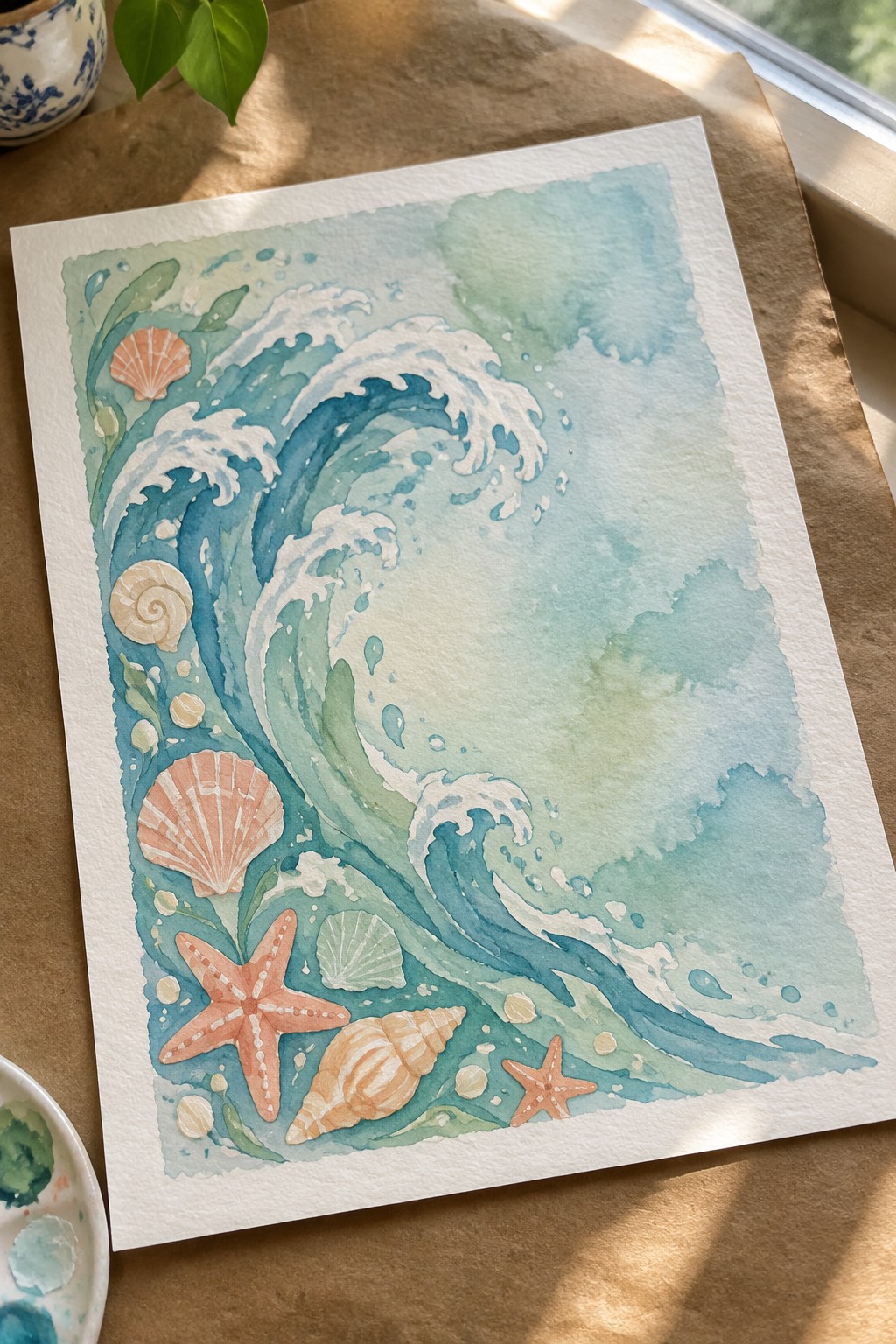
A curling wave painted in layered blues and teals with white foam crests forms the central focus of this coastal idea. Seashells and starfish cluster along the lower left to create a natural border that balances the open space on the right. This approach combines wave movement with small detailed elements for a decorative ocean scene that stays balanced without feeling crowded.
The composition does a lot of the work here by leaving breathing room around the wave while grounding the bottom with recognizable coastal objects. You could simplify the shell group or shift the color palette toward deeper blues for a bolder mural version. For wall art this idea works well because the wave shape scales easily while the shells stay as a quick accent that adds interest without extra effort.
Four-Part Coastal Panels With Waves and Shore Subjects
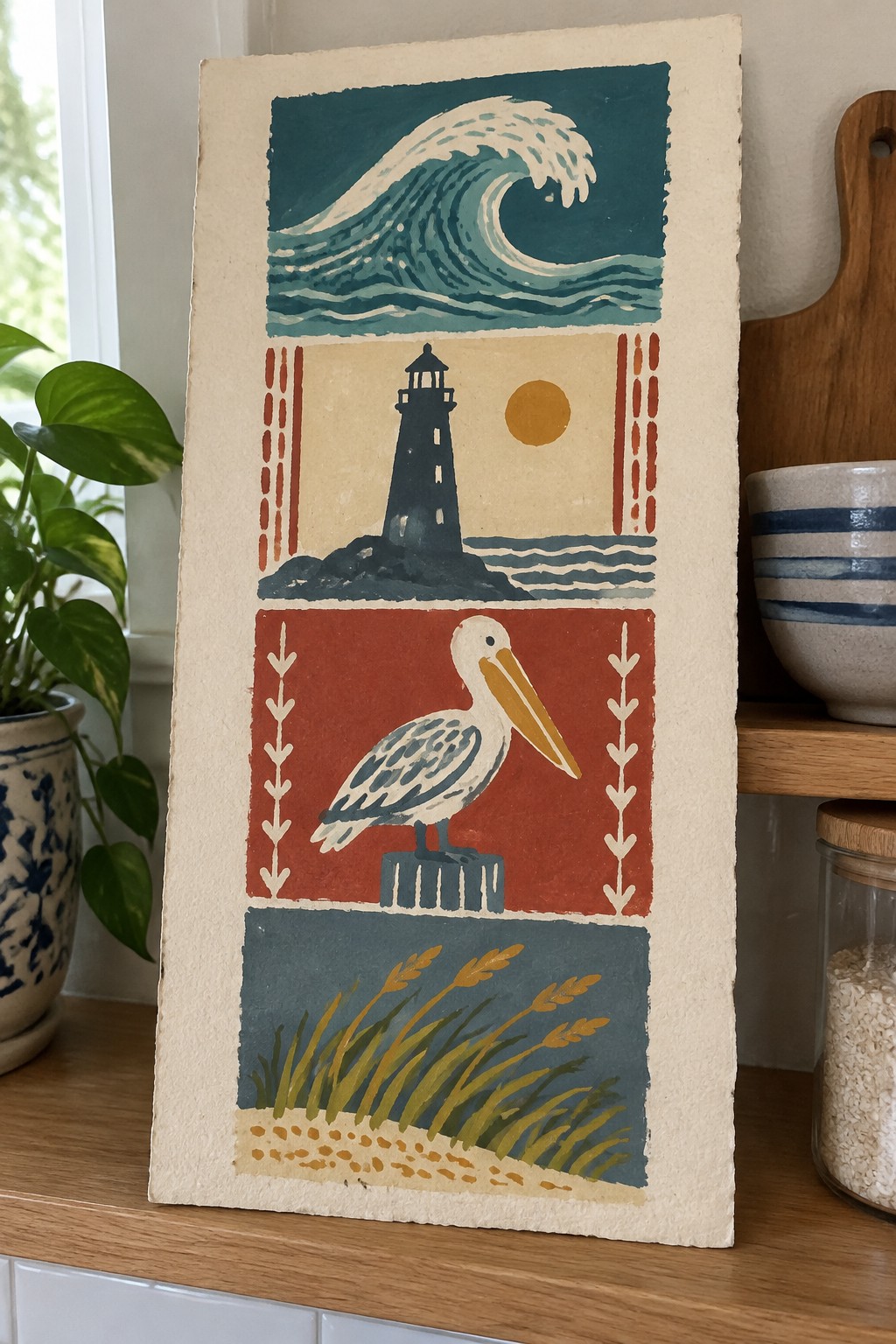
This painting idea stacks four horizontal panels into one tall vertical format, each featuring a different ocean element. The top shows a curling wave in layered teal tones, followed by a lighthouse scene with a setting sun, a pelican perched on a post against a red field, and coastal grass at the bottom. The approach uses flat color blocks, simple repeated border patterns, and clear horizontal divisions to keep the composition balanced and easy to read from a distance.
The composition does a lot of the work here by breaking the mural into manageable sections that can be painted separately or adapted to different sizes. You could swap the pelican for another bird or change the grass panel to shells or dunes while keeping the same layout and border style. For wall art, something like this works especially well because the bold shapes and limited color palette make it stand out on Pinterest without requiring fine detail work.
Layered Wave Bands Over a Sandy Shore

This painting idea uses a stack of wide, flowing wave shapes in shifting blues and teals that run horizontally across the canvas, with a strip of textured sand anchoring the bottom edge. The composition relies on simple color gradients and soft white lines to separate each wave, creating depth through overlapping layers rather than fine detail. It works as decorative landscape art that keeps the focus on the ocean surface and shoreline.
What makes this idea useful is how the repeating horizontal shapes let you build the piece in stages without worrying about perfect symmetry. The color palette moves from deep navy at the top to lighter aqua near the sand, so you can easily swap shades or limit yourself to three or four tubes of paint. For wall art, something like this adapts well to different canvas sizes and still reads clearly from a distance. The simple layout also makes it straightforward to personalize by widening the sand area or softening the wave edges.
Curling Wave with Splash Focus

A curling wave forms the core idea, built from layered blues and teals that show the water turning over as it breaks. The painting idea highlights the contrast between the smooth curve of the wave and the scattered white spray that shoots outward, keeping the rest of the scene minimal. This fits into ocean landscape work because the strong diagonal motion and limited palette let the wave shape carry the whole composition.
What makes this idea useful is how the single wave can be enlarged for a mural while keeping the same simple color mix. The splash details add interest without requiring extra objects or a busy background, so the piece works for both small practice sheets and larger wall pieces. You can soften the blues or push the teal deeper depending on the room, and the open sky area above the wave gives room to adjust scale without changing the main subject.
Stormy Cliffs with Crashing Waves

This painting idea centers on a coastal landscape where steep rock faces meet a turbulent ocean under heavy clouds. The composition relies on the contrast between dark vertical cliffs and the bright, churning white water below to pull the eye through the scene. Strong horizontal wave lines and scattered dark rocks break up the surface and keep the focus on the point where water meets land.
What makes this idea useful is the built-in focal point at the wave impact zone, which works even if you simplify some of the rock textures. The color palette stays limited to blues, grays, and ochres, so it is easy to adjust for a smaller canvas or a calmer version by softening the foam. For wall art, the vertical cliff shape fits tall spaces well and gives a strong sense of scale without requiring intricate details across the whole piece.
Curving Wave Lines Linking a Vibrant Harbor Village
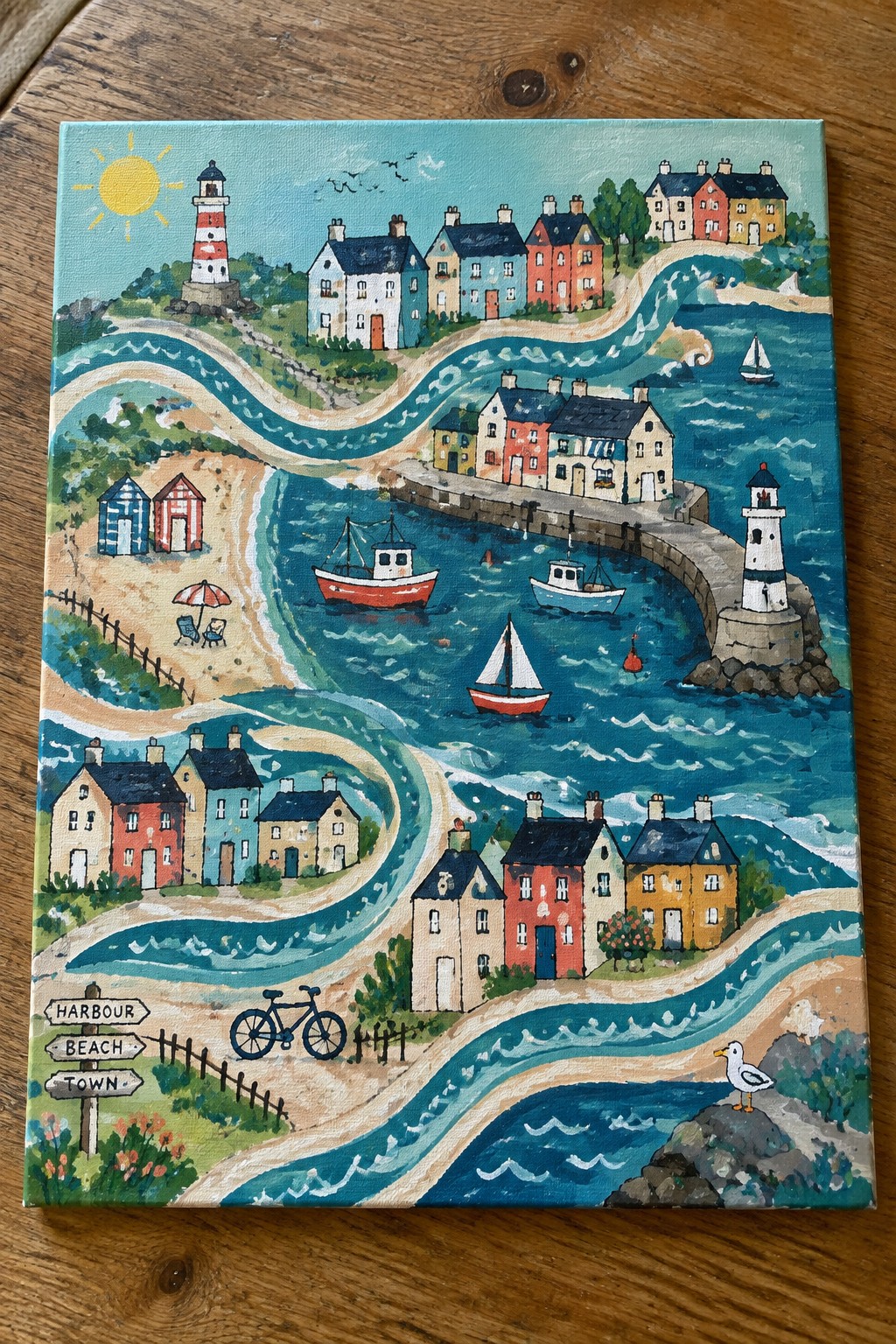
This painting idea centers on a coastal village layout where flowing wave shapes act as visual connectors between the beach, harbor, and clusters of hillside houses. The composition uses repeated curved bands of blue to create movement and separate distinct areas while keeping the whole scene unified. Bright blocks of color on the buildings and two lighthouses placed at opposite corners help balance the layout and give it clear focal points.
The composition does a lot of the work here by using the wave paths to organize multiple subjects without overcrowding the canvas. You could easily adapt it for a wall mural by stretching the wave bands wider or reducing the number of houses to fit a smaller space. The limited color palette of blues, reds, and yellows also makes it straightforward to match with existing room colors or to recreate in a different scale. For Pinterest-style ocean murals, this approach stands out because it combines several typical coastal elements into one flowing scene.
Layered Ocean Waves Behind Grassy Dunes

This landscape idea focuses on a coastal view built from stacked horizontal bands, with the ocean filling the middle distance and sandy dunes rising toward the foreground. The composition uses simple overlapping shapes and scattered grass strokes to suggest depth without needing precise perspective. It fits squarely into the ocean landscape category and works through its calm color blocks and loose directional marks rather than intricate detail.
What makes this idea useful is how the clear horizontal structure scales to different wall sizes without losing balance. The muted teal, sand, and soft green palette adapts easily if you swap in colors that match an existing room. For practice, the grass clusters can be simplified to quick vertical dashes or expanded with more layers depending on the time you have. A painting like this stands out on Pinterest because the subject reads clearly even in a small thumbnail.
Repeating Horizontal Bands of Suns and Waves
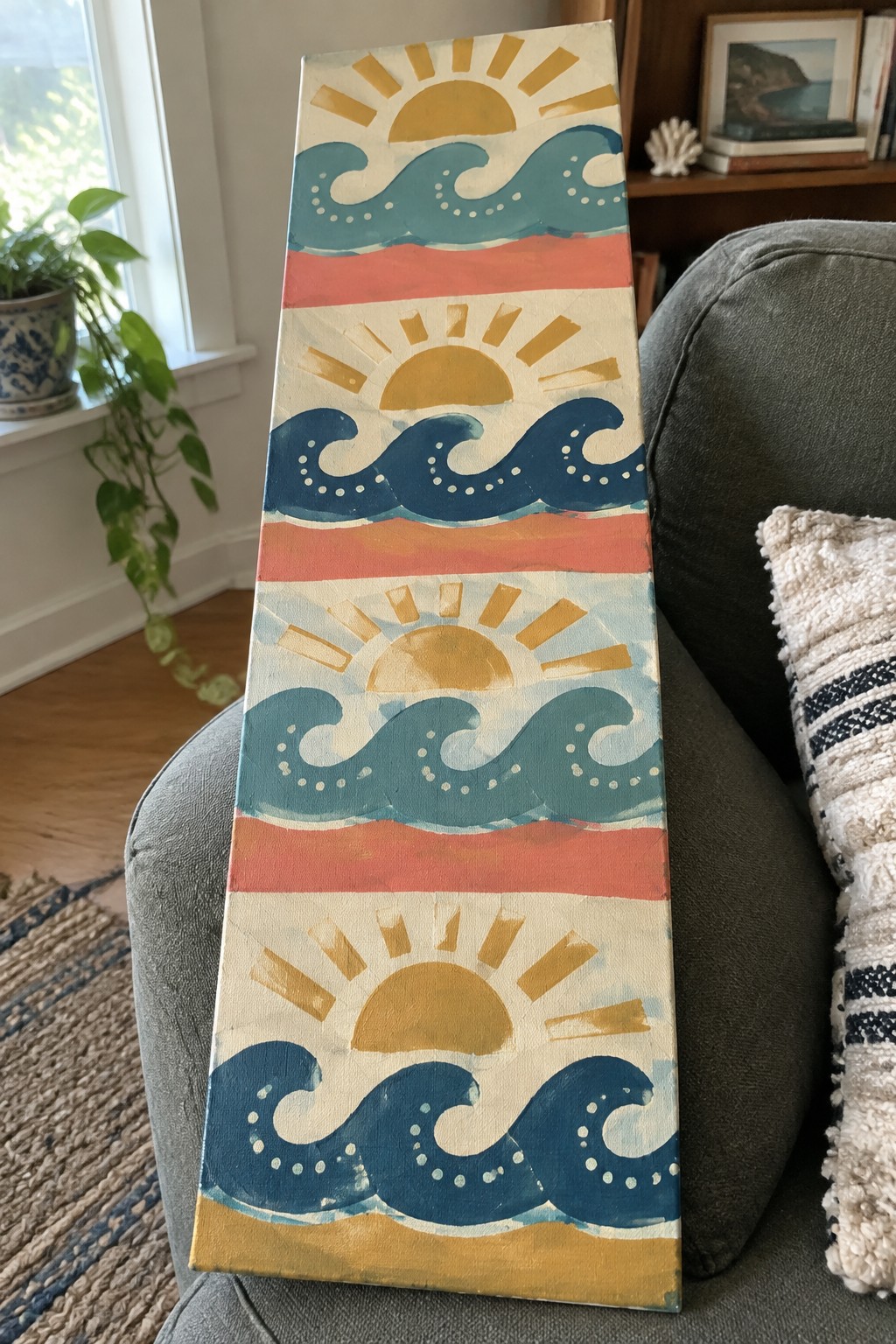
This painting idea uses a tall narrow canvas divided into stacked horizontal sections, each featuring a stylized sun with radiating rays above curling wave shapes. The design repeats the same sun-and-wave motif four times, separated by solid color bands in coral, orange, and light blue. Simple curved brushstrokes and dotted accents on the waves create visual rhythm while the vertical format suits narrow wall spaces like the area beside a window or door.
What makes this idea useful is how the repeating structure lets you scale the number of bands up or down depending on your canvas size. The solid color dividers between sections keep the composition balanced and make color changes easy to test. You could simplify it to two or three bands for a quicker project or swap the coral tones for other accent colors to match different room palettes. For wall art, the bold striped layout shows up clearly in small thumbnails, which helps it grab attention on Pinterest.
Seals Riding Surfboards Through Rolling Waves

This painting idea places multiple seals on surfboards at different points across layered ocean waves, with a simple sky and distant shore behind them. The rounded seal shapes stand out against the curved wave lines, and the soft blue-gray palette keeps the whole scene balanced without sharp contrasts. It fits into the cute animal category while still working as a coastal scene for ocean-themed wall art.
What makes this idea useful is the way the seals sit at staggered heights, which lets you easily add or remove animals without redrawing the waves. The flat color areas and minimal background details make it straightforward to enlarge for a mural or shrink for smaller prints. You could swap in different seal poses or adjust the wave size to match your space, and the limited palette stays easy to adapt with chalk pastels or acrylics.
Layered Ocean Waves with Distant Sailboats

This painting idea uses horizontal bands of waves to build a seascape that stretches from the foreground all the way to a soft horizon. Three small sailboats sit at different distances, which keeps the eye moving across the water without crowding the scene. The color shifts from cooler greens and teals in the lower waves to warmer sky tones above create a gentle sense of depth and atmosphere.
The composition does a lot of the work here because the repeating wave shapes are straightforward to layer one over the next. A painting like this works especially well for wall art since the wide horizontal format matches typical mural proportions and the muted palette stays easy to match with coastal decor. You could simplify it further by using fewer boats or adjust the sky colors to fit a different time of day while keeping the same wave structure.
Layered Kelp Over Stylized Waves

This painting idea uses a tall cluster of kelp with rounded pods as the main foreground element, placed so the leaves cross in front of multiple curling waves. The composition builds depth by letting the plant partially cover the water while the waves continue behind it, keeping both the organic shapes and the fluid lines visible. It belongs to the category of coastal decorative art that combines marine plant life with repeating wave forms.
What makes this idea useful is the clear foreground and background split, which lets you finish the waves first then add the kelp without tricky blending. The repeating wave shapes can be simplified or made more detailed depending on the wall size, and the green and blue palette stays consistent if you want to shift the sand tone or change the wave height. For practice, the subject gives direct work on both leafy edges and curved water lines in the same piece.
Coastal Motif Grid in Square Tiles

A grid of small square panels works well for mixing separate coastal elements such as waves, shells, boats, and suns into one finished piece. This type of decorative art keeps each motif self-contained within its own border, so the eye moves easily across the arrangement without any single square dominating. The repeated square shape and shared color accents create a pattern that feels balanced even when the subjects differ.
What makes this idea useful is that you can paint the squares one at a time and still display them together once several are done. The composition does a lot of the work here because the uniform borders and limited palette tie everything together without extra planning. For wall art, something like this works especially well if you want to try different subjects while keeping a single cohesive look. You could also shrink the grid to nine or four squares if a smaller version fits your space better.
Boardwalk Path Over Coastal Dunes
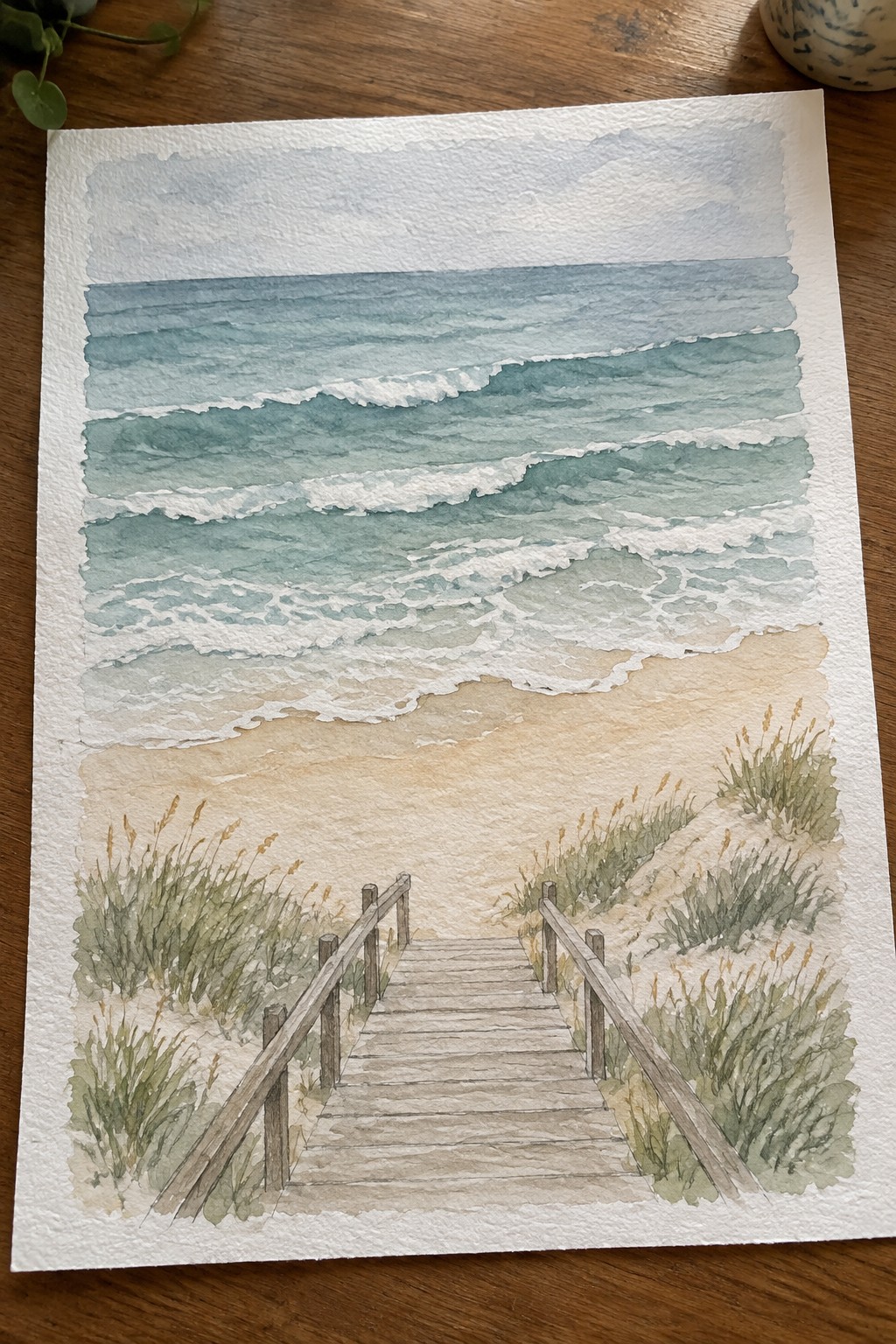
A boardwalk receding toward the water creates a clear leading line that guides the eye through a coastal landscape. The idea relies on repeating horizontal wave layers in muted blues and teals paired with sandy foreground tones to build depth without overcrowding the scene. Low dunes with scattered grass on both sides frame the path and keep the focus on the ocean beyond.
What makes this idea useful is how the straight boardwalk gives the composition instant structure that beginners can copy or adjust. The limited color palette of cool ocean tones against warm sand makes it simple to scale up for a wall mural or tone down for a smaller canvas. This layout works especially well for ocean-themed decor because the perspective adds interest while the subject stays familiar and easy to personalize with different wave heights or grass density.
Frequently Asked Questions
What materials are commonly used in ocean wall murals featuring waves and coastal scenes?
These murals are often made from high-quality vinyl, fabric, or peel-and-stick paper that allows for vibrant printing of wave details and coastal elements. Vinyl options provide durability against moisture in bathrooms or kitchens, while fabric versions offer a softer texture suitable for living rooms. When selecting one from a collection of 18 designs, check the product specifications for fade resistance to ensure the ocean colors stay bright over time.
How should I prepare my wall before installing an ocean wall mural?
Start by cleaning the wall thoroughly to remove dust, grease, or old paint residue, then fill any holes or cracks with spackle and sand the surface smooth. Measure the wall accurately to match the mural dimensions from the 18 available options, and apply a primer if the wall is textured or dark-colored. This preparation helps the mural adhere properly and prevents bubbles or peeling around wave patterns.
Can ocean wall murals be customized for different room sizes or themes?
Many providers allow resizing of the 18 wave and coastal designs to fit specific wall measurements, and some offer adjustments like adding more beach elements or altering color tones. Contact the seller with your wall dimensions and preferences for a custom quote. This flexibility makes it easier to match a mural to a bedroom, office, or entryway without compromising the scenic flow of the waves.
What rooms work best for wave and coastal scene wall murals?
Living rooms and bedrooms benefit from these murals as they create a calming atmosphere with their ocean waves and shores. Bathrooms and home offices also pair well due to the refreshing coastal vibe that can make smaller spaces feel larger. Avoid direct sunlight areas unless the mural has UV protection, and consider the existing decor to ensure the design complements furniture and lighting.
How do I clean and maintain an ocean wall mural over time?
Use a soft, damp cloth with mild soap to gently wipe away dust or smudges from the surface, avoiding harsh chemicals that could damage the printed waves or coastal details. For peel-and-stick versions, check the edges periodically and press them down if needed. Regular dusting with a microfiber cloth keeps the mural looking fresh, and most designs from such collections are designed to last several years with basic care.