
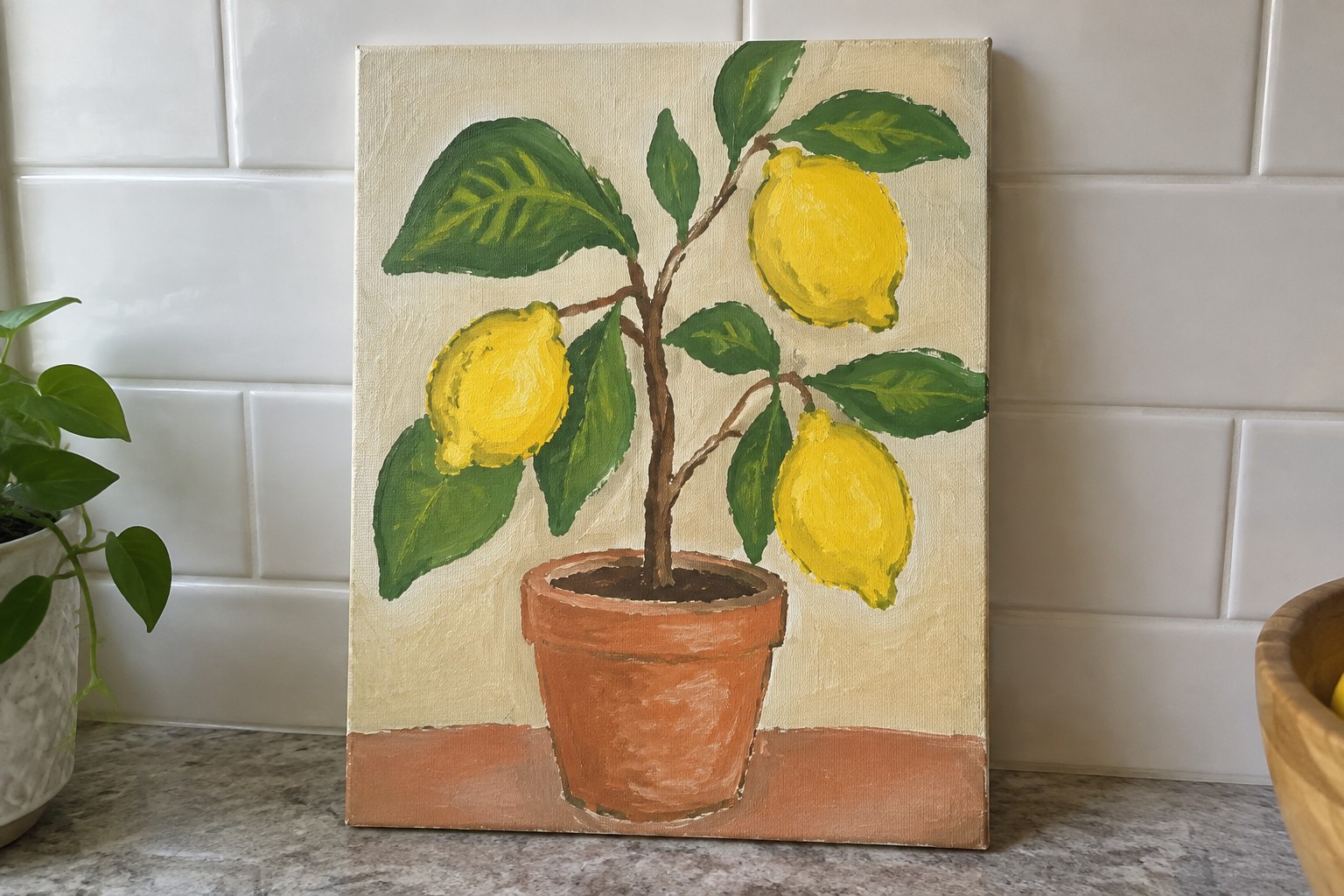
I’ve been painting fruit trees on and off for a few years now.
Lemon trees often end up in my sketches because of the way the yellow stands out against the leaves.
Orange and apple trees give me other shapes to try with the branches and fruit clusters.
I gathered twenty ideas that stay focused on these three kinds.
Some are quick and loose while others take a bit more time with details.
Potted Lemon Tree Still Life
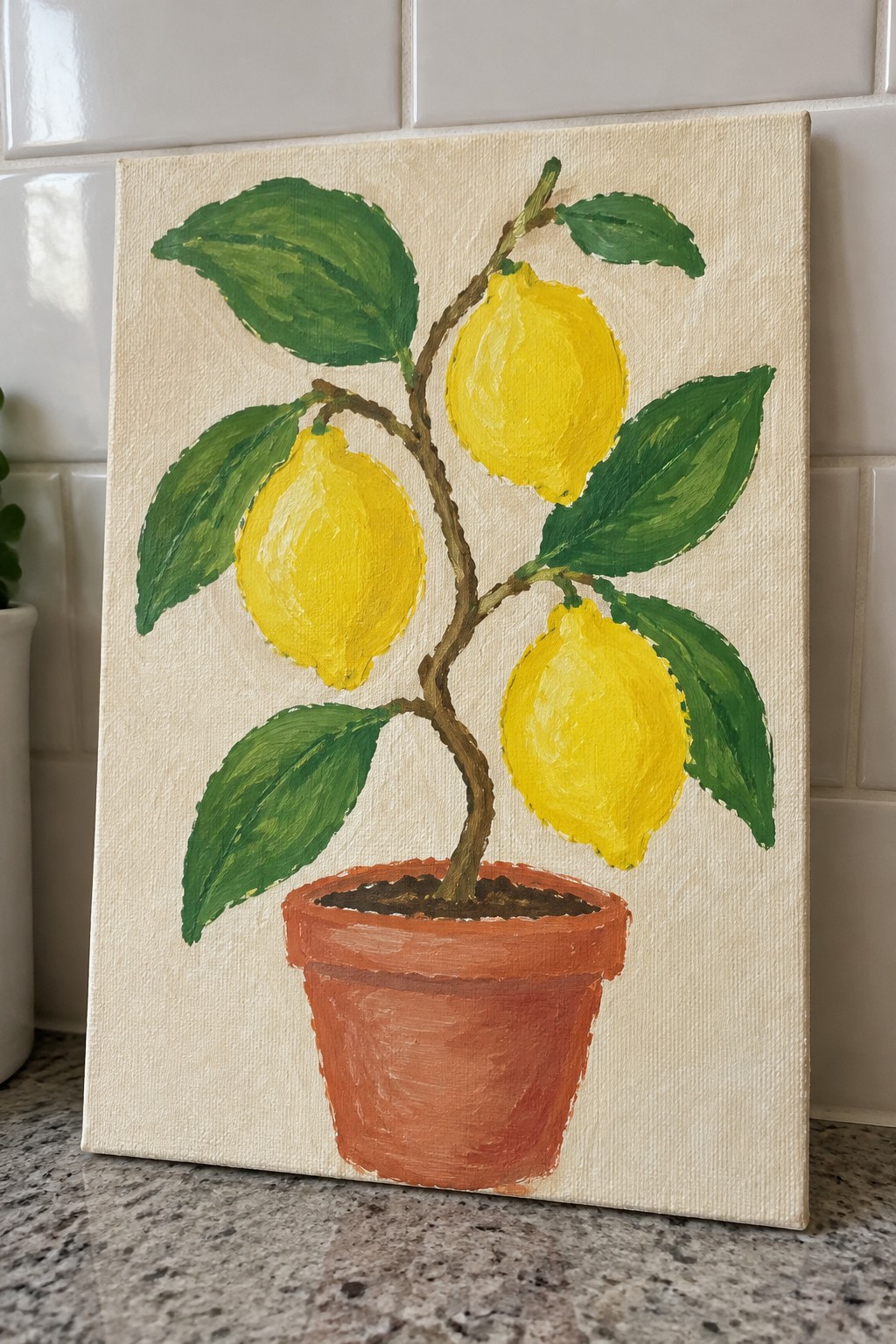
A potted lemon tree gives you a compact still life that combines fruit, leaves, and a simple container in one frame. The idea centers on a single trunk rising from the pot with branches arranged to hold three or four lemons at different heights. This layout works because the plain background keeps attention on the tree while the terracotta pot anchors the bottom and the green leaves balance the bright yellow fruit.
What makes this idea useful is how the limited number of elements lets you focus on shape and color without building a full scene. The color palette stays simple with yellow, green, brown, and orange, so it is easy to adapt by swapping the pot color or changing how many lemons you include. For practice this subject helps with basic branching and leaf shapes, and the same setup could be turned into a small series using orange or apple trees. The clean vertical format also works well for wall pieces where you want something that reads clearly from a distance.
Apple Orchard Rows in Soft Spring Light
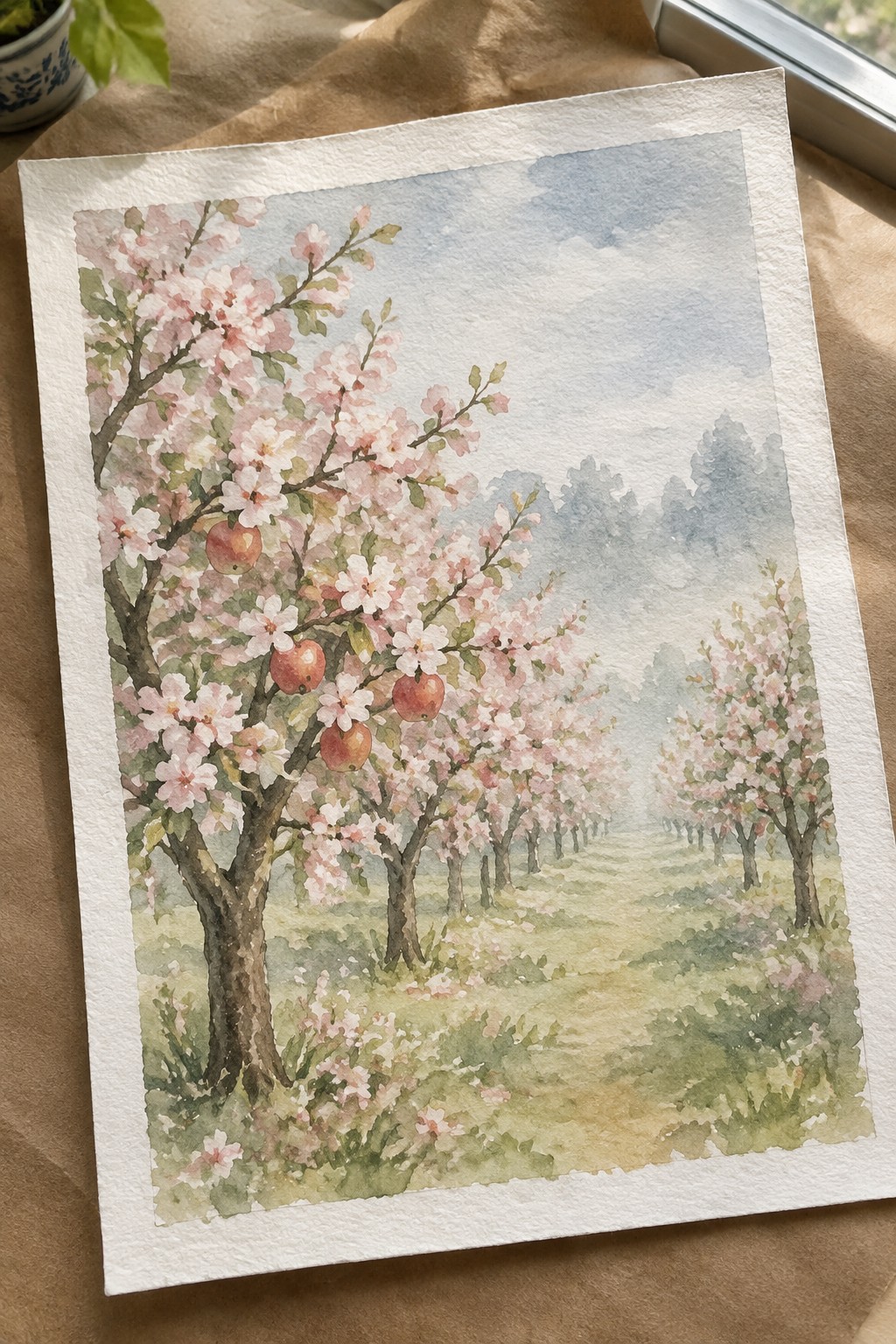
This painting idea uses an orchard layout where a detailed foreground apple tree with pink blossoms and red fruit draws the eye, while rows of lighter trees guide the view down a central path into a misty background. The approach blends landscape structure with floral detail, letting the repeating vertical tree shapes and gradual fade in color create natural depth without complex perspective work. A muted palette of soft pinks, greens, and pale blues keeps the focus on the trees while allowing easy layering from foreground to distance.
What makes this idea useful is how the path and tree rows do most of the compositional work, so you can adjust detail levels without redrawing the whole scene. You could swap the apples for lemons or oranges in the same setup or simplify the background to loose washes for a quicker version. For practice, this kind of subject helps build confidence with both foliage and fruit shapes in one piece, and the balanced layout translates well to different paper sizes for wall art.
Folk-Style Citrus Tree with Mixed Fruit Tones

A centered tree filled with round citrus fruits in orange, yellow, and teal creates a balanced decorative painting idea. The repeating fruit shapes paired with teal leaves build a clear rhythm, while the dotted border keeps the whole piece contained and easy to read from a distance. This approach sits comfortably in the decorative art category because it relies on simple shapes and a limited palette rather than fine detail.
What makes this idea useful is how the color blocks let you swap fruits quickly without redrawing the whole tree. You could shift the palette toward more lemons or add a few apples by changing just a handful of circles, and the border makes the finished piece ready to hang as-is. For practice, the layout works well because the main structure stays the same even if you simplify the leaves or reduce the number of fruits.
Apple Branch with Whole and Halved Fruit

Painting an apple branch that shows both the outside of the fruit and cut sections gives a clear view of the form and interior at once. This still life idea uses the diagonal branch to link the whole red apple with the two pale halves, while the green leaves balance the composition and keep the eye moving across the canvas. The simple background and limited palette of reds, greens, and warm off-whites make the fruit the clear focus without extra elements.
What makes this idea useful is the built-in contrast between the whole apple and the cut pieces, which adds interest without extra details. You can adapt the layout by moving the halves closer together or using a smaller branch for a tighter crop on a vertical canvas. The plain background also makes it simple to match with different room colors or turn into a quick fall-themed piece. For practice, this kind of subject helps with basic color mixing on the red skin and the lighter cut flesh in one session.
Paired Citrus Blossom and Potted Orange Tree Studies

This painting idea splits an orange tree into two separate but related views: a close-up of an open white blossom with buds, and a small potted tree that shows both flowers and ripe fruit. The approach works as a botanical still life that lets you focus on one part of the plant at a time rather than cramming everything into a single frame. The soft greens, whites, and warm orange accents keep the color palette simple while the side-by-side layout gives the composition balance without needing extra elements.
What makes this idea useful is that each painting can stand alone or be displayed as a pair, so you can start with whichever feels easier. The potted tree version fits well on smaller paper and can be adapted by changing the container or adjusting how many oranges you add. For practice, the split format lets you work on flower detail in one piece and overall tree shape in the other without getting overwhelmed by scale.
Apple Tree Painted with Heart-Shaped Leaves and a Small Bird

This painting idea replaces most of the foliage on an apple tree with heart shapes in red, green, and beige tones while keeping a handful of solid red apples visible on the branches. A small red-breasted bird perches on one limb to give the composition a single clear focal point. The centered tree with open space around the edges keeps the design balanced and easy to read from a distance.
What makes this idea useful is how the hearts reduce the need for detailed leaf work while still filling out the canopy. The color palette stays limited to reds and soft greens, so the same layout works whether you scale it down for a card or keep it larger for a wall piece. You could swap the hearts for circles or stars if you want a different theme without changing the overall structure. The bird adds interest without requiring much extra painting time.
Lemon Tree Sunset Landscape
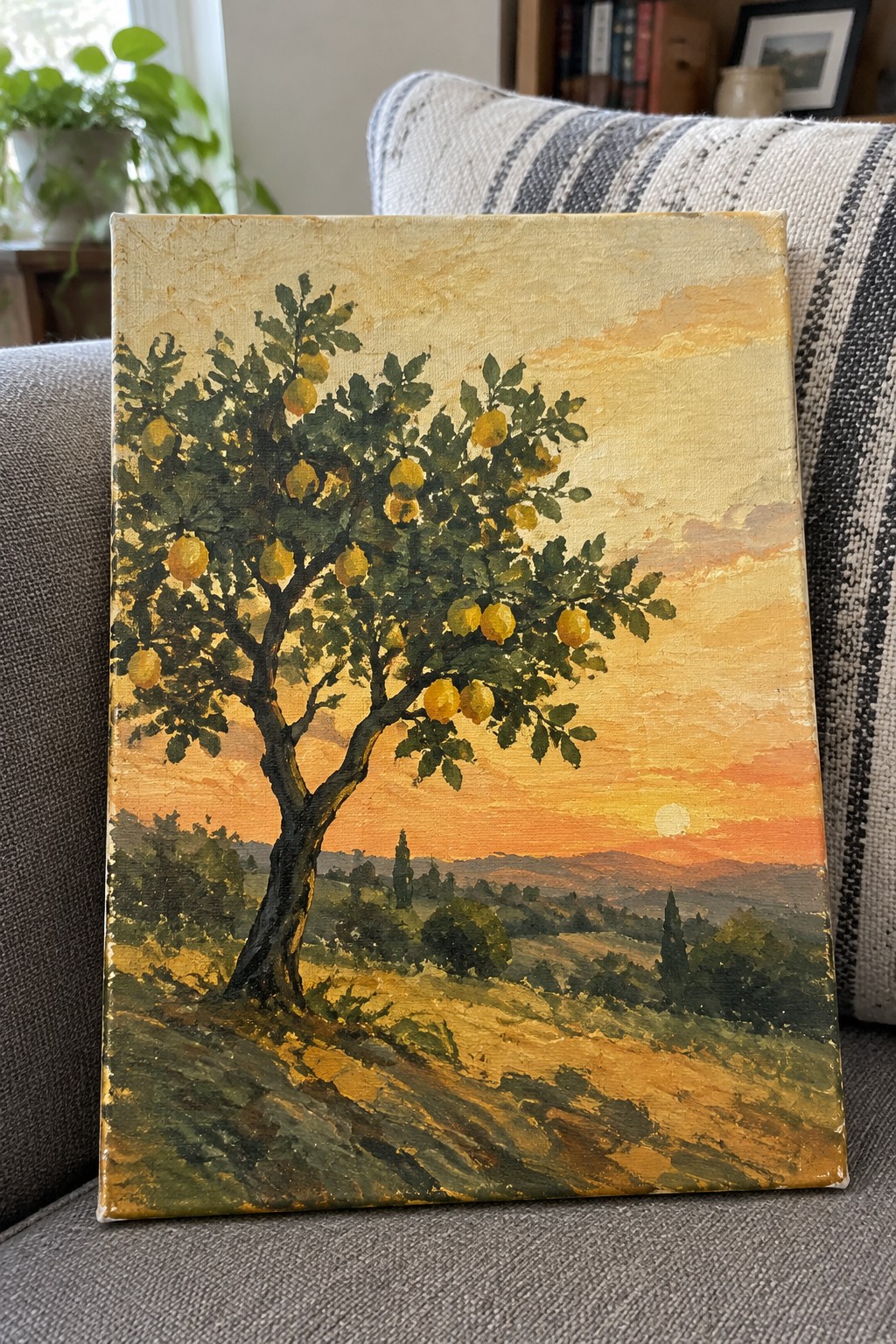
A lemon tree with clusters of yellow fruit serves as the central subject set against a layered landscape of rolling hills and a glowing sunset sky. The idea places the full tree in the foreground to anchor the scene while the distant horizon and low sun add depth and light. This blends a fruit tree study with landscape elements to create a balanced decorative piece that emphasizes natural shapes and warm color transitions.
What makes this idea useful is the strong vertical tree shape that fills a standard canvas without needing complex arrangements. The sunset palette lets you practice blending oranges and yellows across large areas while the lemons stay as simple bright accents. You could shrink the background hills for a quicker version or repeat the same tree form with different sky colors to make a small series for wall display.
Orange Tree Garden Scene with Bench

A backyard orange tree painting idea works well as a landscape composition that places the full tree as the main subject while using a wooden bench to anchor the lower half of the scene. The scattered fruit on the ground creates a natural connection between the tree and the foreground, and the soft fence and house shapes in the background keep the focus on the tree without adding clutter. This approach fits the garden or outdoor vignette category and lets the rounded fruit shapes contrast nicely against the looser foliage.
What makes this idea useful is how the bench gives the viewer an easy entry point into the scene and helps establish scale. You could swap the oranges for lemons or apples using the same layout if you want a matching series. The background stays loose enough that beginners can simplify it further or add more detail as they practice. A painting like this works especially well for wall art because it reads as a complete outdoor moment rather than a single-object study.
Framed Apple Tree Nested in a Still Life
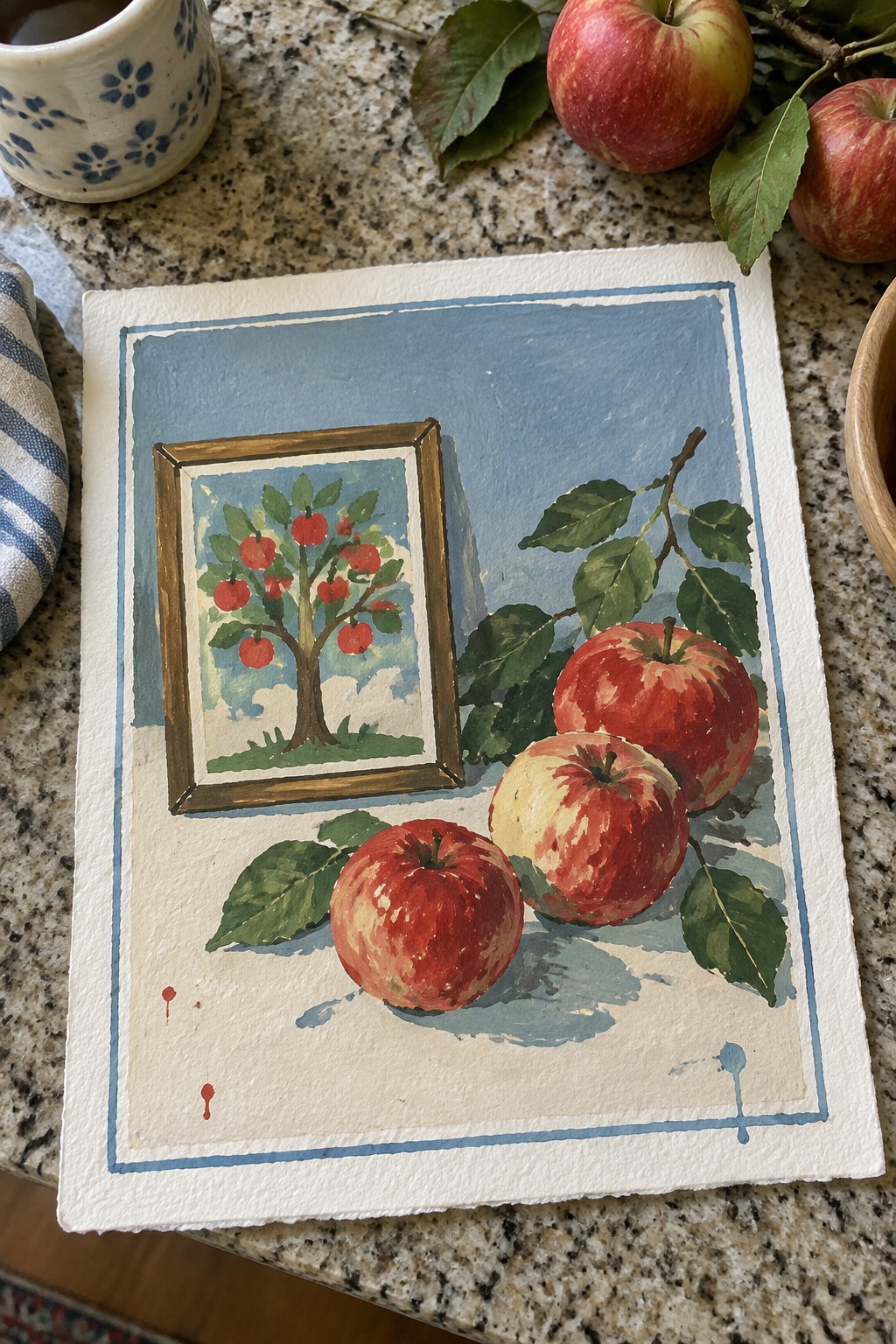
This painting idea places a small framed scene of an apple tree beside loose apples and branches to create a layered still life. The composition works by letting the framed tree act as a focal point while the surrounding fruit fills the rest of the space with simple overlapping shapes. A cool blue background keeps the reds and greens from competing and gives the whole piece a clean, balanced look.
What makes this idea useful is how the frame creates a built-in section for practicing trees without needing to fill the entire page. You can easily adapt it by changing the fruit type or swapping the background color to match other pieces in a lemon and orange series. For wall art, the mix of finished detail inside the frame and looser brushwork outside gives the painting enough variety to hold interest without becoming overly complex.
Lemon Tree with Speckled Trunk and Border Pattern
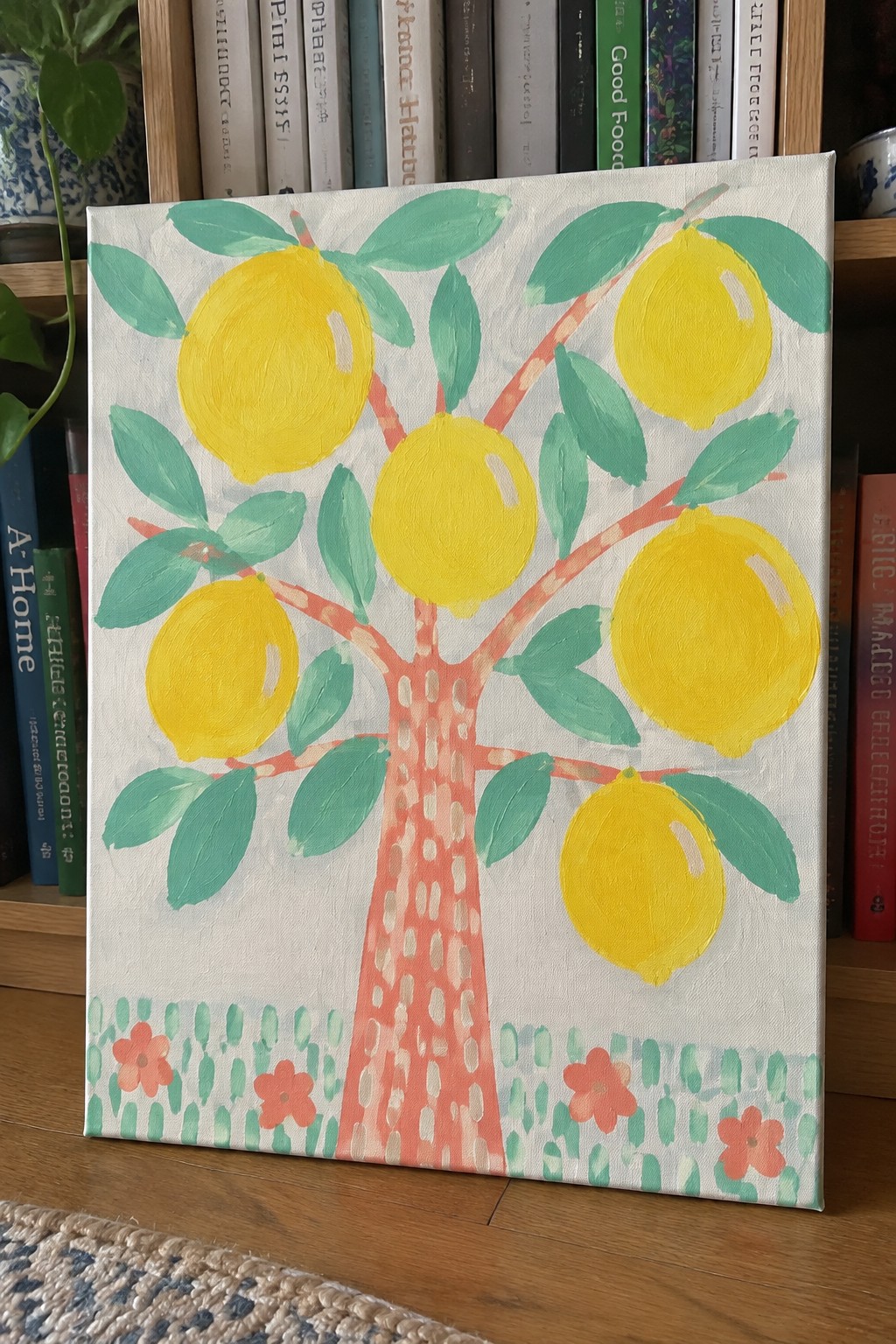
A lemon tree painting built around five bold yellow fruits keeps the focus on simple round shapes and flat green leaves. The idea works as decorative art by using a coral-red trunk dotted with white marks and a repeating pattern along the bottom edge. This layout balances the bright fruit against a plain background while the border adds structure without crowding the main subject.
The limited palette of yellow, green, and coral makes it easy to paint in one session and scale to different canvas sizes. You could replace the bottom pattern with stripes or leaves if you want a cleaner look, or repeat the same tree on smaller panels for a set. The clear fruit shapes also hold up well in thumbnails, which helps when sharing finished pieces online.
Apple Blossoms Along a Branch
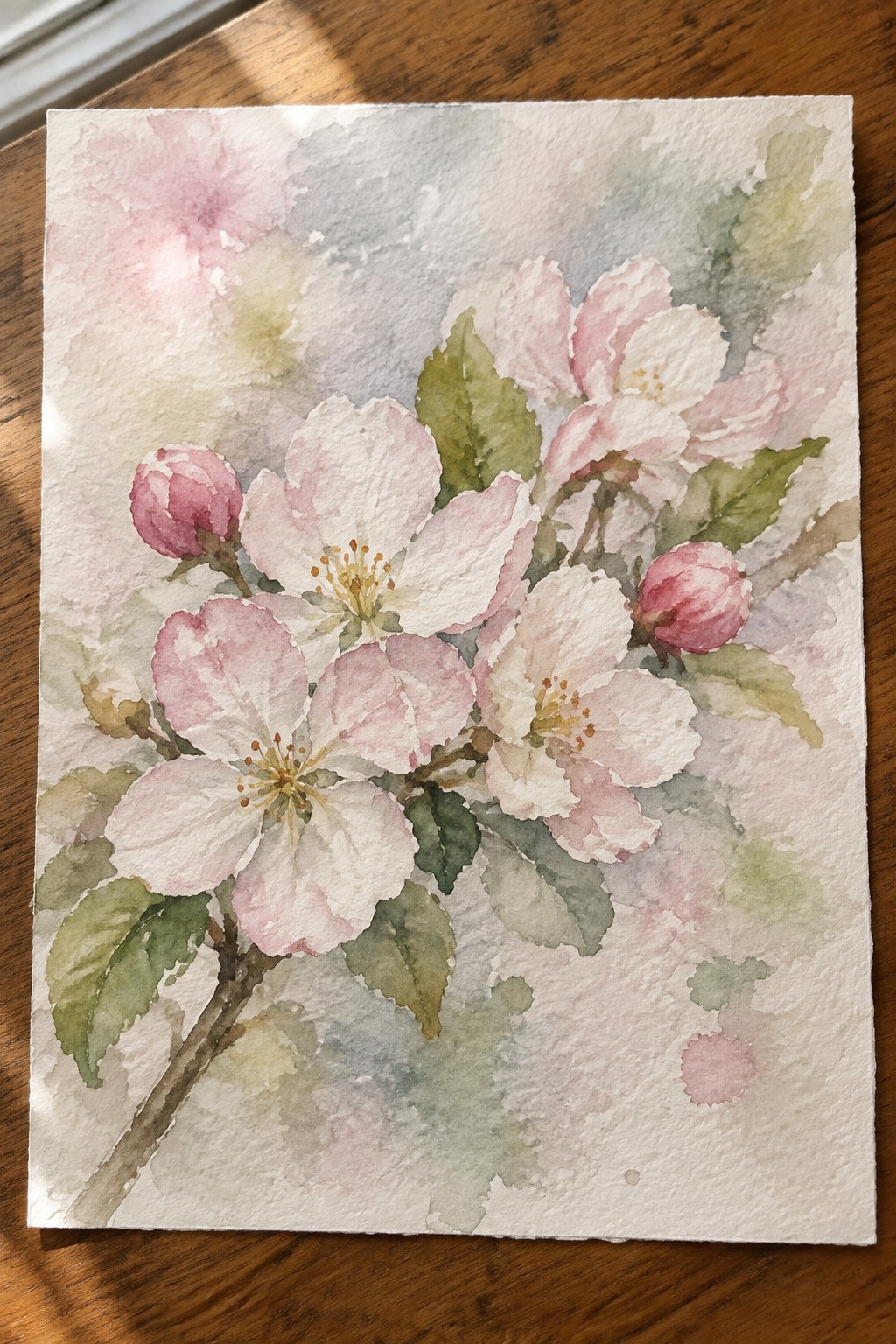
This painting idea centers on a close-up cluster of apple blossoms with both open flowers and pink buds attached to a single woody branch. It works as a floral still life that relies on overlapping petals, varied pink and white tones, and loose green leaves to create natural depth. The soft, blended background keeps attention on the flowers while allowing the composition to feel airy rather than crowded.
What makes this idea useful is the natural grouping of blooms and buds, which gives painters a ready-made focal point without needing complex arrangements. The color palette of muted pinks, whites, and greens can be lightened or deepened depending on the season or desired mood. This would be easy to adapt into a greeting card, a small canvas piece, or a practice study for handling layered petals and soft edges. For wall art, the vertical branch placement helps the subject fit nicely into portrait-style formats.
Stacked Fruit Tree Panels
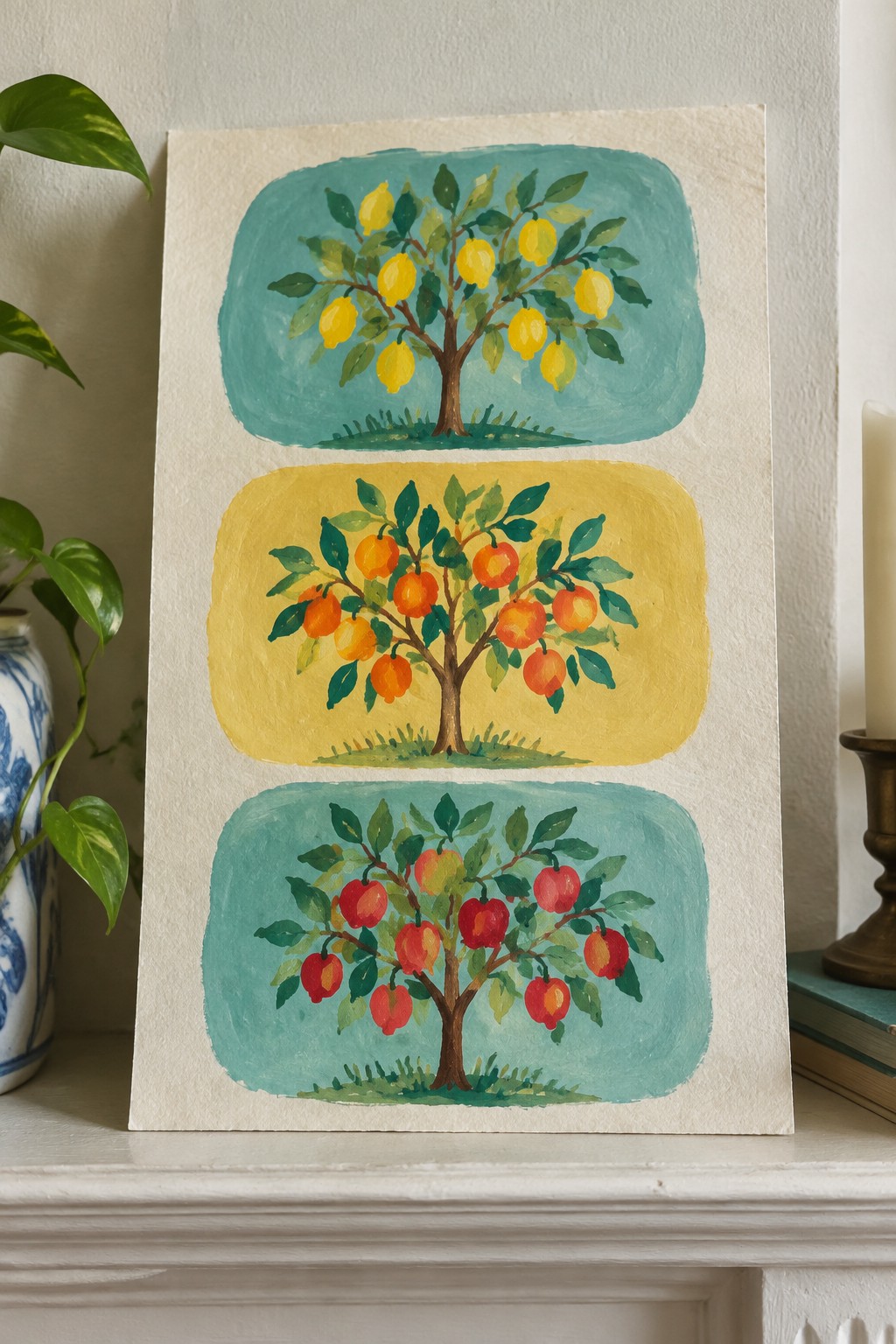
A vertical arrangement of three different fruit trees works as a single cohesive piece when each one sits inside its own rounded panel. The lemon tree uses a teal background, the orange tree sits on yellow, and the apple tree returns to teal, which creates a simple repeating rhythm across the page. This format keeps the trees as the clear focus while the colored panels add structure without extra detail or scenery.
The composition does a lot of the work here by letting the panels separate the trees and control the color story. You can easily swap in different fruits or change the panel colors to match a room. For wall art this kind of layout stands out on a mantel or shelf because the bold fruit colors read clearly from a distance. It also scales down well for smaller paper or sketchbook practice if you want to try the same idea with fewer layers.
Apple Tree in an Autumn Orchard
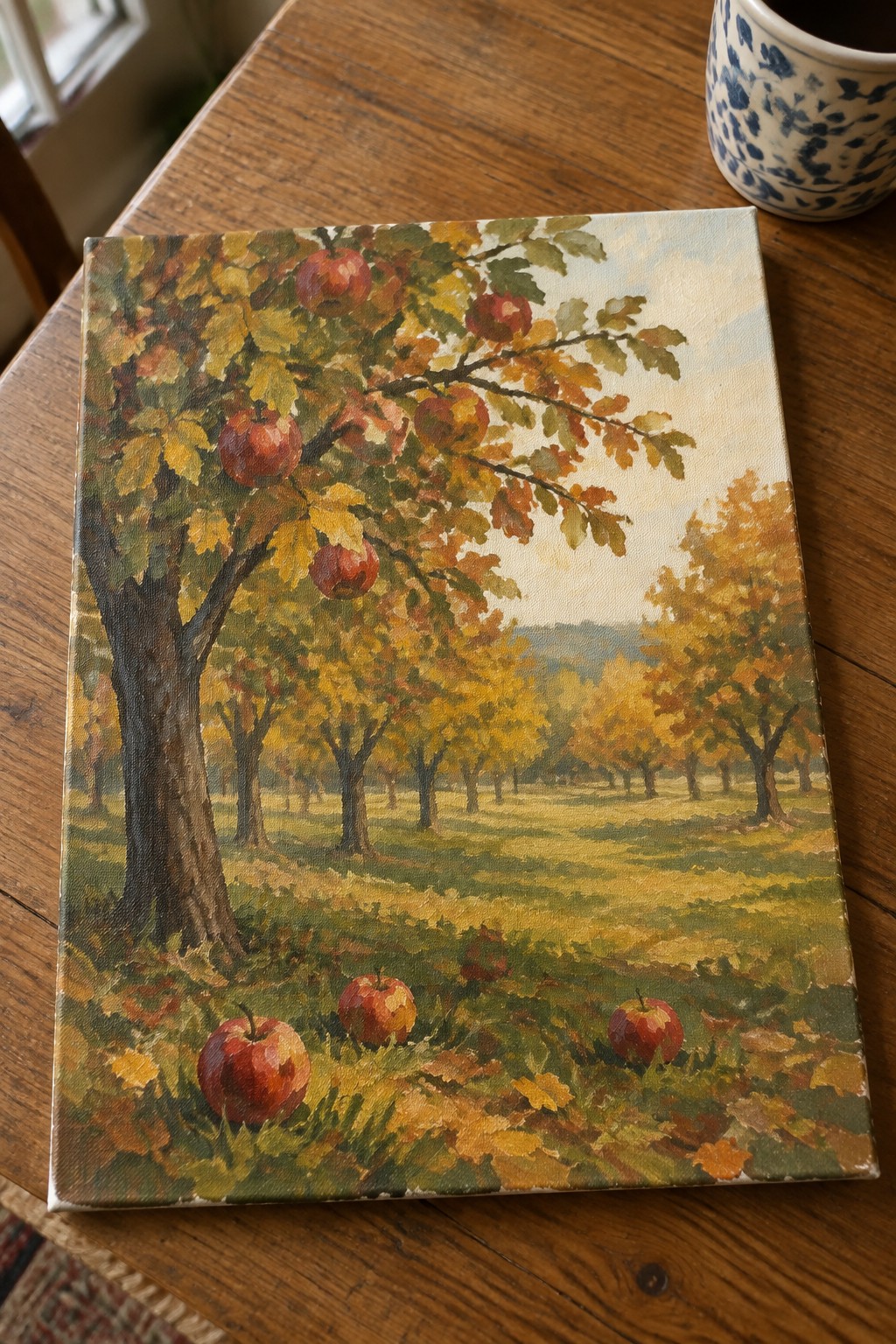
An apple tree painting idea that focuses on one large foreground tree heavy with red fruit, set against rows of smaller orchard trees in fall colors. This seasonal landscape works by using the main tree and scattered ground apples to anchor the scene while the distant trees create depth through softer shapes and muted tones. The warm yellow-orange foliage against the red apples gives the idea a clear autumn color direction without needing extra elements.
What makes this idea useful is how the single prominent tree carries most of the visual weight, making the rest of the orchard easier to suggest rather than fully render. The color palette of yellows, oranges, and reds adapts easily if you want to shift the season or change the fruit type later. For wall art or practice pieces, this layout stands out on Pinterest because the fallen apples add interest at the bottom without complicating the overall balance.
Lemon Branch with Separate Element Studies
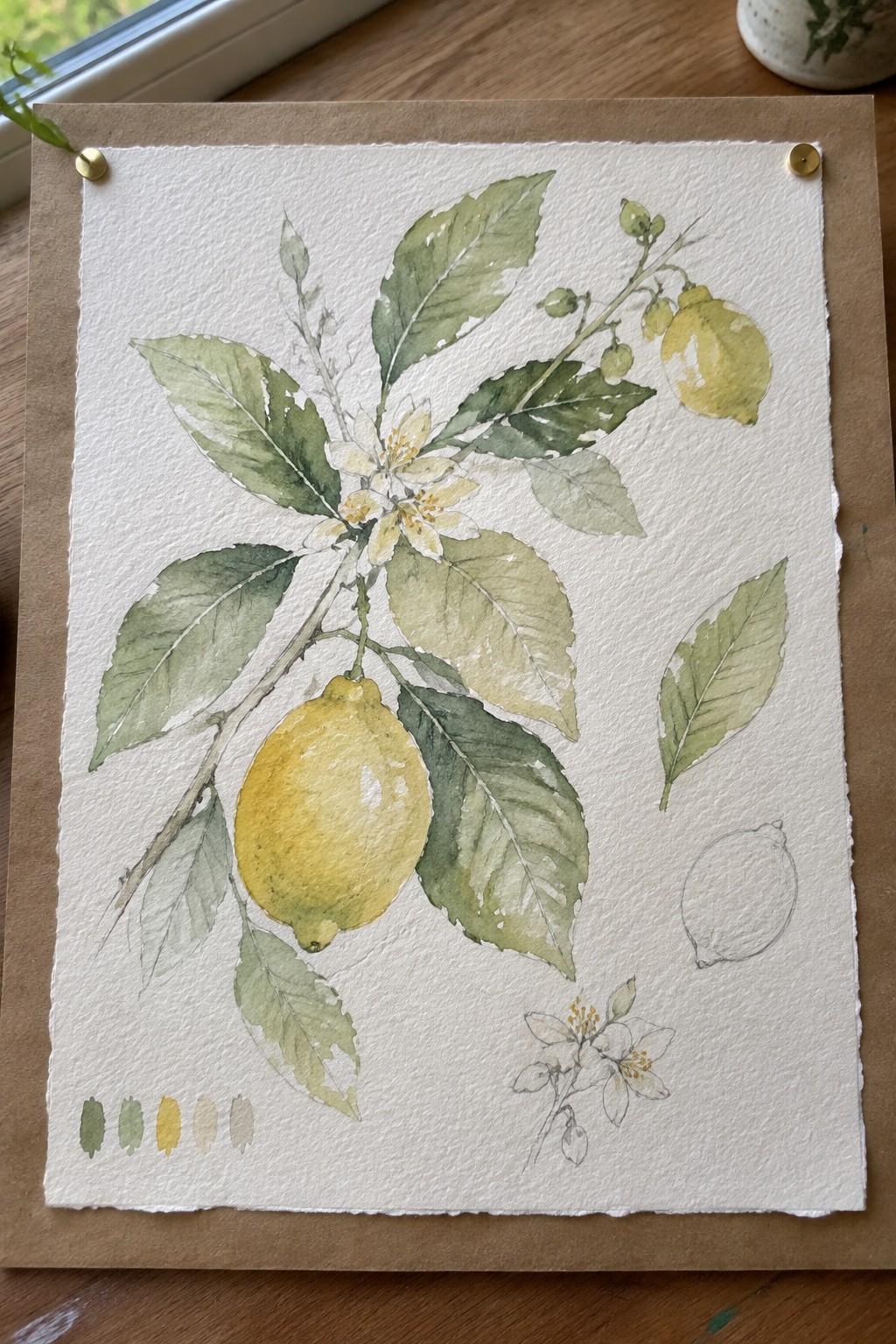
A lemon branch painting idea centers on one main stem carrying both ripe fruit and open blossoms, surrounded by smaller studies of individual leaves, flowers, and fruit shapes. This creates a botanical still life that mixes a finished composition with quick reference sketches and a color palette at the bottom. The layout keeps the eye moving between the large yellow lemons and the lighter supporting elements without crowding the page.
What makes this idea useful is how it turns one painting session into both a main piece and extra practice on leaves and blossoms. The color swatches make it easy to match the same greens and yellows if you adapt the idea to orange or apple branches later. For wall art, the combination of a complete branch plus studies gives the page more visual interest than a single subject alone, and the open space lets you simplify by dropping the extra sketches if you prefer a cleaner look.
Orange Tree Packed with Fruit in an Open Field
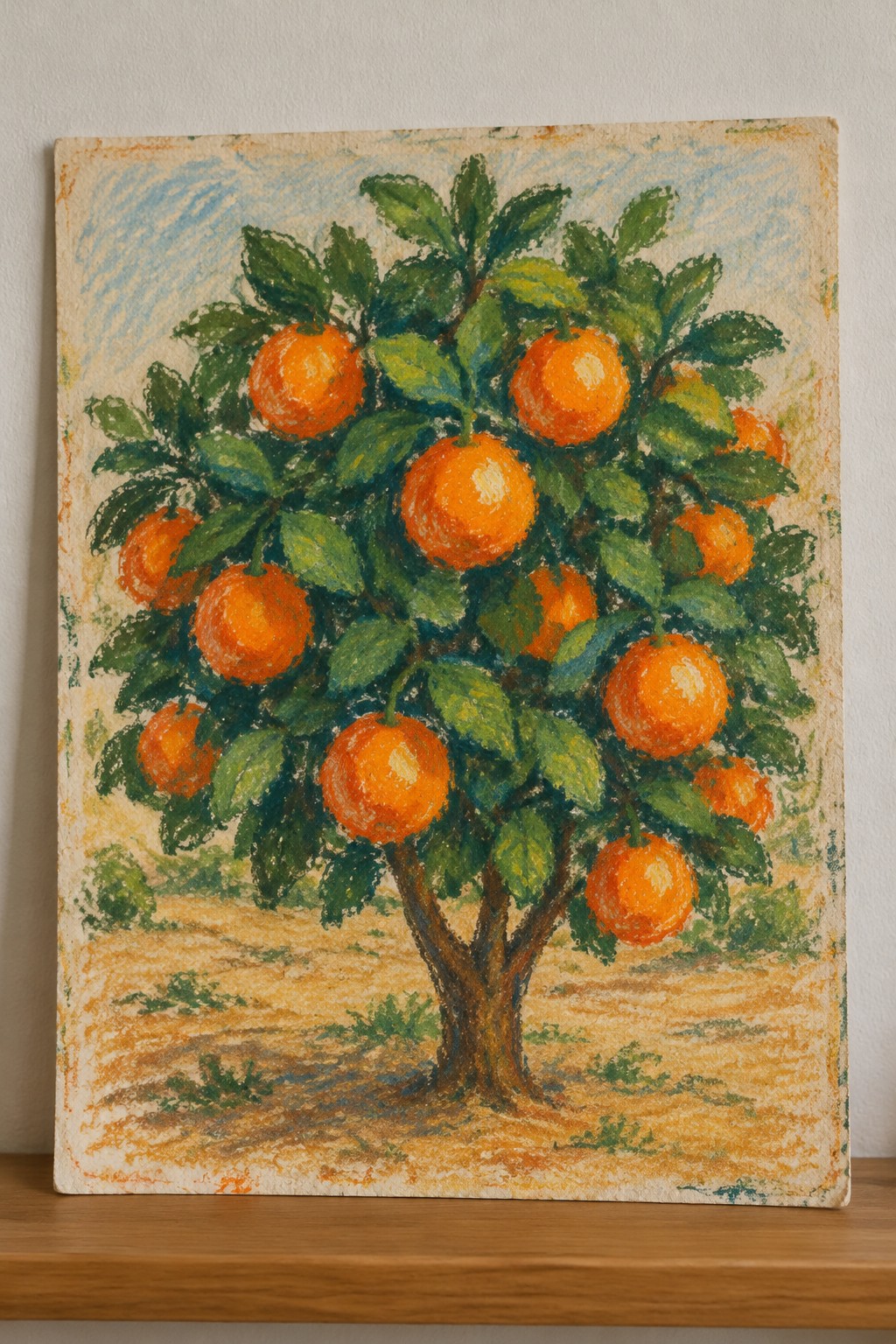
A centered orange tree heavy with ripe fruit offers a clear fruit tree painting idea that focuses on abundance and natural balance. The round oranges are scattered through the canopy to create visual rhythm against the layered green leaves, while the simple field background keeps attention on the tree itself. This fits a landscape-style fruit tree approach that feels direct and seasonal.
The even distribution of fruit across the branches makes the idea easy to adapt for different canvas sizes or to simplify for quicker sketches. You can swap the field for a garden setting or adjust the sky tones to match the season without changing the core structure. For practice, this subject helps work on building color layers to separate the oranges from the foliage while keeping the overall shape strong.
Apple Tree with Patterned Trunk
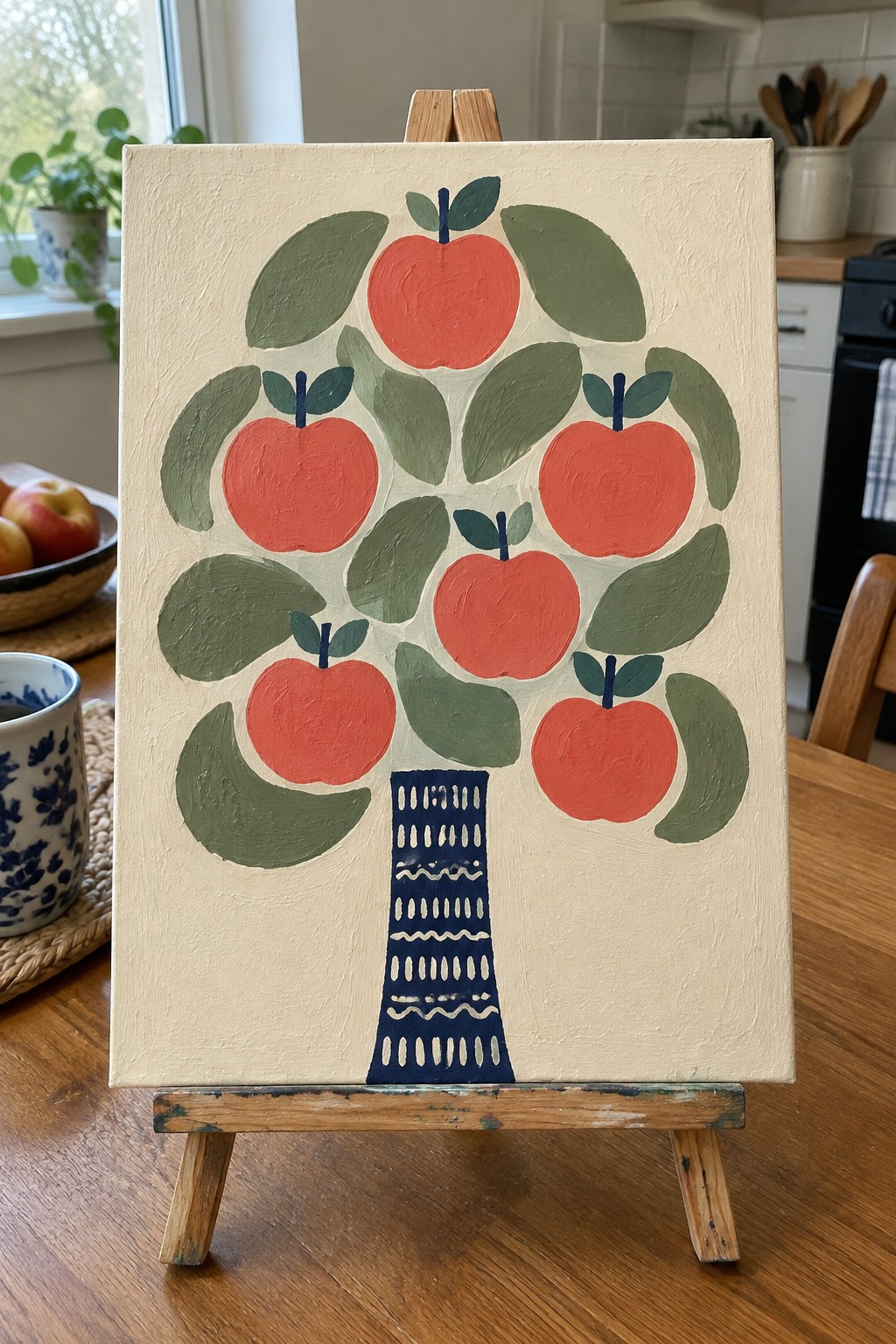
This painting idea uses a balanced arrangement of round red apples and simple green leaves around a central trunk that stands out through its repeated white line patterns on a dark blue base. The flat shapes and limited color palette make the tree form easy to read from a distance while keeping the overall look clean and graphic. It fits into the decorative art category because the focus stays on shape placement and color blocking rather than realistic detail or shading.
The composition does a lot of the work here by using symmetry and repeating leaf and fruit shapes that stay consistent even if you adjust the canvas size. You could easily adapt the same layout for an orange or lemon tree by swapping the fruit color and keeping the trunk pattern as the main accent. For practice this kind of subject works well because the bold trunk design gives you something structured to build around without requiring advanced blending skills.
Lemon and Orange Trees at Dusk Over a Village

A landscape idea that pairs lemon trees on one side with orange trees on the other during twilight gives both fruits equal weight in a single scene. The composition works by using a central path and layered hills to guide the eye from the foreground trees toward the distant village, while the sky moves from deep blue down to warm orange with a crescent moon as a simple anchor point. This approach sits in the landscape category rather than still life, letting the fruit trees serve as the main vertical elements against a broader outdoor setting.
The color shift in the sky makes the yellow and orange fruit pop with minimal extra detail needed on the leaves or branches. You could adapt the idea by changing the moon to a low sun or sliding an apple tree into the middle for a three-fruit version that still fits the series. This layout works for wall pieces because the balanced sides and receding background keep the focus on the trees without requiring a large canvas or complex foreground.
Apples on a Branch in Three Color Stages

This still life idea focuses on a short branch holding three apples that shift from bright red to greenish yellow. The vertical arrangement lets the fruit stack naturally with leaves breaking up the spaces between them, while soft shadows underneath add depth and keep the eye moving down the page. It fits squarely in the food still life category, where simple overlapping shapes and limited background detail do most of the visual work.
What makes this idea useful is how the three distinct apple colors give you built-in variety without needing extra objects or a busy setting. The composition works at a medium size and can be scaled down to two apples if you want a quicker study. For practice, the visible brush marks on the fruit surfaces make it easy to test blending and highlights in one session, and the clean vertical format shows up clearly in Pinterest searches for fruit studies.
Mixed Media Potted Lemon Tree
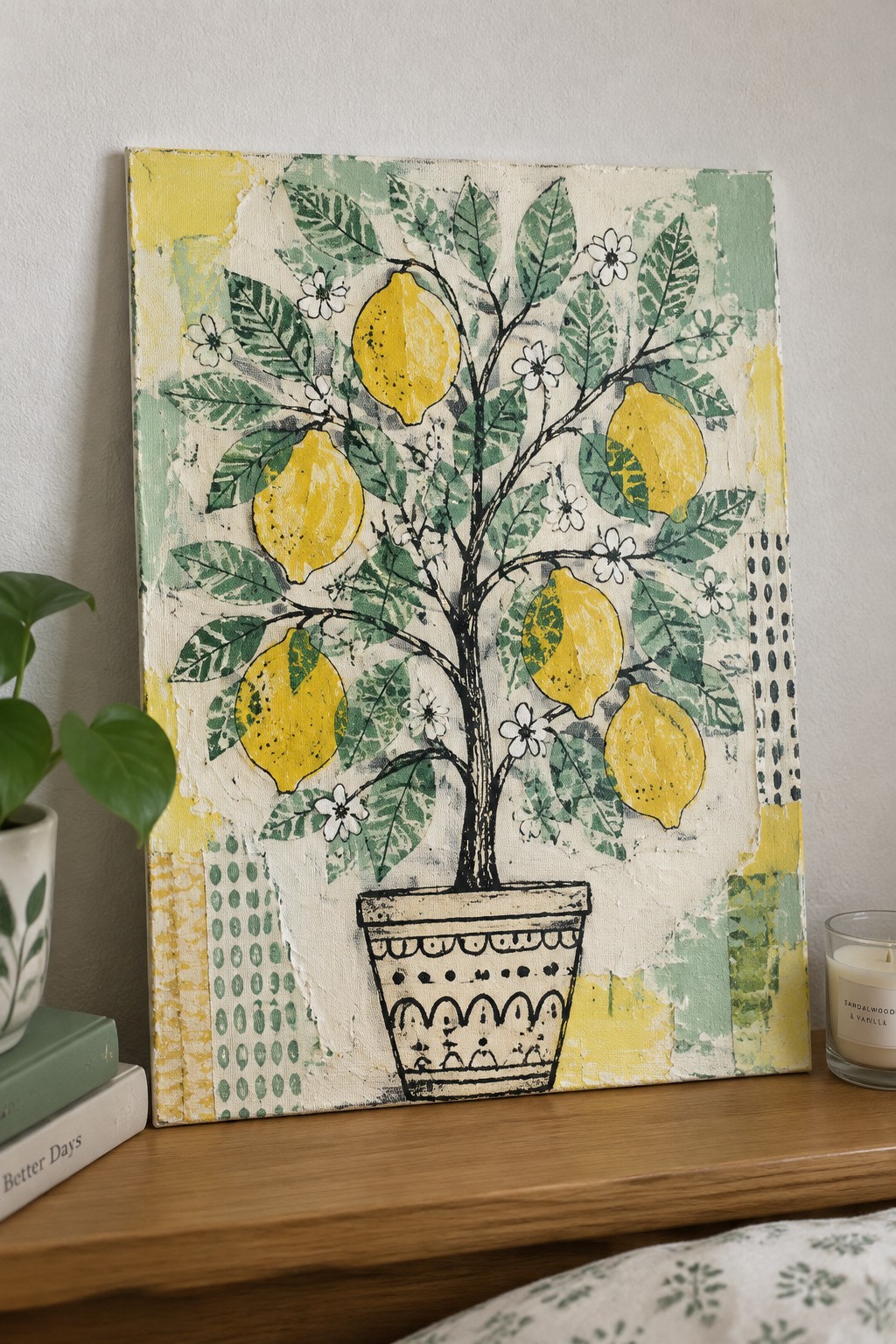
A potted lemon tree works well as a painting idea when the main trunk and branches stay bold and centered while yellow lemons are scattered at different heights. The background uses separate blocks of color and simple patterns like dots and stripes to add interest without crowding the tree. This approach sits in the decorative botanical category and keeps the focus on the fruit and pot through contrast rather than heavy detail.
The composition does a lot of the work here by placing the tree in the middle and letting the patterned sections sit on the sides. You could swap the lemons for oranges or apples and change the pot design to fit different rooms or seasons. The mix of solid color areas and light patterns makes the idea easy to adapt for different canvas sizes or to match existing wall colors.
Paired Apple and Lemon Trees with Exposed Roots
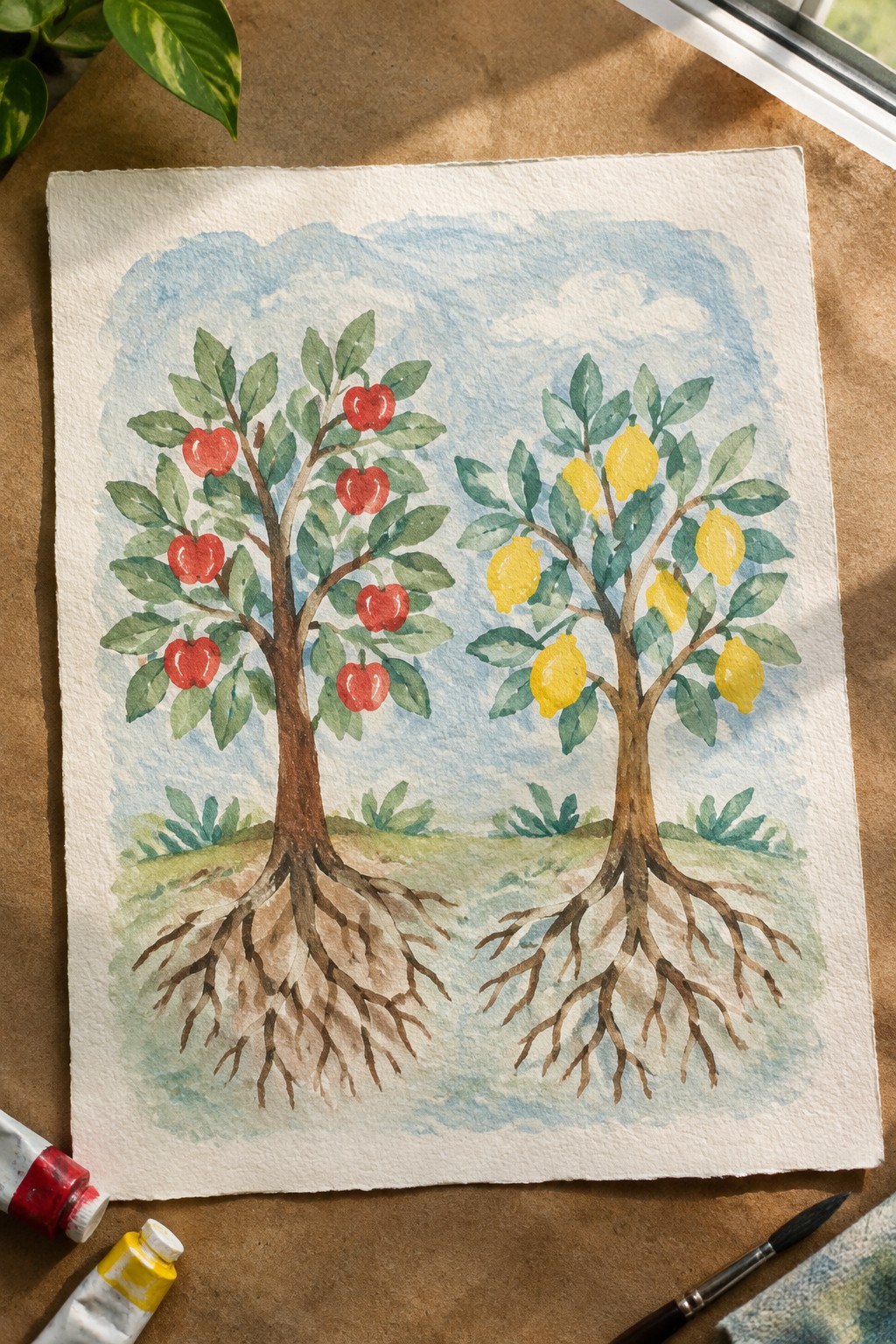
Painting an apple tree next to a lemon tree gives you a direct way to compare two common fruit trees in one frame. The visible root systems below each trunk create a natural ground line and keep the composition grounded without extra landscape elements. This type of idea works as a botanical study that still reads as a simple outdoor scene.
What makes this idea useful is how the two trees can be sketched and painted as matching halves, which helps with spacing and balance. The red and yellow fruit provide an easy color split that stands out even if you keep the foliage loose. For practice, this layout works well because the trunks and roots give you solid shapes to start with while the fruit and leaves can be added in stages or left more minimal depending on your time.
Frequently Asked Questions
What materials work best for creating detailed paintings of lemon, orange, and apple trees? Acrylic paints offer good coverage and quick drying times for layering leaves and fruits, while watercolor allows for soft blends on the sky or ground. Use round brushes in sizes 2 and 6 for fine details like stems and highlights, along with a flat brush for broad areas such as tree trunks. Include a palette for mixing shades of green, yellow, and red, plus canvas or heavy paper to handle multiple layers without warping.
How can beginners adapt the painting ideas to their skill level? Start with simpler compositions that focus on one tree type, such as a single lemon tree with basic foliage shapes. Practice basic shapes for fruits first before adding texture to leaves. Follow tutorials that break down the process into steps like sketching outlines, blocking in colors, and adding shadows last. This approach builds confidence while still capturing the essence of the 20 ideas without overwhelming details.
What color mixing tips help achieve realistic tones for the fruits and leaves? Mix cadmium yellow with a touch of white for bright lemon highlights and add a hint of green for unripe areas. For oranges use cadmium orange blended with burnt sienna for shadows, and layer in yellow for highlights. Apple reds come from mixing alizarin crimson with a bit of white for lighter spots. Leaves benefit from mixing phthalo green with yellow ochre for variety in tones, creating natural depth across the canopy.
How do I add depth and dimension to scenes featuring these fruit trees? Apply lighter colors to areas facing the light source and darker shades on the opposite sides of trunks and fruits. Overlap elements like placing smaller trees in the background behind larger ones to suggest distance. Use soft gradients in the sky or grass to lead the eye through the composition. Dry brushing techniques on leaf edges can suggest texture while keeping the overall scene balanced and three dimensional.
What display options work well for finished paintings of lemon, orange, and apple trees? Frame the artwork in simple wooden frames that match the natural tones of the trees for a cohesive look in living rooms or kitchens. Consider canvas prints if you want multiple versions from the ideas to create a themed gallery wall. For outdoor spaces, laminate smaller pieces or use weather resistant materials to hang near patios where the fruit themes complement garden settings.