
I have always found trees to be a good subject when I want to practice my acrylic painting.
They have simple shapes but you can add details as you get more comfortable.
Over time I have tried out different ways to paint them and I thought it would be helpful to share some of those ideas here.
These are all easy enough for someone just starting out.
You can use them to experiment with colors and brush strokes without needing a lot of supplies.
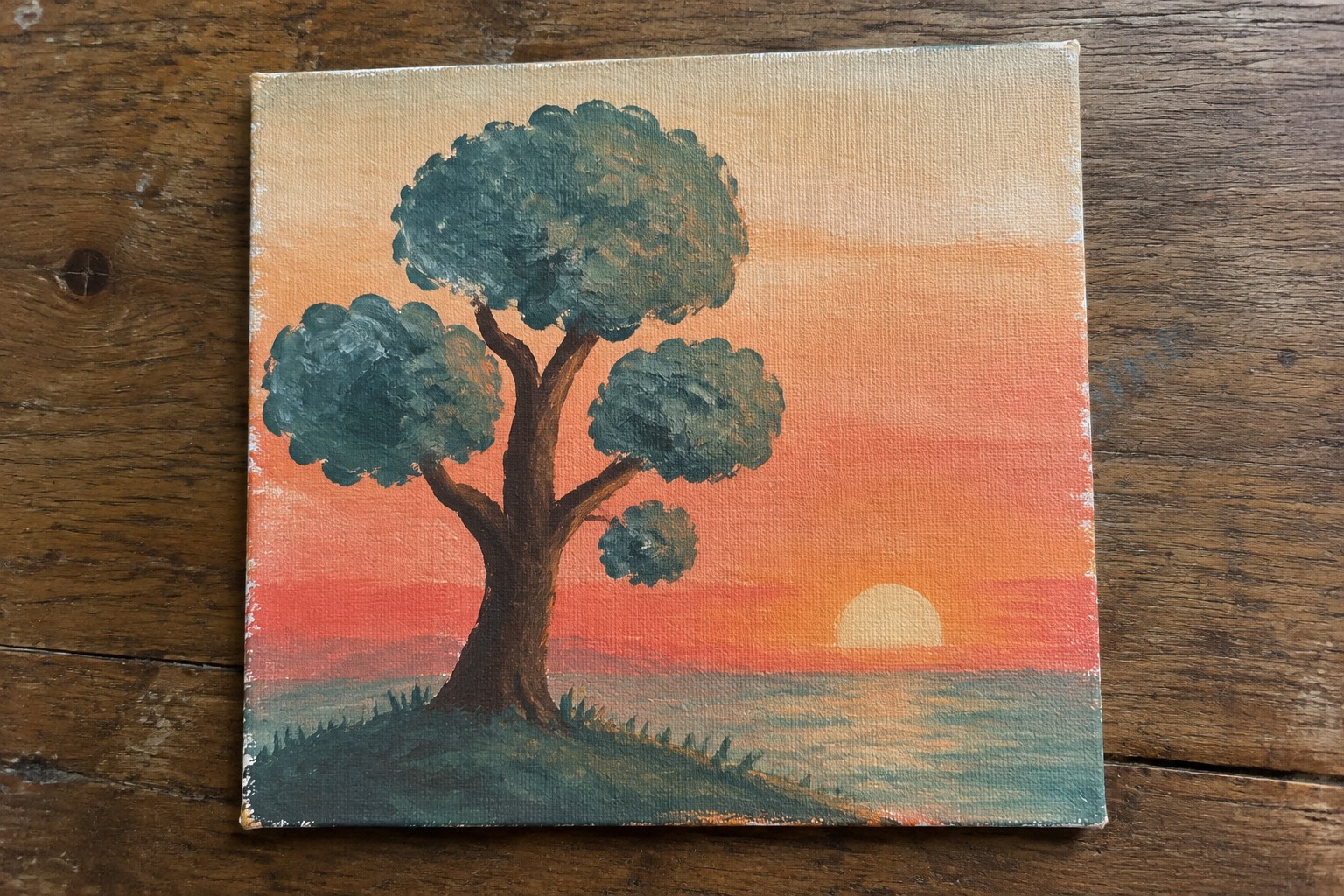
Lone Tree at Sunset Landscape
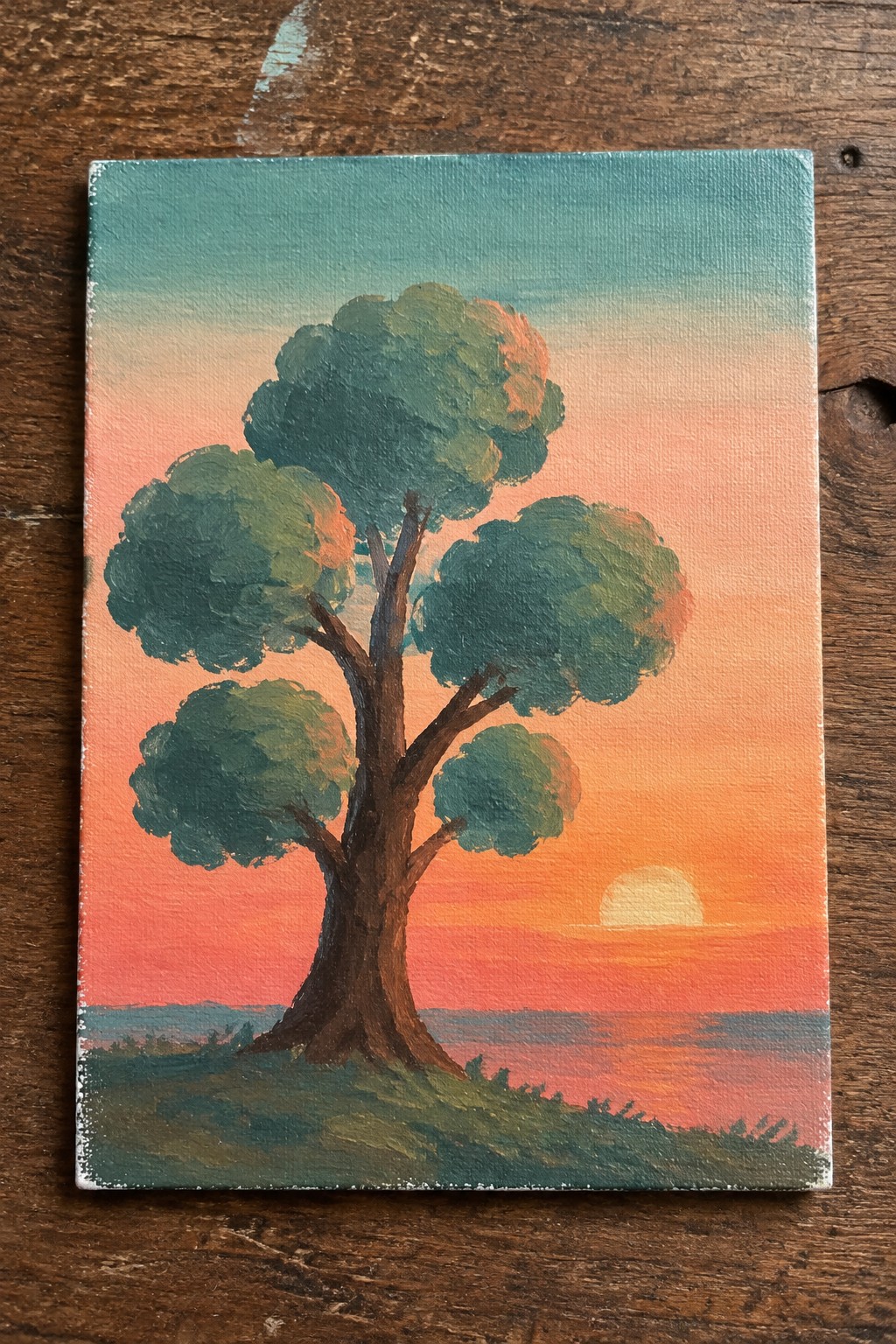
A single tree with layered, rounded foliage clusters stands centered against a smooth gradient sky that moves from teal overhead into warm peach and orange near the horizon. The low sun sits just above a calm water line, with the dark trunk and branches creating a clear silhouette that anchors the whole scene. This landscape idea relies on simple shapes and color blending rather than fine detail, keeping the focus on the tree against the sky.
The composition does a lot of the work here by placing the tree slightly off-center and using the horizon to balance the canvas. The limited palette of greens, browns, and sunset tones makes it easy to adapt by swapping in different leaf colors or adding a few clouds. For practice, this kind of subject helps with brushwork on foliage and basic blending without requiring complex layers. You could shrink the water area to fit a smaller panel or stretch the sky for a taller format.
Three Birch Trees with Yellow Leaves on Gray
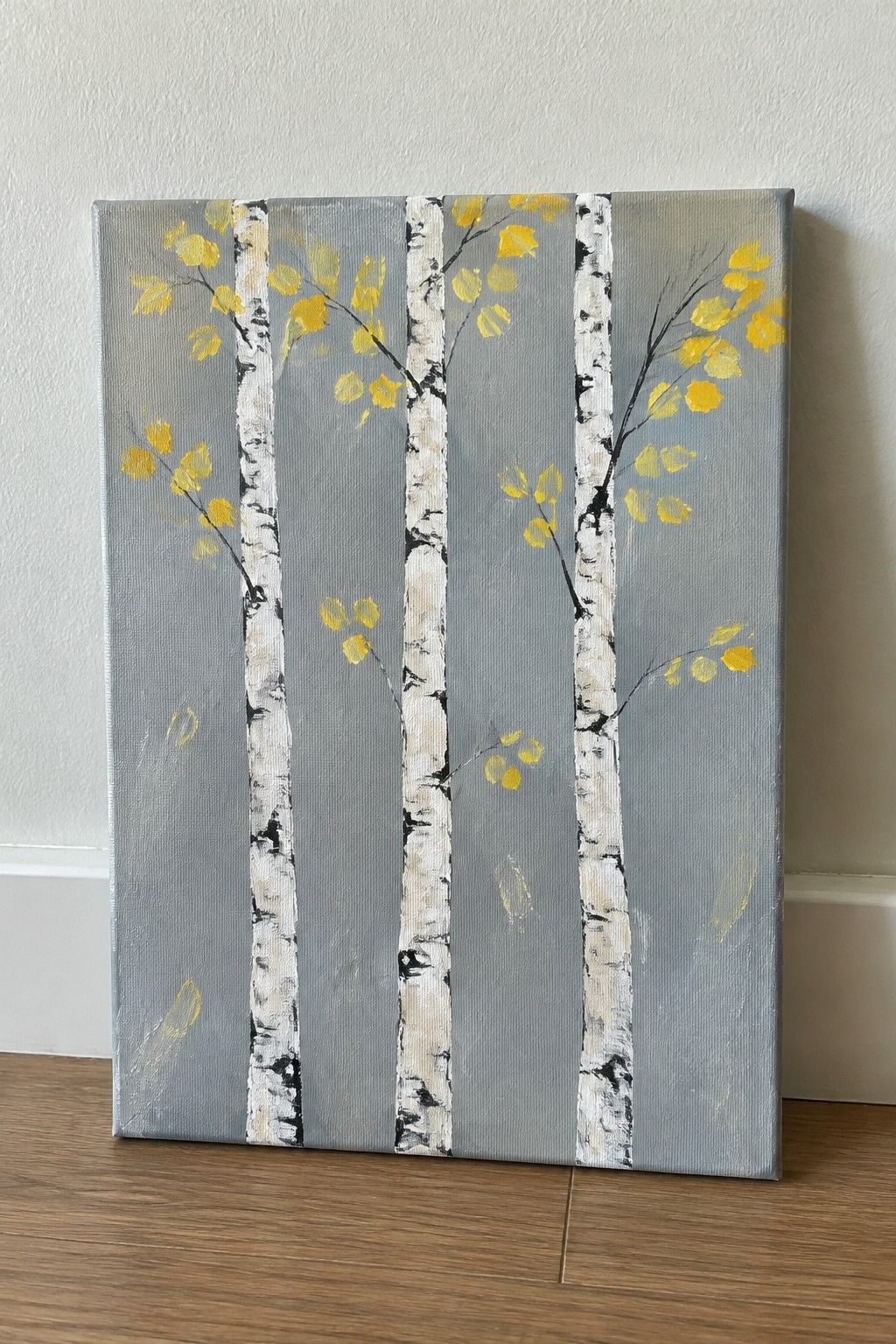
Painting three evenly spaced birch trunks with white bark and black markings against a solid gray background creates a balanced vertical composition that stays simple while still filling the canvas. The yellow leaves are scattered lightly on the branches and a few float downward, adding just enough color contrast without crowding the scene. This approach keeps the focus on the repeating tree shapes and the clean separation between trunks and background.
What makes this idea useful is how the three-tree layout handles the space for you, so you do not need to invent extra elements or worry about perspective. You can swap the yellow for spring green, winter bare branches, or even a different background color to match a room. For practice, the straightforward bark pattern and loose leaf shapes give you room to work on texture and color placement without overcomplicating the design.
Treehouse Built Into a Spreading Canopy Tree
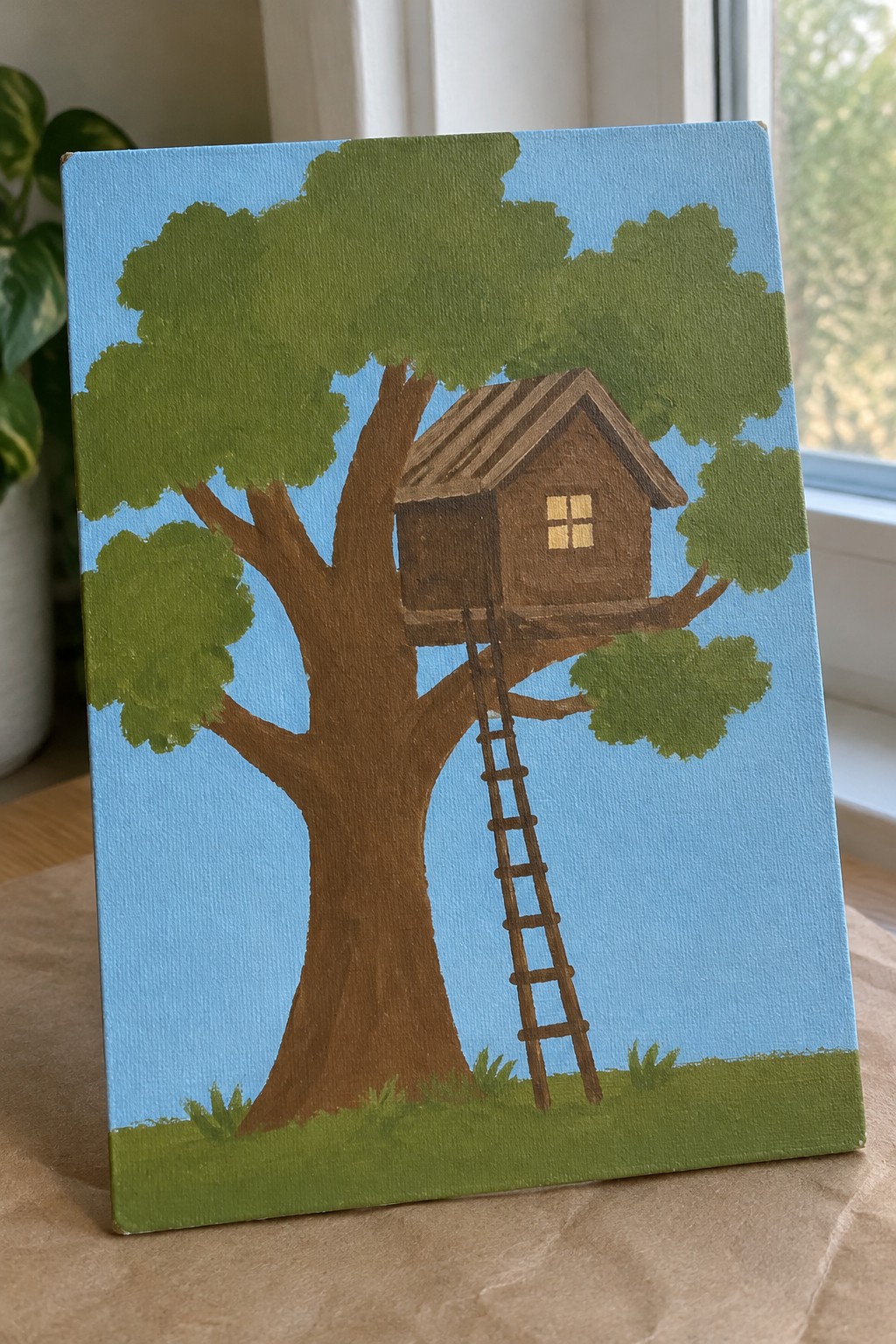
This painting idea centers on a single tree carrying a small wooden treehouse with a ladder leaning against one branch. It works as a straightforward landscape subject where the trunk and main branches create a strong vertical structure while the rounded foliage fills out the upper half against a flat sky. The house sits naturally within the branches rather than floating, which keeps the whole scene grounded and easy to compose.
What makes this idea useful is how the large foliage masses and simple rectangular house let you block in shapes quickly before adding smaller details like the ladder rungs. The color choices stay limited to a few greens, browns, and a clear blue, so it adapts easily if you want to shift the season or swap in different leaf tones. For wall art, the vertical tree shape fits tall canvases well and still reads clearly from a distance even if your brushwork stays loose.
Stacked Geometric Christmas Trees
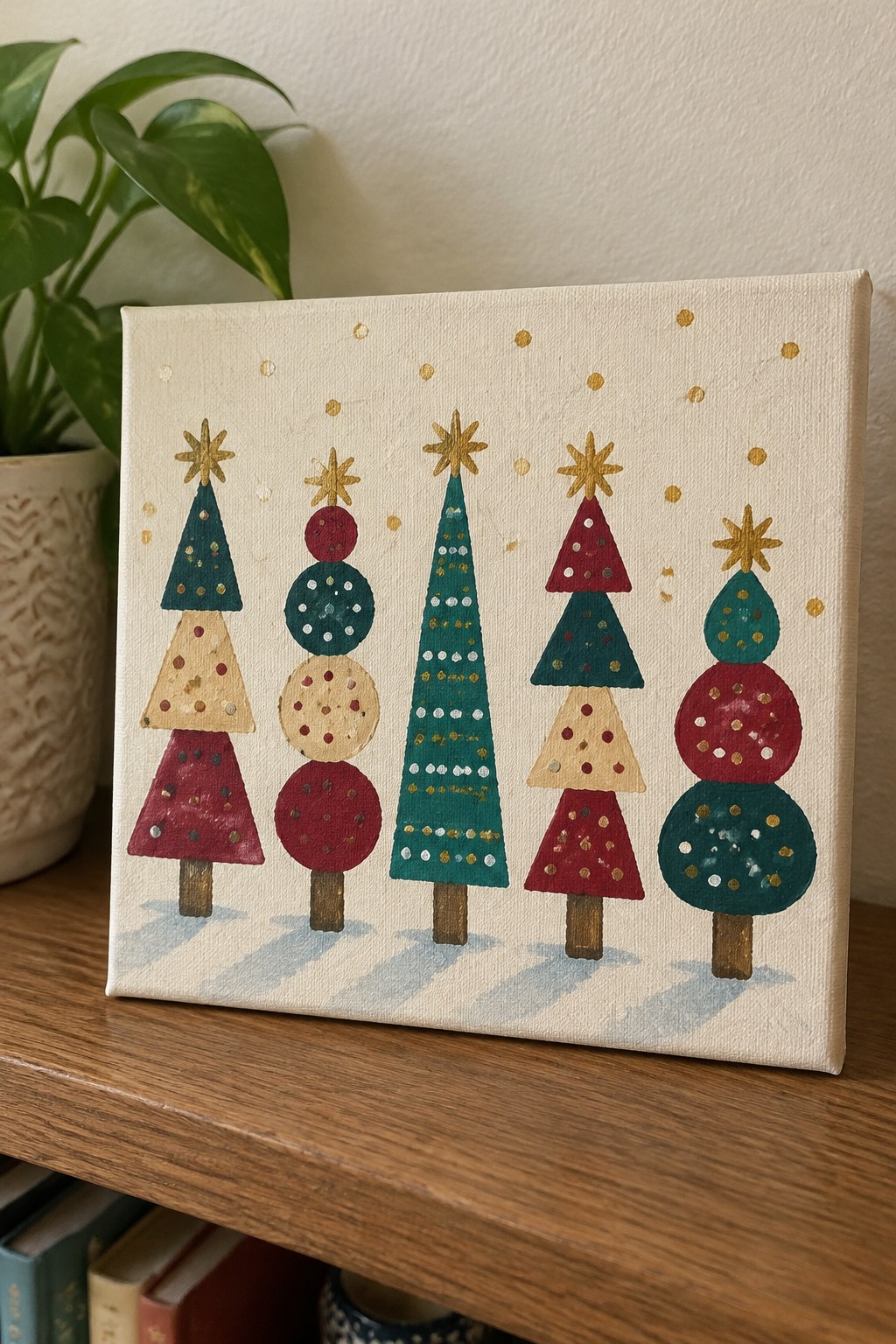
Painting trees by stacking simple triangles and circles in different sizes and colors gives a clean graphic style that suits holiday themes. The limited palette of reds, teals, and golds with scattered dots keeps the focus on the shapes rather than fine detail. This approach works as decorative seasonal art because the even spacing and repeated vertical forms create balance without complex layering.
What makes this idea useful is how the basic shapes can be resized or recolored to match any canvas width. The dot patterns and star tops can be reduced or skipped if time is short. For wall art, something like this works especially well on a mantel or shelf since the bold outlines stay visible from across a room. The same layout could be turned into a set of smaller canvases by painting one tree per piece.
Silhouetted Pine Over Reflective Lake
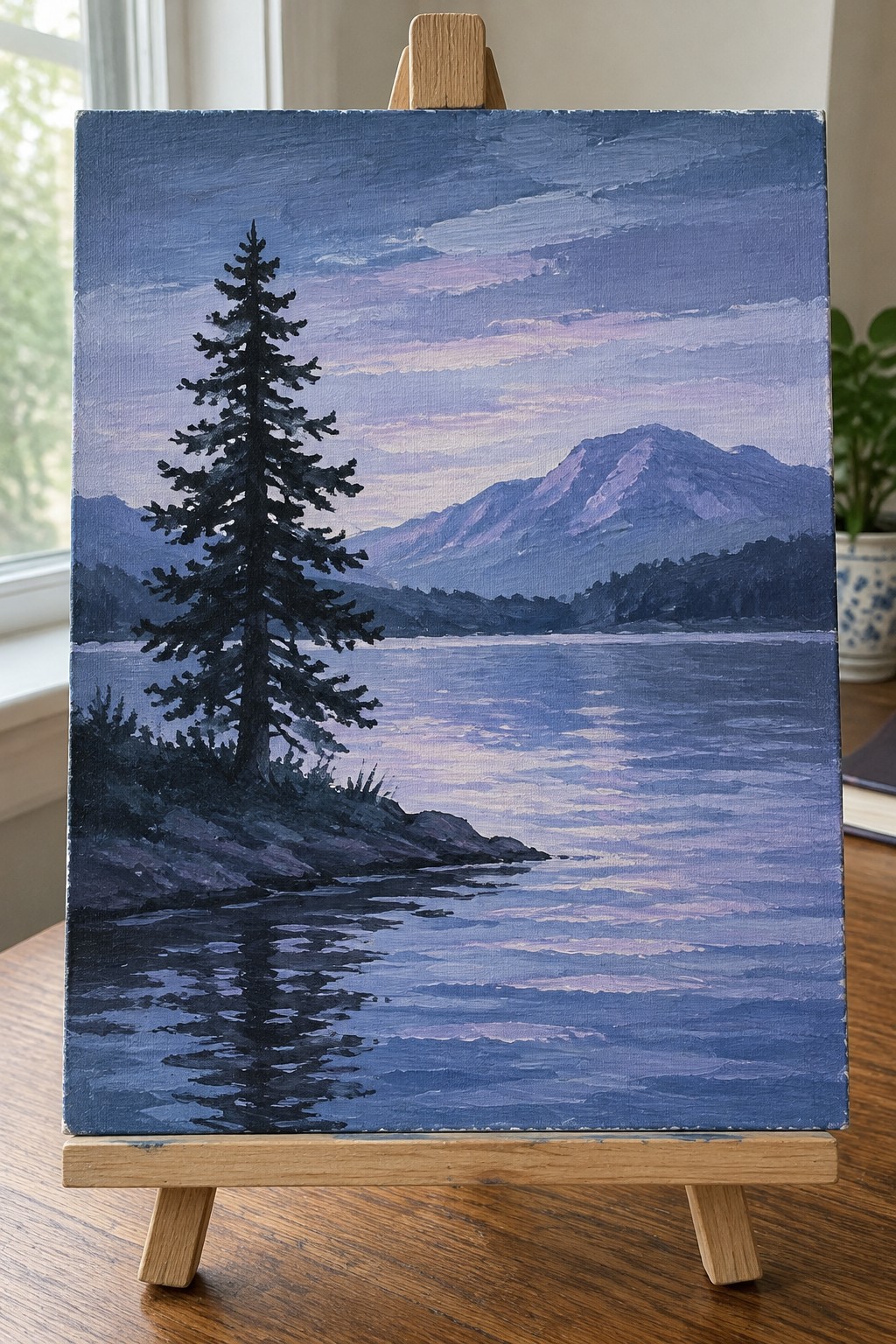
A single tall evergreen placed on the left side creates a strong vertical anchor against horizontal bands of water and distant mountains. The idea relies on a limited blue-purple palette with the tree painted as a dark shape so its reflection can carry much of the detail work. This landscape approach keeps the composition balanced while letting beginners focus on sky blending and simple water strokes rather than intricate foliage.
The composition does a lot of the work here because the reflection automatically adds symmetry and interest with minimal extra painting. You could swap the mountain shapes or shift the sky toward warmer sunset tones without changing the overall layout. For practice, this kind of subject works well when you want to try acrylic blending and basic layering on a canvas that still looks finished even if the tree edges stay a little rough.
Round Leaf Tree Cluster
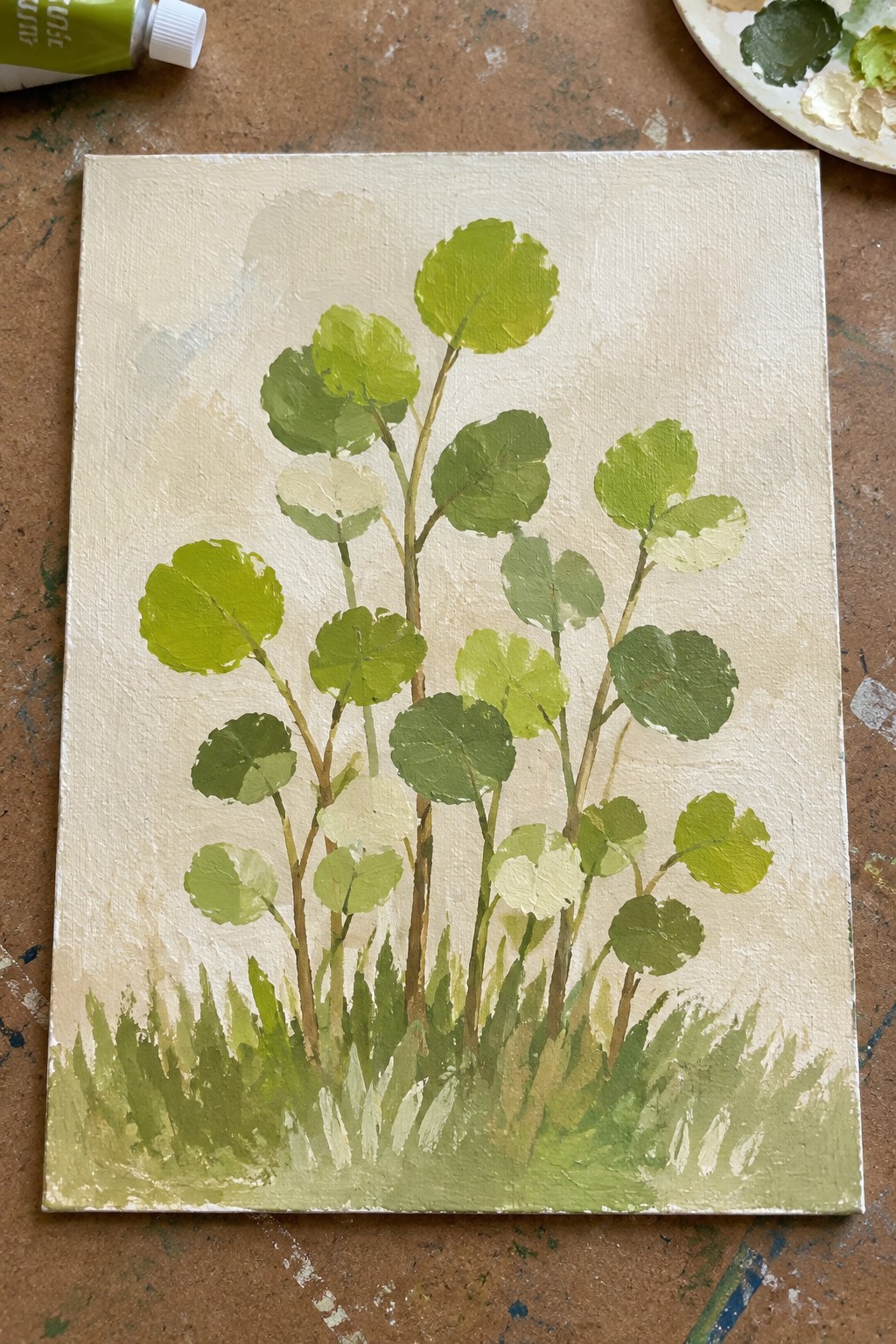
This painting idea uses simple overlapping circles to build foliage on thin vertical stems, creating a small group of young trees or tall plants. The leaves shift through several green shades while the background stays a soft neutral tone, and a quick layer of grass strokes anchors everything at the bottom. The approach focuses on shape repetition rather than fine detail, which keeps the whole piece balanced without needing precise drawing.
What makes this idea useful is how the circular leaf shapes let you practice color mixing and edge control at the same time. You can easily swap the greens for autumn tones or shrink the cluster to fit a smaller canvas. For practice, this kind of subject works well because the stems and grass require only basic strokes, and the limited palette helps beginners finish a complete scene without getting overwhelmed.
Bare Winter Tree with Red Berries
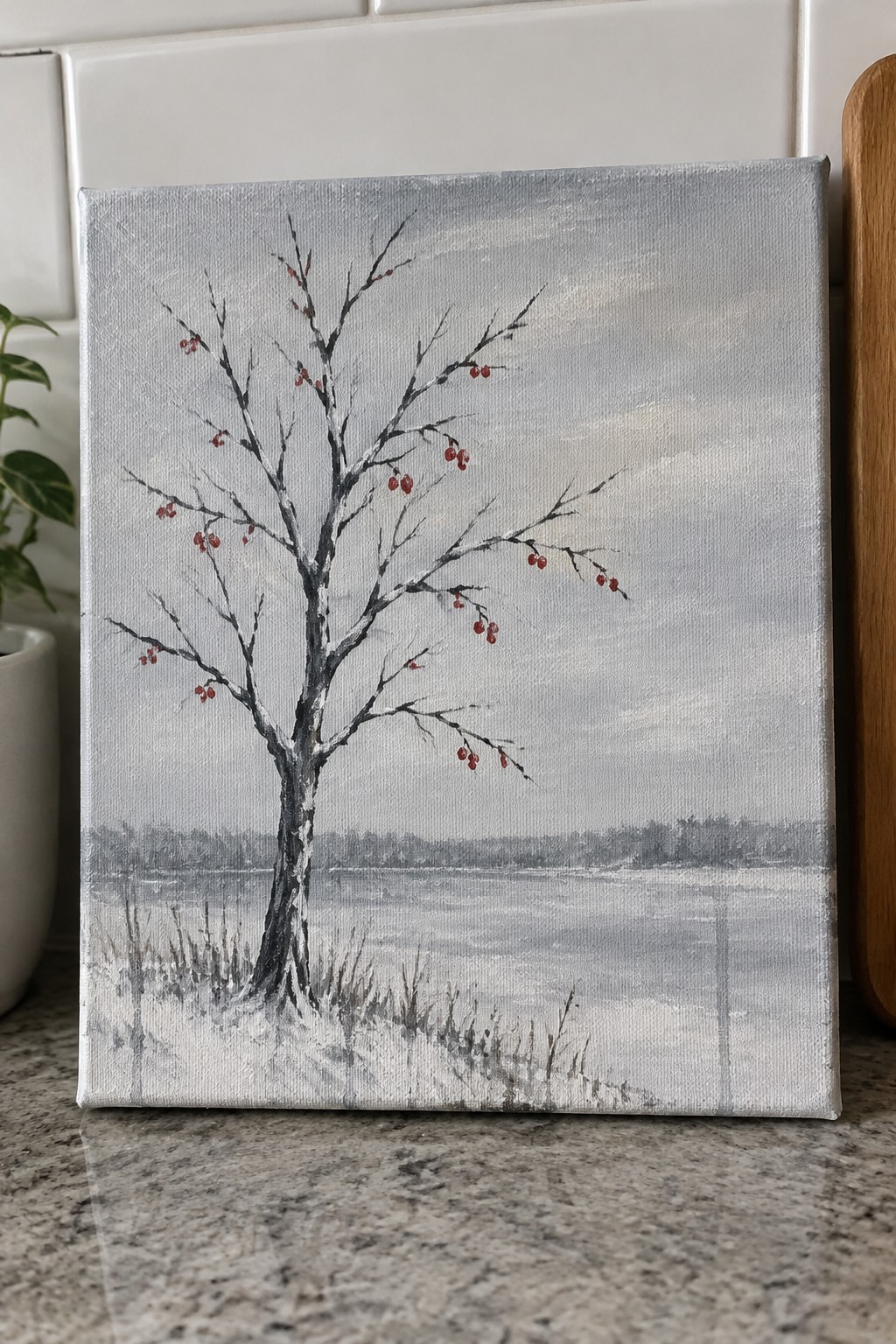
A seasonal landscape idea built around one bare tree with clusters of small red berries. The composition works by keeping the tree as the clear focal point while the open snowy foreground and distant horizon create depth without extra elements. This approach fits the winter landscape category and relies on simple contrast between dark branches and the muted background to hold attention.
The limited palette of cool grays and whites with red accents makes it straightforward to paint and easy to adapt. You could shrink the canvas size for a quick study, swap the berry color for a different season, or keep the background even softer to change the mood. For wall art or Pinterest, the strong vertical shape of the tree against the horizontal landscape gives it clean visual impact that reads well at small sizes.
Colorful Dotted Tree with a Hanging Swing
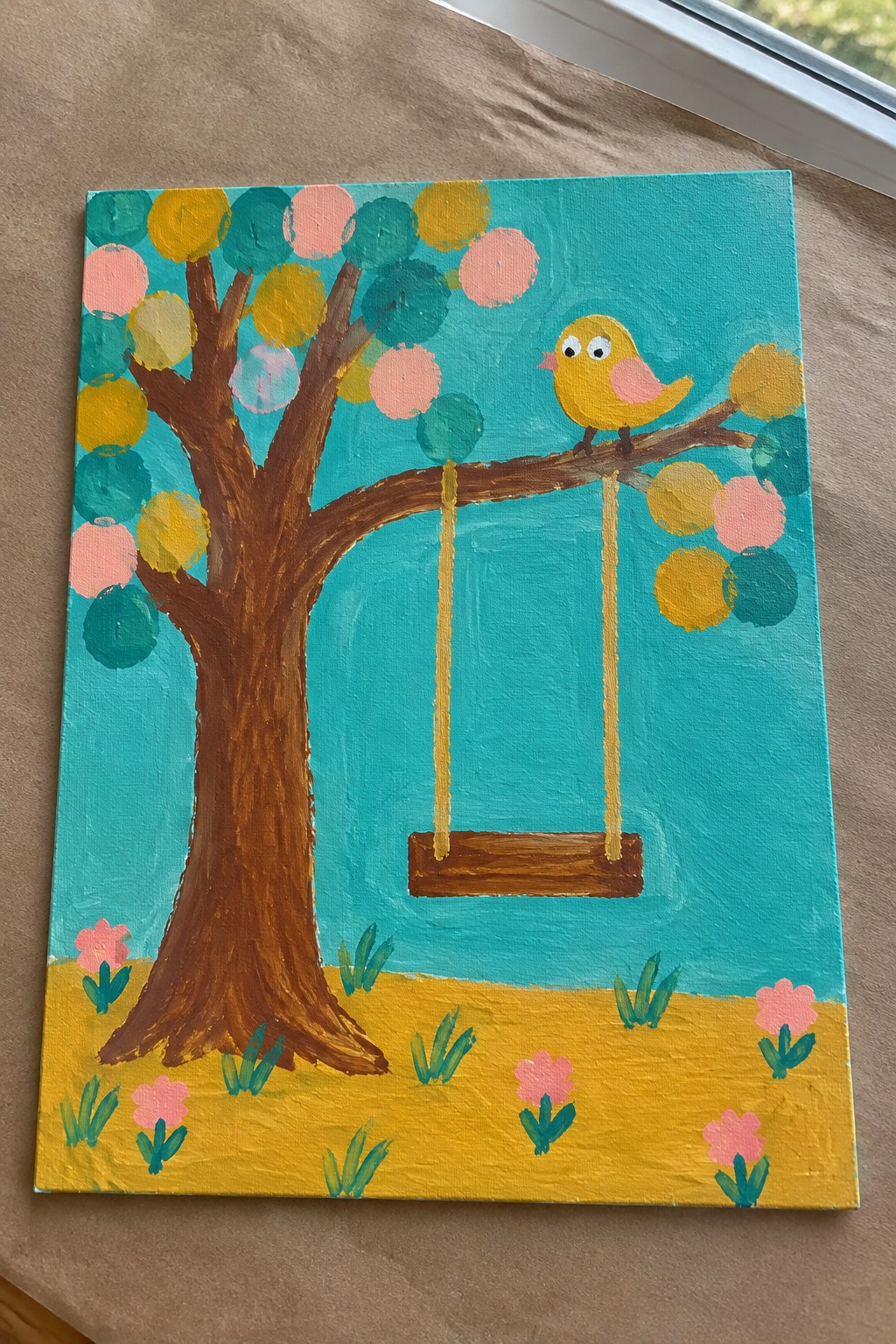
A tree painted with simple circular shapes in bright yellow, pink, and teal creates the foliage instead of layered leaf details. The swing hangs from one of the branches while a small yellow bird sits nearby, and the yellow ground with scattered pink flowers keeps the lower half balanced. This approach uses flat color blocks and basic shapes to build a clear scene without needing fine brush control.
What makes this idea useful is how the circle leaves let you focus on placement and color mixing rather than individual strokes. The layout leaves plenty of open sky space, so the painting stays readable even on a small canvas. You could swap the bird color or shorten the swing ropes to fit different frame sizes while keeping the same structure. For practice, this kind of subject works well because the main elements stay separate and easy to correct.
Gradient Sunset Hills with Tree Silhouettes
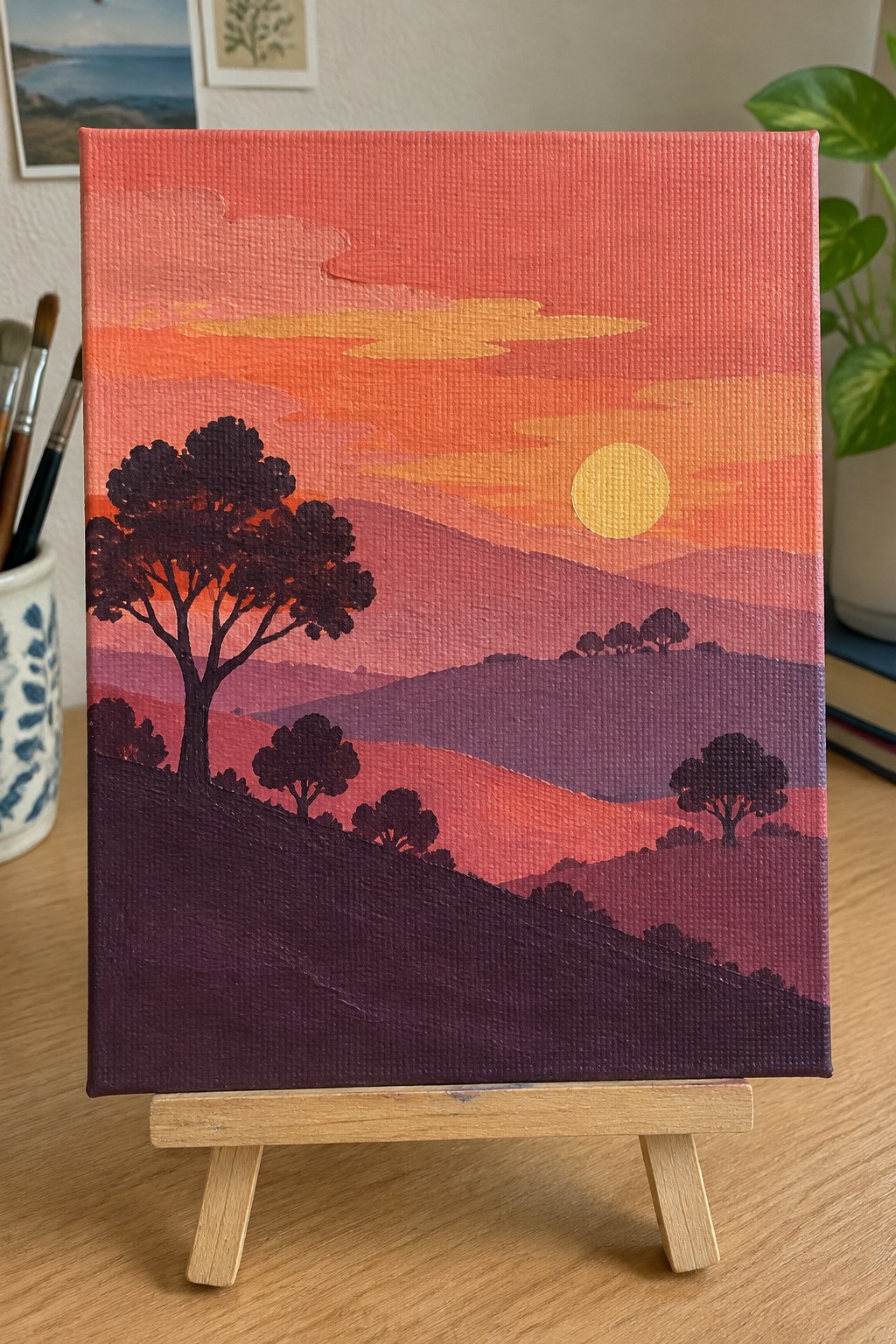
A sunset landscape built from stacked bands of color creates a clean, graphic scene that relies on strong horizontal layers rather than fine detail. The idea uses a bright yellow sun against blended stripes of orange, pink, and red that shift into deeper purples and magentas for the hills, while dark tree silhouettes sit at varying distances to give the composition depth. This approach keeps the focus on shape and color blocking, making the trees read as flat cutouts against the glowing background.
The composition does a lot of the work here by letting the color bands carry the sky and terrain so the trees stay simple to paint with basic shapes. You can easily swap the warm palette for cooler tones, reduce the number of layers for a quicker version, or scale the whole thing down for practice on a smaller canvas. For wall art, the bold shapes and sunset colors hold up well at a distance and translate nicely to different sizes or slight changes in tree placement.
Heart Tree with Colorful Foliage Shapes
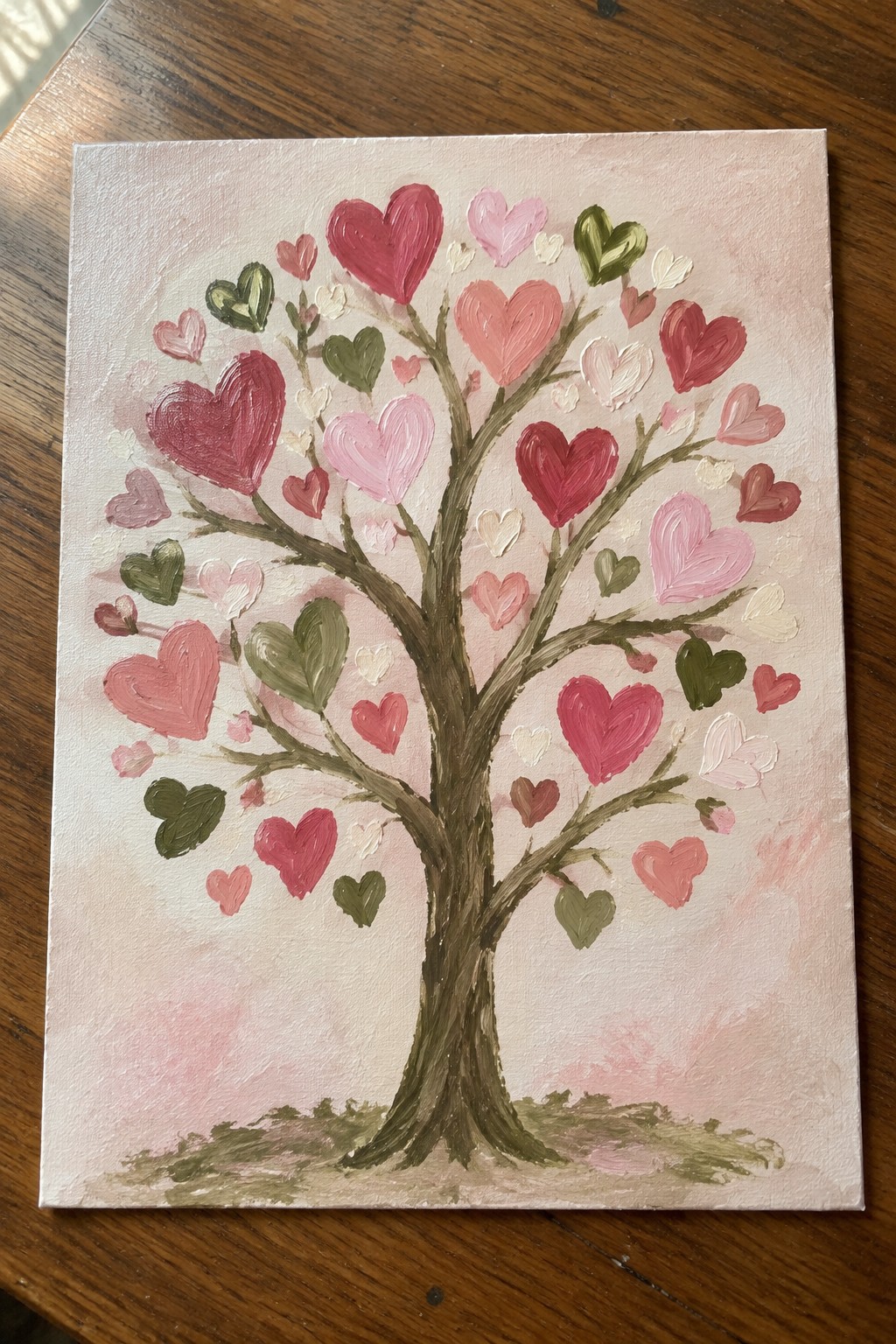
A tree painting where the leaves are swapped for hearts in different sizes and colors gives the composition a clear focal point without complex foliage details. The trunk and branches stay simple in brown tones while the hearts in pinks, reds, and greens spread out to fill the upper space. A soft gradient background keeps the attention on the tree and lets the scattered heart shapes create visual interest through color variation rather than intricate texture.
What makes this idea useful is how the repeated heart shapes let you practice color mixing and placement without worrying about realistic leaf edges. The color palette makes this easy to adapt by shifting the hearts toward reds and greens for one season or keeping them in soft pinks for another. For practice, this kind of subject works well because the main elements stay readable even if the brushwork stays loose. This would be easy to turn into a small canvas version or a larger piece by adjusting how many hearts you add around the branches.
Moonlit Tree Silhouette Landscape
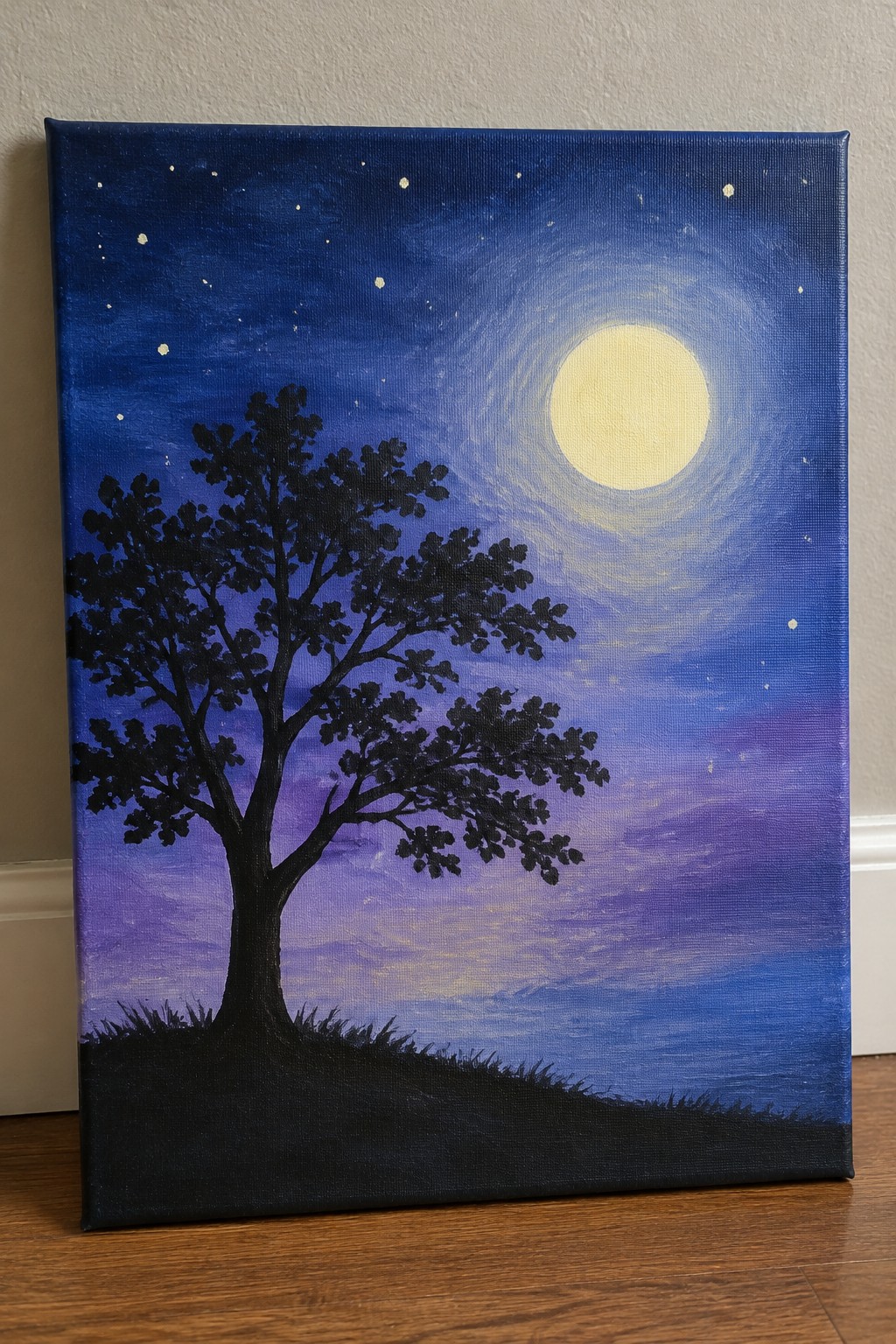
A tree silhouette against a bright moon creates an effective night landscape using simple shapes and high contrast. The idea works by placing the tree to one side so the moon becomes the main focal point in the sky. A soft gradient background from blue to purple helps blend the elements without needing complex details.
The composition does a lot of the work here by relying on negative space and a single strong shape. This approach is easy to adapt by adjusting the tree size or swapping in different sky colors for sunrise or sunset versions. For practice, this kind of subject helps beginners focus on brush control and blending without worrying about fine leaf details.
Clustered Autumn Trees with Layered Foliage
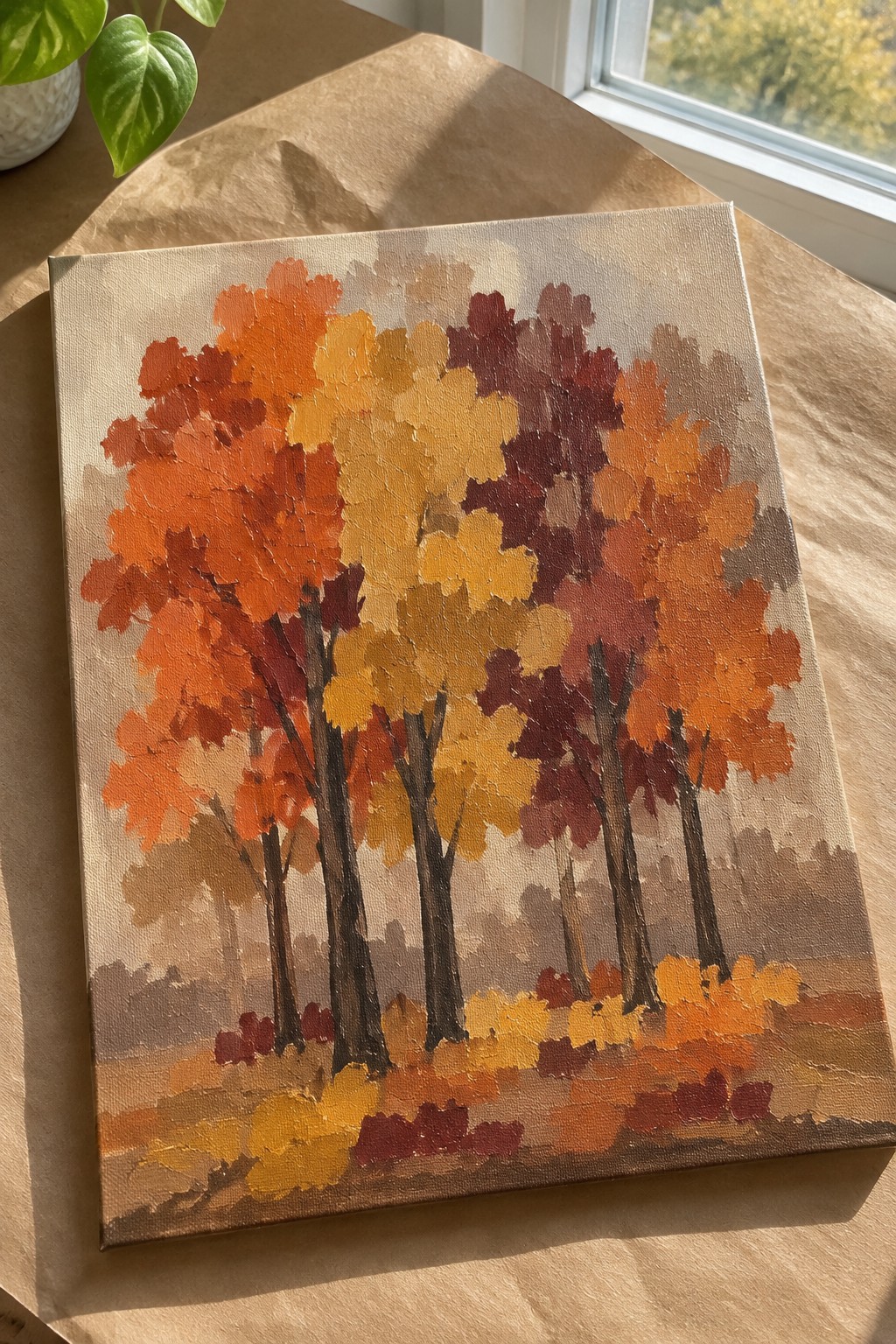
This painting idea focuses on a group of trees with overlapping canopies painted in warm fall colors. The trunks provide strong vertical lines while the leaves build up through rounded patches of orange, yellow, red, and brown. The soft background keeps the trees as the clear focal point and lets the color blocks create a sense of depth.
What makes this idea useful is how the overlapping leaf shapes build interest without requiring fine detail work. The color palette can shift easily to spring greens or winter tones, and the same layout works on both large and small canvases. For practice, this kind of subject helps with mixing autumn shades and placing simple trunks. The background haze makes the trees stand out, which works well for seasonal wall pieces or quick gifts.
Bold Tree Silhouette on a Sloping Hill
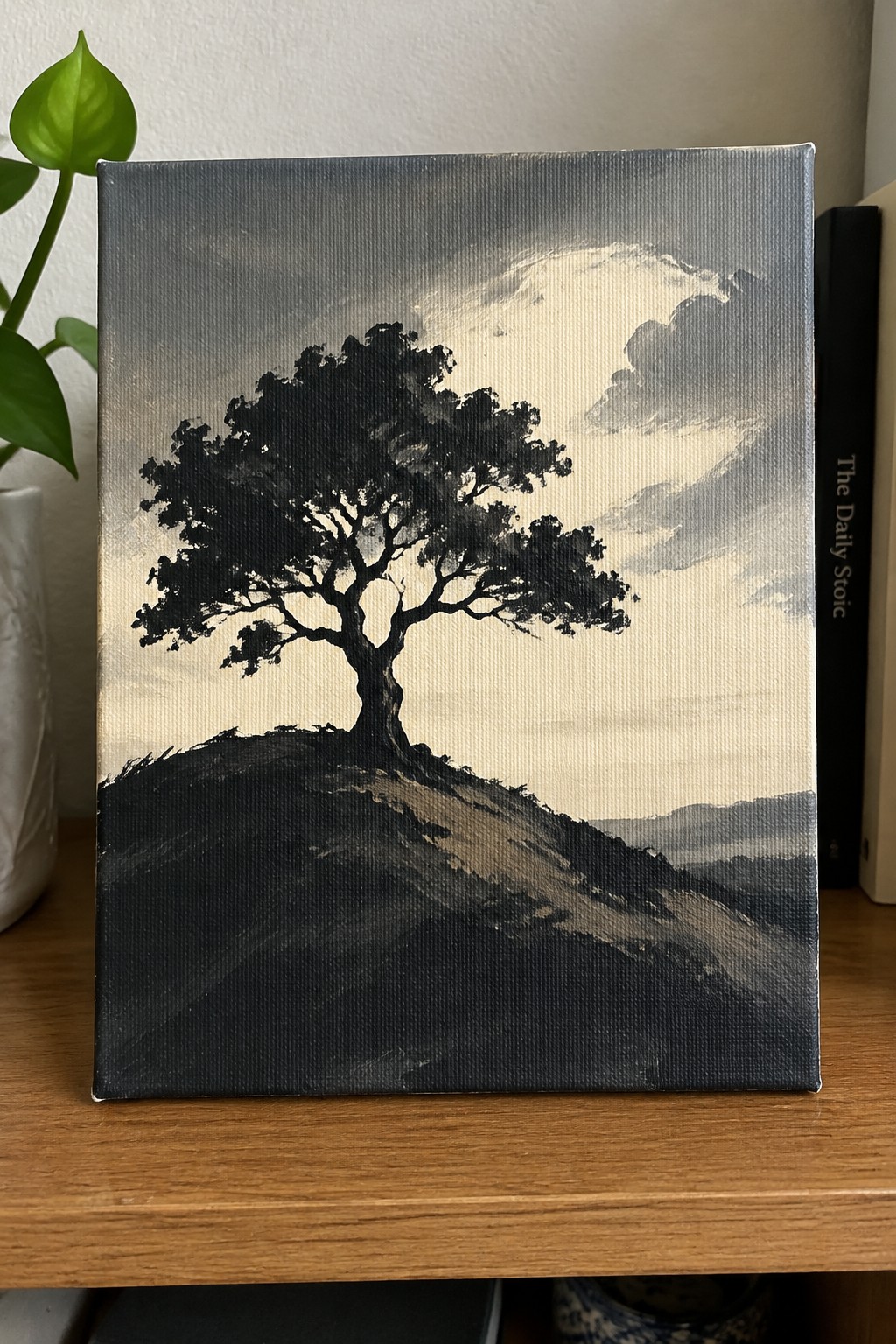
This painting idea centers on a single tree rendered as a solid dark shape against a lighter sky. The composition uses the hill as a strong base that lifts the tree upward while the sky takes up most of the space with soft cloud forms. High contrast between the tree and background keeps the focus on the branching structure without needing fine detail.
What makes this idea useful is how the limited color range cuts down on choices while still producing a finished look. The tree shape can be adjusted easily by changing the branch spread or trunk thickness. A painting like this works especially well for practicing value contrast and shape blocking. You could swap the sky tone for warmer colors or add a second smaller tree on the hill to create a simple variation.
Palm Trees Framing a Sunset Beach Scene
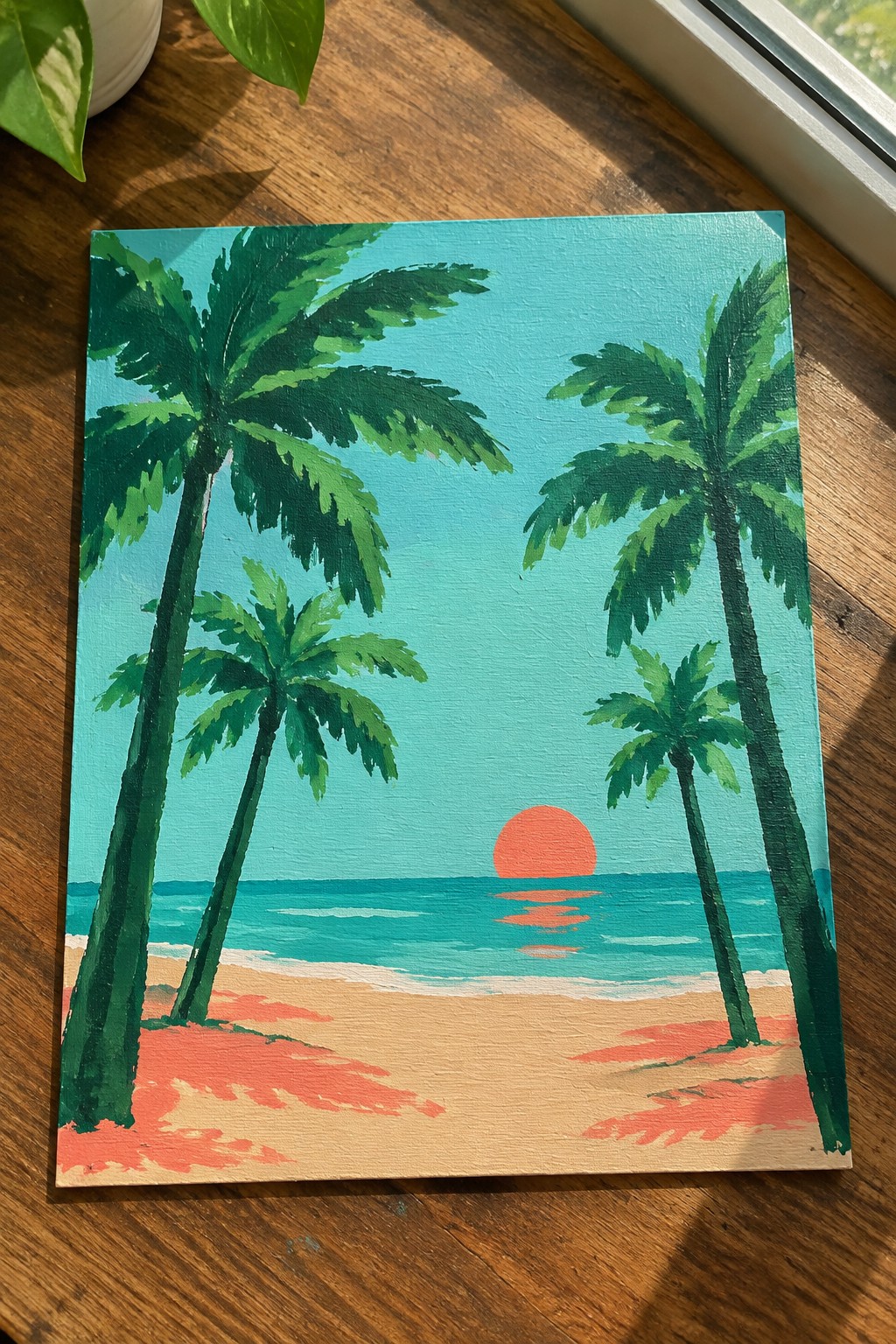
A tropical beach landscape with tall palm trees works as a strong painting idea because the trees act as natural frames on both sides of the canvas. The simple trunk and frond shapes sit against flat blocks of turquoise sky and water, while a centered orange sun and its reflection pull the eye straight through the middle. This layout keeps the focus on bold color areas rather than tiny details.
What makes this idea useful is how the large shapes and limited color palette let you finish the painting quickly without getting stuck on fine work. You can drop one or two trees, shift the sun lower, or swap the sand color if you want a different feel. For practice, this kind of subject helps you test how negative space and basic color blocking hold a composition together before trying more complex scenes.
Concentric Ring Tree in Warm Earth Tones
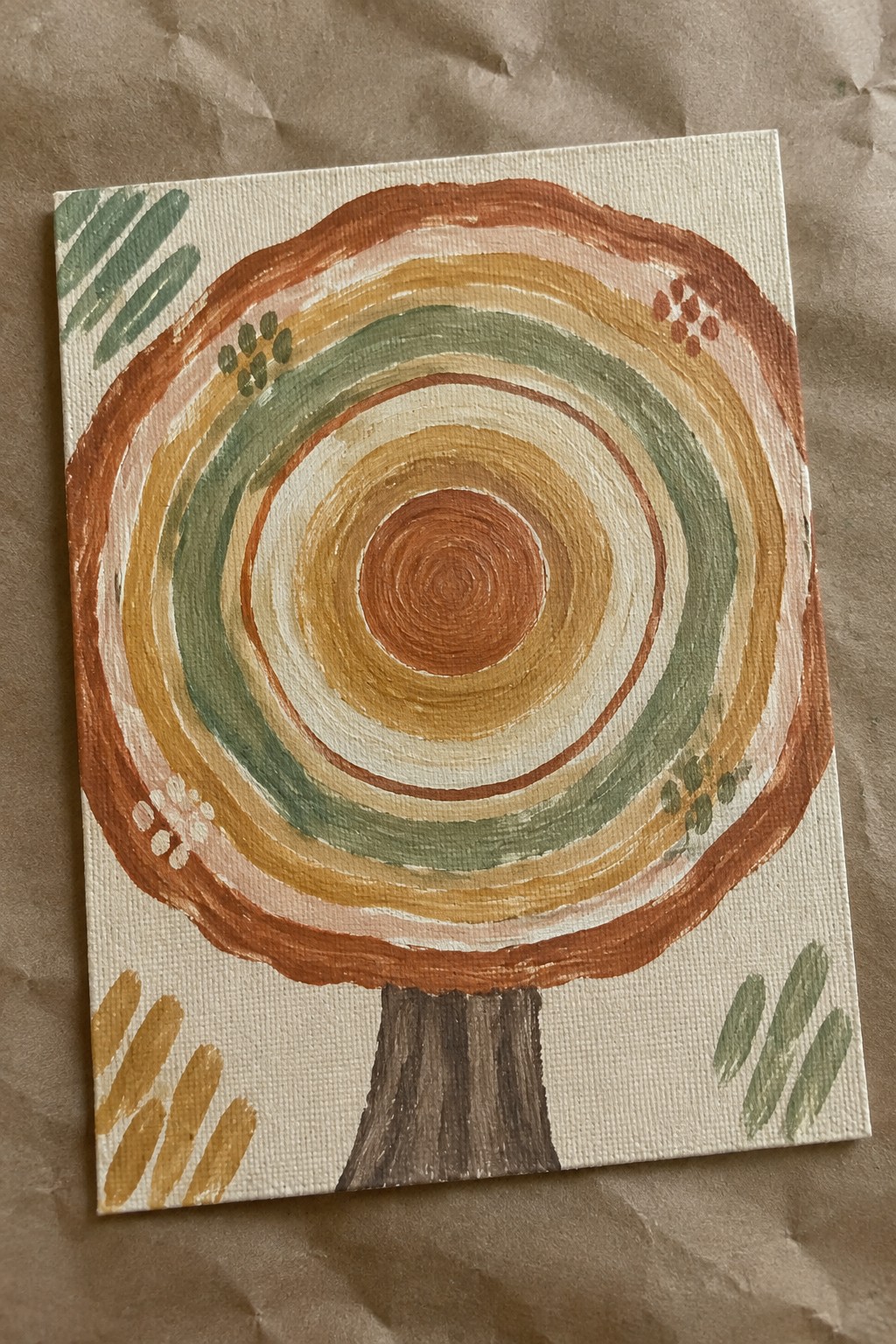
A tree with a canopy built from overlapping concentric circles gives this painting a clean graphic structure that is easy to follow. The idea uses a tight palette of browns, oranges, and muted greens layered in rings, with a thick central trunk and minimal side details to keep the focus on the rounded form. Small dot clusters and simple leaf shapes placed around the edges add interest without breaking the repeating pattern.
The composition does a lot of the work here by centering the rings and keeping the background plain. You can swap the ring colors for cooler tones or brighter shades to match different seasons, or shrink the canvas size for quicker versions. This kind of tree works well for practice because the shapes are repetitive and the trunk stays simple, making it straightforward to adapt for wall pieces or small decor items.
Vertical Trees with Birdhouses and Bunting Flags
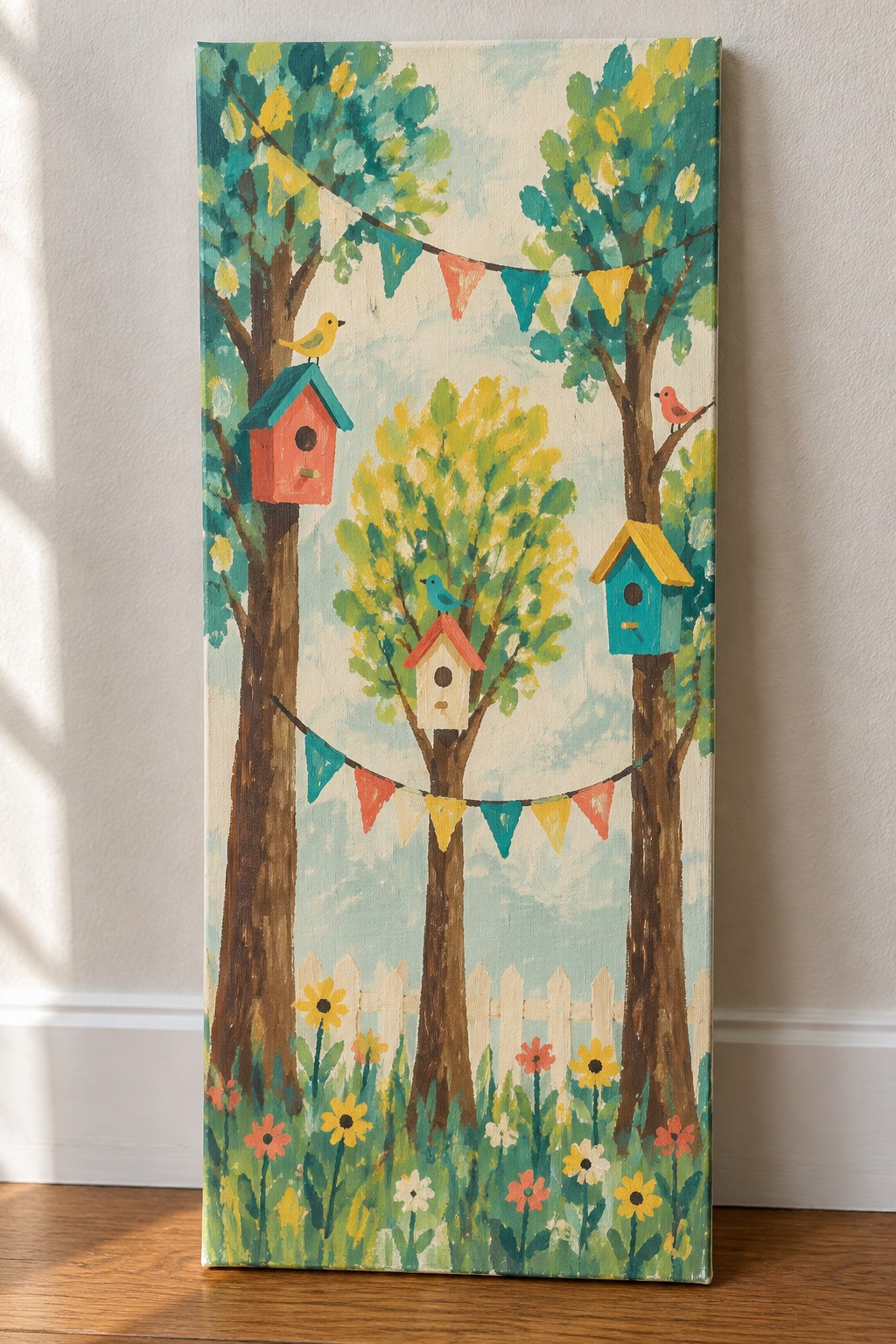
A row of trees spaced across a tall canvas works well as a decorative landscape idea, with each trunk holding a simple birdhouse and the spaces between filled by string flags. The composition stacks clear layers from ground flowers up through foliage and into open sky, using repeated vertical trunks to hold the design together. Flat color areas and basic shapes keep the focus on placement rather than fine detail, making the overall scene read as a single patterned unit.
The composition does a lot of the work here by using the tall format to let trunks and hanging elements create natural rhythm without extra planning. You could easily change the birdhouse roof colors or swap flag order to match different rooms or seasons. For wall art, this kind of layout fits narrow spaces where a wide landscape would feel cramped. The same idea scales down well to smaller canvases or sketchbook pages if you keep the same spacing between trunks.
Forest Path Framed by Tall Trees
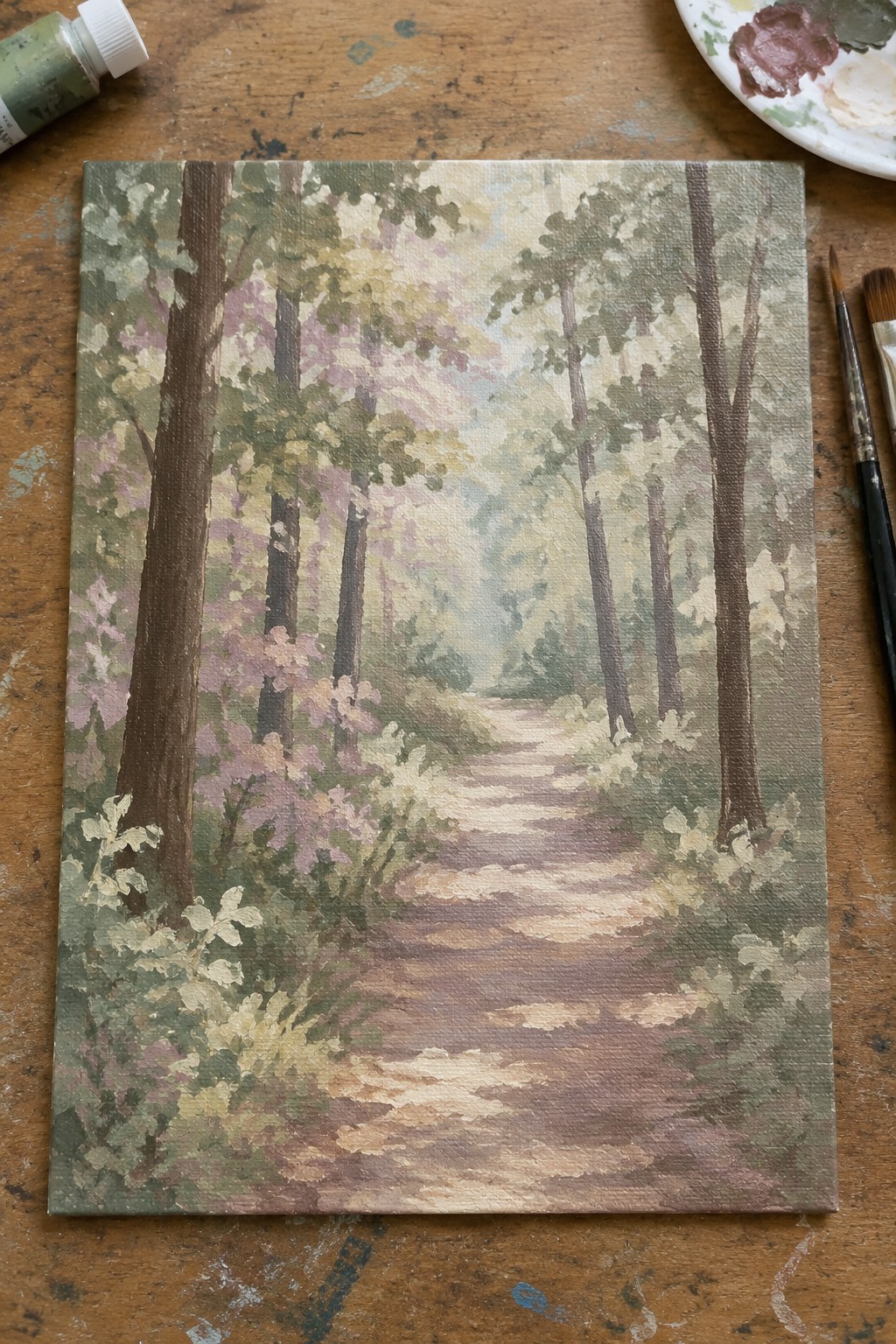
This painting idea focuses on a receding woodland path bordered by vertical tree trunks, with layered foliage in muted greens, purples, and soft creams filling the spaces between. The composition relies on the path itself to create depth and lead the eye forward, while loose brushwork on the leaves and undergrowth keeps the background simple. It sits firmly in the landscape category and stays effective because the strong verticals and gentle color shifts do most of the visual work.
What makes this idea useful is how the path and tree placement handle the main structure, leaving room to adjust foliage colors or density without redrawing the whole scene. You can scale it down for smaller canvases or practice versions by using fewer layers and broader strokes. The same layout works for seasonal changes, such as shifting the purple tones toward warmer autumn shades or cooling the greens for a different mood.
Folk Style Tree with Patterned Trunk and Scattered Flowers
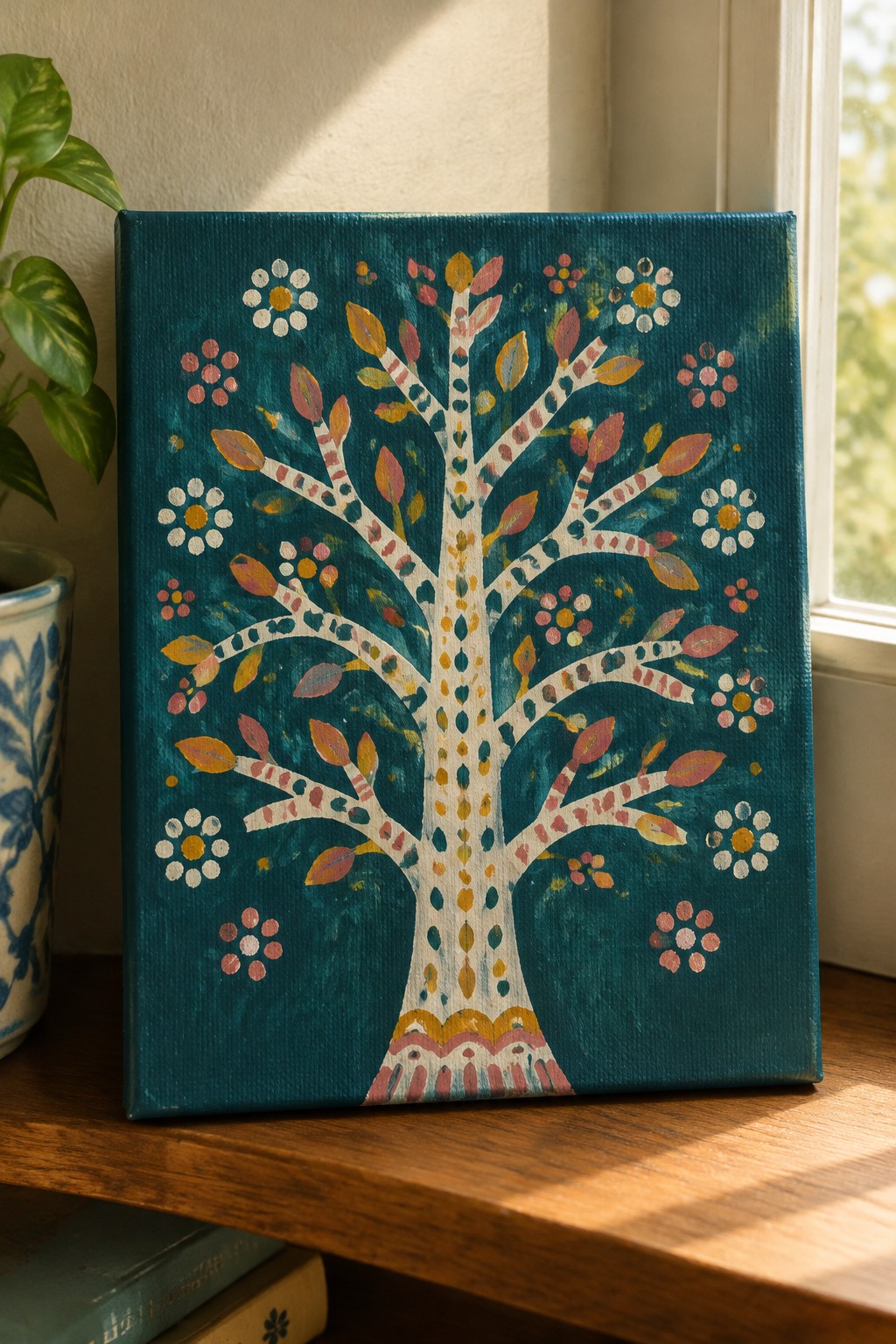
This painting idea uses a central tree silhouette as the main subject, with a white trunk and branches covered in repeating heart, dot, and stripe patterns. The leaves are painted in warm yellow, orange, and pink tones, while small daisy-style flowers and clusters fill the surrounding space on a solid teal background. The approach blends botanical shapes with graphic pattern work, creating a balanced decorative piece that keeps the focus on the tree structure.
What makes this idea useful is how the dark background lets the tree and flowers stand out without needing extra shading or detail work. The scattered flower placement gives flexibility to adjust spacing or add more elements depending on canvas size. This kind of painting works especially well for wall art or small decor pieces since the patterns can be simplified or expanded without losing the overall look.
Frequently Asked Questions
What supplies do beginners need to try these acrylic tree painting ideas? You will need acrylic paints in basic colors like green, brown, blue, and white, along with a few brushes of different sizes, a canvas or sturdy paper, a palette for mixing, and water for cleaning. Start with inexpensive supplies from any craft store and add details like a fan brush for leaves or a small round brush for branches as you progress through the ideas.
How should a complete beginner select their first tree painting idea from the list? Pick a simple design like a basic silhouette tree against a sunset sky or a single trunk with minimal foliage. These build confidence quickly without requiring advanced blending. Once comfortable, move to ideas with more layers such as forests or seasonal trees to practice new skills gradually.
What techniques work best for creating realistic foliage with acrylics? Apply paint in short dabbing motions with a dry brush to mimic leaves rather than smooth strokes. Layer lighter colors over darker bases for depth and use a sponge for texture on larger areas. Keep the paint thick for highlights and thin it with water when you need softer edges on branches.
How can artists add depth to their tree paintings without advanced skills? Use darker shades at the base of the tree and gradually lighten colors toward the top to suggest sunlight. Add a few overlapping branches in the foreground and keep background elements smaller and lighter. This simple approach creates dimension in any of the 18 ideas.
What steps help protect finished acrylic tree paintings? Allow the painting to dry fully for at least 24 hours, then apply a thin coat of acrylic varnish with a soft brush. Store the work away from direct sunlight and moisture to prevent fading or cracking over time.