
I’ve been working with oil paints for a few years now and I still remember how hard it was to figure out what to paint when I first started.
Many of the ideas out there seemed too complicated or required skills I didn’t have yet.
Over time I found that keeping things simple made the whole process feel much more doable and less stressful.
Here are some subjects I’ve tried myself that worked well for beginner level work without needing a lot of extra tools or planning.
They focus on everyday things that let you practice without pressure to make something perfect.
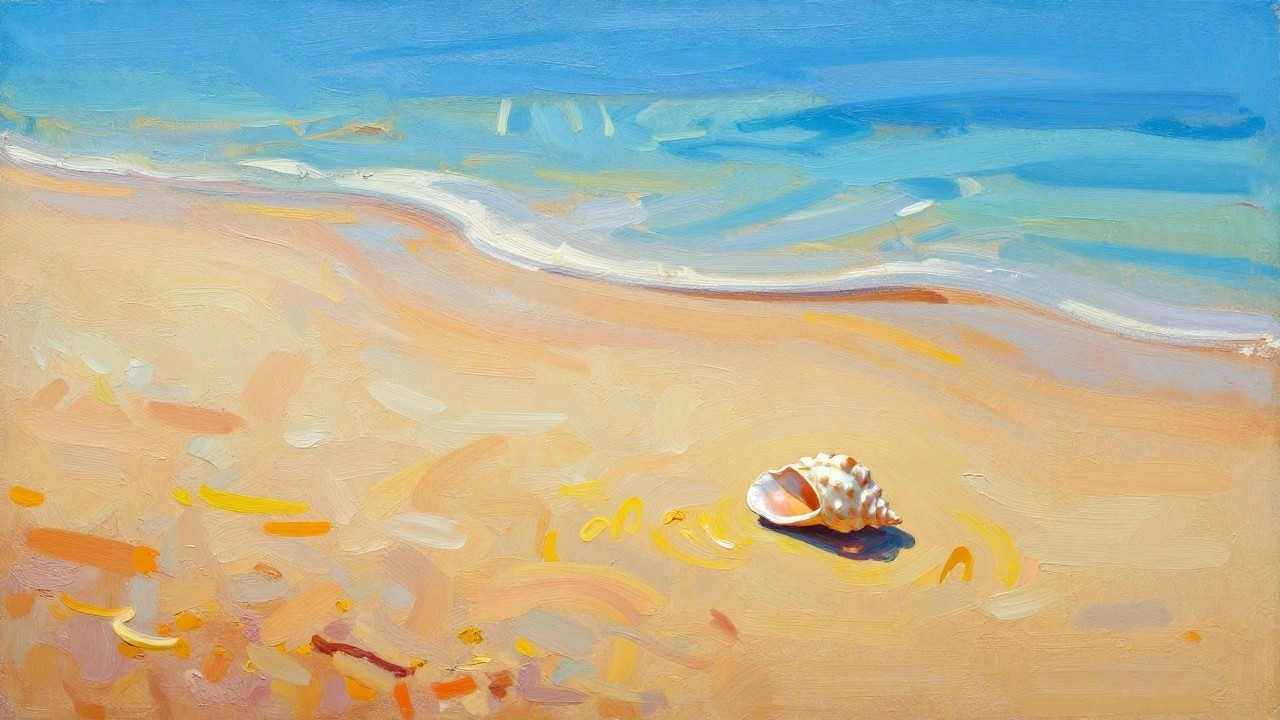
Seashell on the Sand with Ocean Waves Behind
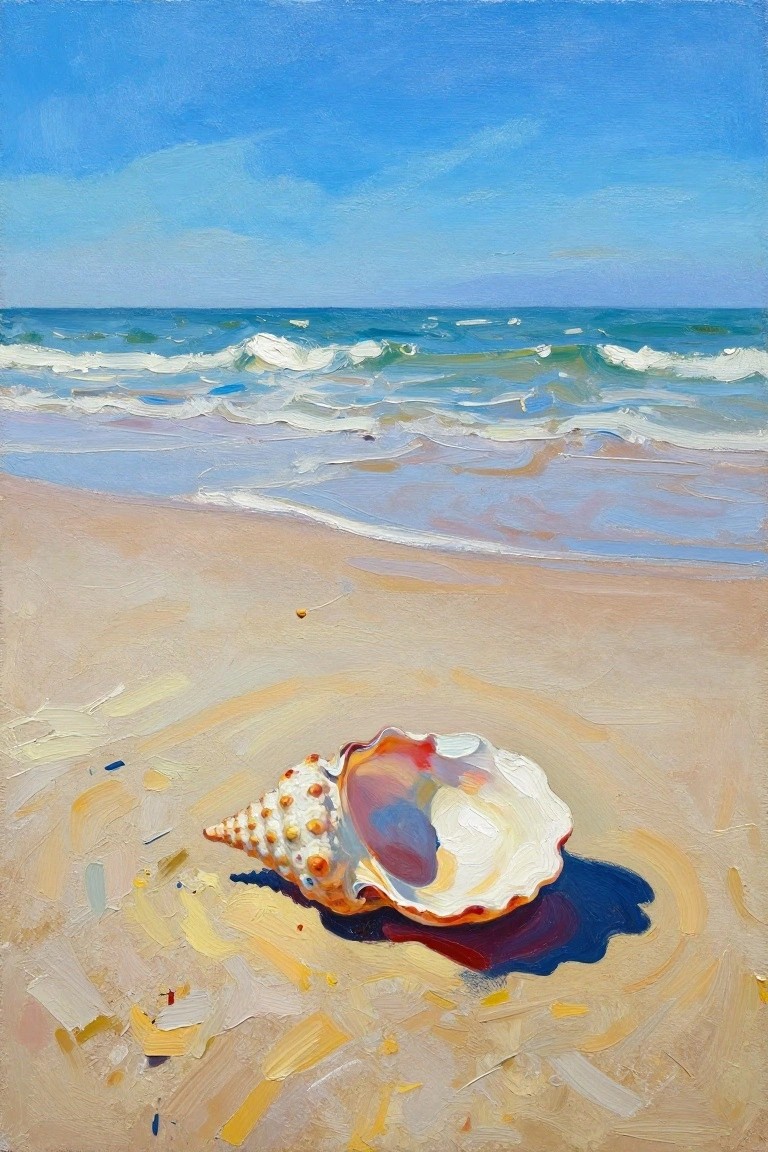
A single seashell positioned on the sand near the shoreline makes an effective still life idea that blends a close-up subject with a simple coastal background. The shell anchors the foreground while the water and waves recede into the distance, creating depth through basic layering rather than intricate detail. Warm sand colors against cooler ocean tones keep the overall palette straightforward and balanced.
The composition does a lot of the work here by placing the shell low and slightly off-center so the eye moves naturally toward the waves. This setup works especially well for beginners because the shell can be painted first with basic shapes before adding loose strokes for the water. The color palette makes this easy to adapt by swapping in different sand or sky hues to match available paints or a preferred mood. For practice, this kind of subject lets you focus on texture in one area while keeping the background simpler.
Sunflower Close-Up with Radiating Petals
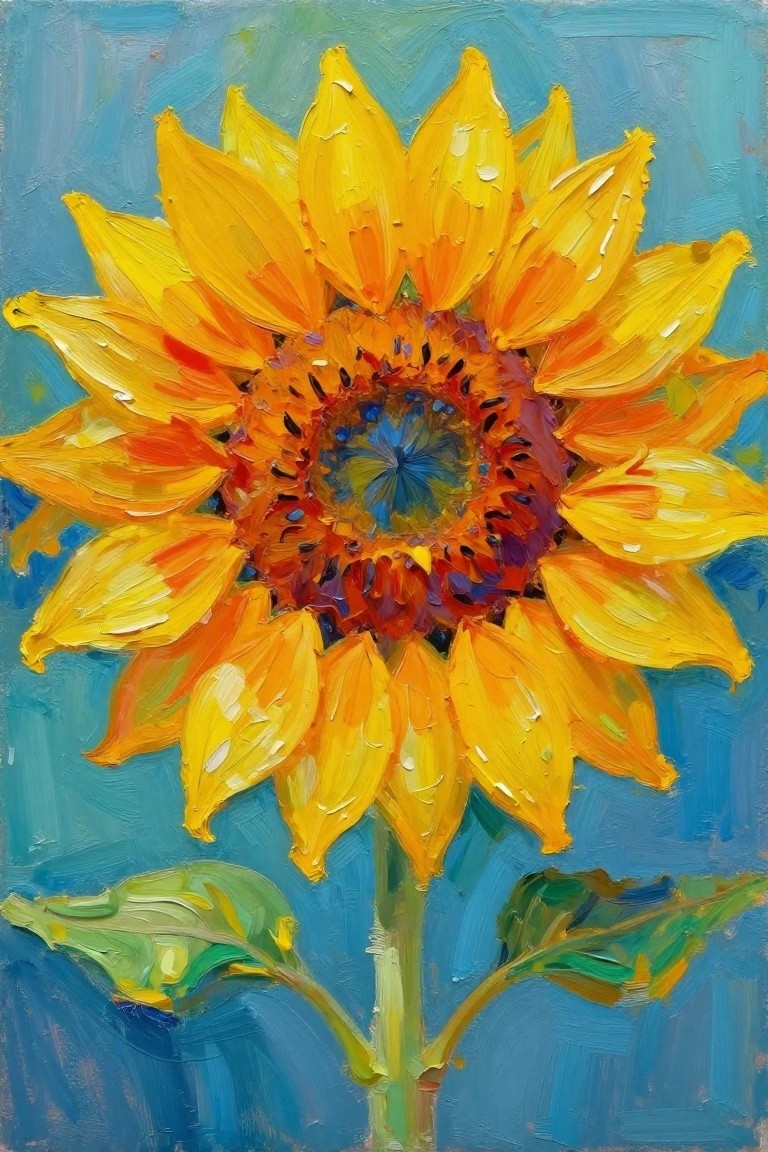
A close-up sunflower works well as a floral painting idea because the petals spread outward in strong, overlapping shapes that lead the eye straight to the center. The high contrast between the yellow petals and the blue background keeps the composition balanced without extra elements. Visible brushstrokes in the center and petals add texture while keeping the focus on broad color areas rather than tiny details.
What makes this idea useful is how the radial layout does most of the compositional work for you. You can simplify the petal count or shift the background color to fit different wall spaces or seasonal themes. The same approach scales easily to a larger canvas or a quicker study on a smaller panel. For practice, it helps build confidence with layering color and handling thick paint without needing precise realism.
Still Life with Lemons on a Plate
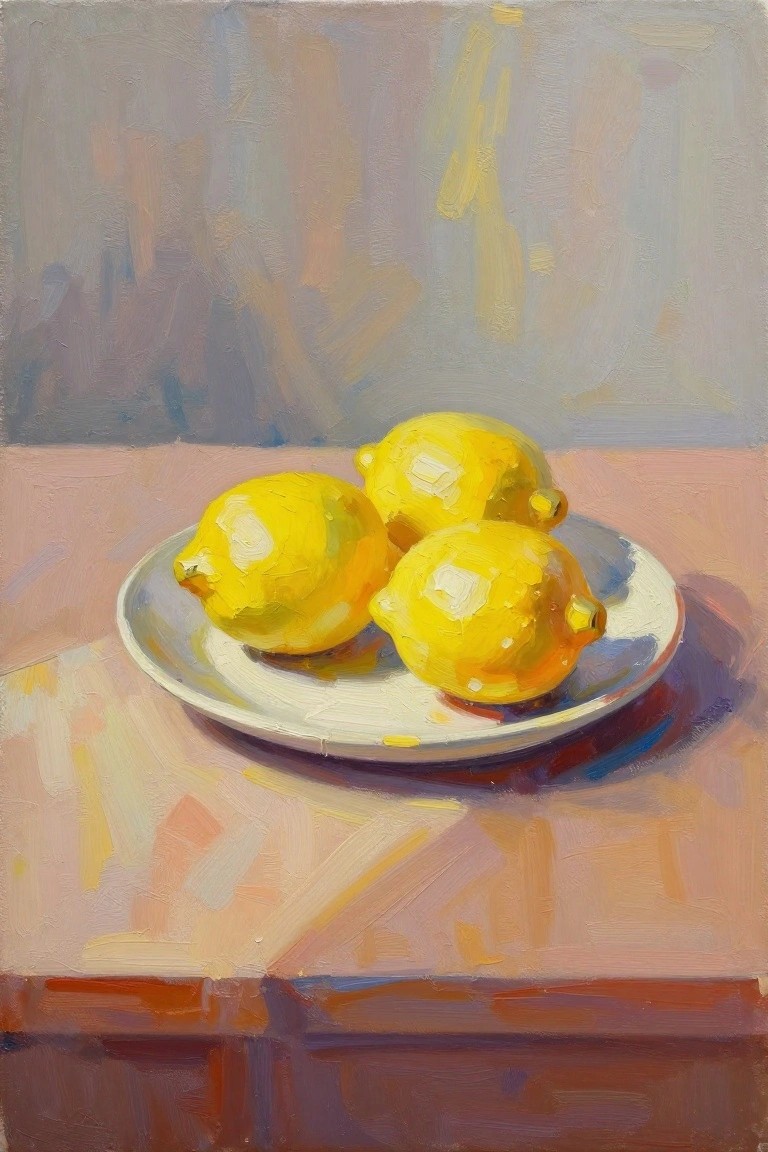
Still life setups with a few pieces of fruit on a plate give beginners a clear subject that stays in one place. The round lemons sit together on a white dish, which creates a simple contrast against the flat table and soft gray background. This arrangement keeps the eye on the main shapes without extra elements getting in the way.
The composition does a lot of the work here because the limited number of objects makes it easy to plan the layout. You can swap the plate for a different color or change the table tone to match whatever paints you already have on hand. For practice, this kind of subject works well when you want to focus on light hitting curved surfaces without needing a lot of detail.
Crescent Moon Over Rolling Hills
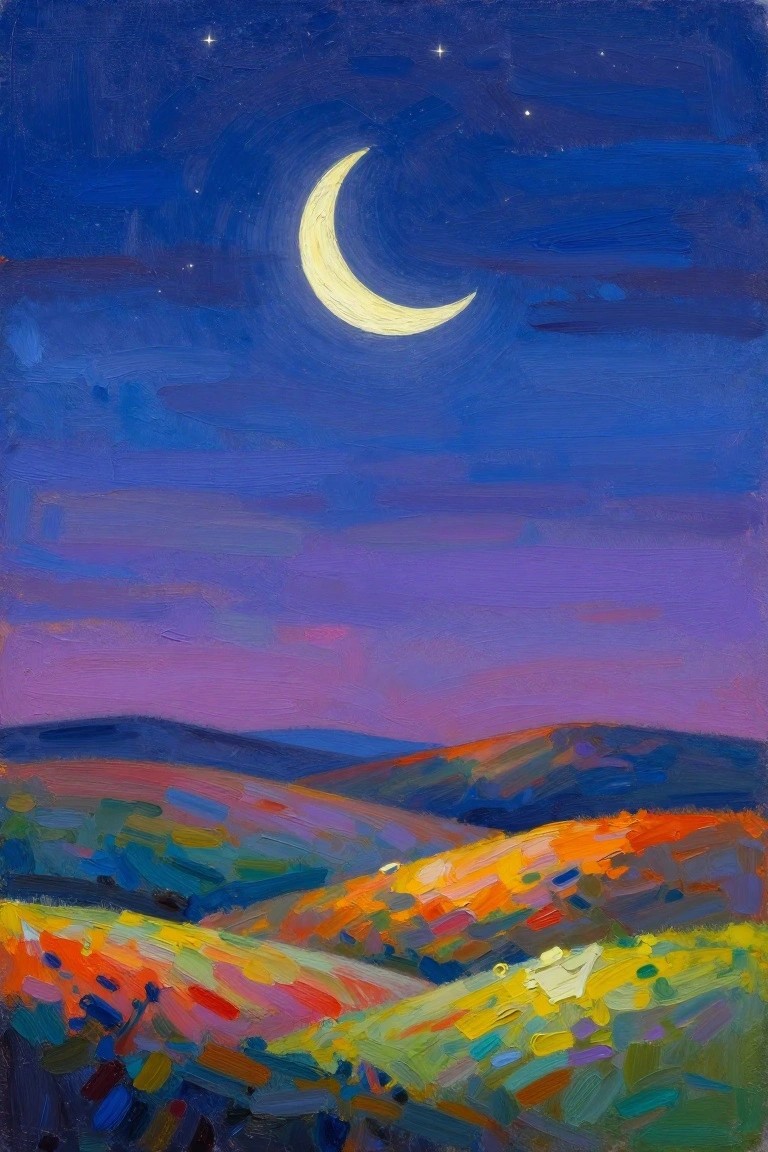
A night landscape with a crescent moon as the main focal point works well when the hills below are treated as broad, overlapping shapes rather than detailed terrain. The idea relies on a strong contrast between the pale moon and the deep blue sky, while the hills are built from blocks of warm oranges, yellows, and greens that read as fields or autumn foliage. This approach fits the landscape category and keeps the composition balanced by placing the moon high and letting the rolling hills fill the lower half.
The composition does a lot of the work here because the simple curved forms of the moon and hills make it easy to adjust the color palette for different seasons or wall colors. You could change the hill tones to cooler greens for a summer version or add more red for a harvest feel without changing the layout. For practice, this kind of subject helps with layering sky colors and keeping foreground shapes loose, and it would translate well to a smaller canvas or even a quick study in a sketchbook.
Yellow Chick Among Bright Spring Flowers
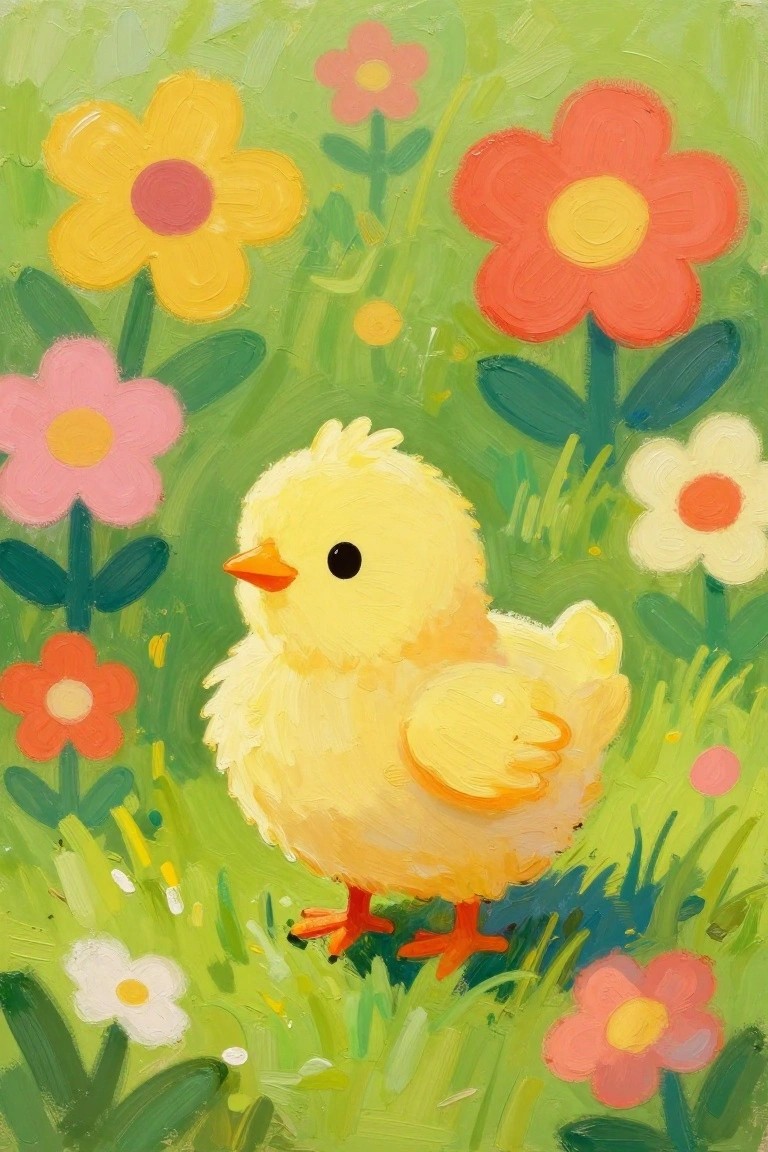
A small yellow chick placed front and center against a field of colorful flowers creates a simple animal-and-floral painting idea. The idea works by keeping the chick as the clear focal point while the surrounding blooms in pink, red, yellow, and white fill the space without crowding it. Loose brushwork and a bright green background keep the whole scene light and easy to build layer by layer.
What makes this idea useful is how the rounded shapes of the chick let you practice basic form and color blocking before adding small details like the beak and feet. The color palette makes this easy to adapt by changing flower hues or swapping the grass for a softer background tone. A painting like this works especially well for small canvases or spring-themed pieces that can hang as seasonal decor. For practice, this kind of subject lets you test how much detail you need before the image starts to feel busy.
Sunset Mountain Silhouettes
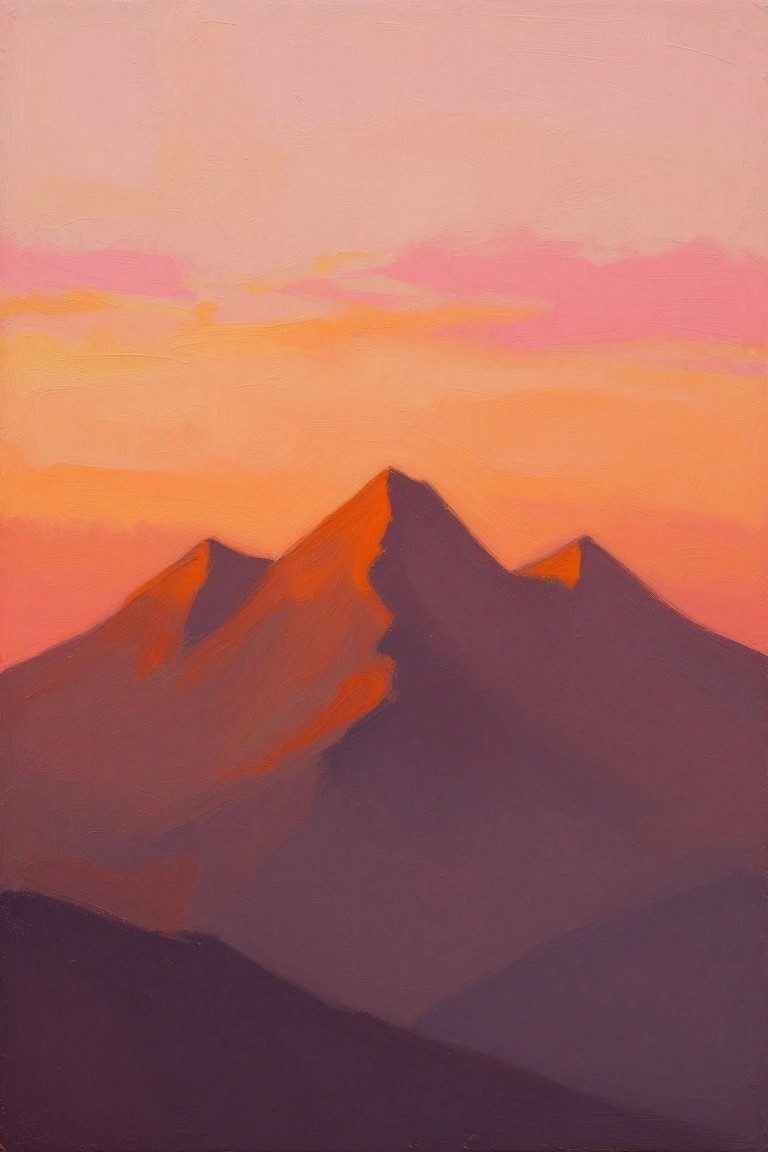
A mountain range at sunset works as a landscape idea because the dark peaks create strong shapes against a sky built from soft gradients of pink, orange, and peach. The concept relies on simple overlapping forms and limited color contrast rather than intricate details or textures. This keeps the painting focused on broad shapes and color placement that read clearly from a distance.
The composition does a lot of the work here since the peaks naturally lead the eye across the canvas without extra elements. You can adapt the idea by changing the sky colors to cooler tones for a different time of day or by stretching the mountains wider for a horizontal canvas. For practice, this kind of subject lets you focus on blending large areas and placing highlights on edges while staying loose with the lower slopes.
Sunset Sailboat Scene
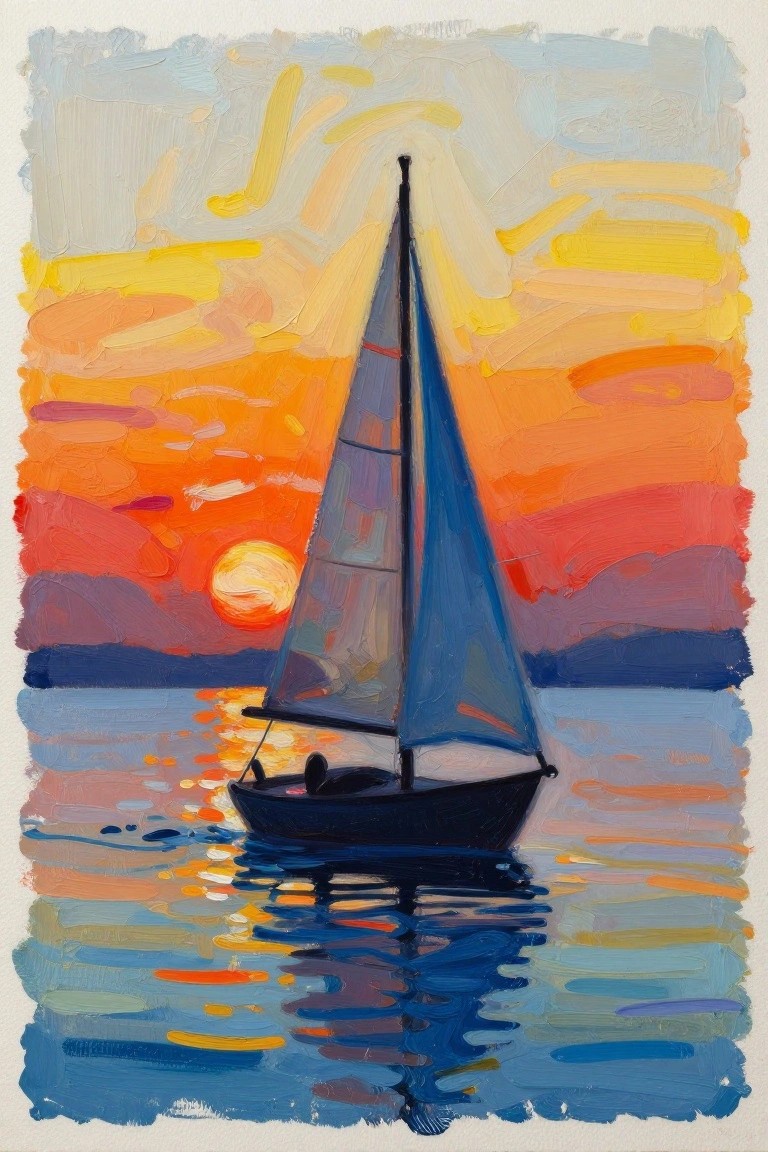
A sailboat at sunset gives you a clean landscape idea built around strong vertical lines and horizontal color bands. The boat anchors the center while its reflection links the sky and water, and the color shifts from warm oranges near the horizon to cooler tones above and below. This seascape approach works because the simple shapes and blocked-in colors let the composition carry the interest without needing intricate details.
The composition does a lot of the work here since the centered mast and mirrored water keep everything balanced with minimal planning. You can easily change the sky colors to match a different season or swap the sailboat for a smaller dinghy if you want less height. For wall pieces this kind of subject stands out on Pinterest because the dark boat against bright bands makes the image read quickly even as a thumbnail.
Stacked Stones Still Life
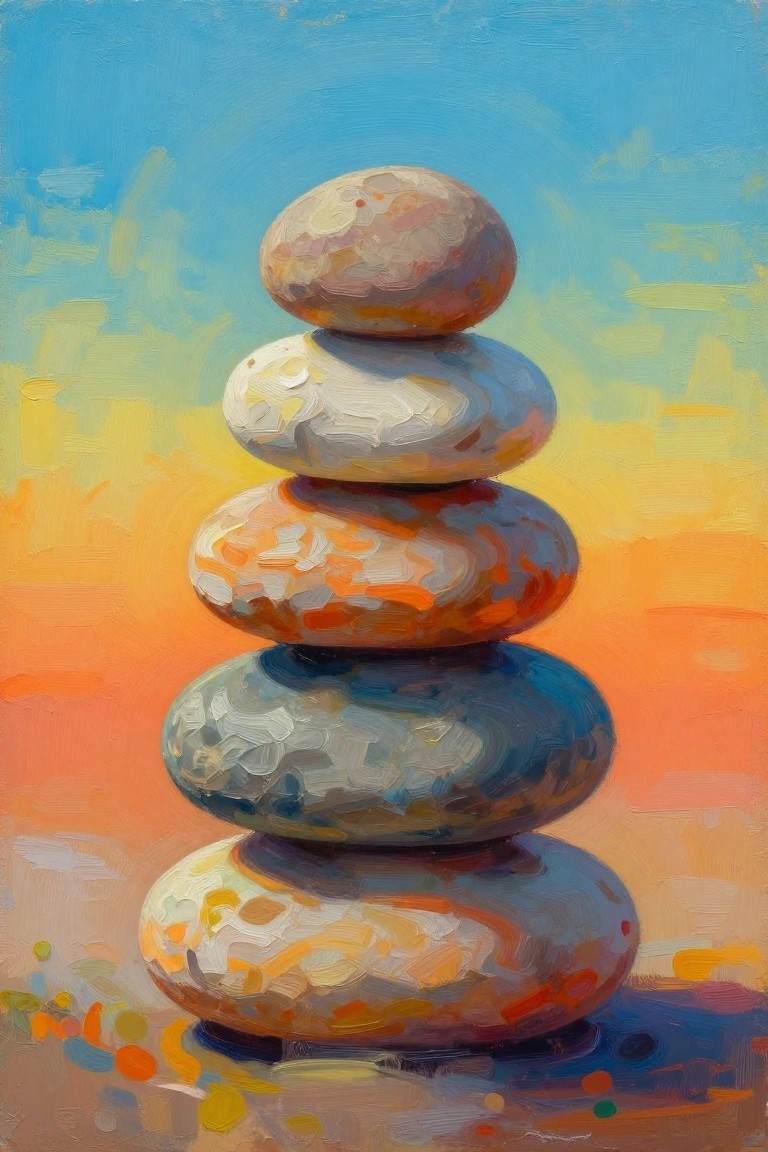
A stack of rounded stones creates a straightforward still life idea built around simple overlapping shapes and color variation. Each stone gets its own mix of hues and surface texture while the overall form stays compact and centered. A strong vertical layout with a warm-to-cool background gradient keeps the focus on the stack itself and reduces the need for extra elements.
The composition does a lot of the work here because the repeating rounded forms create balance without complex drawing. You can change the number of stones, swap in different color combinations, or crop the stack tighter to fit any canvas size. For practice this subject helps with blending edges and building subtle texture, and the clean result often performs well as a quick Pinterest pin or small wall piece.
Single Tulip with Layered Yellow Petals
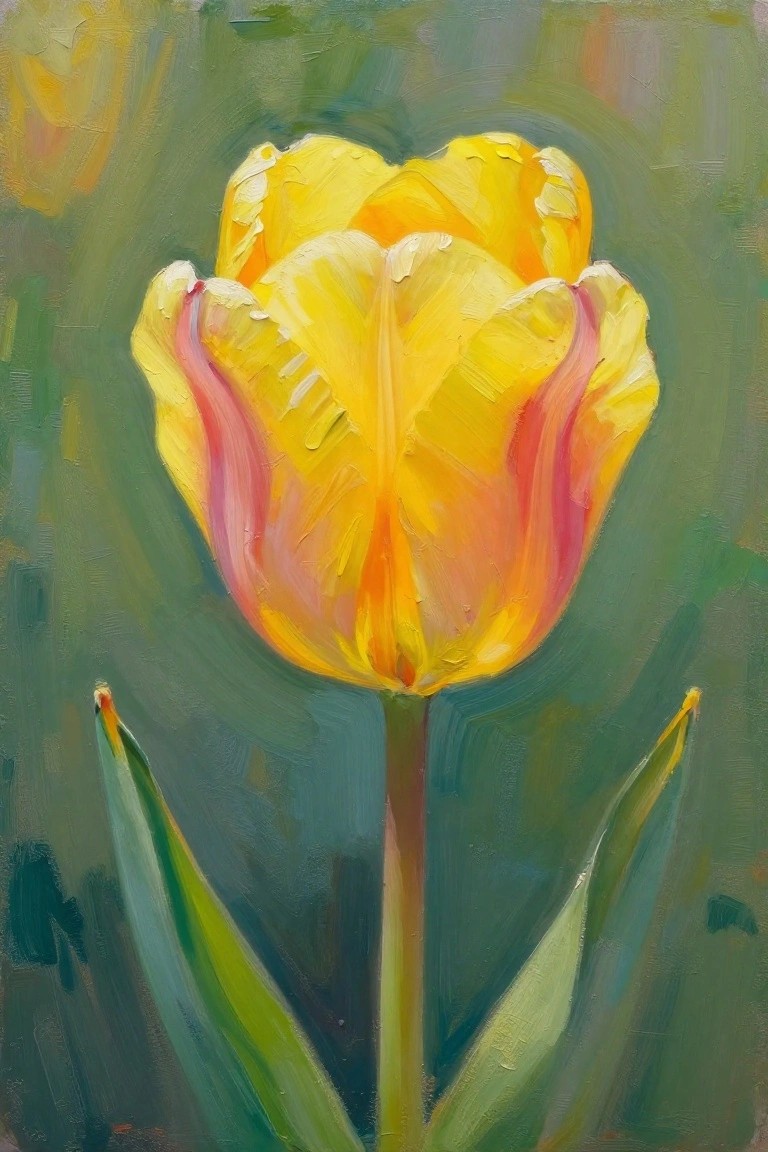
A single tulip works well as a floral idea when the petals are built up with overlapping strokes that show both bright yellow and warm pink tones. The composition stays simple by placing the flower in the center on a narrow stem with two leaves at the base and keeping the background a muted green. This approach lets the shape of the bloom carry the painting without extra objects or details.
What makes this idea useful is how the limited elements let you practice blending and building form on one main subject. You can swap the petal colors or shift the background tone to match different seasons or wall colors. For practice, the straightforward layout helps you focus on edge control and light direction without juggling multiple objects. The same setup can be painted smaller for cards or repeated with different flower types for a quick series.
Bold Autumn Tree Landscape
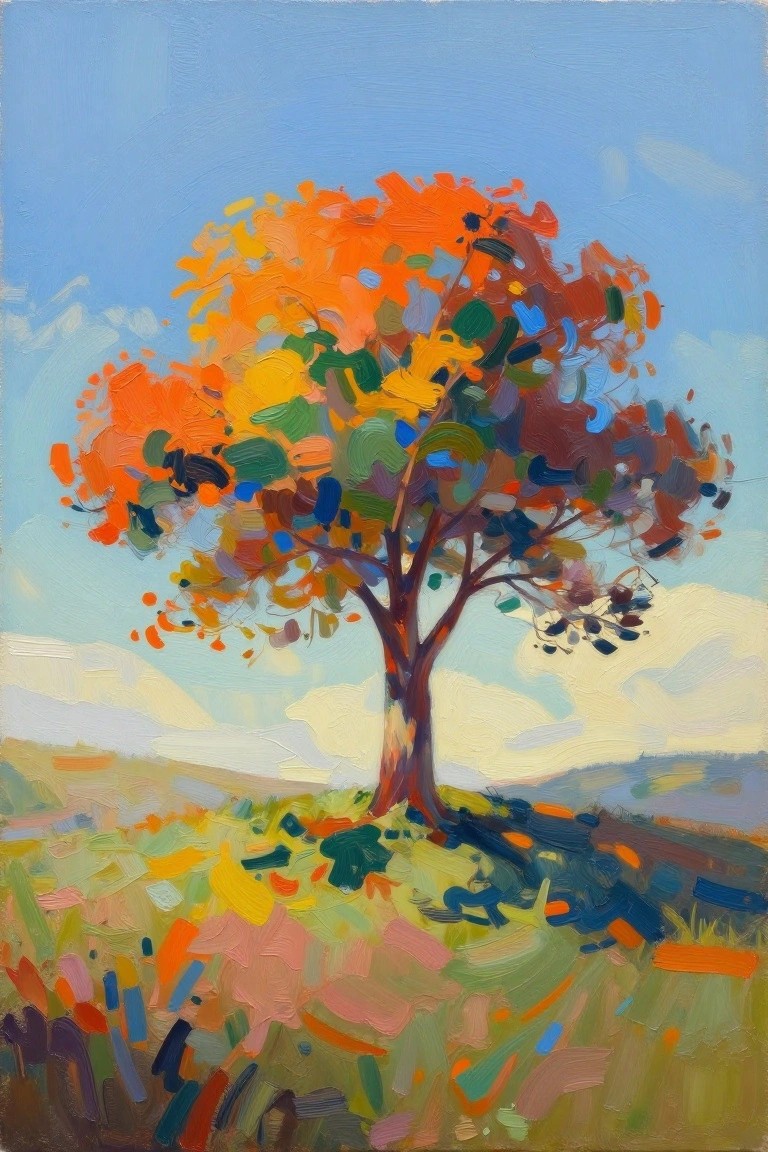
A single tree painted with energetic brushstrokes and blocks of orange, yellow, red, and green creates a strong focal point in a simple landscape. The idea relies on layering warm colors over a cooler blue sky and muted hills so the foliage feels full without needing fine detail. This type of seasonal landscape works well because the high contrast between the tree and background keeps the composition balanced even with loose shapes.
The composition does a lot of the work here by placing the tree slightly off center so the eye moves naturally across the canvas. You can swap in different color mixes for other seasons or crop the scene tighter if you want a smaller study. For practice, this kind of painting helps with color mixing and brush control while still looking finished on a wall.
Colorful Birds Soaring Over a Field
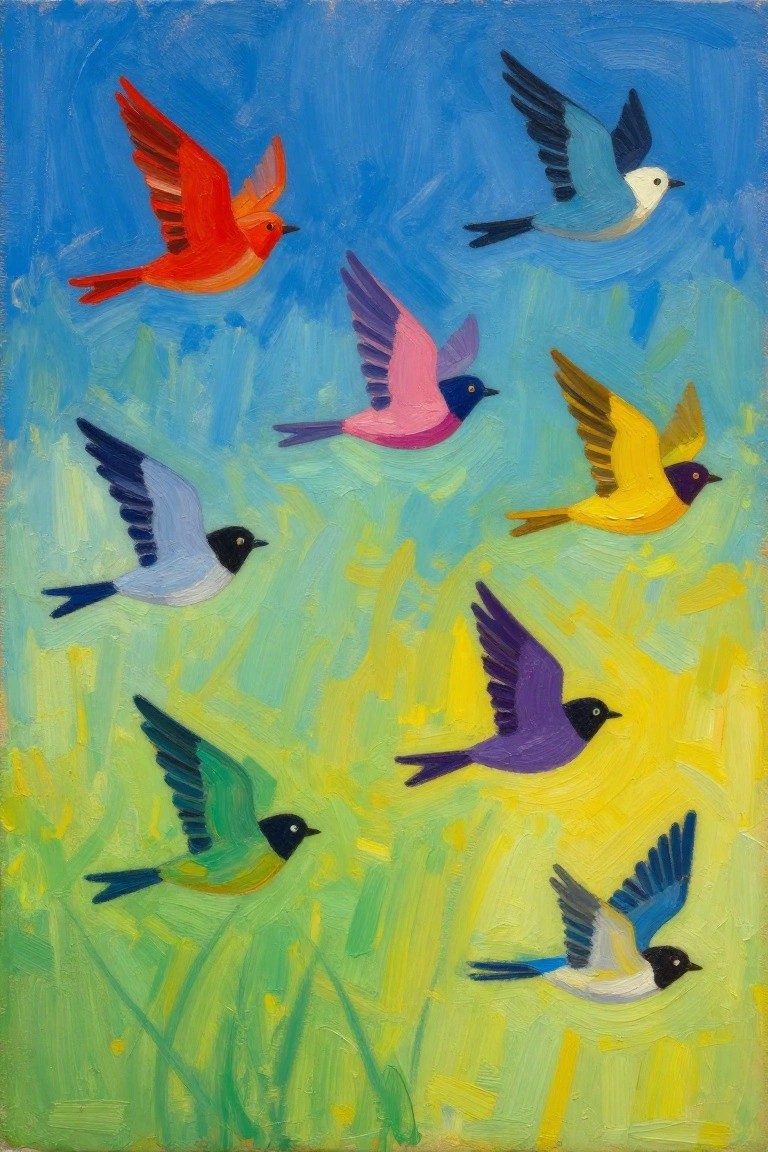
Painting a group of birds in flight gives you a clear animal subject that stays simple to set up. The idea centers on placing several birds at different angles and heights so their shapes fill the space without crowding, while a soft sky and grass area underneath keeps the layout balanced. Varied bright colors on the birds stand out against the background and let you focus on basic wing positions rather than fine feathers.
What makes this idea useful is that the scattered placement removes pressure to get every bird perfectly aligned, so you can start with just a few and add more as you go. The color choices are easy to adapt by swapping in whatever shades you have on hand or toning them down for a quieter look. For wall pieces, this kind of loose bird grouping works well because the movement draws the eye without needing extra details or a complicated setting. You could also shrink the canvas size and use fewer birds if you want a quicker version.
Oversized Flowers Around a Small Cottage
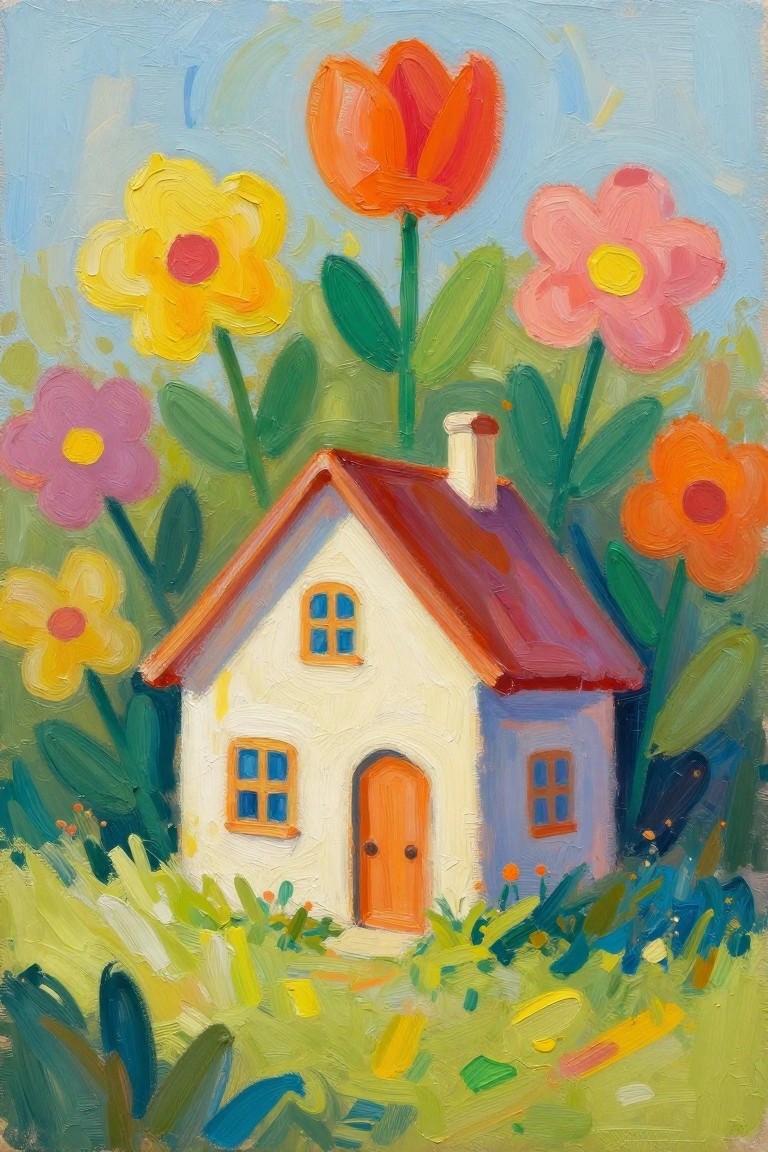
A cottage with a red roof and blue accents sits low in the frame while large blooms in yellow, pink, orange, and red tower above it on thick green stems. The idea centers on scaling flowers much bigger than the house itself so they become the main focus, with the building acting as a simple anchor in the middle. This approach works as a decorative floral scene that relies on strong color blocks and clear shapes rather than fine detail.
The composition does a lot of the work here by letting the flowers fill most of the space and create instant visual interest. You can change the flower types or shift the house color to match whatever paint you already have on hand. For practice, this kind of subject helps beginners handle bold shapes and overlapping elements without needing to paint tiny windows or textures. It also translates well to a square canvas for Pinterest, where the bright palette and simple layout stand out in a feed.
Wildflower Meadow of Daisies and Colorful Blooms
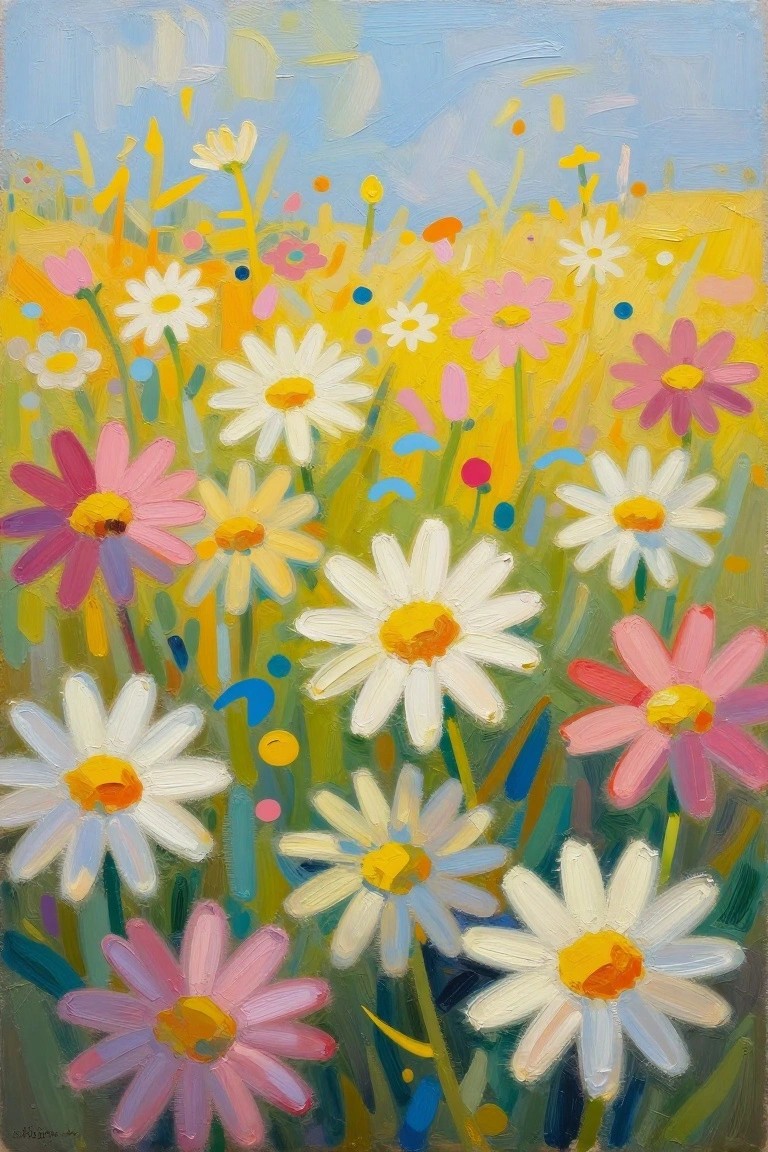
A meadow filled with white daisies mixed among pink, purple, and yellow wildflowers offers a simple floral landscape idea. The composition places larger blooms in the foreground with smaller ones receding into a yellow-green field, which creates depth while keeping the focus on the flowers themselves. Loose brushwork and a bright color mix let the shapes overlap naturally without needing exact petal details.
The color palette makes this easy to adapt since you can change the accent flowers to match whatever paints you have. You could scale it down to a smaller canvas by painting just a cluster of six or seven blooms instead of the full field. For practice, this kind of subject helps you work on layering and color contrast without getting stuck on fine details. A painting like this would also translate well to a quick study you could repeat with different background tones.
Vibrant Autumn Path Landscape
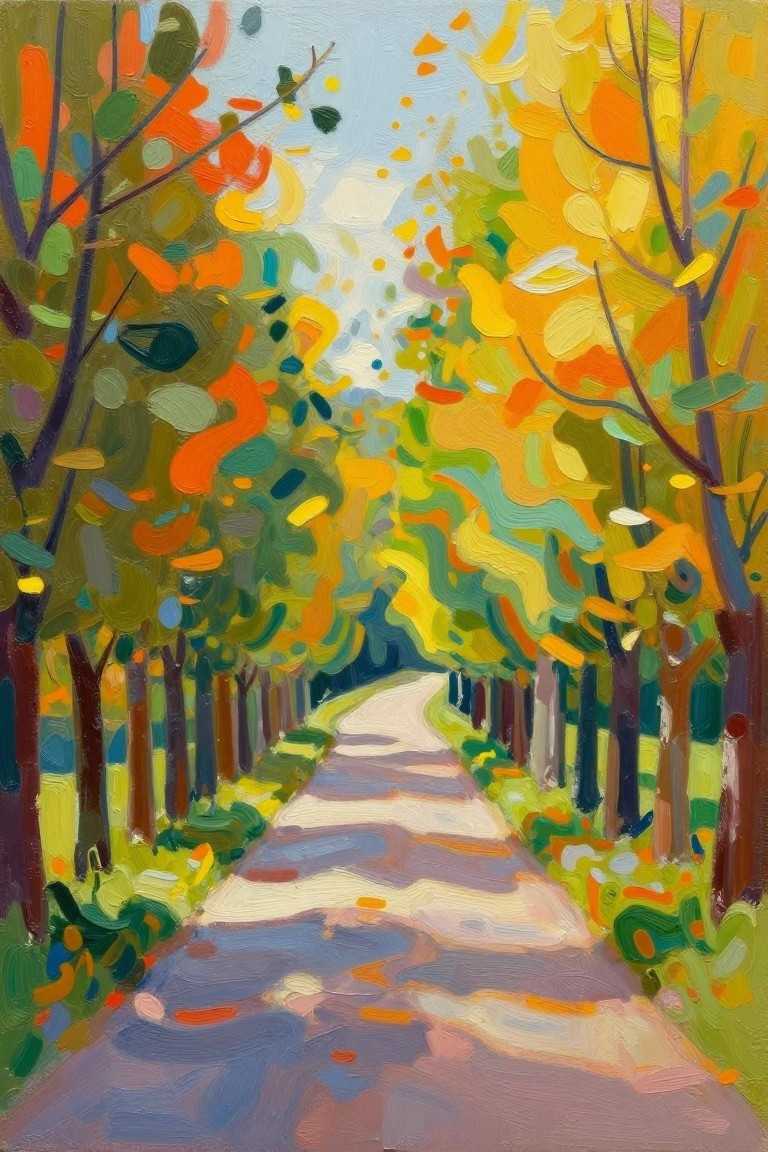
A path winding between rows of trees makes a strong landscape idea, especially when the foliage uses bold blocks of orange, yellow, and green to suggest fall without needing individual leaves. The central path creates natural depth by narrowing toward the background, while the varied brush marks in the canopy add movement and keep the scene lively. This approach fits the seasonal landscape category and works because the color choices carry most of the visual interest.
The composition does a lot of the work here since the path leads the eye automatically and reduces the need for complex planning. You can adapt it by shifting the palette to spring greens or winter tones, or by simplifying the trees into larger shapes if you want a faster study. For wall art this kind of piece stands out on Pinterest because the bright, high-contrast colors read well even in small thumbnails.
Sleeping Fox Curled in Moonlit Grass
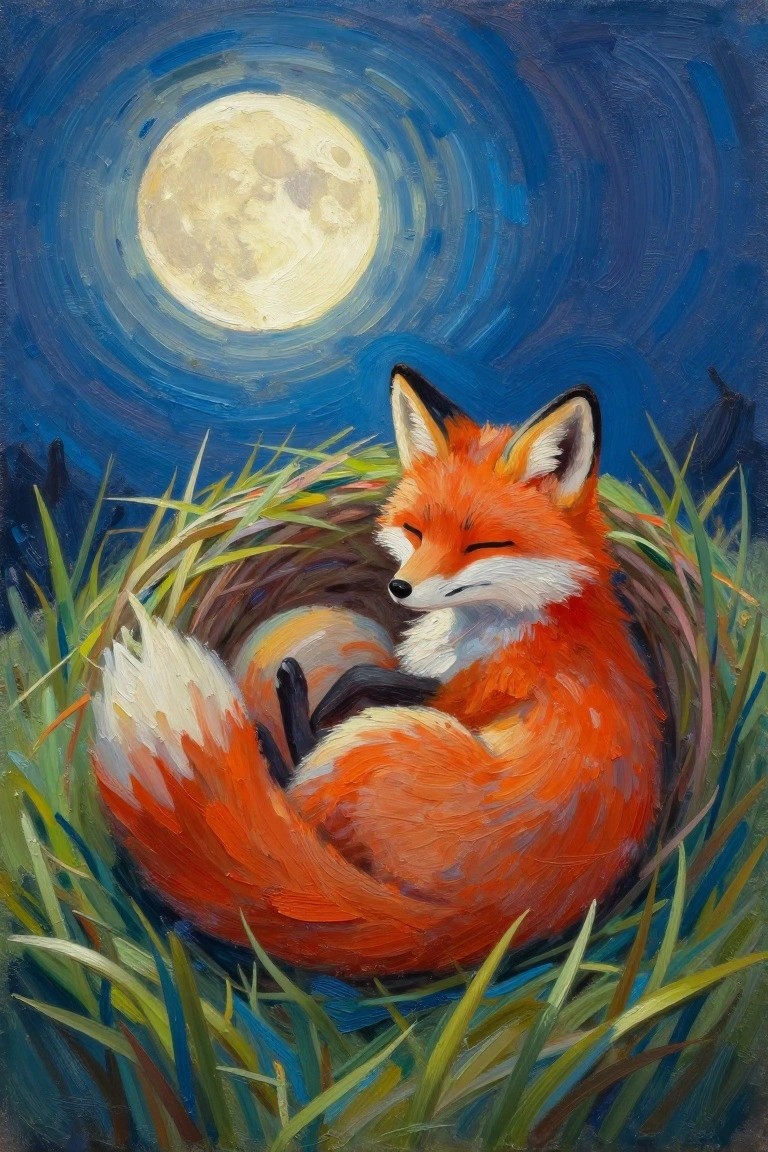
A curled fox sleeping in grass makes a straightforward animal painting idea that relies on one clear focal point and a simple circular composition. The fox takes up most of the space with its tail wrapped around its body, while the moon and night sky fill the background without adding extra subjects. Warm orange fur against cool blue tones creates contrast that helps the shape read clearly even with visible brushstrokes.
What makes this idea useful is how the compact pose lets you work on a small canvas without needing complex proportions. You can easily change the background to a daytime field or replace the moon with a sun if you want a different mood. The limited palette of orange, blue, and green also keeps color mixing simple, so the same layout works for quick studies or small wall pieces that still look complete.
Sunset Lake Reflection with Foreground Reeds
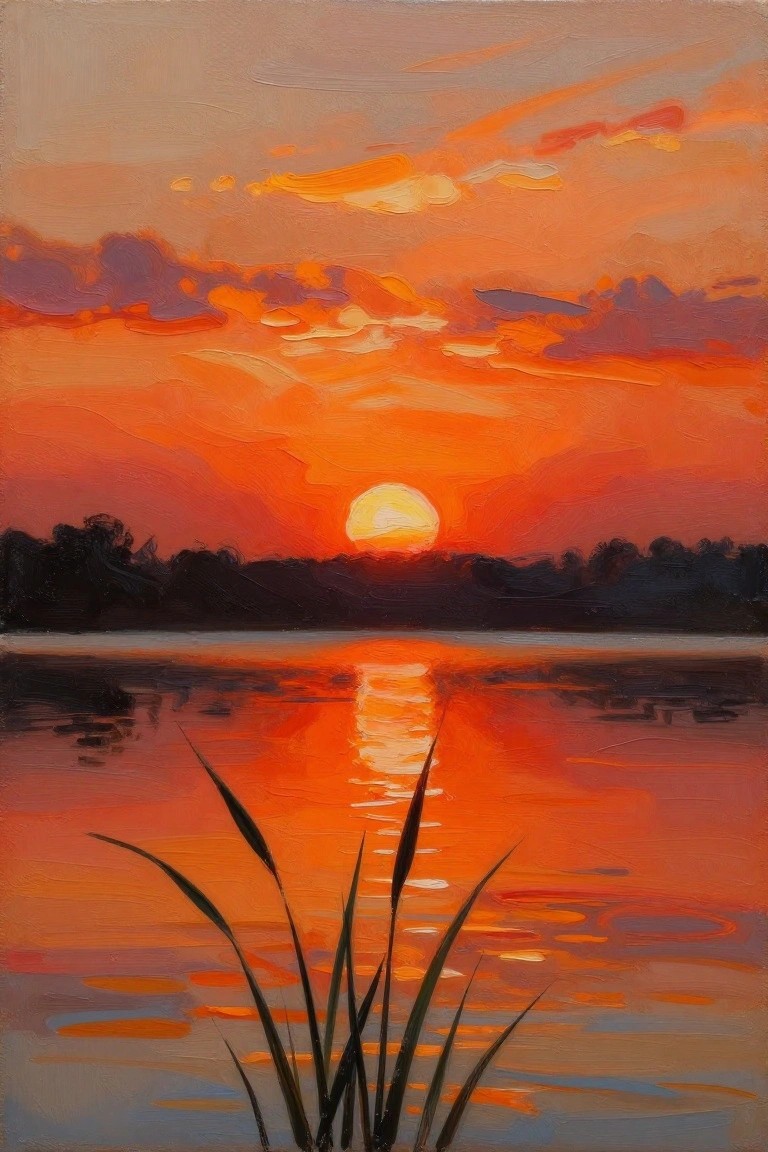
A sunset over calm water works as a landscape idea because the strong horizontal reflection pulls the eye through the middle of the painting while the sky and water share the same warm color range. Tall reeds placed low in the frame give the scene a clear foreground without adding complicated shapes, and the dark land mass along the horizon keeps the focus on the bright circle of sun. This approach fits the landscape category and relies on broad color areas rather than fine detail.
The composition does a lot of the work here since the reflection repeats the sky colors and creates instant balance. You can change the reeds to other simple shapes like rocks or marsh grass, or shift the palette toward cooler tones for a different time of day. For practice this subject helps you work on blending large areas and handling value shifts in one contained scene.
Stacked Suitcases Still Life
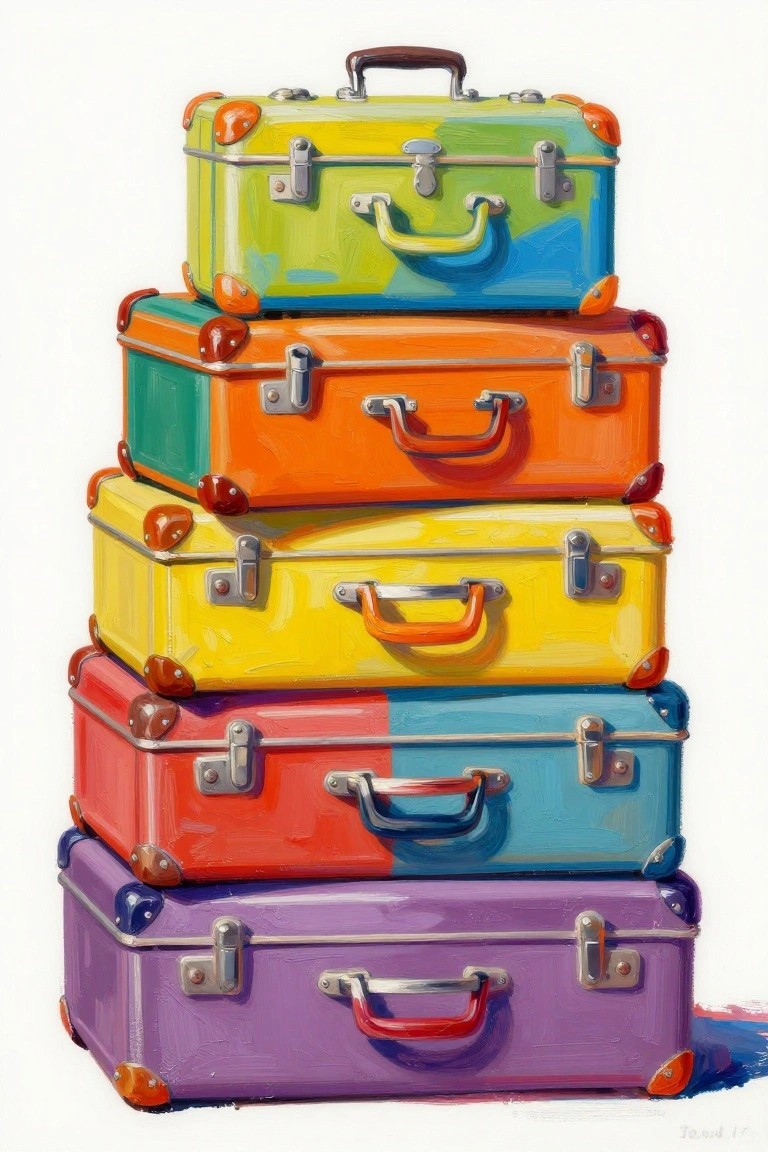
A still life built from stacked suitcases gives you a simple subject that relies on overlapping rectangles and strong color blocks. The vertical pile creates height while the different handle shapes and corner details add just enough variety to keep the eye moving. Bright, flat color areas make it easy to focus on shape and edge work without needing fine detail.
What makes this idea useful is how quickly you can change the palette to fit a room or mood. You could paint only the top four cases on a smaller canvas or add travel stickers for a personal twist. The plain background keeps the work straightforward, so beginners can practice color mixing and layering without extra elements. For wall pieces this format fits nicely over a desk or in a hallway where bold shapes read well from a distance.
Two-Fruit Still Life with Reflections
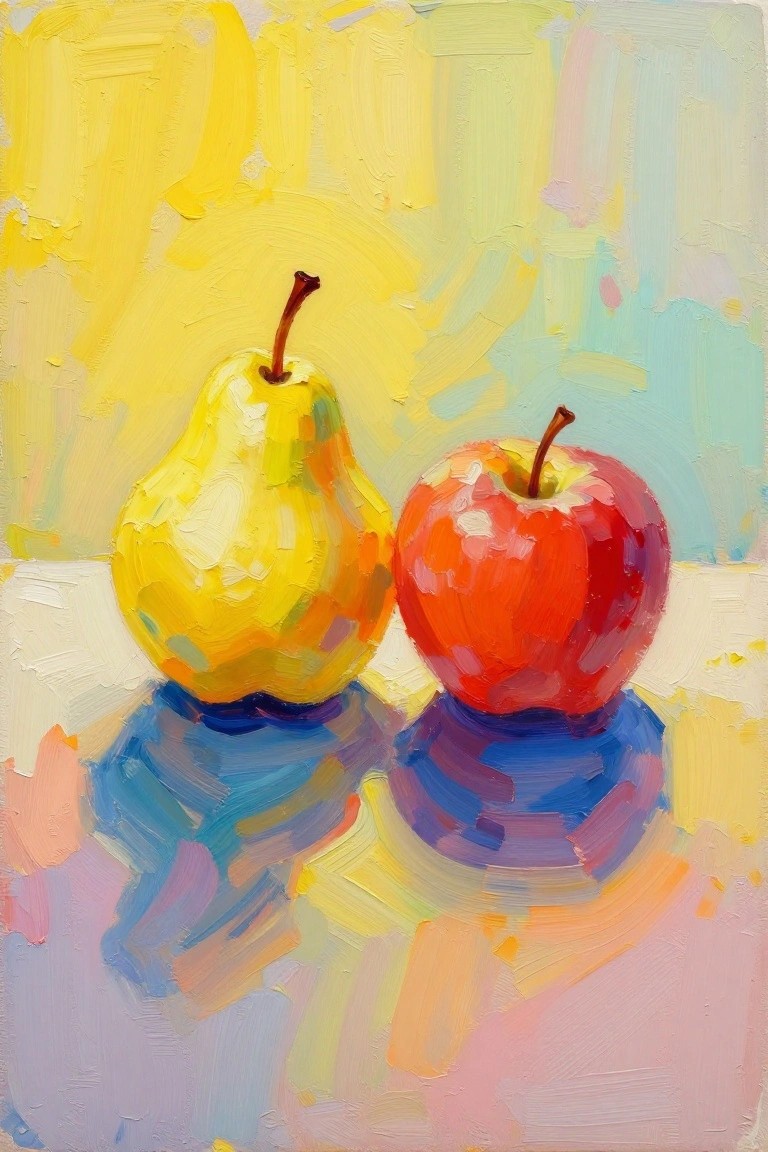
A still life of just an apple and a pear gives you two simple rounded forms to work with while still allowing strong color contrast. The yellow and red fruits sit next to each other with visible brushstrokes that build shape and light without requiring tight detail. Reflections or shadows underneath the fruit add a sense of surface and depth that keeps the composition grounded.
What makes this idea useful is how the limited subject lets you focus on color mixing and brushwork instead of drawing complexity. You can change the fruit types, shift the background hues, or adjust the size of the canvas with almost no extra planning. For practice, this kind of setup works well because the basic shapes stay forgiving while still teaching you how to handle light and reflected color on everyday objects.
Lighthouse Over a Sunset Ocean
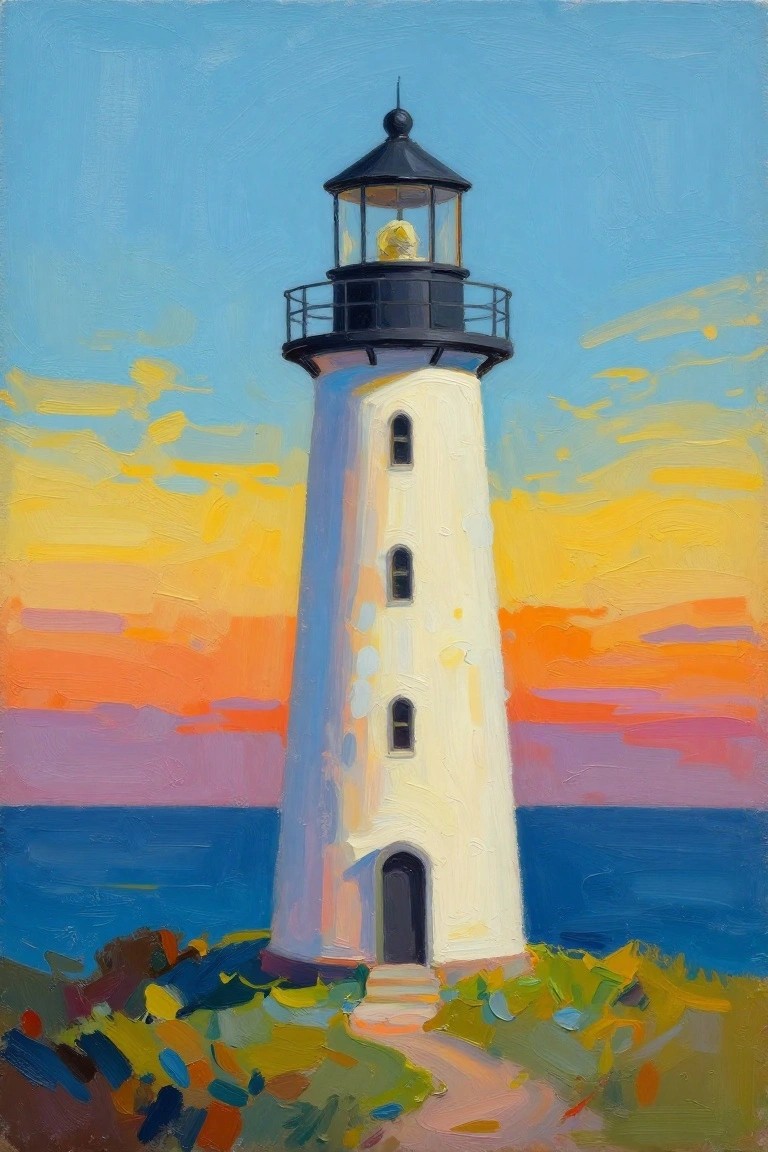
A tall lighthouse against a bold sunset sky works as a straightforward landscape painting idea. The vertical shape of the tower paired with horizontal bands of color in the sky creates a clean composition that holds together even with loose brushwork. This type of coastal scene fits into the seascape category and stays effective because the main forms stay simple while the sky supplies most of the visual interest.
What makes this idea useful is how the sky can be painted with just a few blended color blocks that still read as a sunset. The limited foreground detail keeps the focus on the lighthouse without requiring extra elements. For practice, this kind of subject scales down easily to smaller canvases or studies, and the strong vertical layout makes it stand out when saved on Pinterest for future reference.
Cherry Cluster Still Life
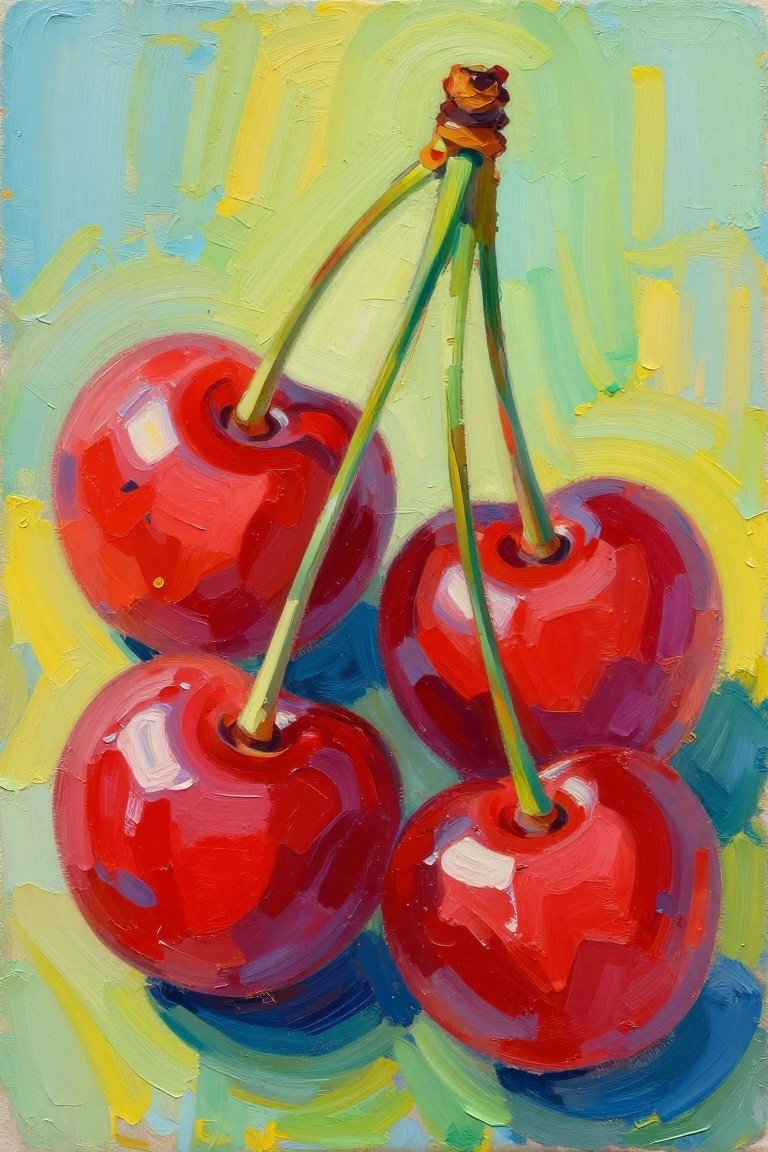
A still life built around four red cherries works as a straightforward fruit painting idea. The stems meet at a single point above the group to create a clear structure while the round forms overlap just enough to feel natural. Strong red tones against loose greens and yellows in the background give the piece contrast without requiring precise edges or tiny details.
The composition does a lot of the work here because the connected stems and overlapping shapes cut down on layout decisions. You can easily change the background to whatever leftover colors you have or scale the whole thing down for a quick canvas study. This kind of subject stands out on Pinterest when kept bold and simple since the bright reds read clearly even in small thumbnails.
Bridge Over a Lily Pad Pond
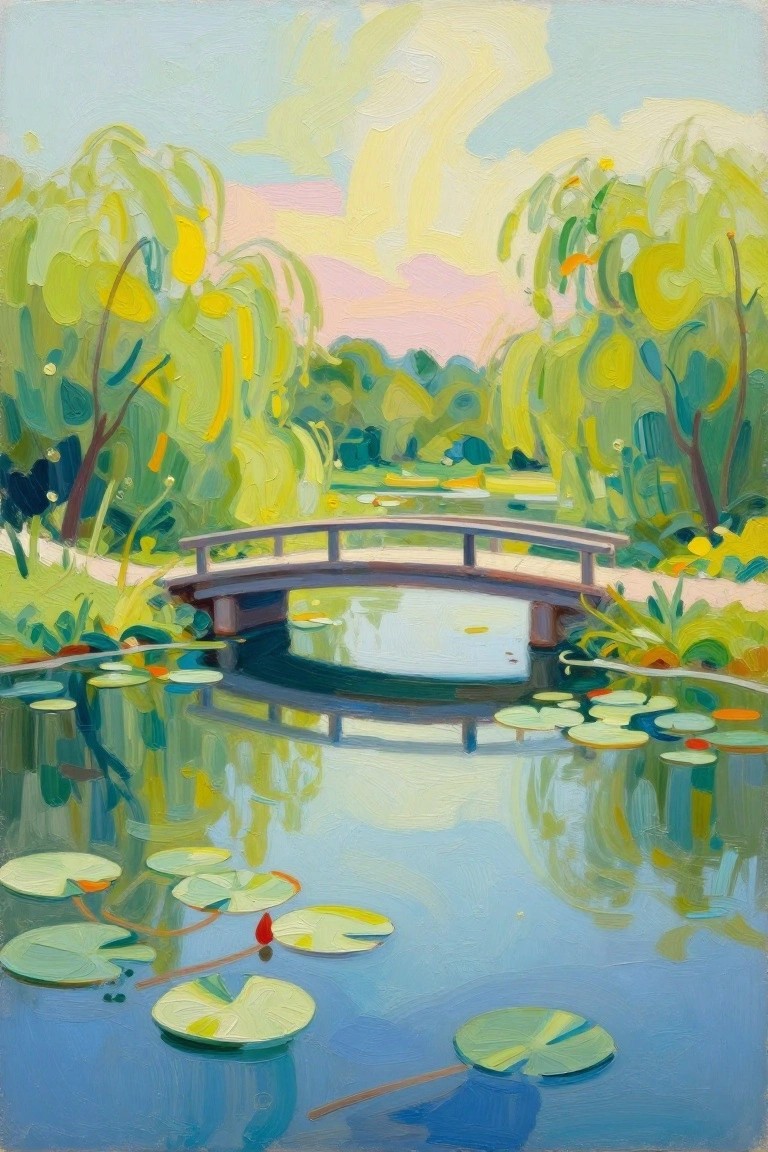
A landscape idea built around a low wooden bridge spanning a still pond covered with lily pads. The curved bridge creates a clear focal line across the water while the reflections underneath repeat the shapes in softer tones. Thick greenery on both sides frames the view and keeps the eye moving toward the center without needing many extra elements.
What makes this idea useful is the simple division of space into sky, trees, water, and bridge, so you can block in large areas first and add details later. The color palette stays mostly greens and blues with a few warm accents, which makes it easy to adjust for different seasons or light conditions. You could shrink the bridge to one side of the canvas or reduce the number of lily pads if you want a quicker version. For wall art, the balanced layout holds up well even at smaller sizes.
Striped Beach Umbrella and Chairs
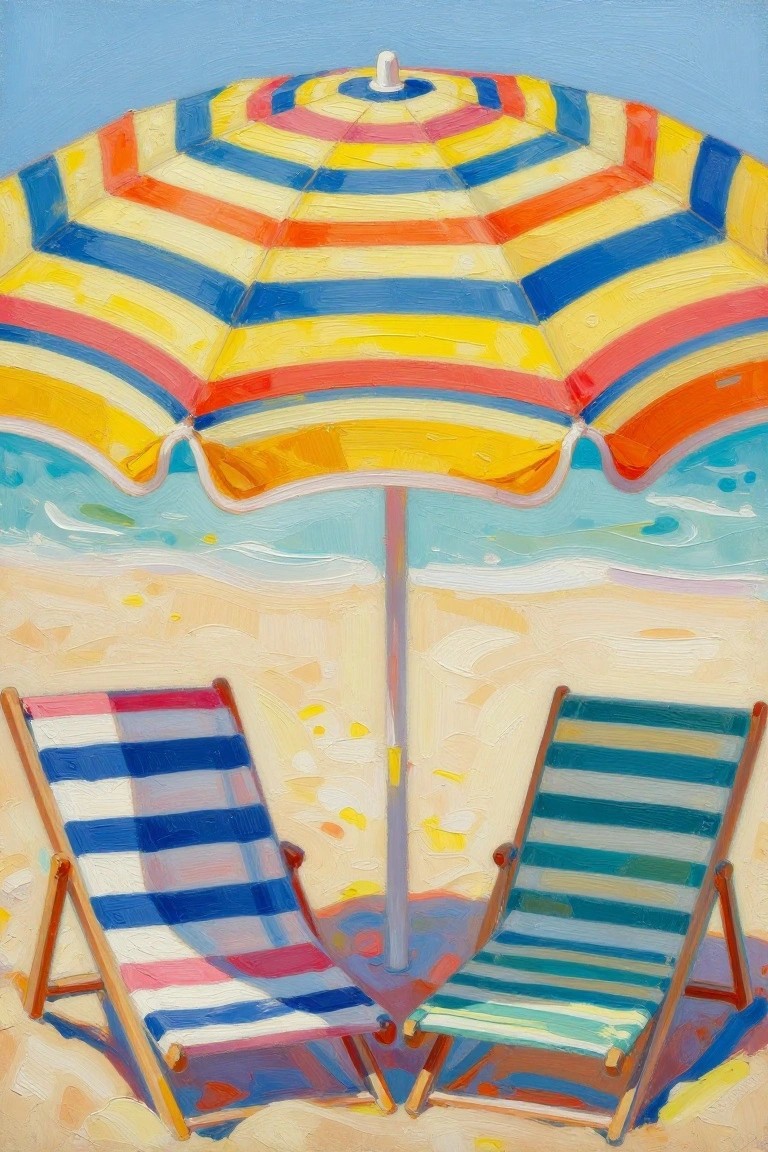
A large overhead umbrella with wide stripes in yellow, blue, red, and orange creates the main subject here, paired with two striped beach chairs positioned directly below it on the sand. The vertical pole connects the canopy to the lower half of the scene and helps balance the composition. This type of painting idea fits into a landscape or seasonal category and uses repeating patterns plus a bright, limited palette to keep the focus clear.
What makes this idea useful is how the strong stripes and simple shapes carry the visual weight without extra detail work. You could change the stripe colors to match a favorite photo or reduce the number of bands to make the piece faster to paint. For wall art, the bold pattern stands out well in small previews, and the same layout works if you want to swap the beach setting for a different background.
Bold Sky with a Lone Boat
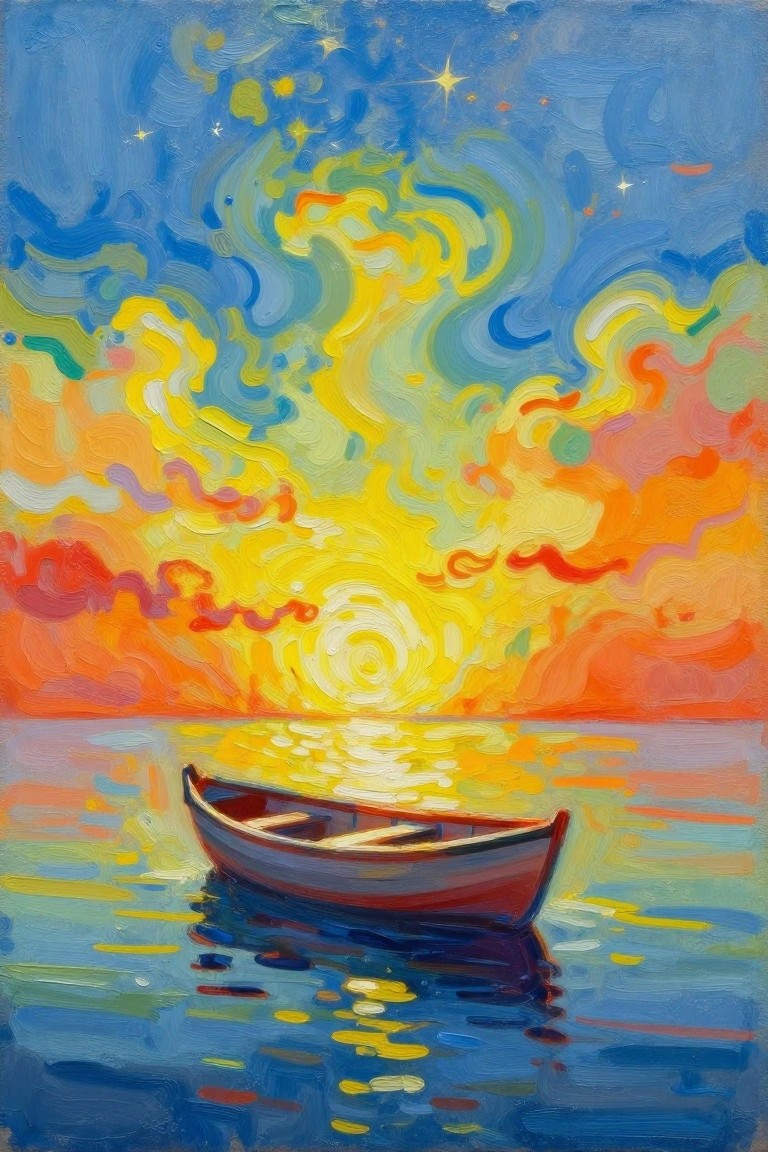
A simple boat floating on water paired with a dramatic sky full of swirling colors makes an effective landscape idea. The composition works because the boat stays small and contained in the lower third while the sky takes up most of the space, letting bright yellows, oranges, and reds contrast against cooler blues. This kind of scene fits the landscape category and gives beginners a clear focal point without needing lots of fine detail.
The composition does a lot of the work here by keeping the boat shape basic so you can focus on brushwork and color blending in the sky. You could adapt the idea by changing the color mix to match a different time of day or by cropping tighter around the boat if you want a smaller canvas. For practice, this kind of subject lets you try loose strokes on the sky while the water reflection stays easy to simplify with just a few horizontal marks. A painting like this would also translate well to a square format for social media without losing impact.
Frequently Asked Questions
What supplies are essential for starting with these beginner oil painting ideas?
You will need a small set of oil paints in primary colors plus white and black, a few brushes of varying sizes, a palette for mixing, and a canvas or primed board. Linseed oil or another medium helps with consistency while a jar of solvent aids cleanup. Start with affordable student-grade materials to keep costs low and focus on enjoying the process rather than perfection.
How long does it typically take to complete one of these simple paintings?
Most of the approachable ideas can be finished in one to three sessions of two to four hours each because they use basic shapes and limited color palettes. Oil paints dry slowly so plan for touch-ups over a few days but the initial blocking in of forms happens quickly. Allow extra time for drying between layers if you want crisp details.
Can I use these ideas with acrylic paints instead of oils?
Yes many of the listed subjects work equally well with acrylics since the compositions rely on simple forms and everyday subjects rather than complex blending unique to oils. Acrylics dry faster which can speed up your progress but you may need to add a retarder if you prefer more working time similar to oils. Adjust your approach by keeping a spray bottle handy to maintain moisture on the palette.
What are some tips for mixing colors effectively in these projects?
Begin with a limited palette of five or six colors to avoid muddiness and practice creating tints and shades by adding small amounts of white or complementary hues. Test mixes on scrap paper before applying them to your canvas and observe how light affects your subject in real life. Keep a notebook of successful color recipes so you can repeat pleasing combinations in future paintings.
How should I care for my brushes and workspace after painting?
Clean brushes immediately with solvent followed by soap and water to prevent paint from hardening in the bristles. Wipe your palette with a rag and store leftover paint in an airtight container or under plastic wrap. Ventilate your area well during sessions and dispose of rags safely to reduce fire risk from oil-soaked materials.