
I enjoy painting landscapes now and then when the weather keeps me inside.
It is nice to have a few easy ideas ready when I want to try something new.
These suggestions are based on scenes I have painted or seen others do successfully.
They are meant to be peaceful and not too demanding.
I put together 19 of them that might appeal to other nature lovers.
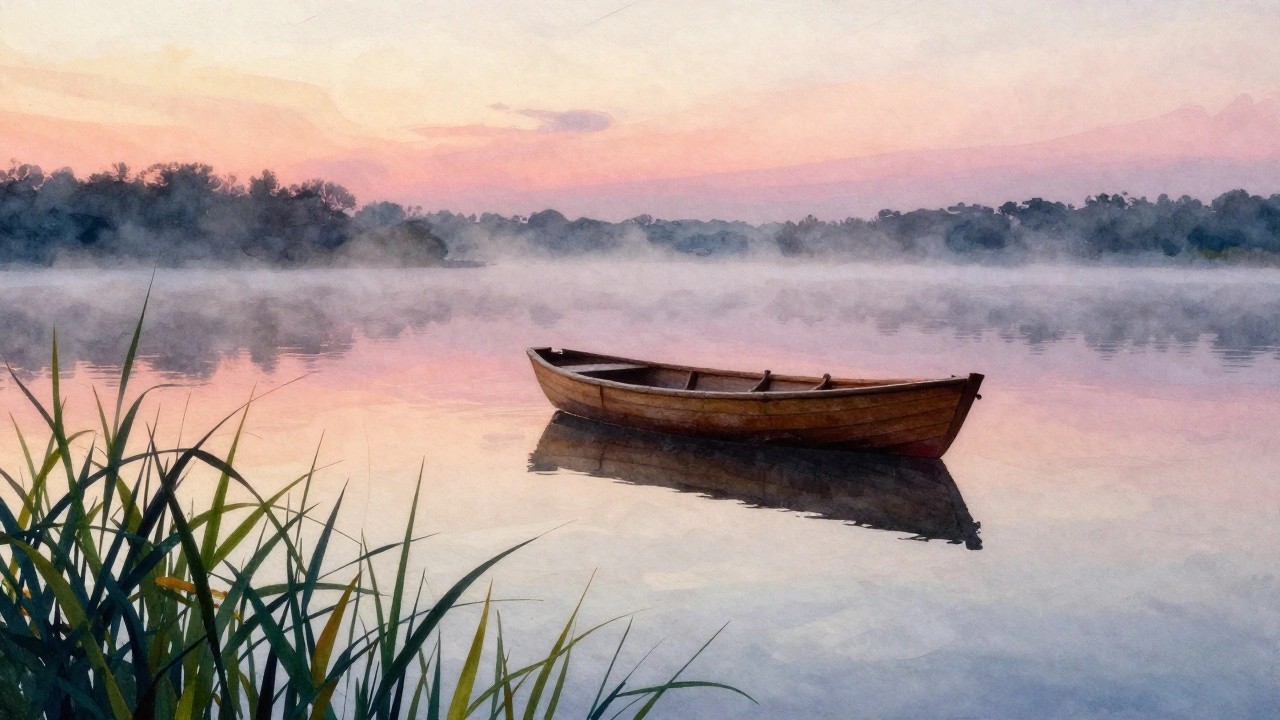
Rowboat on Calm Water at Sunrise
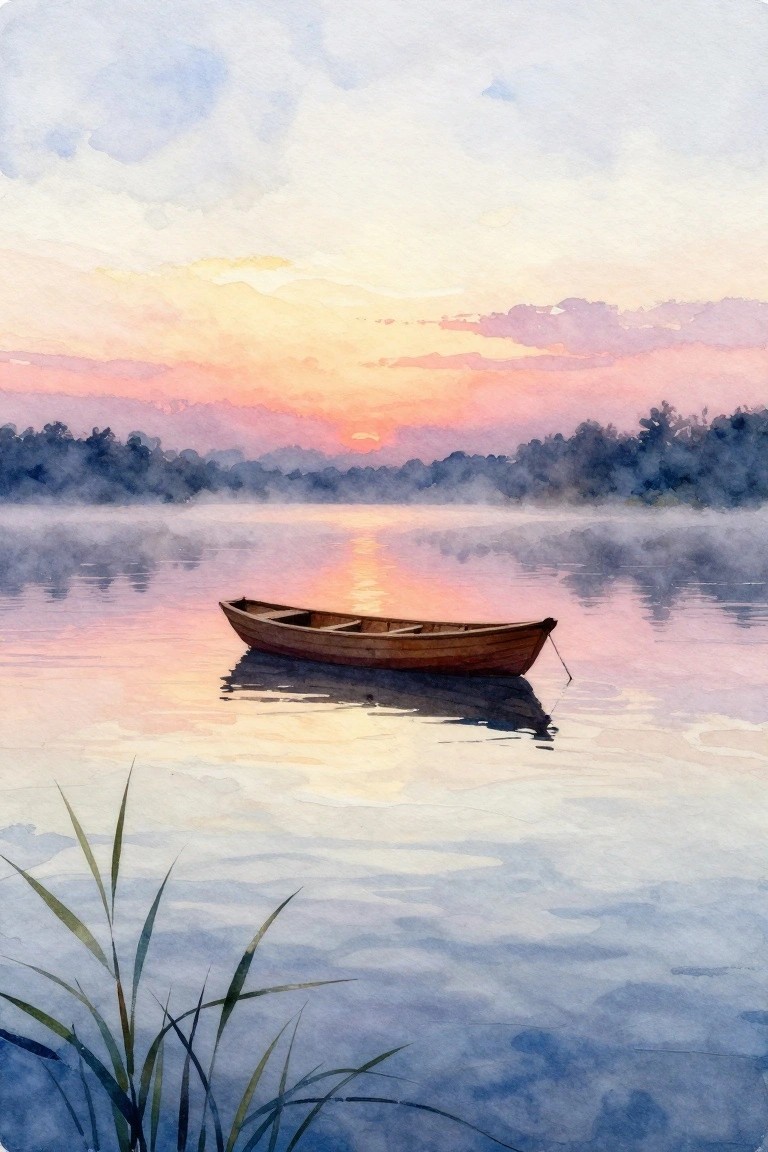
A rowboat floating on still water forms the core of this landscape painting idea. The scene uses a soft sky gradient and misty background to create distance while the boat and its reflection stay as the clear focal point. Foreground reeds add a simple layer that frames the water without crowding the composition.
What makes this idea useful is how the boat shape and water reflections can be built with flat washes and a few dark lines. The color palette shifts easily if you want to try different times of day or seasons. For practice, this kind of subject works well at any size since the main elements stay recognizable even when simplified.
Winding Path Across Rolling Hills to a Hilltop House
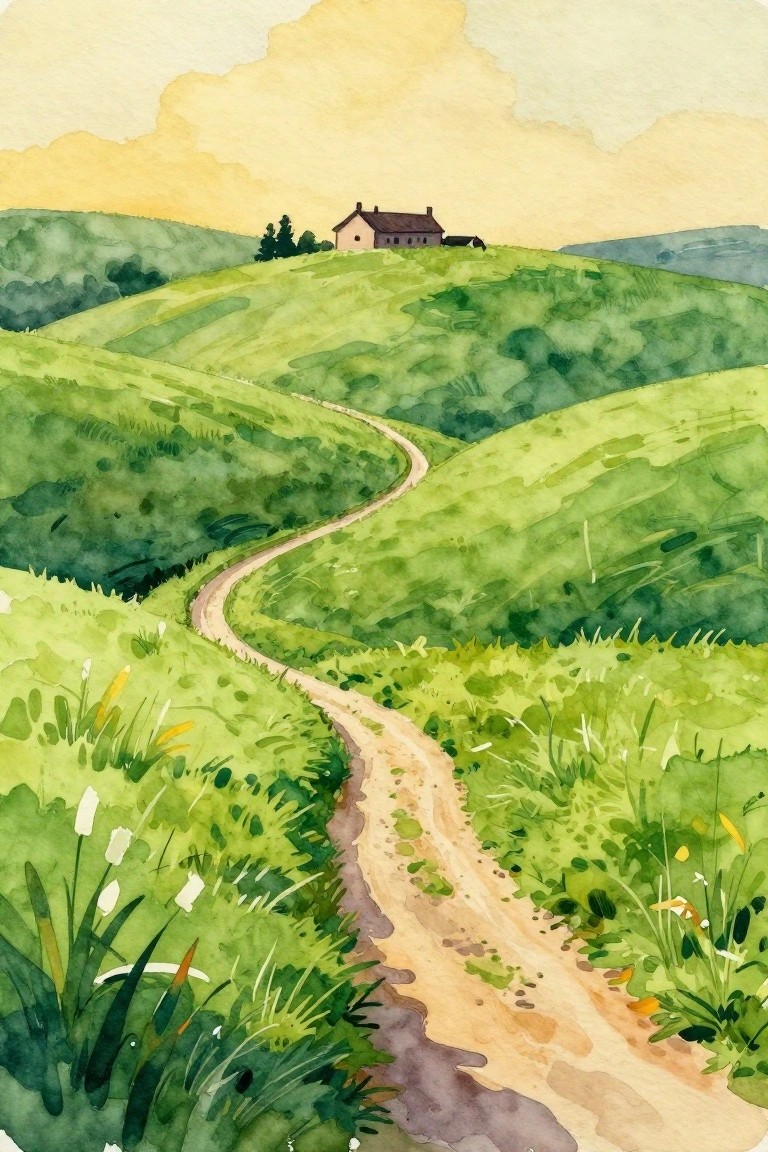
A landscape idea built around a curving dirt path that leads through layered green hills toward a small house on the ridge gives the scene a clear sense of movement and distance. The path acts as the main organizing element, starting wide in the foreground and narrowing as it climbs, which keeps the composition balanced without extra focal points. Soft washes of green with touches of earth tones and wildflowers along the edges make the open countryside feel natural and easy to follow.
The composition does a lot of the work here by using the path to guide placement of hills and the house so nothing feels scattered. You can adapt the idea by adjusting the house size, adding different foreground plants, or shifting the sky color for a different time of day. For practice, this kind of scene helps with layering hills and handling gradual changes in value while staying loose enough to finish without getting stuck on details. It would pin well as a straightforward nature view that still shows depth.
Coastal Sunset with Rocks and Waves
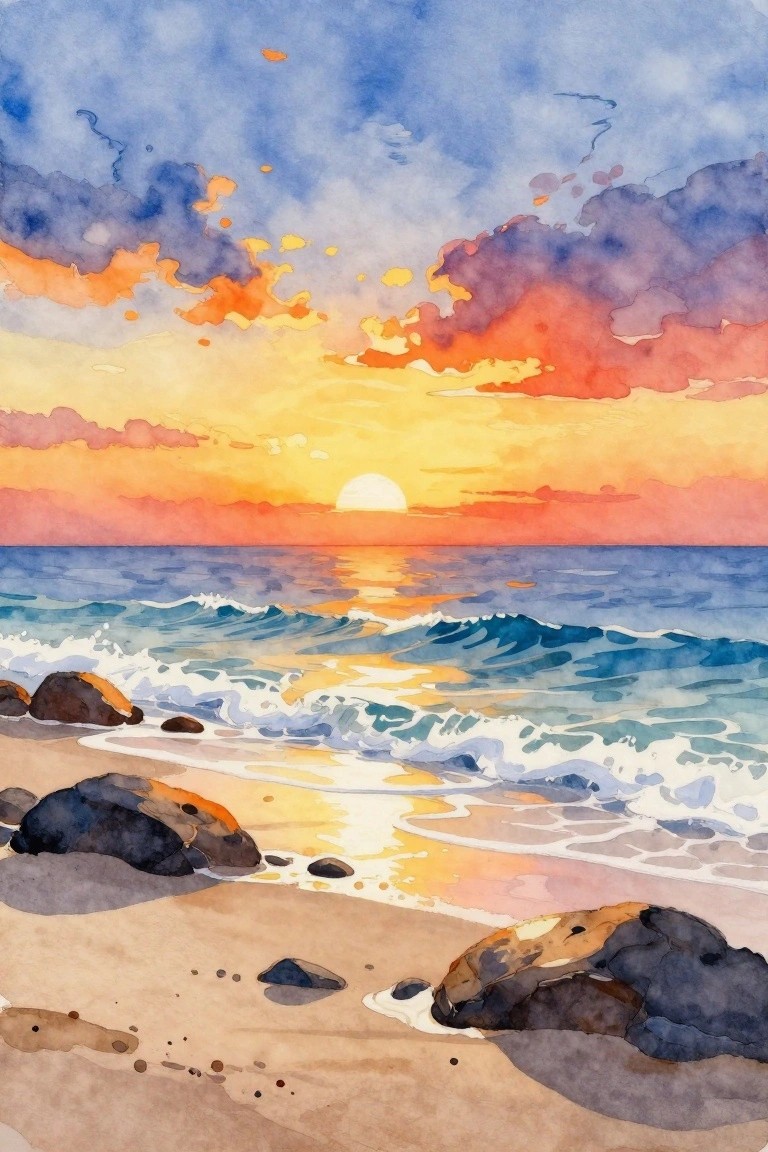
A landscape painting idea centered on a sunset over the ocean works well because the low sun creates a strong horizontal division between the vivid sky and the water below. The composition places dark rocks in the foreground to anchor the view while the waves and their white edges lead the eye toward the glowing horizon. Warm oranges and yellows in the sky transition into cooler blues and teals in the sea, giving the scene clear color contrast without needing complex details.
What makes this idea useful is that the basic layout of sky, water, and sand stays simple to sketch even if you adjust the number or shape of the rocks. The color palette can be swapped for different times of day or seasons while keeping the same structure, which makes it easy to repeat for practice or to match a room’s decor. For wall art the horizontal format fits standard canvas sizes, and the idea can be scaled down to a quick study by softening the wave lines.
Winding Stream Through Pine Trees
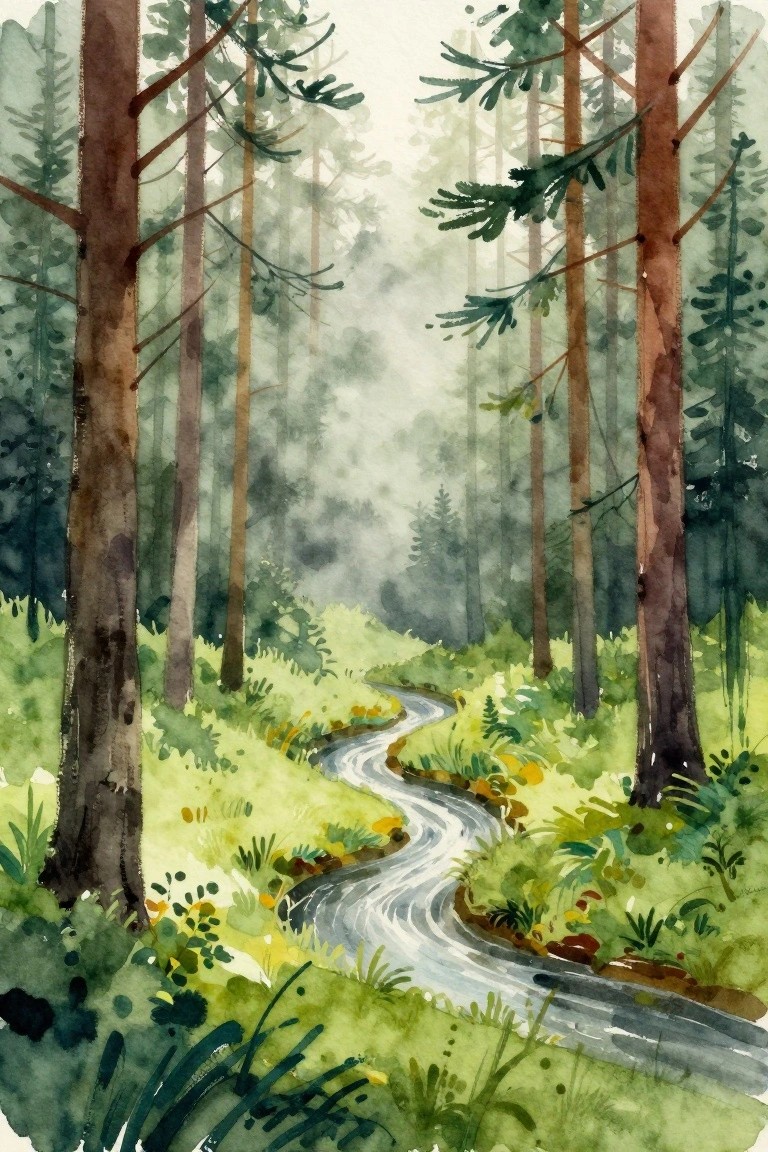
A landscape idea centered on a curving stream that leads through tall pine trunks creates natural depth by using the water as a leading line into a soft misty background. Vertical trees on both sides frame the scene and keep the focus on the flowing path rather than scattered details. Loose green and brown tones with simple foliage shapes make this a straightforward nature landscape that relies on composition instead of fine rendering.
The composition does a lot of the work here by letting the stream guide the eye without extra elements. You can adapt the idea by changing the curve of the water or swapping in different tree heights for variety across multiple paintings. For practice this works well as a quick study in watercolor or acrylic since the main shapes stay basic. The same layout also translates easily to larger wall pieces where the flowing line keeps the result balanced.
Lavender Field Rows Under Pastel Sky
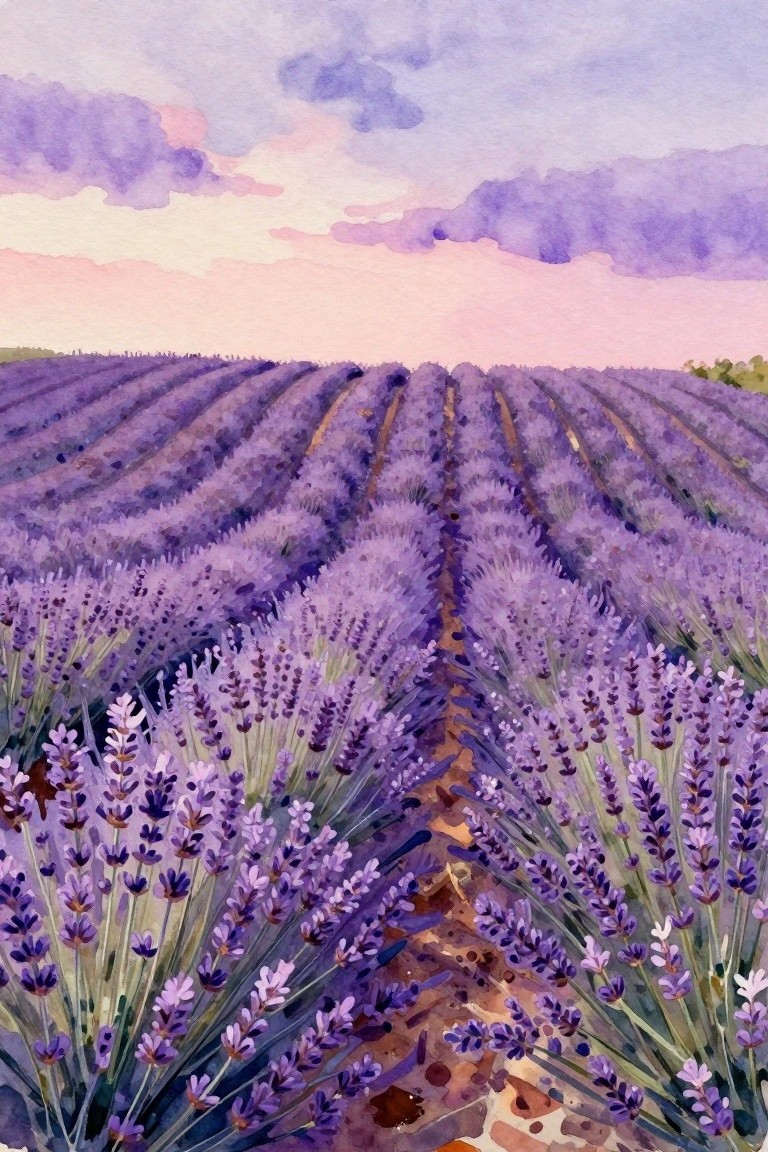
A lavender field painted with straight rows that narrow toward the horizon makes an effective landscape idea. The repeating lines of purple blooms paired with a low path through the middle create natural perspective without extra elements. A soft pink and purple sky above keeps the color palette simple while still giving the scene a complete look.
The repeating rows let you block in the basic layout quickly before adding flower details. You can shorten the path or widen the field edges to fit different canvas sizes. This kind of subject works well for practice because the main shapes stay clear even if your brushwork stays loose.
Woodland Stream Over Rocky Bed
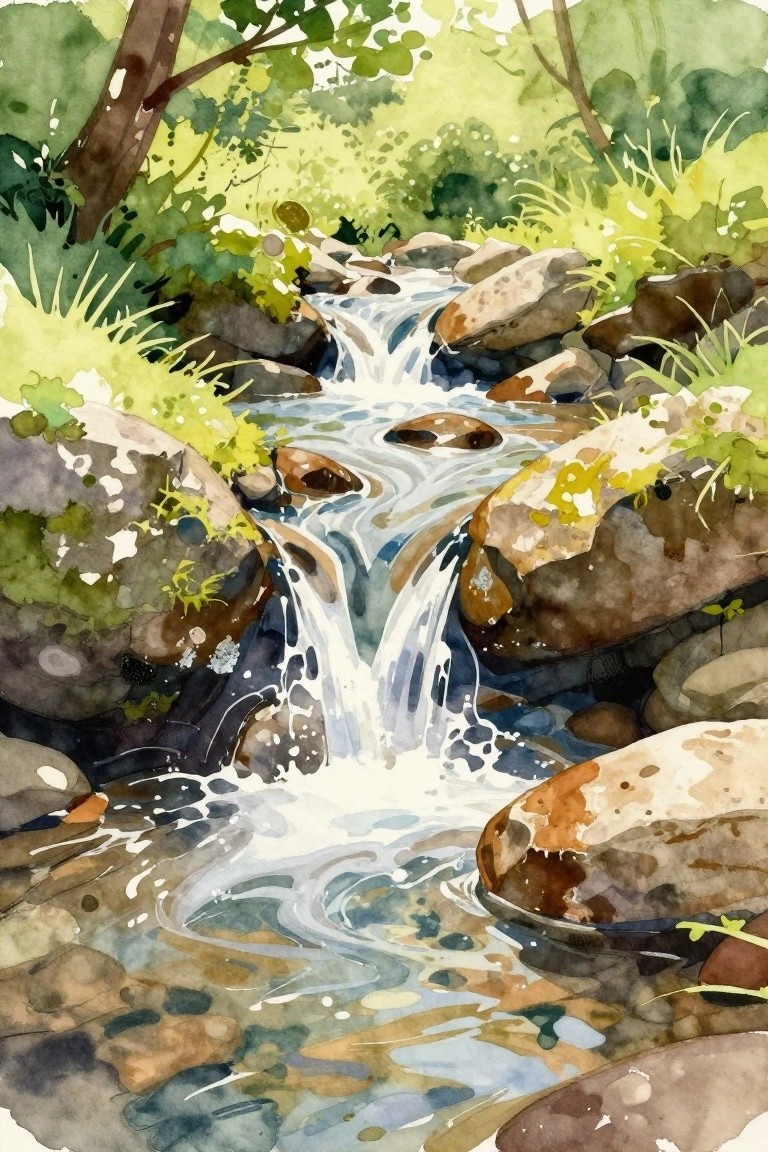
A landscape painting centered on a small cascading stream gives a straightforward nature idea built around water movement and rock formations. The composition works by letting the flowing water create diagonal lines that lead through the scene while the surrounding rocks and greenery frame the action without overcrowding it. This type of piece fits the landscape category and relies on contrast between the bright water and darker stones to keep the focus clear.
What makes this idea useful is how the natural flow of the water already supplies the main lines so you do not have to invent a complicated layout. The color palette of greens and earth tones can be adjusted easily for different seasons by shifting the foliage toward autumn shades or keeping everything cool and muted. For practice this subject helps with brush control on the water details while the background can be kept loose and simple. A version like this would translate well to a small canvas or even a sketchbook study if you want to test the composition first.
Lone Tree in Golden Light
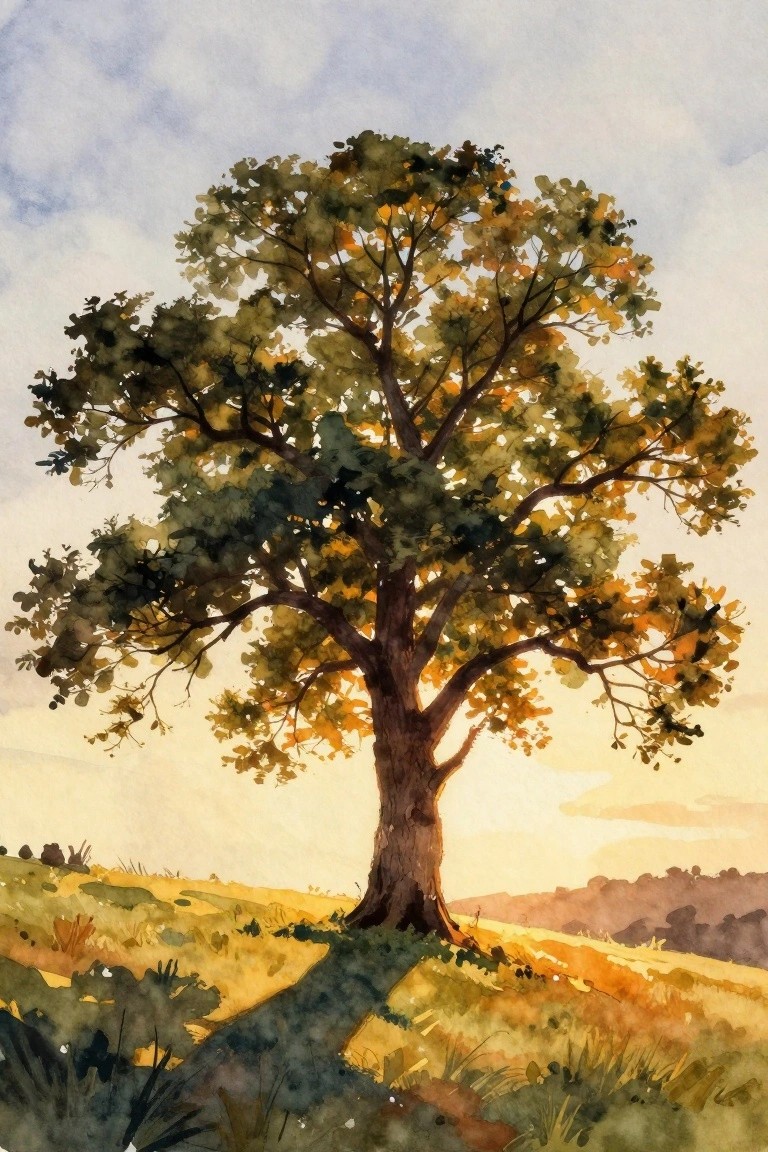
A landscape painting centered on a single large tree works well when the trunk and canopy take up most of the vertical space and the horizon sits low. The idea relies on a warm color shift in the foliage against a pale sky, plus a simple path that leads the eye toward the base of the tree. This approach fits the classic landscape category and keeps the focus on shape and light rather than many separate objects.
What makes this idea useful is that the tree can be painted with broad strokes first and then refined with a few darker branches. The limited color range of yellows, oranges, and muted greens makes it easy to adjust for different seasons by swapping in cooler tones. For practice, this kind of centered subject helps with proportion and balance without needing extra foreground details. A painting like this also translates cleanly to a medium canvas for wall decor.
Moonlit Pond Reflection
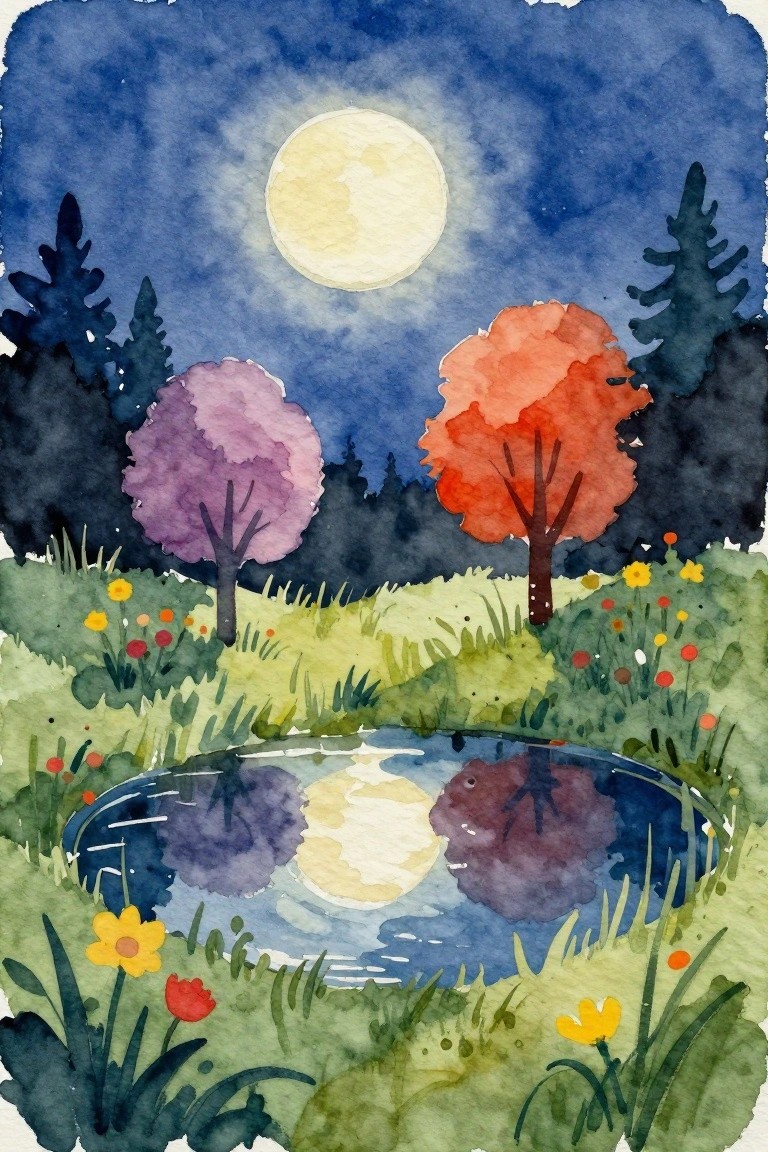
A landscape painting built around a still pond that reflects the moon gives the scene a clear focal point and natural symmetry. The idea relies on contrasting a bright circular moon against a dark sky while echoing that shape in the water below to guide the viewer’s eye. Placing a few colorful trees on the banks with simpler grass and flower details in the foreground keeps the composition balanced and easy to follow.
What makes this idea useful is how the reflection itself creates depth without needing complex details everywhere. You can swap the tree colors for different seasons or crop the foreground flowers if you want a faster study. The layout works especially well for wall art because the moon provides an immediate center that holds attention even in smaller sizes.
Birch Forest with Sunlit Greens
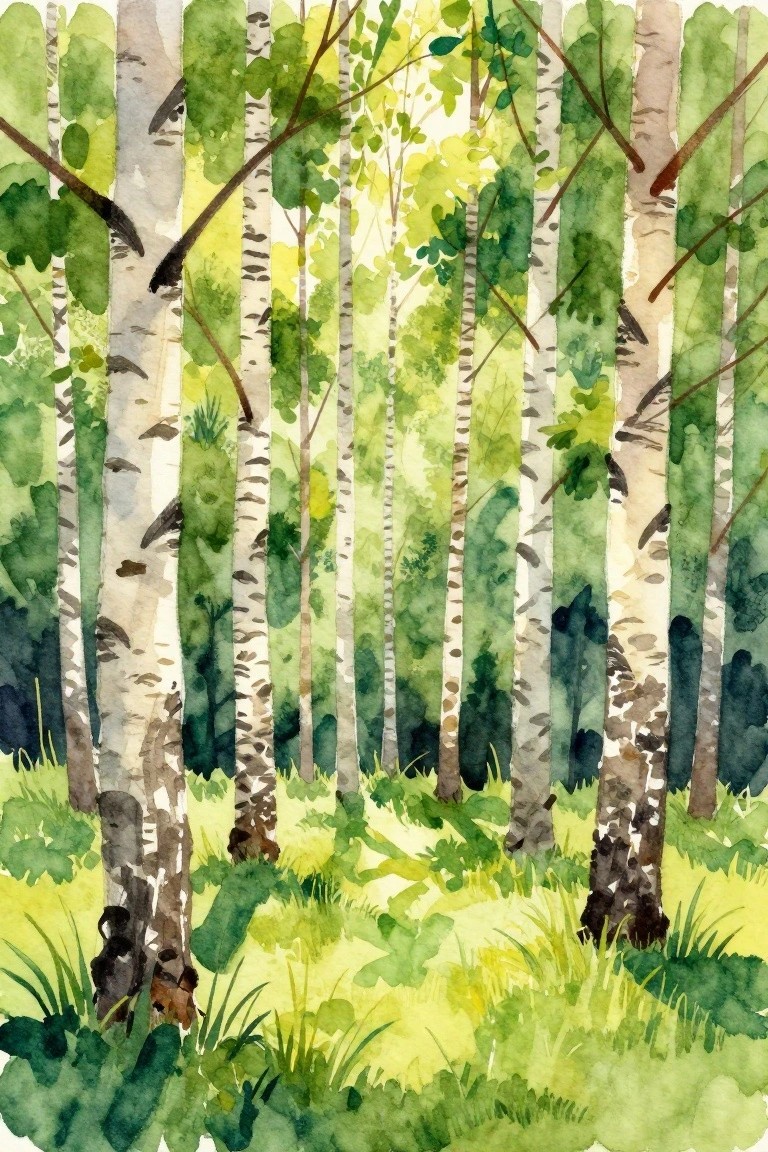
A birch forest scene works well as a landscape painting idea because the repeated vertical trunks give the composition a clear structure that is easy to build on. The idea relies on soft overlapping washes of green and yellow to show light moving through the canopy, with the brighter grass in front helping separate the foreground from the deeper background. This approach sits comfortably in the landscape category and keeps the focus on simple shapes rather than fine detail.
What makes this idea useful is how the straight trunks let you practice even spacing and bark texture without needing complex perspective. The color palette of yellow-greens against white and brown trunks can be swapped for cooler tones or warmer autumn shades depending on the season you want. For wall art, the strong vertical lines and light foreground make the piece readable from a distance, and you can reduce the number of trees if you want a quicker version.
Dune Grass in Layered Landscape
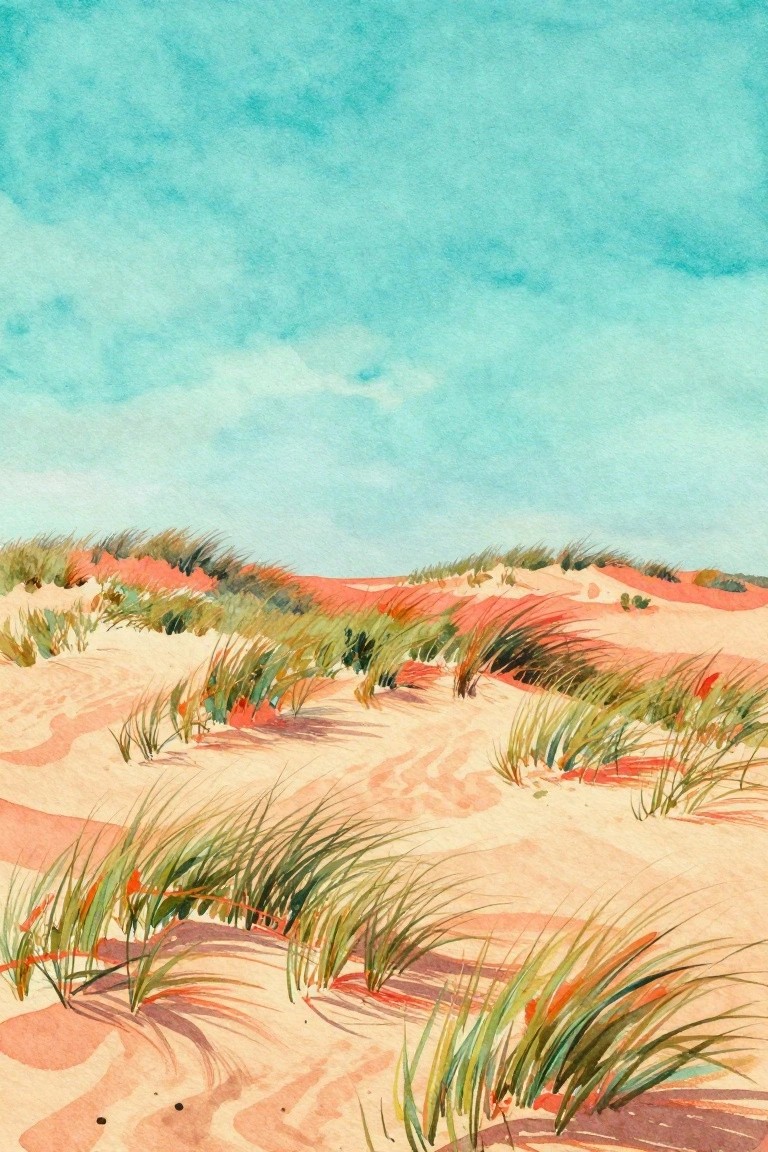
A landscape painting of rolling sand dunes with clumps of tall grass works well for showing open outdoor spaces using simple color blocks and directional brushstrokes. The idea centers on a warm sand palette set against a cool sky, with the grass strokes creating movement across the foreground and midground. This approach keeps the focus on shape and color contrast rather than fine detail, making it a straightforward landscape subject.
The composition does a lot of the work here by using overlapping dunes to create depth without complex perspective. You can easily adapt the same layout to a smaller canvas or switch the sky to a sunset tone if you want a different mood. For practice, this kind of scene helps with loose washes and quick grass marks that still read as natural. It would also translate well to a horizontal format for a wide wall piece.
Bridge Over a Stream with Weeping Willows
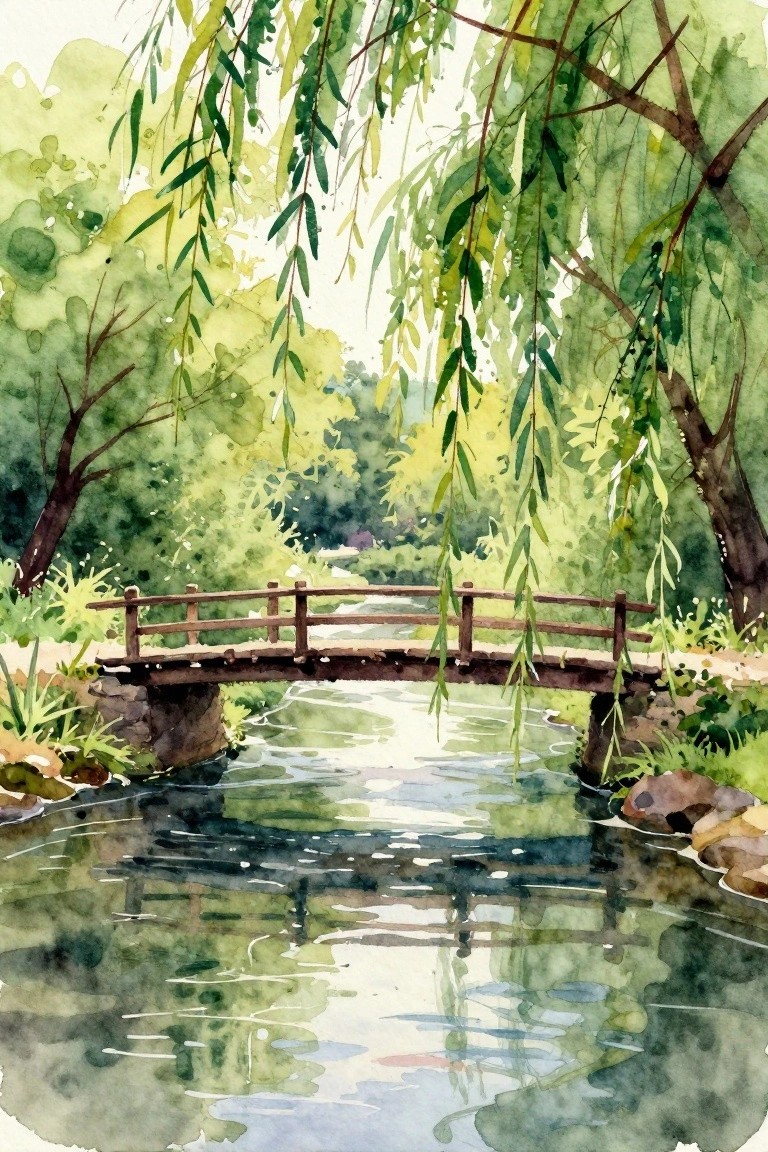
A landscape idea built around a wooden footbridge crossing a shallow stream works because the bridge gives the scene a clear center while the drooping willow branches frame it from above. The hanging leaves and their reflections create repeating vertical lines that hold the composition together without needing extra elements. This approach sits firmly in the nature landscape category and relies on soft color transitions and layered foliage rather than tight detail.
What makes this idea useful is the bridge acting as an easy starting shape that anchors everything else. The muted green and brown palette can be swapped for cooler tones or simplified into larger washes if you want a quicker version. The layout also translates well to different sizes since the main shapes stay readable even when the foliage is reduced to broad strokes. For practice, this kind of subject helps with balancing open water against dense greenery in one scene.
Layered Mountain Mist with Pine Silhouettes
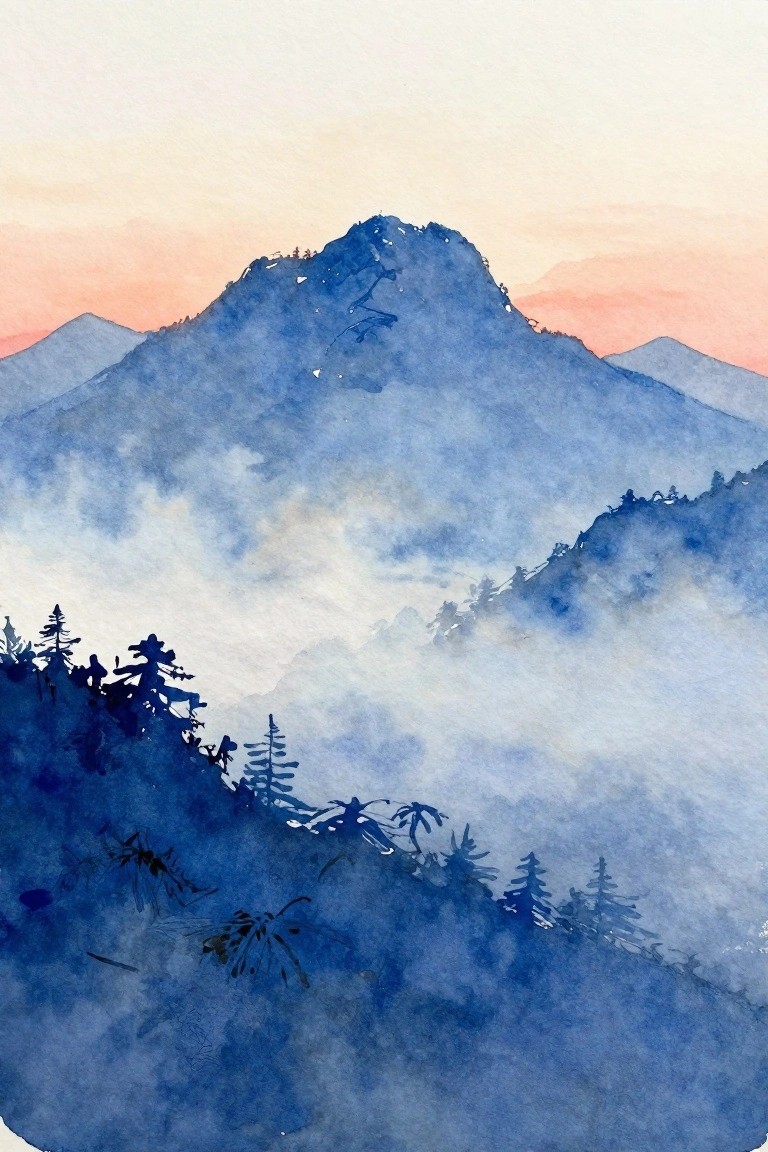
A landscape idea centered on stacked mountain ridges fading into fog works well because it builds depth through overlapping shapes rather than fine detail. The main focus stays on the contrast between the dark foreground trees and the softer blue washes behind them, with a narrow band of warm sky color pulling the eye upward. This approach fits a straightforward landscape style that relies on broad washes and simple silhouettes instead of precise outlines.
What makes this idea useful is how the fog naturally hides hard edges so you can focus on brush control and value shifts without overworking any section. You can easily change the sky colors to match a different time of day or crop the composition tighter if you want a smaller canvas. For practice this subject stays approachable because the trees can be simplified to basic shapes while the mountains still read clearly.
Wildflower Meadow with Mixed Blooms
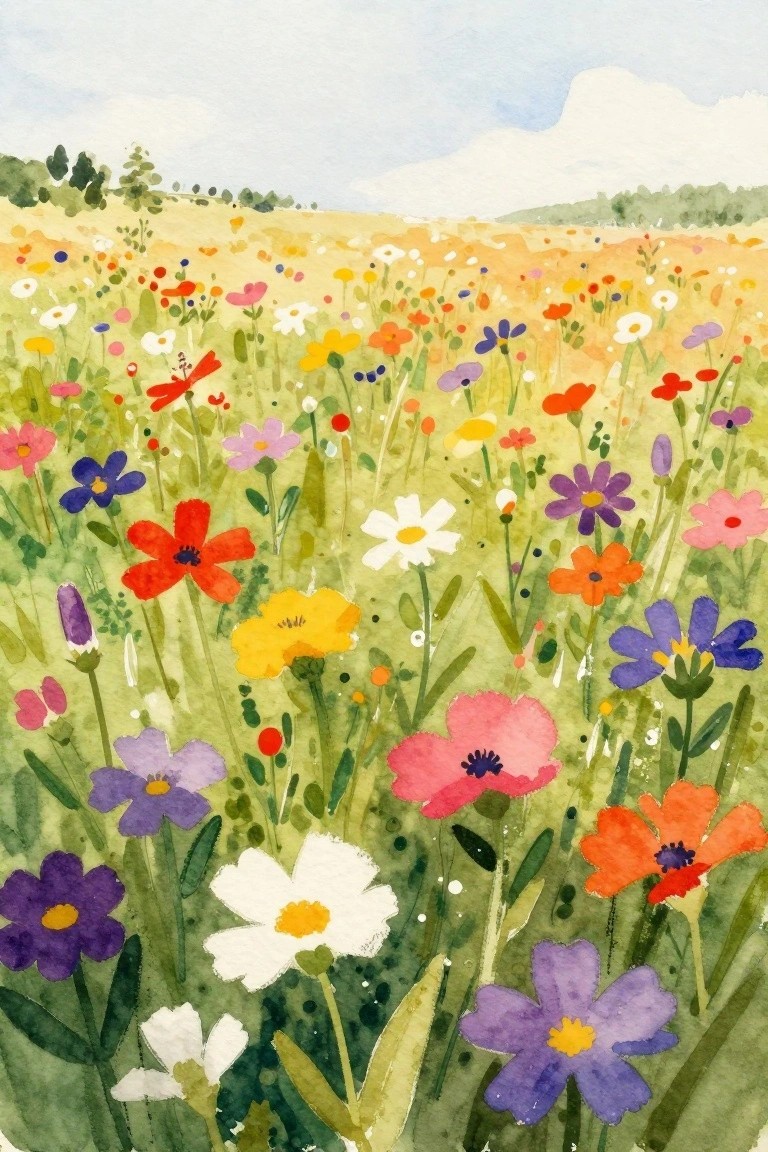
A wildflower meadow idea centers on packing a variety of simple flower shapes into the foreground while letting the view open up toward distant hills. The painting uses a loose layering approach where bright reds, yellows, purples, and whites sit against soft green stems and grass, creating a natural sense of depth without tight detail. This style fits the floral landscape category and relies on color contrast and scattered placement to keep the eye moving across the scene.
The composition does a lot of the work here by letting the flowers fill most of the space and fade naturally into the background. You can adapt it by reducing the number of flower types or shifting the palette to match the season you want to paint. For wall art this kind of subject works especially well because the bright mix stands out even at small sizes on a screen. For practice, start with a light sky and hill wash then add the flowers on top so the layers stay fresh.
Blossom Path Through Flowering Trees
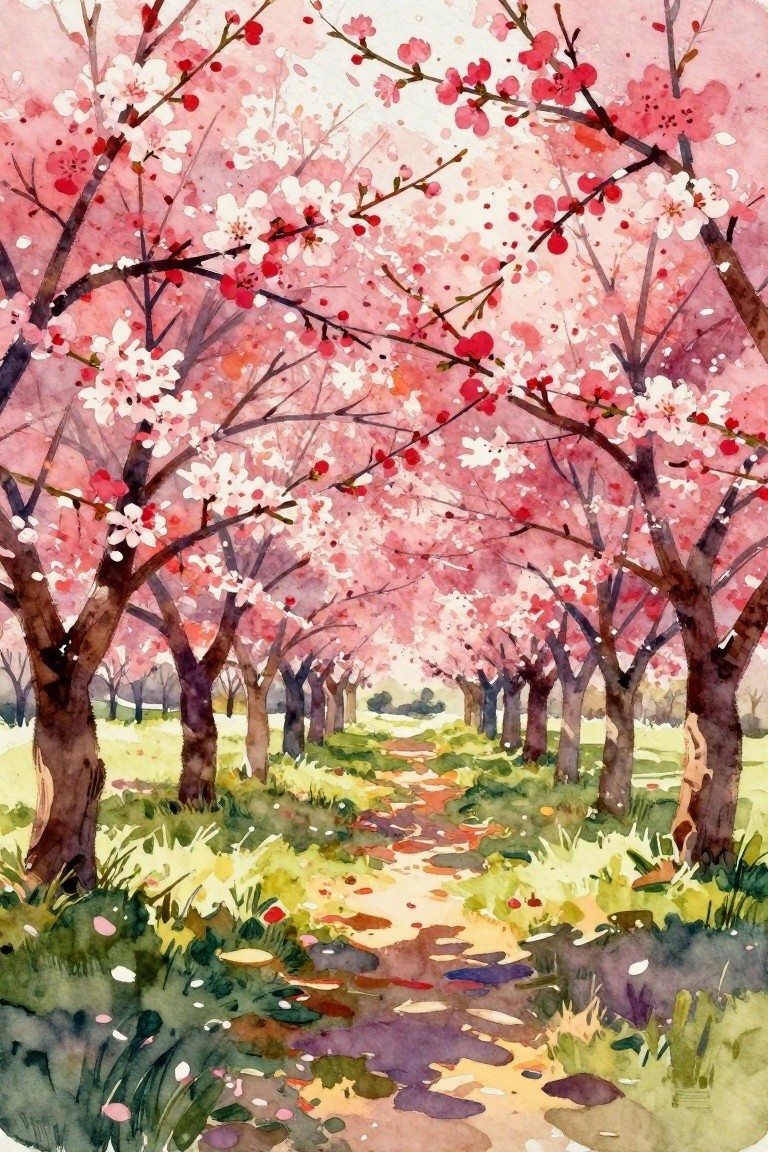
A path running between rows of flowering trees gives a clear landscape painting idea that relies on perspective and repetition. The main subject is the receding line of trunks and branches covered in pink and white blooms, with the path acting as the element that pulls the view forward. This approach works well as a seasonal landscape because the overhead canopy and ground plane create natural framing without extra details.
What makes this idea useful is how the repeated vertical lines of the trees do most of the compositional work once the path is placed. You can easily change the flower colors or soften the edges to suit different times of year or personal style. For practice this subject helps with depth and color mixing while staying manageable, and the layout adapts quickly to different canvas sizes for wall pieces.
Terraced Hillside Fields in Layered Greens
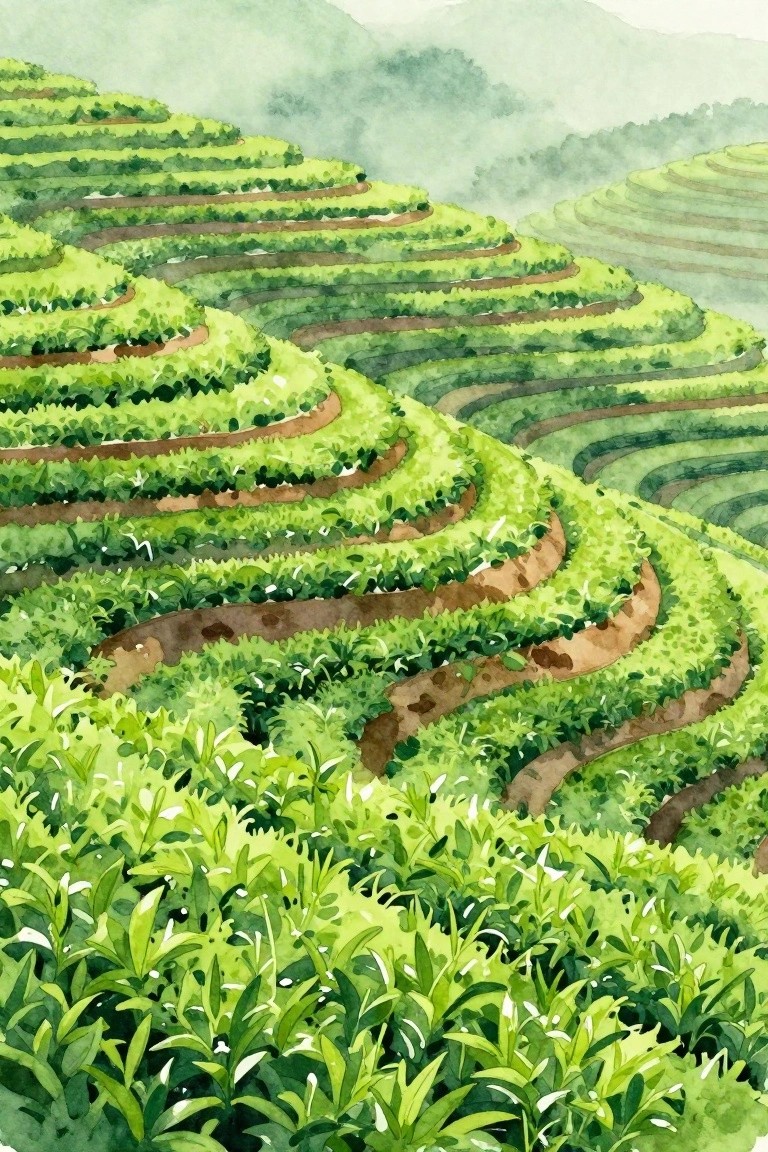
Painting terraced fields gives you a landscape idea built around repeating curved bands that step down a hillside. The main appeal comes from stacking different greens with brown dividing lines to create clear depth without needing lots of extra elements. A light misty background of distant hills helps the terraces stand out while keeping the whole scene simple to balance.
What makes this idea useful is how the repeating terrace shapes let you practice color variation and edge control in one go. You can reduce the number of layers or shift the greens to whatever shades you already have if you want a faster version. For wall pieces this layout works well because the horizontal flow stays strong even when printed smaller or turned into a series. The same structure also adapts easily if you want to try it in a different medium or add a seasonal crop color on top.
Path Through Red Poppies in the Woods
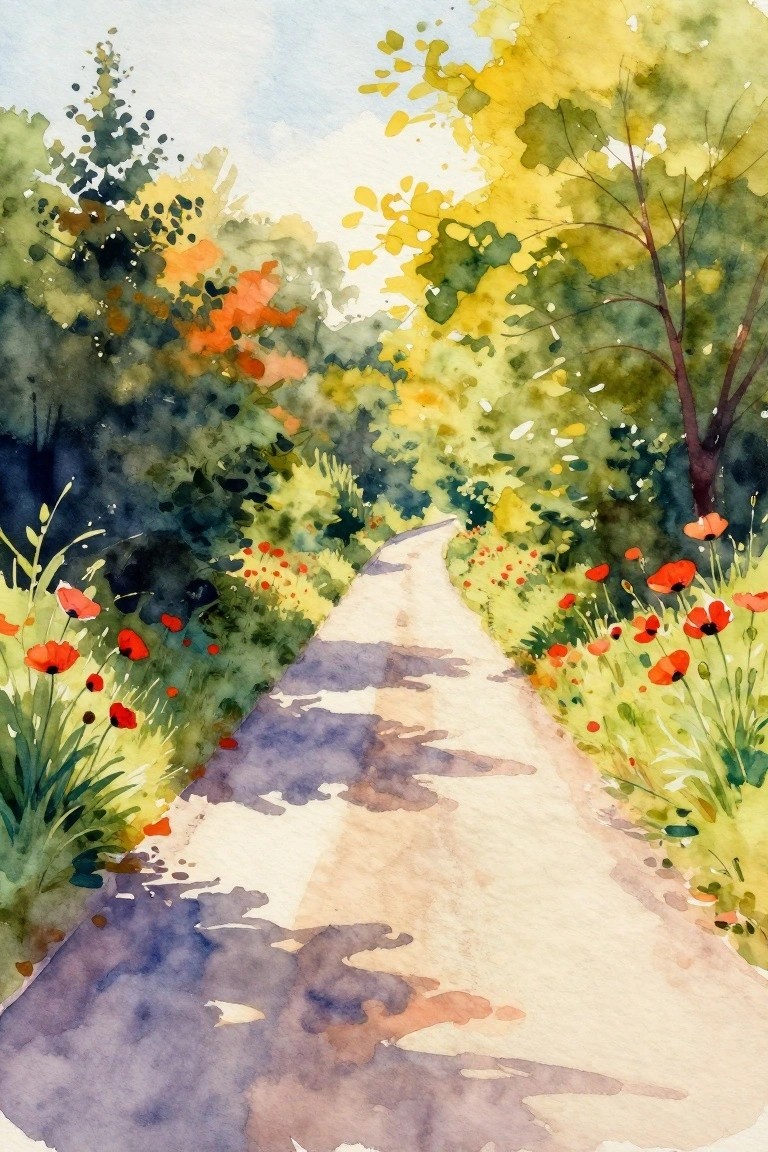
A winding path flanked by red poppies offers a clear landscape idea that combines a strong leading line with simple floral accents. The composition works because the path narrows toward the distance while the flowers stay clustered along the edges, creating contrast against the layered greens and yellow foliage. This approach sits in the landscape category with an added floral focus that keeps the scene grounded in nature.
What makes this idea useful is how the path handles most of the visual structure so you do not need to invent extra elements. You can adapt it by changing the flower color to match a different season or shortening the path if you want a smaller canvas. For practice, this kind of subject helps you work on perspective and edge control without getting lost in fine detail. The color palette stays flexible enough to match whatever greens and warm tones you already have.
Water Lilies on a Calm Pond
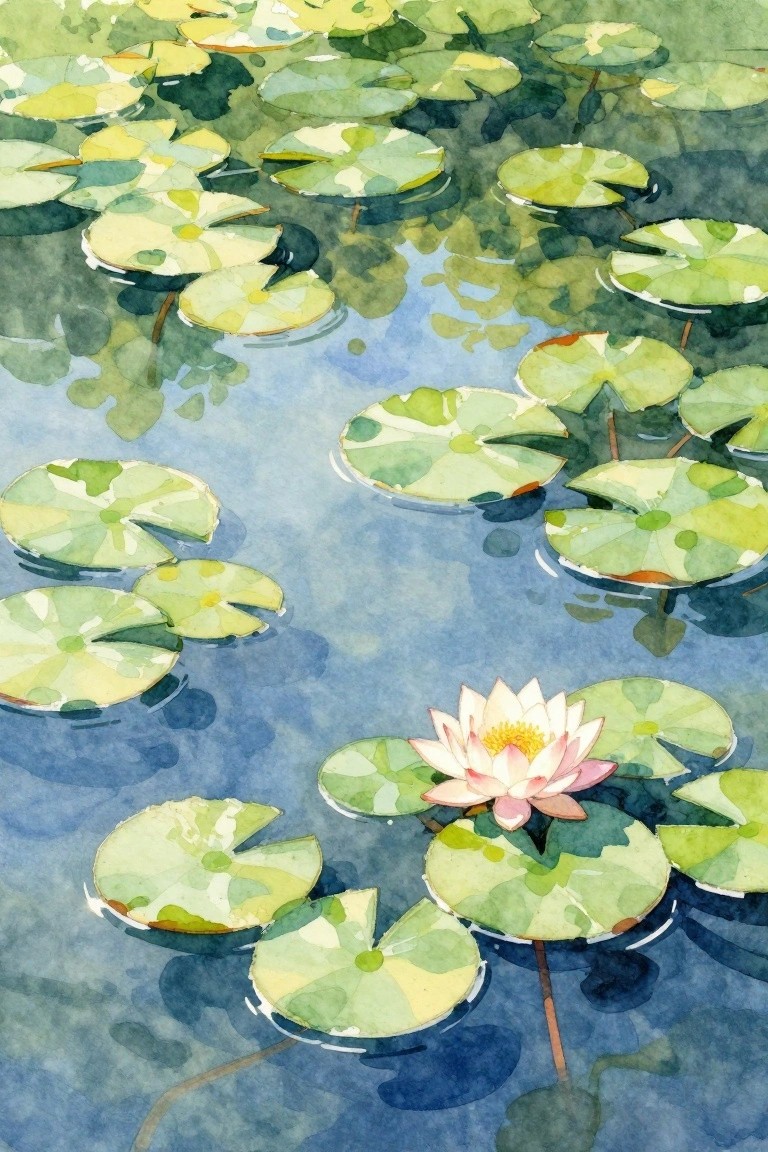
A cluster of lily pads paired with one open lotus flower creates a simple floral landscape idea that works well as a standalone piece. The composition places the bloom slightly off center so the surrounding pads guide the eye without crowding the space. Soft green shapes against the blue water keep the focus on the flower while still showing a natural pond setting.
The composition does a lot of the work here by leaving open water around the pads so the scene stays balanced. You can adapt it easily by changing the number of pads or shifting the flower to a different corner. For practice this subject lets you work on layering greens and testing how much detail to add before the water loses its calm look. A painting like this would stand out on Pinterest as a clean nature option that still feels complete.
Sunset Daisy Field Landscape
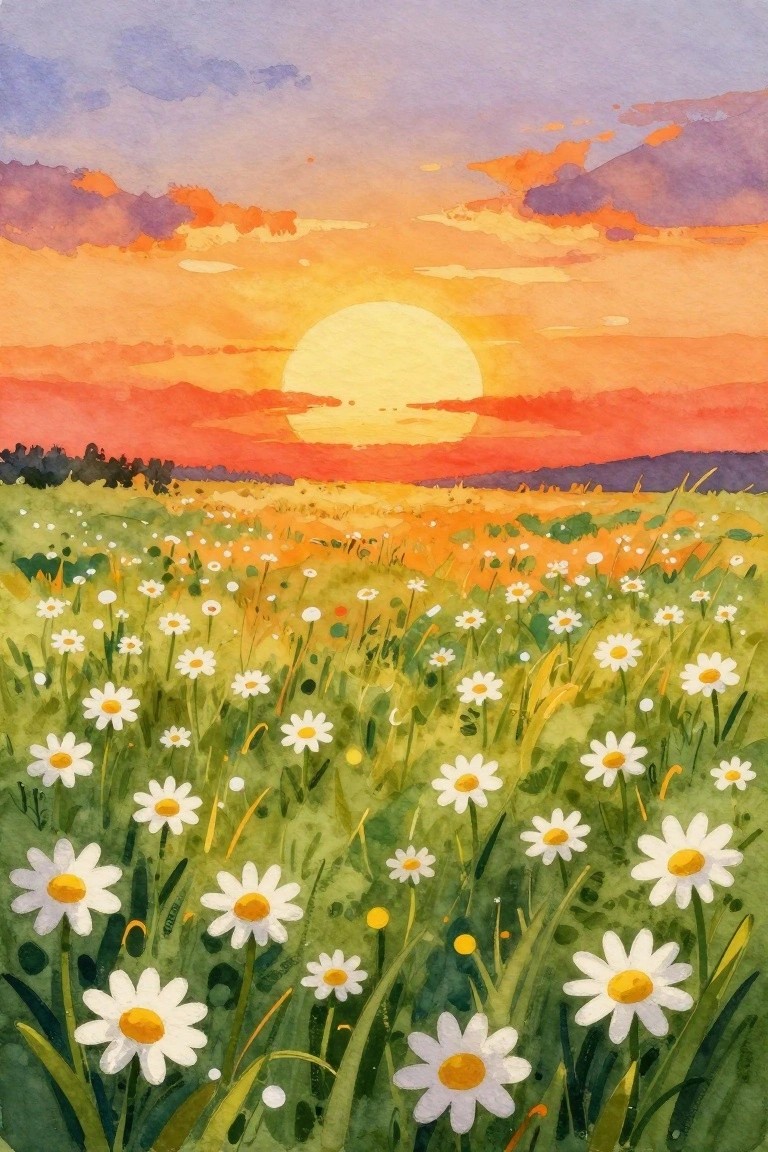
A wide meadow filled with white daisies under a setting sun makes a straightforward landscape idea that blends floral elements with open sky. The composition uses layers of flowers in the foreground and a strong horizon line to create depth while keeping the main focus on the bright sun and warm sky colors. This approach works well for landscape paintings that want a natural scene without overcrowding the canvas.
The composition does a lot of the work here by balancing the green field against the orange and red sky tones. You can adapt it by changing the flower shapes to match whatever brush you prefer or shifting the sky colors for a different season. For wall art this kind of subject stays simple enough to finish in one or two sessions while still looking complete.
Winding Rainy Path Through Green Woods
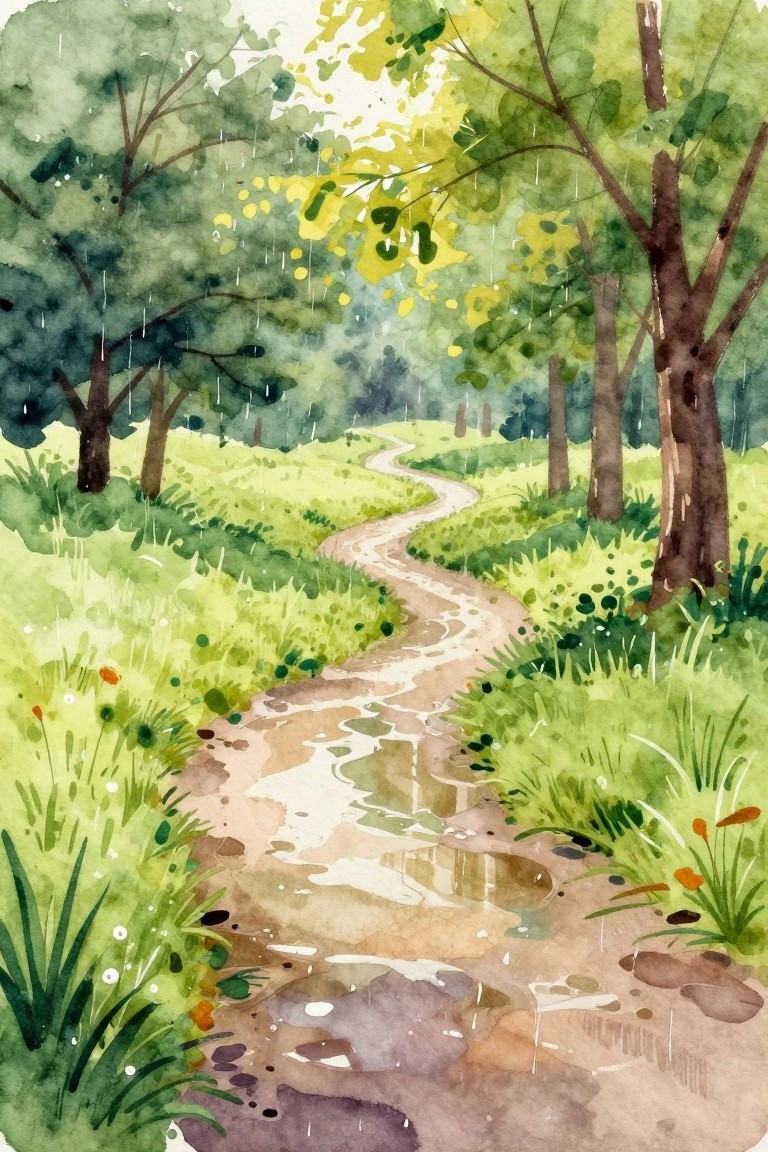
A curving dirt path lined with puddles offers a straightforward landscape painting idea that relies on a single strong element to hold the composition. The path draws the eye forward while trees and grass on either side keep the focus centered without extra focal points. This approach works well as a weather-based landscape where rain effects and reflections can be added with simple layered washes.
The composition does a lot of the work here by using the path as a built-in guide that reduces the need for complex planning. You can easily change the green palette to cooler or warmer tones depending on the season you want to suggest, and the same layout scales down for sketchbook pages or up for larger panels. For practice, this subject helps with basic perspective and water texture at the same time, and it stays interesting on Pinterest because the rain adds a clear mood without requiring advanced detail work.
Frequently Asked Questions
What materials do I need to start painting these easy landscape ideas?
You will want a small set of acrylic or watercolor paints in soft greens blues and earth tones along with a few brushes of different sizes a canvas or thick paper and a palette for mixing colors. Keep a cup of water and paper towels nearby for easy cleanup. These basic supplies allow you to follow all 19 ideas without extra cost or complexity while focusing on simple shapes like hills and skies.
How can I make sure my landscape paintings feel peaceful and calming?
Choose muted colors such as pale blues soft greens and warm grays instead of bright shades. Paint in gentle layers starting with a light background wash then add soft edges for clouds or distant trees. Avoid sharp lines and heavy details by using a dry brush technique to blend areas smoothly. This approach turns any of the nature inspired ideas into restful scenes that evoke quiet outdoor moments.
Are these ideas suitable if I have never painted before?
Yes many of the 19 suggestions use basic shapes like triangles for mountains or simple horizontal strokes for fields making them ideal for beginners. Start with one idea that has fewer elements such as a single tree by a lake and practice on small paper first. Follow the steps slowly focusing on one part at a time to build confidence without pressure.
What if I want to adapt the ideas for different seasons or local scenery?
Swap in seasonal colors and shapes while keeping the simple structure of each idea. For autumn use warm oranges and yellows on tree foliage instead of green. In winter add soft white layers for snow over the same hill or river outlines. Observe your own backyard or a nearby park to adjust the 19 suggestions to match real local views.
How long should I spend on each painting to keep it easy and enjoyable?
Plan for 30 to 60 minutes per session depending on the idea chosen. Break the work into short steps such as blocking in the sky one day and adding trees the next. This keeps the process relaxed and prevents burnout while still completing peaceful nature scenes from the list.