

I like ocean paintings that include boats or ships as the main focus.
They add a human element to the vast water scenes.
In my sketches I often add a small boat to give the eye something to follow.
I put together some examples here that show different styles and moods.
Maybe one of them will give you an idea for your next project.
Lone Sailboat on Sunlit Ocean Waves

A seascape idea built around a single sailboat as the clear focal point works well when the surrounding water uses layered waves and a bright reflection path to guide the eye toward it. The soft sky gradient and distant horizon line keep the scene balanced without pulling attention away from the boat itself. This type of painting falls into the realistic landscape category, where the main interest comes from natural light effects on moving water rather than intricate details.
What makes this idea useful is how the boat stays small enough that beginners can focus on wave shapes and color blending without needing perfect proportions. The cool blue palette adapts easily if you want to shift it toward sunset tones or keep it simple for a quick study. For wall art, the open water layout leaves room to adjust the canvas size or crop tighter around the boat and reflection. This kind of subject also stands out on Pinterest because the light path on the waves gives it an instant focal point that reads clearly even in small thumbnails.
Quiet Rowboat Moored at Sunrise
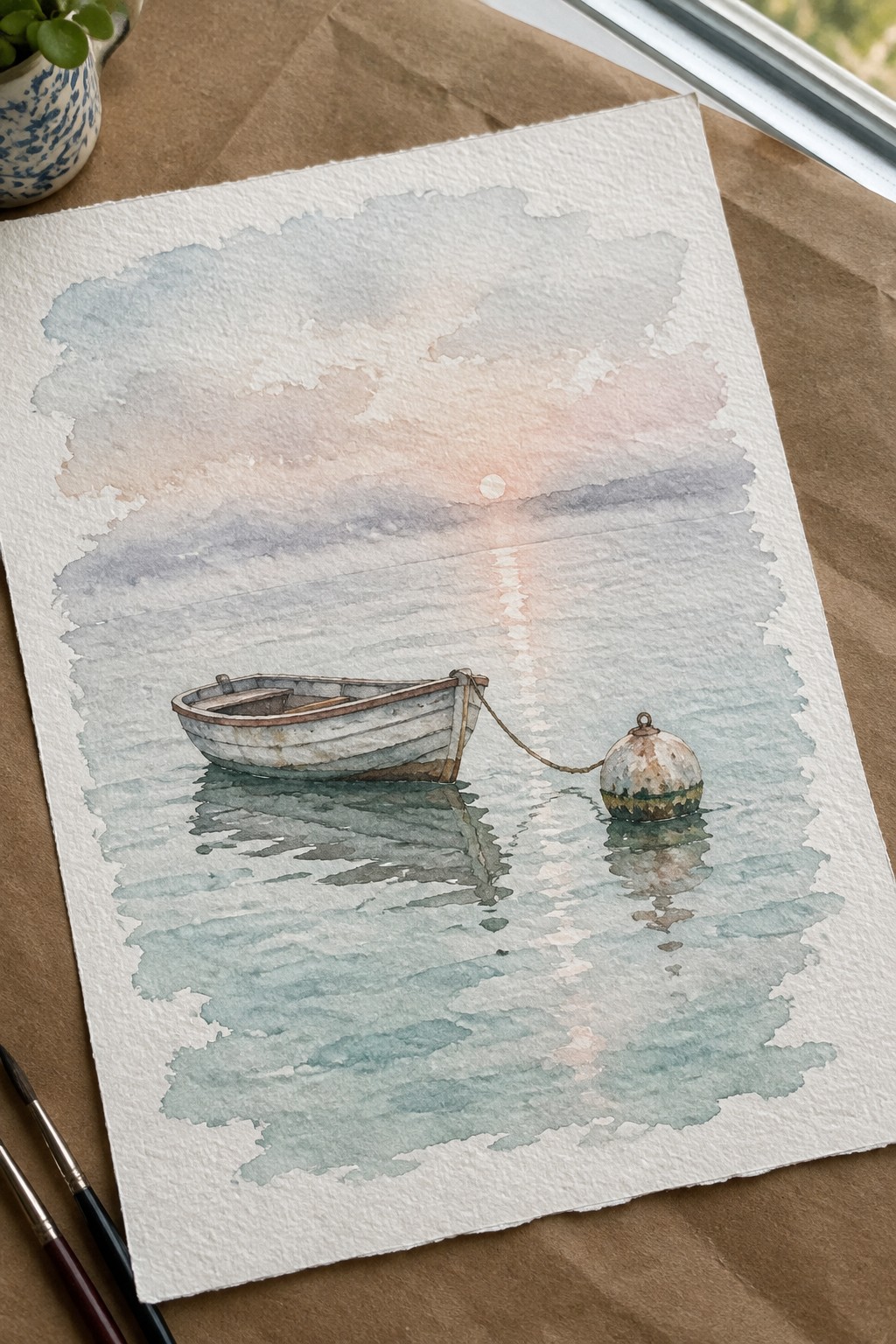
A small rowboat and buoy placed on either side of a low sun form the core of this seascape idea. The horizontal layout uses the sun’s reflection as a natural line that connects the two objects and guides the eye across the water. Soft color blending in the sky and water keeps the shapes simple while still suggesting distance and calm surface movement.
The composition does a lot of the work here by balancing the boat on the left with the buoy on the right. You can swap the sky colors for a different time of day or drop the buoy entirely if you want a quicker version. This kind of subject works well for practice because the reflections give clear feedback on your brush control without needing lots of detail.
Patterned Sails on a Harbor Sailboat

A sailboat with contrasting patterned sails forms the central idea here, using a yellow floral sail paired with a red and white striped one to create a clear focal point. The composition works by keeping the boat large and centered while the water, dock, and distant buildings stay secondary. This approach fits decorative nautical painting where simple repeating shapes on the sails give the piece its main visual interest without needing complex details.
The composition does a lot of the work here by balancing the busy sails against calmer water and sky areas. You could swap the sail patterns for other motifs or change the color palette to match a different room or season. For wall art this idea stands out because the boat remains easy to read even from a distance. The same layout could be simplified by dropping a couple of seagulls or houses if you want a faster version to try.
Cheerful Tugboat Towing a Loaded Barge
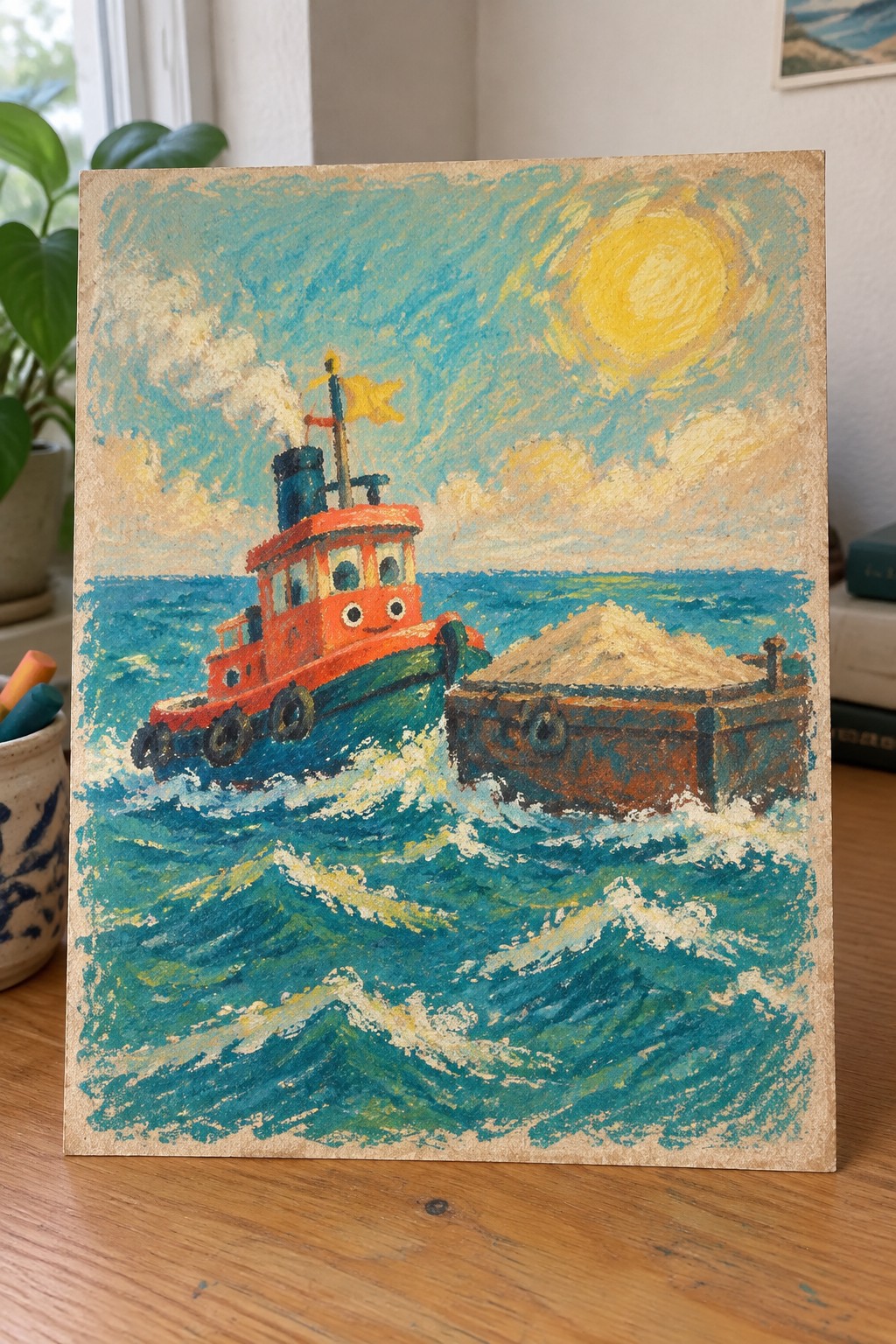
A tugboat with simple eyes and a smile pulls a sand-filled barge across rough blue-green waves. The idea uses strong color contrast between the bright red boat and the swirling water, with the sun and sky adding a clear focal point above. It works as a cute seascape that keeps the main action centered on the two vessels and their movement.
What makes this idea useful is the straightforward layout that lets you focus on wave patterns without needing complex details. The bold shapes of the boat and barge are easy to resize or simplify for smaller canvases or sketchbook practice. The color palette also adapts well if you want to swap the sand for different cargo or adjust the sky tones for a different time of day. This kind of subject stands out on Pinterest because the action and bright colors read clearly even as a thumbnail.
Sailboat Silhouette at Sunset with Strong Water Reflections

A seascape idea built around a single sailboat placed against a layered sunset sky relies on the horizon line and vertical reflection to hold the whole piece together. The color progression from cool purples at the top through intense oranges near the sun creates a natural focal point that draws attention straight to the boat without extra detail. This approach fits the landscape category with a clear boat motif as the central element.
The composition does a lot of the work here by using the dark boat shape and its mirror image to balance the bright sky. You could adapt the idea by changing the sky colors to different sunset tones or shifting the boat closer to the edge for a more off-center layout. For practice, this subject works well because it lets you work on blending sky layers and matching reflections before adding more boats or land.
Sailboats with Bold Colored Sails on Layered Water

This painting idea uses three small sailboats as the main subject in a seascape, with their sails in yellow, red and white stripes, and green arranged at different distances to show depth. The approach relies on simple boat shapes and strong color contrast against the blue and turquoise water washes, making the boats the clear focal points. It fits the landscape category and works because the scattered placement keeps the eye moving across the surface without extra elements.
The composition does a lot of the work here by spacing the boats to suggest open water and movement. You could adapt it by changing the sail colors or using a different water tone for a new mood while keeping the same layout. For practice, this kind of subject helps you work on washes and basic shapes while still producing a finished piece that stands out in a collection of ocean scenes.
Tall Ship with Patterned Sails and Flags
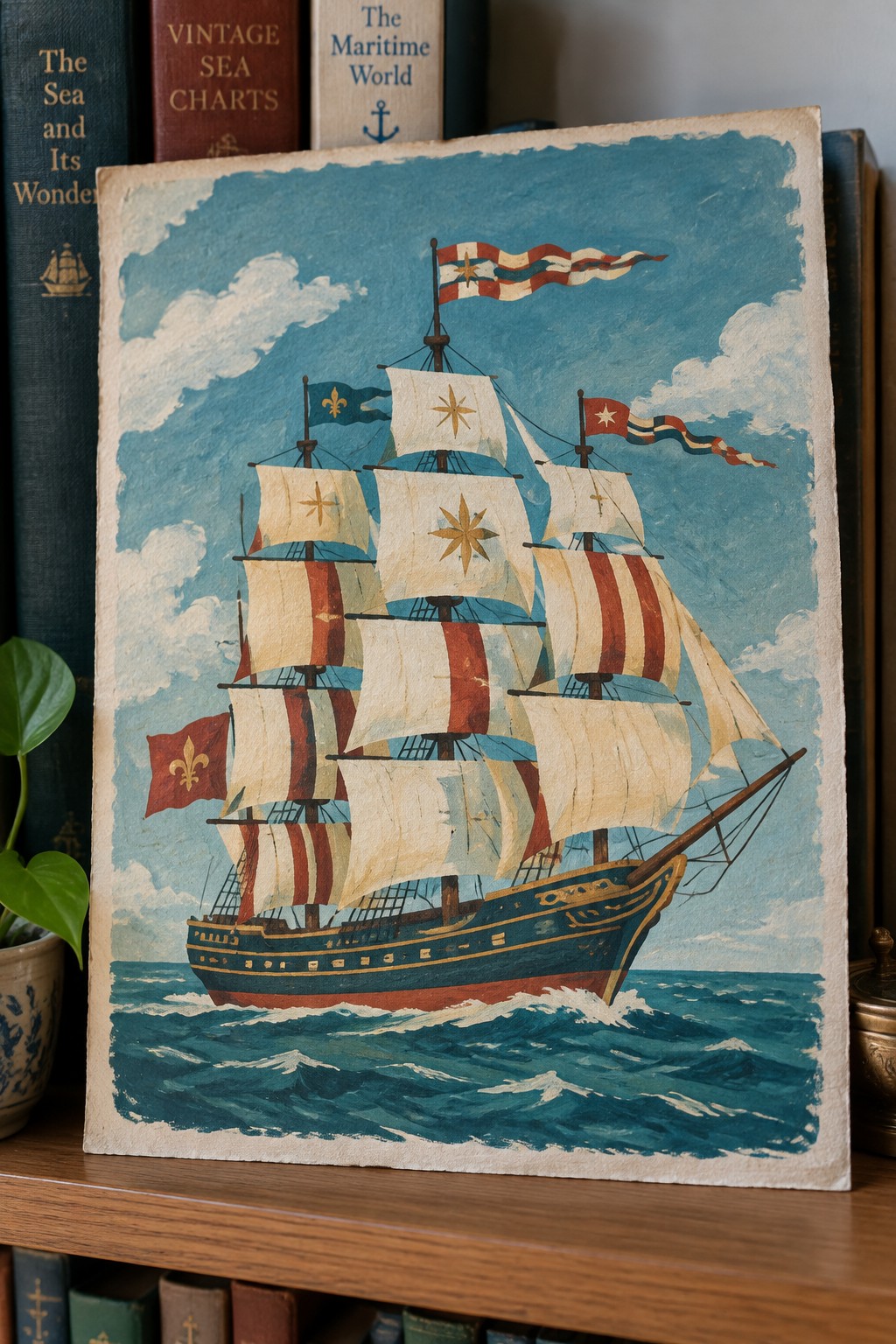
A sailing ship with multiple masts serves as the main subject here, shown from a side angle so the hull, deck, and full set of sails stay visible at once. The idea centers on a decorative maritime piece where the ship acts as the clear focal point against a simple sea and sky. Horizontal layers of water and clouds let the tall vessel stand out, while the red, white, and gold details on the sails create enough contrast to hold attention without extra elements.
What makes this idea useful is the way the ship can be built in stages, starting with the basic hull and mast shapes before adding the striped sails and small flags. The limited color palette of blues, reds, and off-white makes it straightforward to adjust for different canvas sizes or to match existing room colors. For wall art, this kind of centered ship works well because it reads clearly from a distance and can be simplified by dropping some of the smaller rigging lines if needed.
Docked Boats with Evening Water Reflections

A harbor scene centered on three boats moored near a wooden pier makes a strong landscape painting idea, especially when the calm water is used to repeat the boat shapes as reflections. The composition places the vessels at different distances to create depth while the distant shore and lit houses keep the background simple and supportive. This fits neatly into nautical landscape work where the focus stays on the boats and their mirrored forms rather than on fine detail.
The composition does a lot of the work here by letting the reflections carry much of the visual interest without extra elements. The color palette of blues, muted greens, and warm accents on the boats and lights can be shifted easily for different times of day or seasons. For practice, this kind of subject helps with shape work and water effects at a moderate level of detail. This would be easy to turn into a smaller canvas study or adapt by reducing the number of boats.
Stormy Sailboat on Rough Seas

A sailboat with two masts and billowing sails forms the main subject as it moves across heavy, rolling waves under a dark overcast sky. This marine painting idea uses the boat’s vertical masts against the horizontal motion of the sea to create a strong sense of forward movement. The limited palette of deep blues, grays, and off-white sails keeps the composition focused on the vessel and the active water surface.
What makes this idea useful is the off-center placement of the boat, which lets the waves fill most of the foreground and adds natural energy. The color palette makes this easy to adapt by shifting the sky to warmer sunset shades or simplifying the wave texture for a smaller canvas. For practice, this kind of subject works well when you want to study water movement without adding extra elements like distant land or figures.
Paper Boat on Rolling Ocean Waves
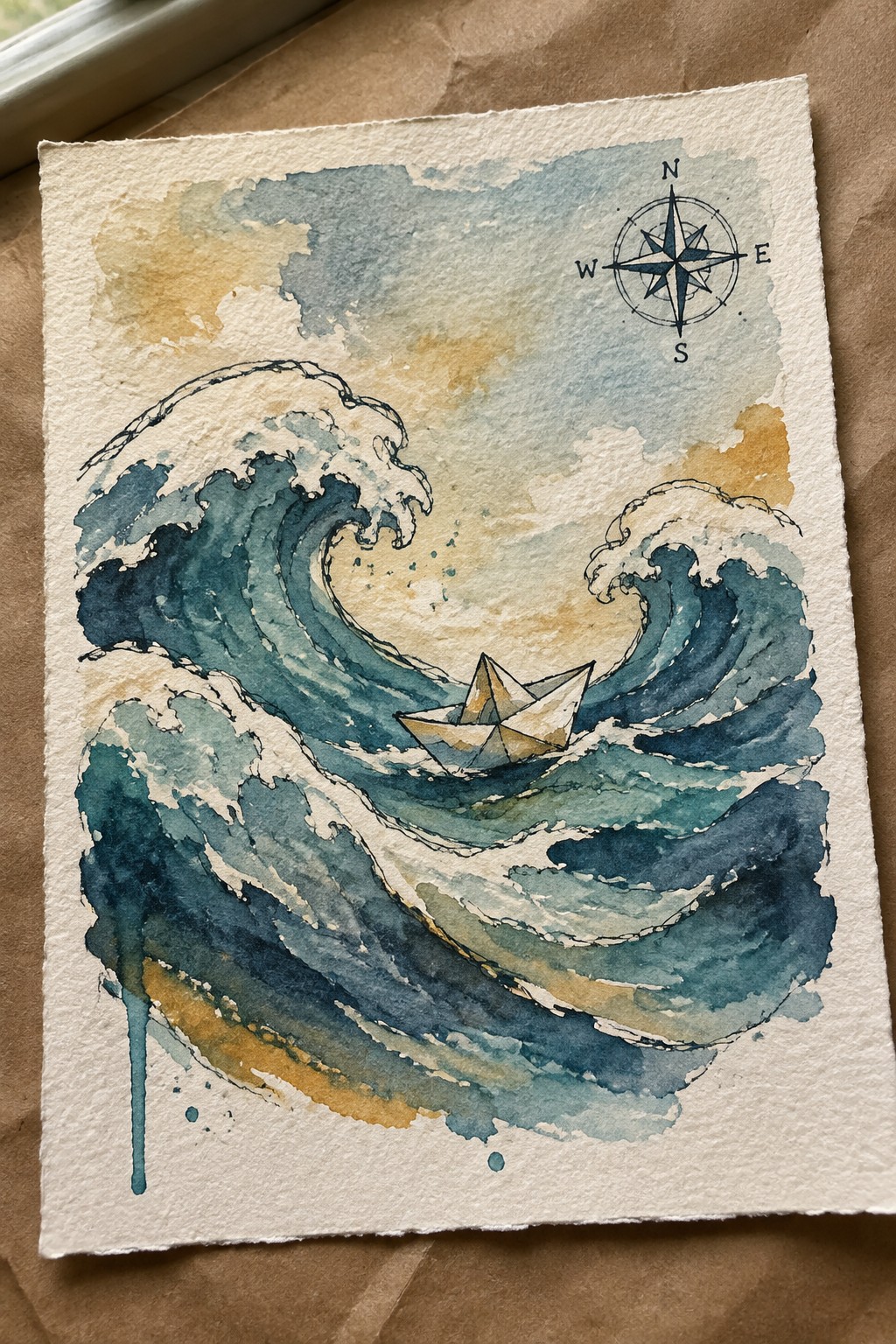
This painting idea uses a small paper boat as the focal point set against large, curling waves to highlight scale contrast in a marine scene. The composition places the boat low in the frame while the waves dominate the space, creating movement through layered curves and overlapping shapes. A compass rose in the upper corner adds a navigation reference that keeps the idea grounded in ocean travel without adding extra elements.
The composition does a lot of the work here by letting the waves frame the boat naturally. This works especially well for wall art because the limited color palette of blues and muted golds stays easy to match with most rooms. You could simplify the wave details for a faster version or swap the compass for a different symbol if you want to personalize it. For practice, the subject gives clear shapes to follow while still leaving room to adjust wave height or boat placement.
Vibrant Ferry Boat with Coastal Backdrop
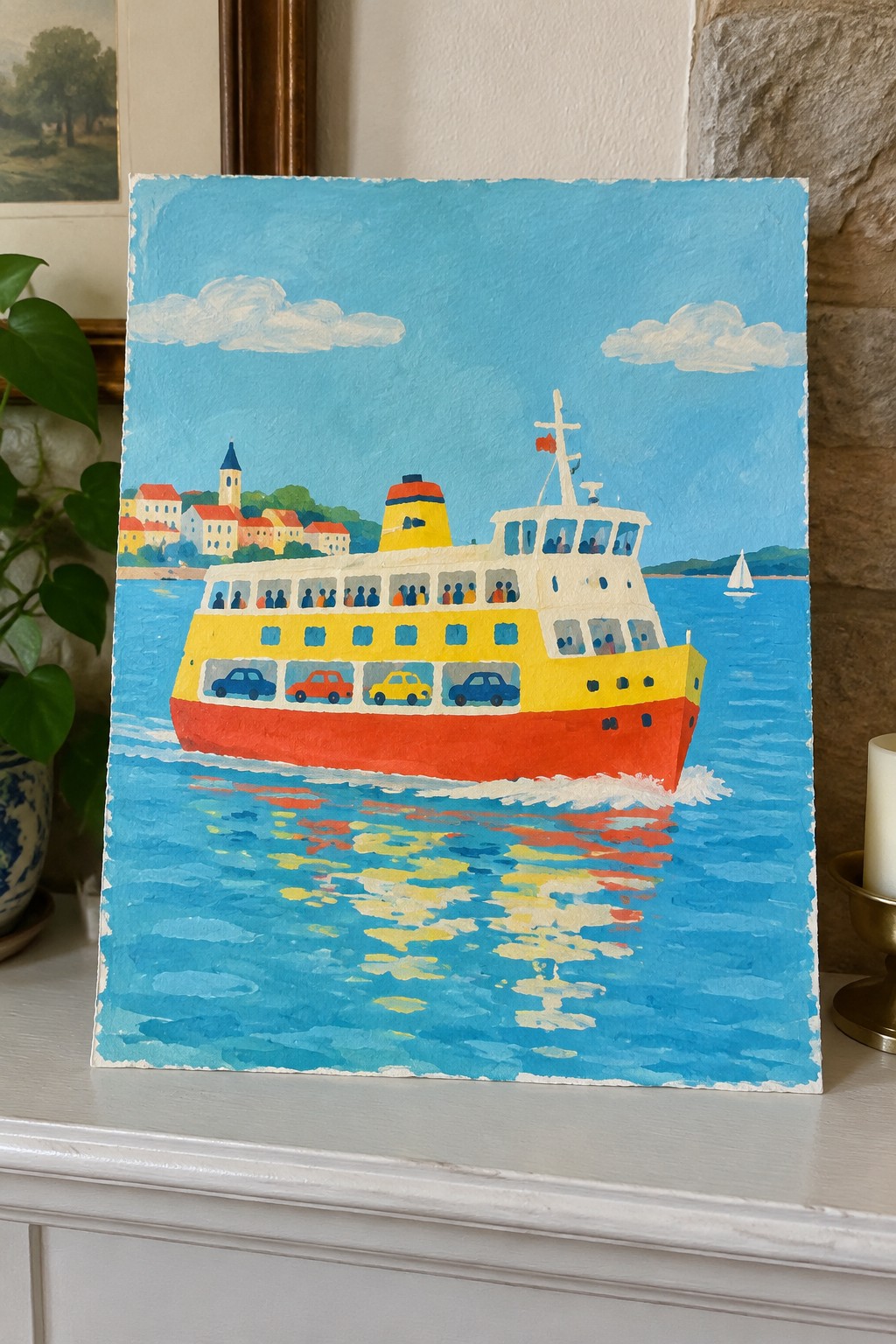
A ferry boat painted in bold blocks of yellow and red serves as the central subject here, positioned against a simple coastal town and open blue water. The idea combines a recognizable mode of transport with a clean horizon line and a mirrored reflection that adds depth without extra elements. This approach fits a straightforward maritime landscape style where the vessel and its surroundings stay balanced through strong shapes and a limited color range.
What makes this idea useful is the clear focal point created by the boat’s horizontal layout and bright color contrast against the water. The reflection gives beginners an easy way to practice symmetry while keeping the overall scene simple enough to scale down for smaller canvases or sketchbook studies. The color palette works well for quick adaptations like swapping in different boat types or changing the sky tone for seasonal versions.
Beached Rowboat in a Coastal Scene

A simple rowboat pulled onto the sand works as the main focal point in this coastal landscape idea, positioned to break up the long stretch of beach and water. The idea centers on placing the boat at an angle near the shoreline so the waves and distant horizon create natural depth behind it. Layered bands of blue-green water and pale sky keep the background calm while the boat and scattered seaweed hold attention in the lower half of the composition.
What makes this idea useful is how the boat gives a clear subject without needing complex details or multiple elements. The straightforward color palette of blues, greens, and warm sand tones makes it easy to adjust for a smaller canvas or a quicker version with fewer waves. For practice, the layout works well because the main shapes stay readable even if the seaweed or rope lines are simplified or moved.
Night Seascape with a Single Sailboat

A lone sailboat on open water under a bright full moon forms the core of this painting idea. The concept works as a seascape that uses a tight color range of deep blues and soft whites to keep attention on the light reflection across the water. The boat sits low in the frame with plenty of empty sky above, which lets the moon act as the main focal point without extra elements competing for space.
What makes this idea useful is how the simple horizontal layout makes it easy to adjust for different canvas sizes or paper formats. The contrast between the dark sky and the moon’s glow handles most of the visual interest, so you can start with just two or three tones and build from there. You could swap the sailboat for a different small vessel or reduce the wave texture if you want a calmer version. For practice or quick wall pieces, this type of scene gives clear structure while leaving room to change the moon size or star count.
Pirate Ship Sailing Through Blue Waves

A pirate ship with brown hull details, white sails, and a black flag acts as the clear focal point in this ocean scene. The painting idea uses a centered boat against layered waves below and open sky above, with the flag and sun adding simple vertical and corner balance. This fits into a cute decorative style where bold shapes and flat color areas keep the ship motif easy to read from a distance.
What makes this idea useful is how the ship’s rectangular body and curved sails break down into basic forms that work at different sizes. The strong contrast between the dark hull and light sails helps the subject stand out even if the wave lines stay loose. For wall art or practice pieces, the same layout can be simplified by reducing the number of sails or swapping the flag for a plain one while keeping the wave pattern as the main background element.
Blue Boat with Water Reflections
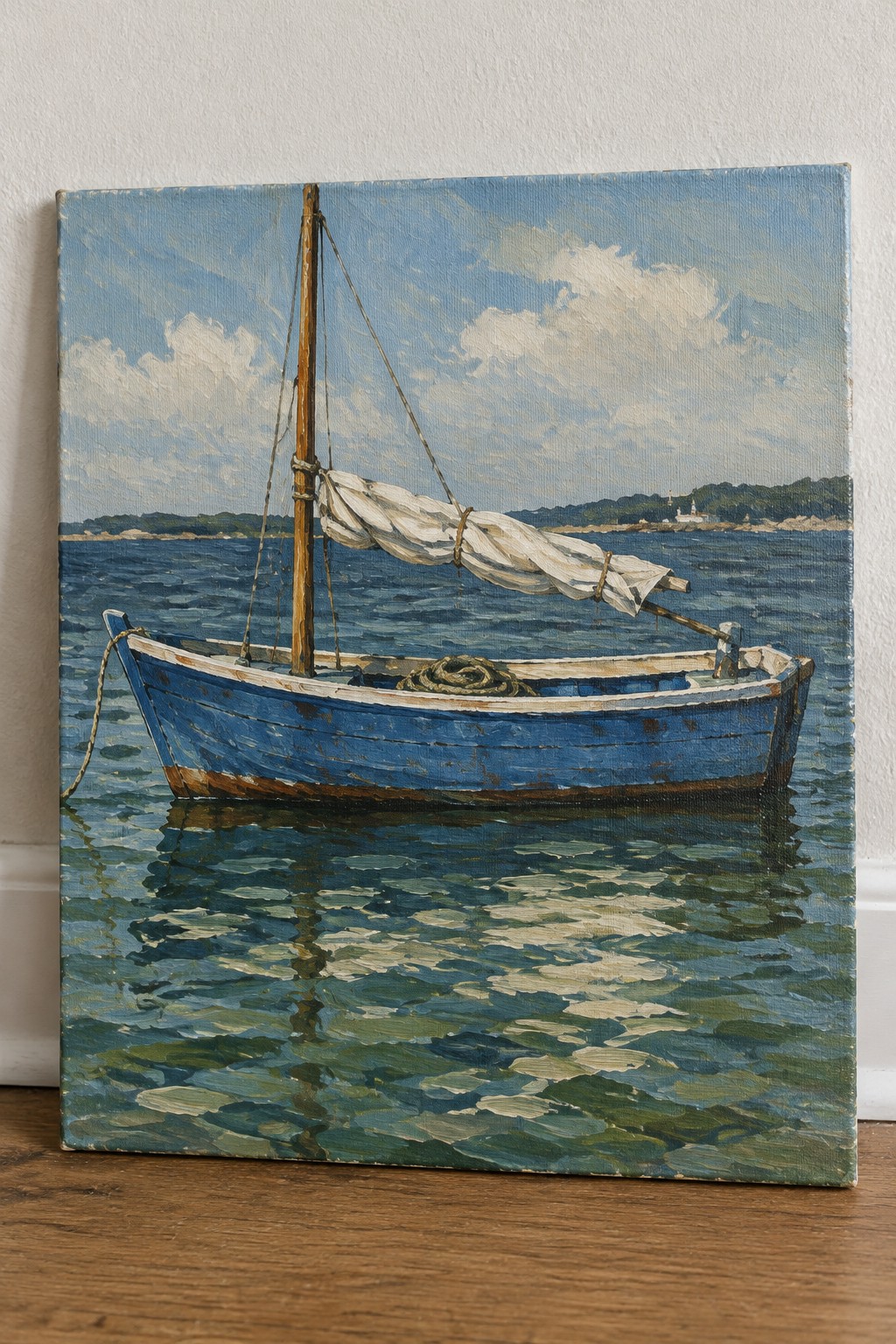
A single boat floating on open water serves as the main focal point in this ocean painting idea. The composition uses the boat’s solid shape against the moving water surface to create visual balance, with the reflection helping to connect the subject to its surroundings. Cool blue and green tones keep the overall palette cohesive while the lighter sail stands out as the key point of contrast.
What makes this idea useful is how the reflection does much of the work in showing depth and light. The distant shoreline adds context without pulling attention away from the boat itself. This kind of setup works well for practice because it can be simplified by cropping tighter around the boat or adjusted by changing the water colors to match a different time of day.
Misty Harbor Boats in Layered Fog

A harbor landscape idea that places several small boats at staggered distances across calm water works well for creating depth with minimal elements. The main subject is the boats themselves, treated as simple shapes that stand out against a soft, receding background of shore, house, and trees. This approach fits an atmospheric landscape category where muted tones and gentle reflections handle most of the mood while keeping the composition balanced and uncluttered.
What makes this idea useful is how the boats give you ready-made focal points without needing complex details on each one. The color palette stays easy to adjust by shifting the haze toward warmer or cooler grays depending on the time of day you want. For practice, this kind of scene lets you work on water reflections and soft edges at the same time, and the horizontal layout translates directly to a standard canvas size for wall pieces.
Lighthouse and Sailboat Seascape

A lighthouse paired with a sailboat creates a balanced seascape idea that uses strong vertical and horizontal elements to hold the viewer’s attention. The striped tower on the right side offsets the sailboat and waves on the left, while the bright sun and simple cloud shapes keep the upper half from feeling empty. This type of coastal landscape works because the limited color blocks and repeated wave patterns give it clear structure without requiring intricate details.
The composition does a lot of the work here by using the lighthouse as a natural focal point that draws the eye upward. You can easily adapt the idea by changing the number of waves, shifting the sailboat closer or farther away, or swapping the sun color for a different time of day. For wall art or quick practice pieces, this layout stands out because the shapes stay readable even when simplified, and the strong contrast between the tower stripes and the water makes it Pinterest-friendly without extra embellishment.
Stormy Ship on Rough Seas
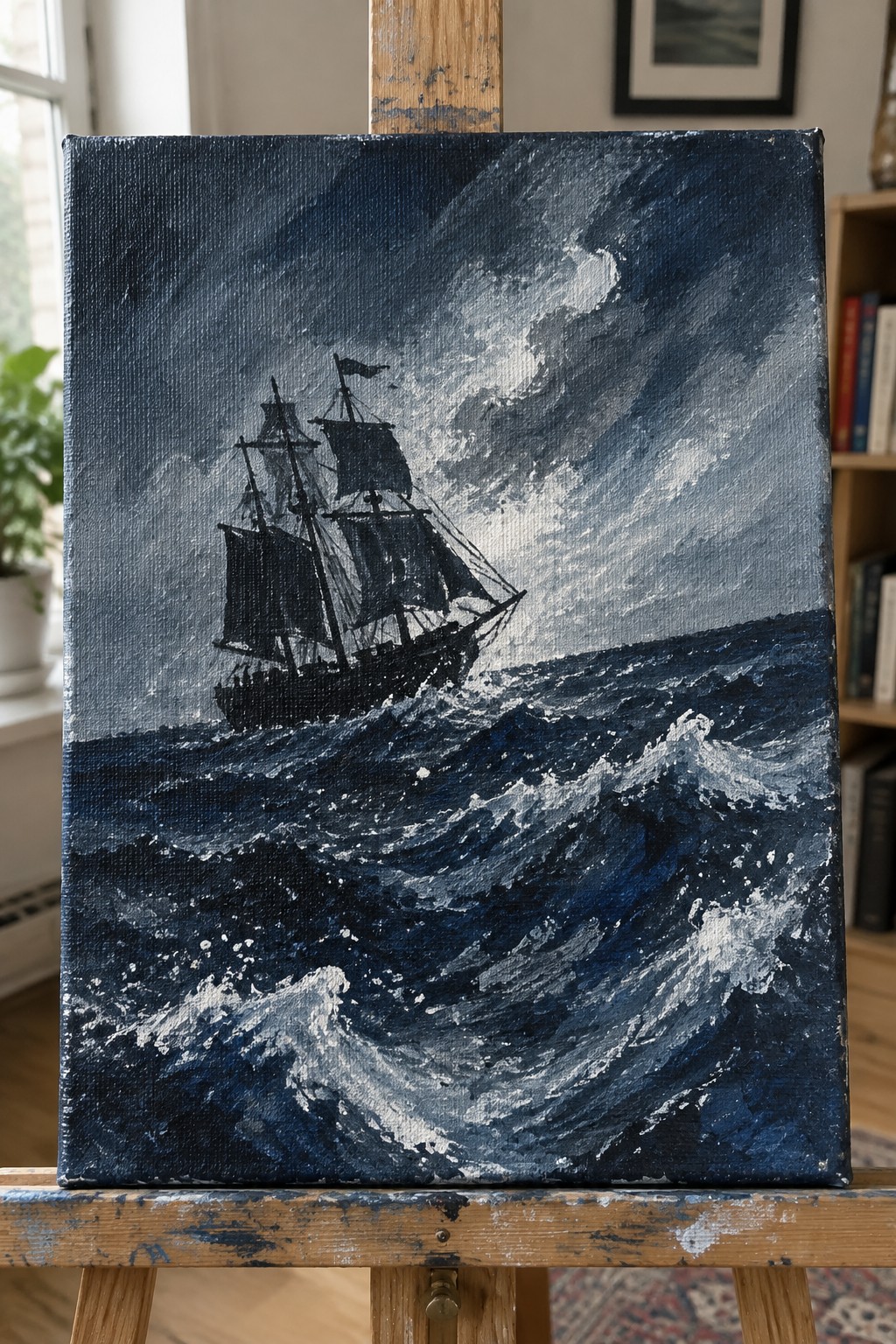
A strong seascape idea centers on a sailing ship as the main subject, placed against a turbulent ocean and a heavy sky. The composition works by using the ship’s solid dark shape to contrast with the lighter, textured waves that fill the lower half of the scene. This approach fits the ocean painting category where the boat serves as the focal motif and the weather adds the main visual interest.
What makes this idea useful is the clear vertical placement of the ship that keeps the eye from getting lost in the moving water. The limited blue and white palette makes it easy to adapt for studies or larger pieces without mixing many colors. For practice, the strong value contrast between the boat and waves offers a straightforward way to work on texture and movement before trying more complex ship details.
Anchored Sailboat with Clear Reflection

A single sailboat floating at anchor forms the core idea here, with its reflection used to add symmetry and pull the eye downward into the water. This seascape approach keeps the boat centered while letting the soft sky and distant shore act as quiet supporting elements rather than competition. The limited color range of blues and off-whites helps the boat stand out without extra detail or clutter.
What makes this idea useful is how the reflection gives you twice the subject with very little extra work. The layout works at small or medium sizes, so you can test it on sketchbook paper before committing to a larger piece. You could swap the buoy for a different shape or change the hull color to match a room without losing the overall balance. For wall art, this kind of straightforward boat scene fits easily into coastal or nautical themes.
Scattered Sailboats on a Dark Blue Field
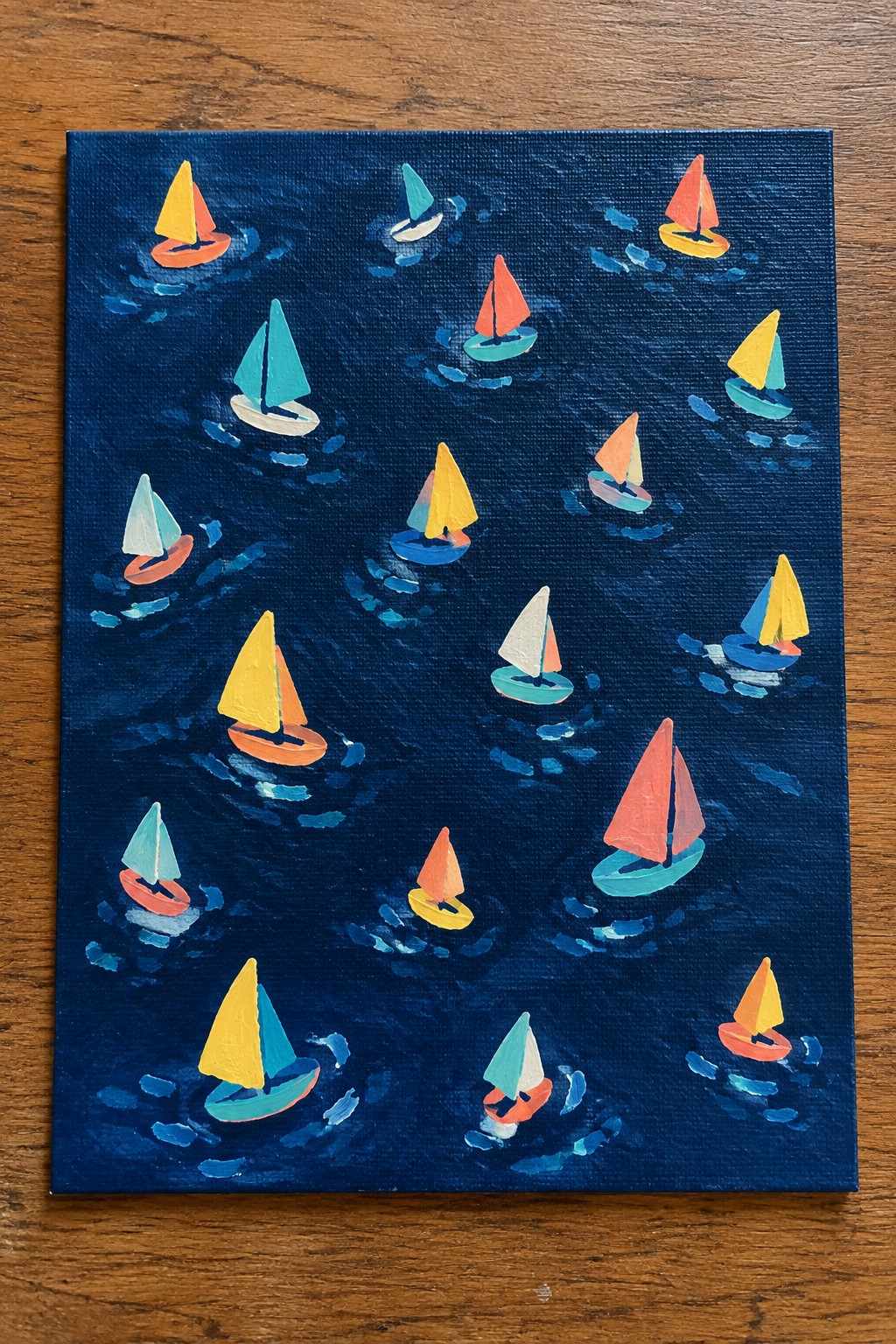
A scattered layout of small sailboats with varied colorful sails creates an easy nautical pattern across a solid dark background. The idea uses simple repeated shapes in different angles and color combos to suggest movement on water without painting waves or a horizon line. This fits decorative art because the bright sails stand out clearly against the deep blue and the loose placement avoids any need for precise spacing or perspective.
The composition does a lot of the work here since the boats stay small and basic, letting you focus on color choices rather than drawing skill. You can swap in any sail colors to match a room or shrink the whole thing down for cards and prints. For practice, this kind of subject works well because it builds comfort with repetition and negative space. The high contrast also makes it pop in a feed of ocean paintings.
Shipwreck Resting in Shallow Coastal Water
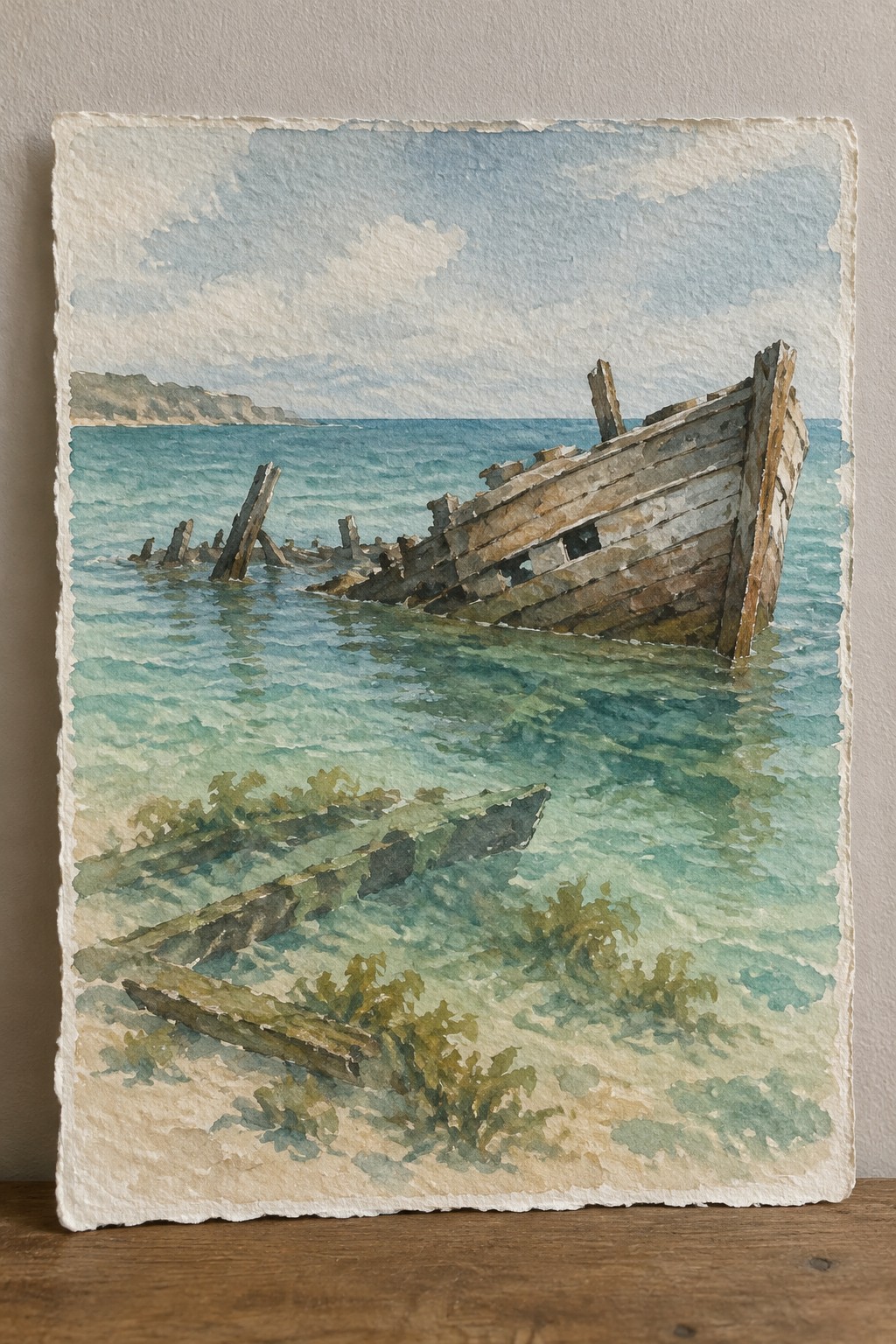
A weathered wooden boat half sunk near the shore forms the clear focal point in this coastal landscape idea. Scattered planks and debris in the foreground lead the eye toward the main structure while the calm water and distant horizon keep the scene balanced. The limited palette of muted blues and browns lets the boat stand out without extra detail or clutter.
What makes this idea useful is the strong diagonal placement of the wreck combined with a simple background that does not fight for attention. You can adapt the composition by cropping tighter around the boat or extending the water for a wider feel. The subject works well for practicing reflections and texture on wood without needing complex figures or multiple elements. For wall art, the quiet color scheme and single dominant shape make it easy to match with coastal or neutral decor.
Frequently Asked Questions
What artists are most frequently featured in lists of ocean paintings with boats and ships? Many such collections highlight masters like Winslow Homer for his realistic depictions of fishermen and rough seas, J.M.W. Turner for his atmospheric use of light on vessels, and Ivan Aivazovsky for his dramatic Russian seascapes filled with ships. These artists stand out because their works emphasize the interplay between human craft and vast waters.
How do the paintings use boats and ships to convey mood or story? Artists often position vessels as central elements to suggest adventure, isolation, or peril on the open ocean. For instance, a small boat battling waves can evoke human resilience, while a grand ship in calm waters might imply exploration or tranquility. Viewers gain insight by noting details like sail angles, weather conditions, and horizon lines that guide emotional interpretation.
Where can someone view or purchase reproductions of these 21 paintings? High-quality prints are available through museum websites, online retailers like Fine Art America, or licensed galleries that offer canvas options. For originals, check auction houses such as Sotheby’s or institutions holding public collections, though many pieces remain in private hands or specific museums worldwide.
What painting techniques help capture realistic ocean waves around boats? Effective methods include layering blues and greens with white highlights for foam, using impasto for texture on waves, and applying perspective rules so ships align with water movement. Beginners benefit from studying light reflections on hulls and practicing wet-on-wet blending to achieve fluid sea effects without overworking details.
How do these artworks reflect changes in maritime history across eras? The selection often spans Romantic period pieces showing sailing ships to modern works with steam vessels or yachts, illustrating shifts from exploration to leisure and trade. This progression reveals how artists responded to technological advances and cultural views of the sea as both a frontier and a source of beauty.