
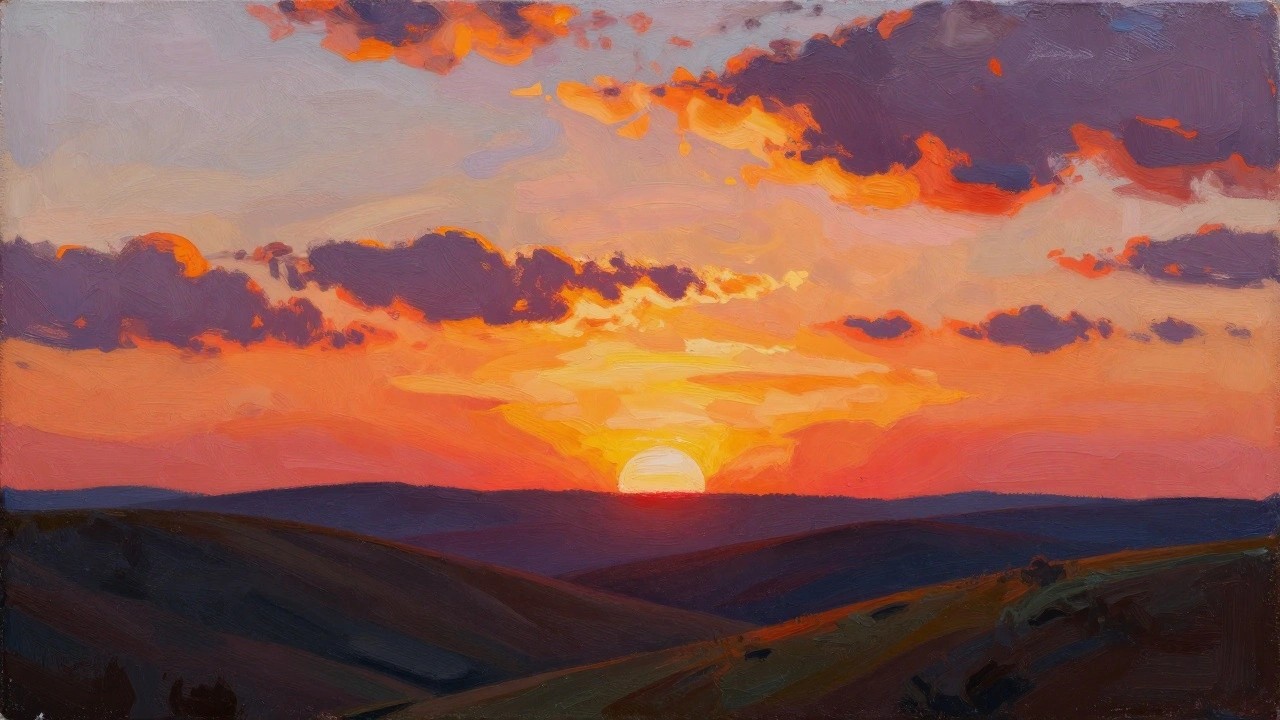
I have tried a few canvas projects over the years and some of the easiest ones surprised me with how finished they looked once they were done.
I put this list together because I know how nice it feels to finish something without spending hours on it or buying special supplies.
Most of these ideas use basic brushes and colors you probably already have at home.
I kept the steps short on purpose so they do not feel like a big commitment.
A couple of them have become my go to when I want something new on the wall without much planning.
Sunset Landscape with Layered Hills
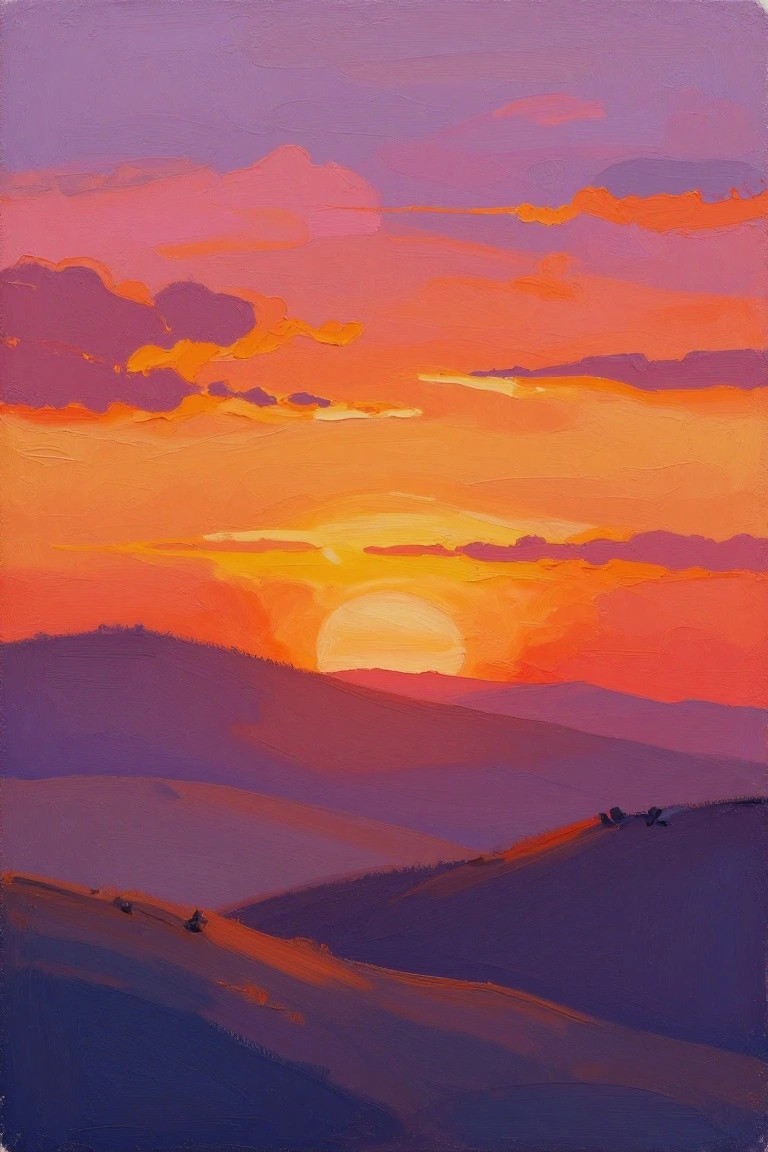
A sunset landscape built from stacked hills works as a strong canvas idea because the main focus stays on the glowing sun and the color bands in the sky. The composition uses simple overlapping shapes to suggest distance, with the brightest area placed low on the horizon so the eye moves naturally across the scene. Broad color shifts from cool foreground tones to warm sky hues keep the painting readable even when the hills stay mostly flat and dark.
What makes this idea useful is that the hill shapes can be adjusted in height or number without changing the overall effect. The color palette makes this easy to adapt by swapping in different sunset tones or even trying a sunrise version with cooler pinks. For wall art, something like this hangs well in a horizontal format above furniture because the layers create balance. This would be easy to turn into a small series by varying only the sky while keeping the same hill layout.
Sunset Mountain Landscape
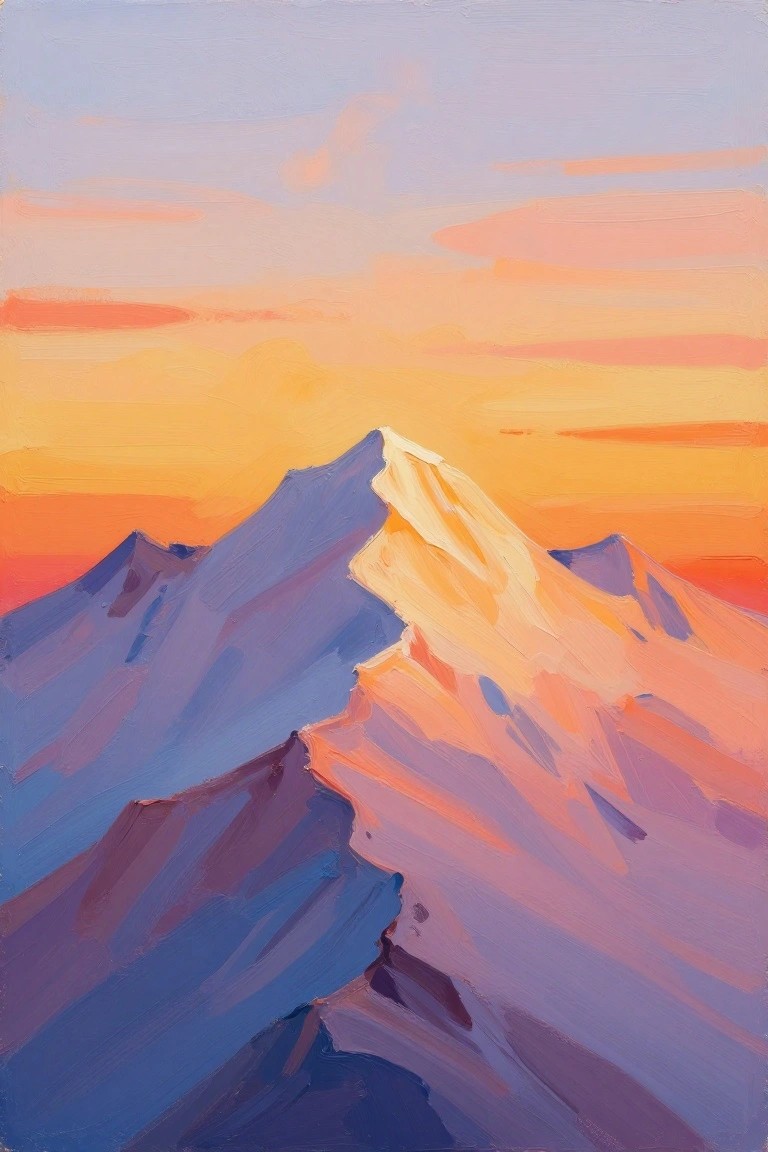
A mountain landscape painting uses strong triangular shapes to build a range of peaks against a glowing sky. The main idea centers on blocking in large mountain forms with cool blues and purples, then adding warm orange and yellow highlights to the central peak where the light hits. This contrast between shadowed slopes and the bright summit creates a clear focal point without needing fine details.
The composition does a lot of the work here by leading the eye straight to the lit peak through simple overlapping shapes. You can easily adapt the color palette to match a different time of day or swap the warm tones for cooler ones if you want a moonlit version. For wall art this style stands out because the bold color blocks read well from a distance and require only basic layering. Try starting with the sky, then add the mountains in two or three values to keep the process quick while still looking finished.
Oversized Pink Peony with Bold Center
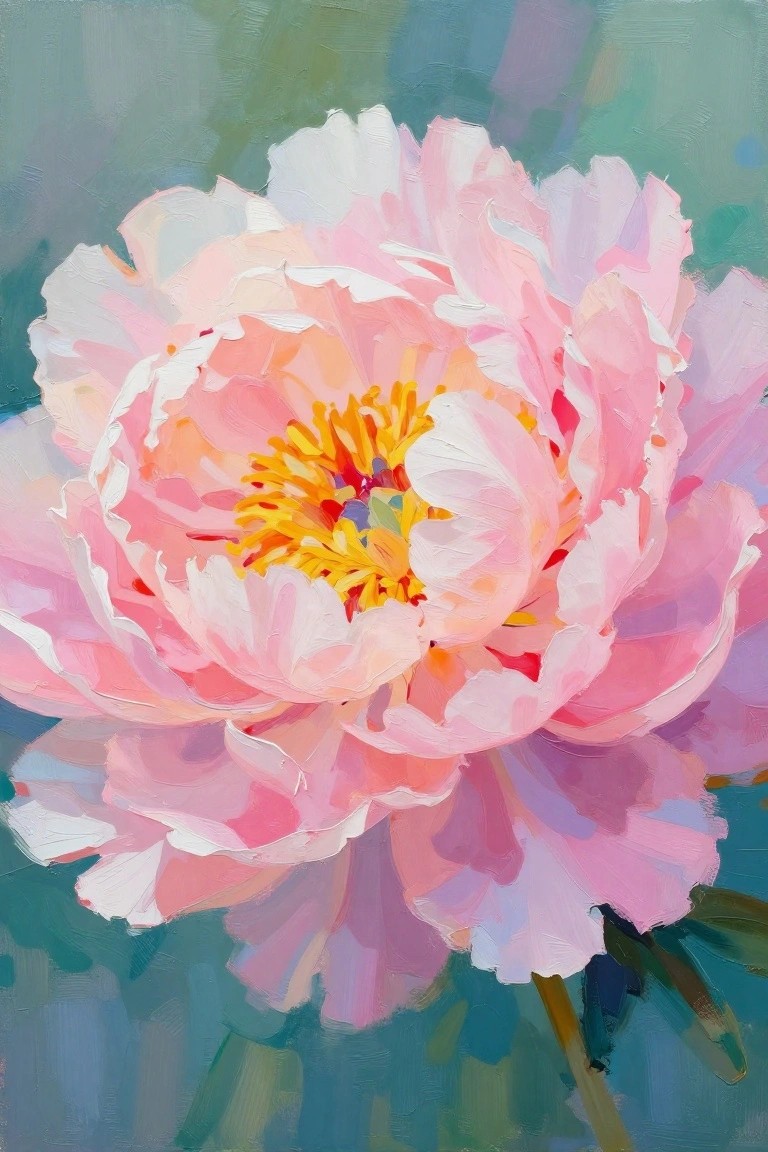
A single large peony painted with loose, overlapping strokes gives beginners an approachable way to practice building form through color rather than outlines. The idea relies on a strong central focal point of yellow and orange that anchors the surrounding soft pink petals and keeps the whole piece balanced. Placing the bloom slightly off-center with a muted teal background lets the flower dominate without any need for extra elements.
The composition does a lot of the work here by filling most of the canvas so you avoid wrestling with empty space or complex backgrounds. You can easily shift the petal colors toward peach or lavender while keeping the center high-contrast to change the mood. This floral style works especially well for wall pieces because the loose brushwork still looks finished even if your edges stay soft. For practice, try blocking in the center first, then build the petals outward in bigger shapes before adding smaller color notes.
Potted Cacti with a Bold Sunset Backdrop
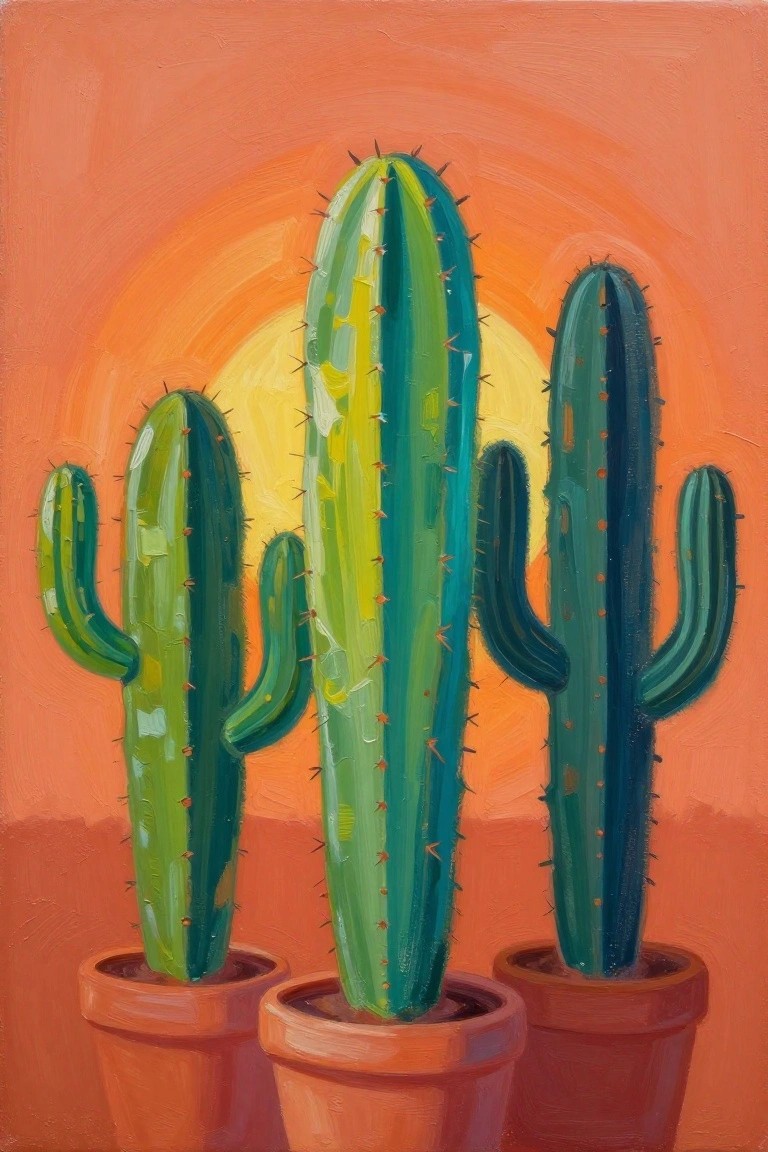
A still life of three cacti in terracotta pots works well as a simple botanical subject that relies on strong color contrast rather than intricate detail. The tallest cactus sits in the middle with two shorter ones on either side, while a large yellow circle behind them creates a clear focal point against the solid orange background. Thick brushstrokes and flat areas of color keep the shapes easy to read and the overall layout balanced.
What makes this idea useful is how the background color carries most of the visual weight, so you only need to focus on basic cactus outlines and pot shapes. You can adjust the number of cacti or swap the orange for other warm tones to match different rooms. For practice, this kind of painting helps you work on composition and color blocking without needing advanced blending skills.
Sunset Sailboat with Reflection
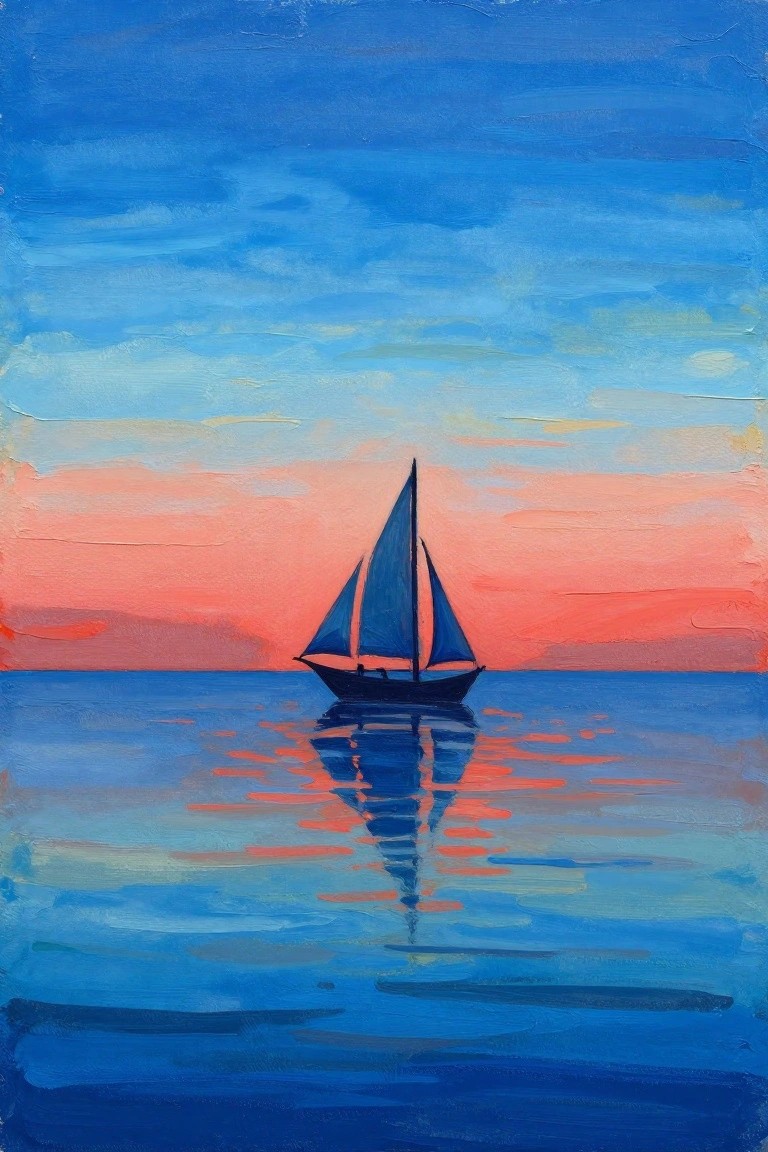
A sailboat silhouette placed on the horizon line makes a straightforward seascape idea built around color contrast and a mirrored reflection. The sky shifts from blue to warm orange and pink while the water repeats those tones in softer horizontal strokes, keeping the boat as the single focal point. This type of landscape works because the limited shapes and clear division between sky and water reduce the need for fine detail.
What makes this idea useful is how the reflection creates symmetry without adding more subjects. You can change the sunset colors to cooler tones or move the boat slightly off center to fit different canvas sizes. The simple layout also translates well to smaller practice pieces or quick weekend paintings since most of the effect comes from blending rather than precise outlines. For Pinterest this kind of scene performs well because the bold horizon and color blocks read clearly even at small sizes.
Bold Abstract Curves in Rainbow Colors
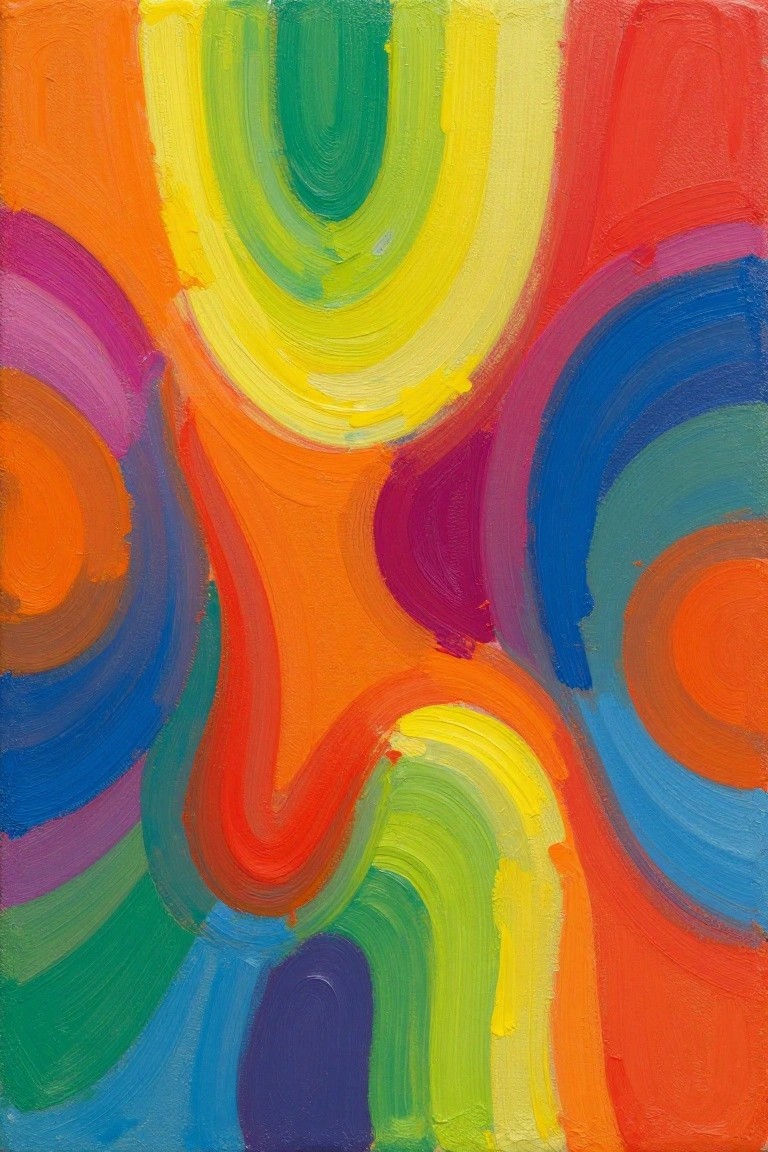
An abstract painting idea built from overlapping curved shapes gives the canvas a strong sense of movement without needing any recognizable objects. The concept relies on a bright mix of warm and cool tones applied in thick, visible strokes so the colors blend slightly at the edges. This kind of design fits the decorative art category because the simple forms let color and rhythm carry the whole piece.
What makes this idea useful is how the curves can be stretched or repeated to match any canvas size. You can swap the full rainbow for a smaller set of colors or add more layers if you want extra depth. For practice, this kind of subject helps beginners focus on brushwork and color placement rather than drawing skills, and the finished look still reads as intentional wall art.
Night Landscape with Moon and Silhouetted Tree
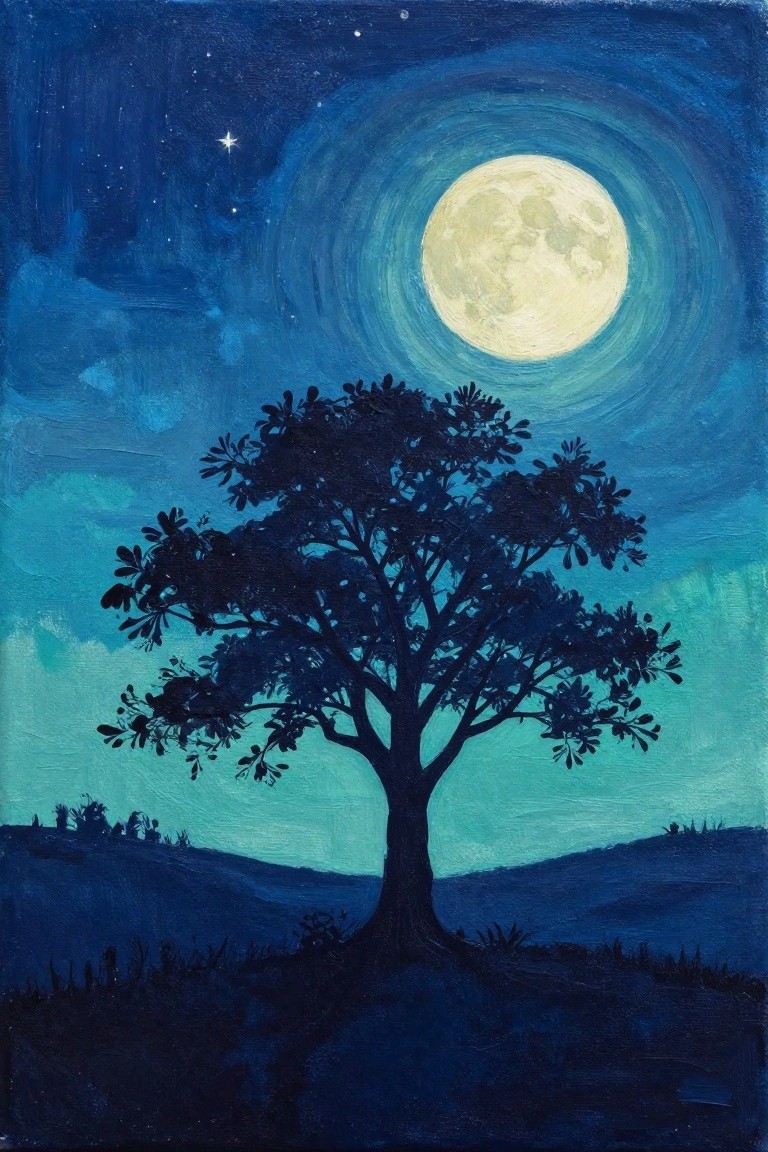
A night landscape built around a large full moon and a dark tree silhouette gives beginners a clear focal point without complicated details. The idea relies on strong contrast between the bright circular moon and the layered dark shapes of the tree, hills, and foreground to hold the composition together. Swirling brushwork in the sky adds interest while the limited color range of blues and greens keeps the process straightforward.
The composition does a lot of the work here by placing the moon high and off-center so the tree can anchor the lower half without crowding. You can adapt it easily by adjusting the moon size, swapping the tree shape, or stretching the hills into a wider format for different canvas sizes. For practice, this kind of subject helps with basic value control and simple layering, and it translates well to wall art because the bold shapes read clearly from a distance.
Bold Colored Houses on a Winding Street
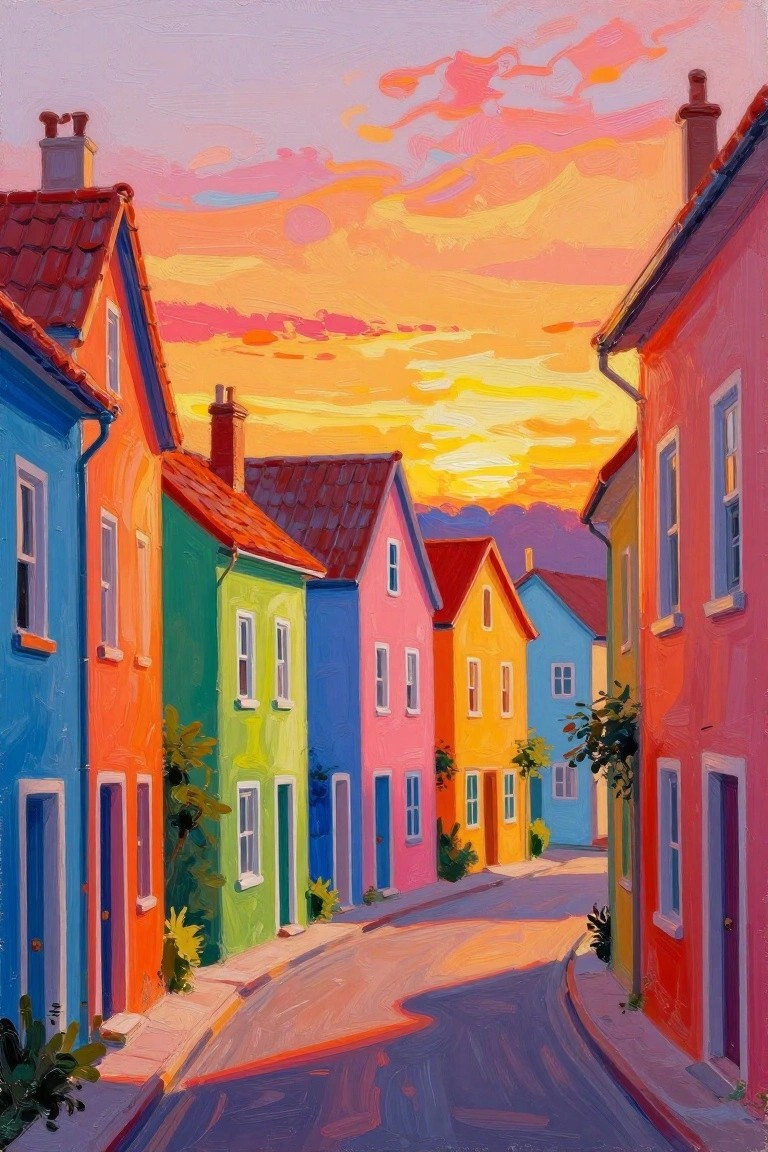
A curved street lined with houses painted in strong blocks of blue, orange, green, pink, and yellow makes a simple but striking landscape idea. The composition relies on perspective created by the road and the staggered rooftops to lead the eye forward, while the bright sky provides a high-contrast backdrop. This approach works well as a scenic painting because the shapes stay geometric and the color choices carry most of the visual interest.
What makes this idea useful is how the limited detail level lets you focus on color mixing and basic perspective without getting stuck on fine textures. You can easily change the house colors to match a different neighborhood or swap the sunset for a daytime sky if you want a calmer version. For wall art, the saturated palette helps the piece read clearly from across a room and tends to perform well when shared on Pinterest boards. The same layout can be scaled down to a smaller canvas or turned into a series by varying just the sky colors.
Colorful Birds on Thin Branches
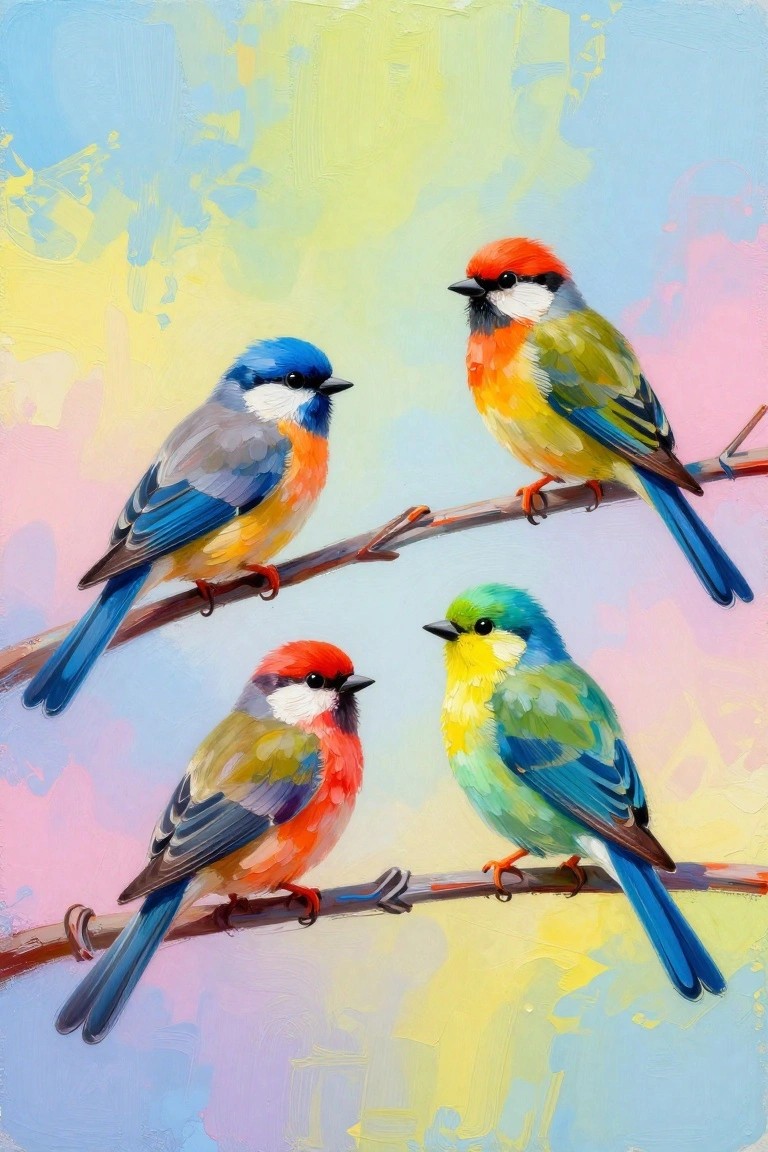
Painting a small group of birds with bold, varied colors on simple branches gives you an easy animal subject that still feels lively. The idea works by keeping the birds compact and using a soft, blended background so the bright feathers stand out without needing fine detail. Placing the birds at slightly different heights and angles adds balance while keeping the composition straightforward.
What makes this idea useful is how quickly you can change the color scheme or number of birds to match your style or available paints. The loose background means you spend less time on perfect blending and more on the main shapes. For wall art, something like this works especially well in smaller sizes where the color contrast does most of the visual work. You could also simplify it further by using just two or three birds if you want a quicker version.
Bold Sunset Reflection on Water
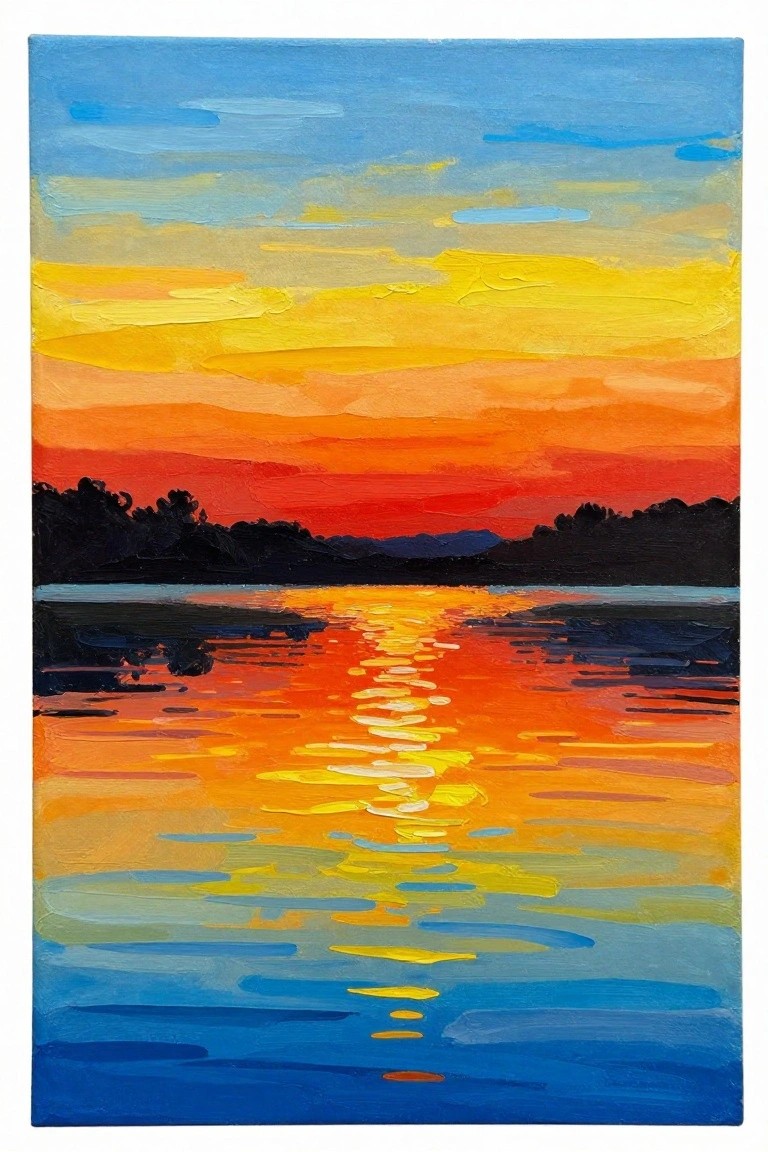
A sunset landscape built around horizontal color bands in the sky and their matching reflection in the water gives beginners a clear structure to follow. The idea centers on layering warm tones from yellow through orange to deep red, then repeating those same hues vertically in the water to create the illusion of light on the surface. A simple dark band of land or trees across the middle horizon keeps the focus on the color play without extra elements.
The composition does a lot of the work here by breaking the canvas into easy sections that can be painted one at a time. You can adjust the width of the color bands or swap in cooler tones for a dawn version while keeping the same layout. This type of painting stands out on Pinterest because the bright gradient and clean reflection read well even in small thumbnails.
Single Lemon Still Life with Bright Color Contrast
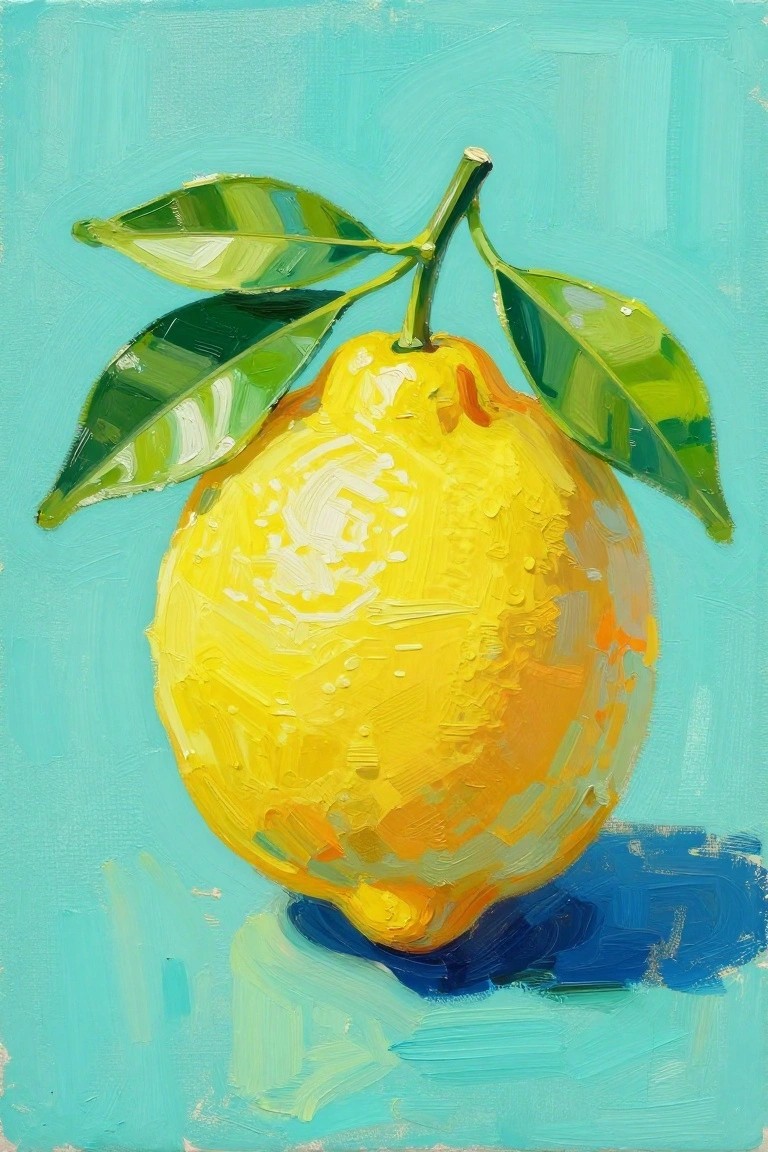
Painting one piece of citrus fruit with a few leaves attached makes an easy still life that keeps the focus on shape and color. The idea works by using a single rounded form placed against a flat background with a small shadow to anchor it, so the eye stays on the lemon without extra objects cluttering the canvas. Visible brushstrokes and a strong yellow against turquoise create contrast that feels finished even with simple layers.
What makes this idea useful is that the subject stays small and contained so you can finish it in one or two sessions. The color palette can be swapped for oranges or limes without changing the layout. For practice, this kind of subject helps you test highlights and texture on a curved surface. This would be easy to turn into a small series by painting different fruits in the same style.
Northern Lights Over Silhouetted Pines
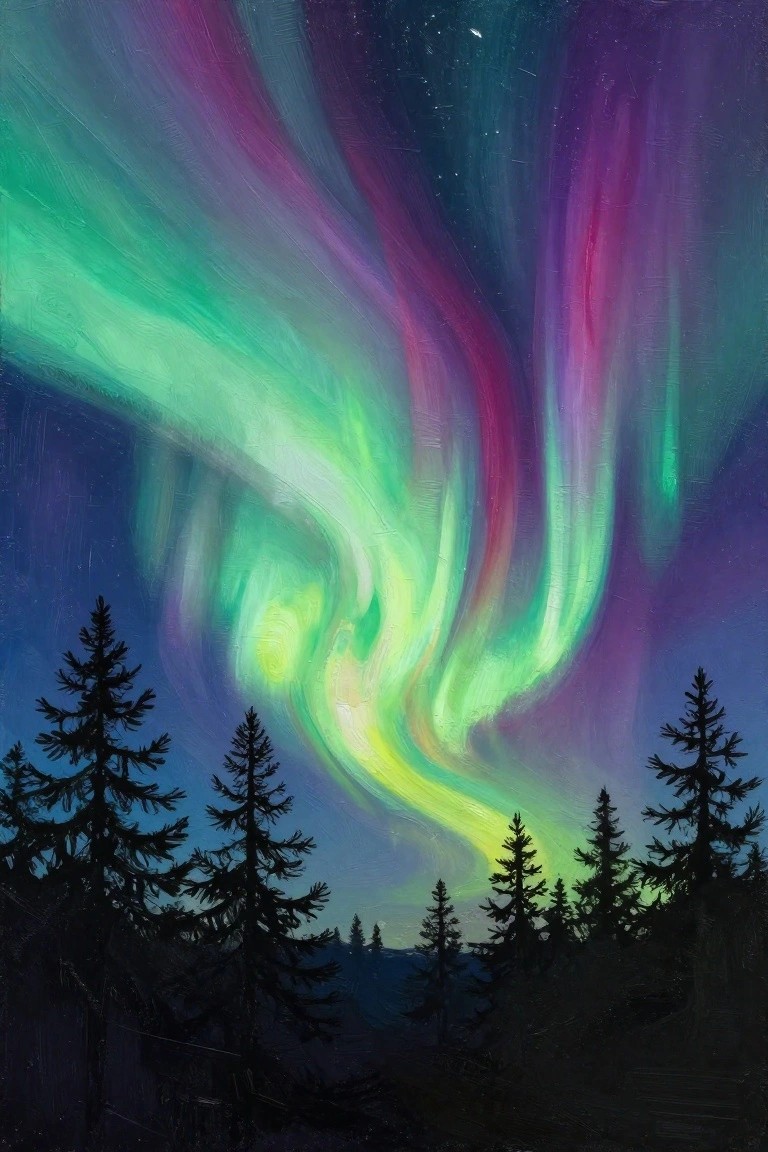
This painting idea focuses on the northern lights as wide, flowing bands of green, pink, and purple that twist across a dark sky. The composition uses those bright color streaks as the main focus while keeping the foreground simple with black pine tree shapes along the bottom edge. It falls into the night sky landscape category where bold color movement and strong contrast drive the look.
What makes this idea useful is the way the sky blending creates most of the impact while the trees stay quick to paint with basic shapes. You could easily change the color mix to cooler blues or add more yellow highlights to match a different aurora photo. For practice, this kind of subject helps beginners work on soft color transitions without needing exact details in the trees. The vertical layout also works well for taller canvases or phone wallpaper prints.
Oversized Monstera Leaves in Hot Colors
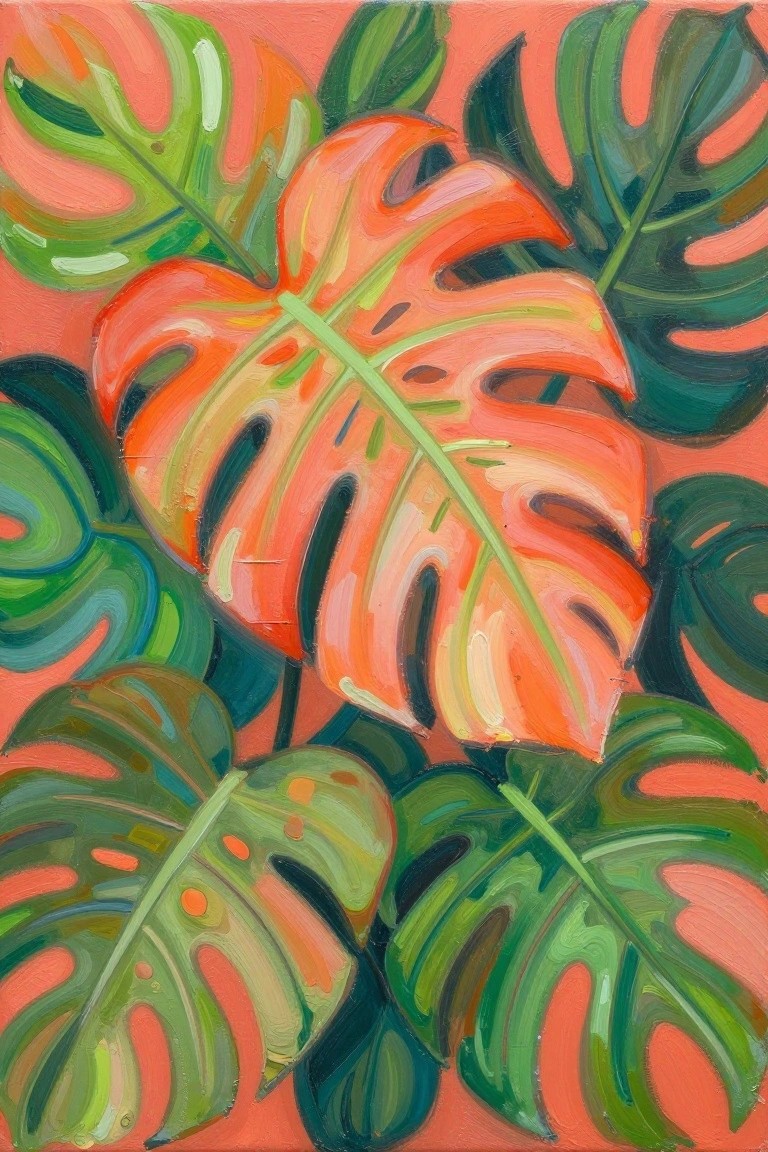
A botanical leaf painting built around large monstera shapes gives you a clear subject that fills the canvas without needing intricate details. The idea relies on overlapping leaves and a limited palette of bright orange, red, and green to create contrast and depth. This approach fits the decorative art category and works because the strong shapes and flat color areas guide the eye across the whole piece.
The composition does a lot of the work here since the leaves already create natural layers and negative space. You can easily adapt it by changing the background color or reducing the number of leaves if a smaller canvas feels better. For wall art this style stands out on Pinterest because the saturated palette reads clearly even in thumbnails, and beginners can practice brush control while still ending up with something finished.
Lakeside Cabin with Reflection
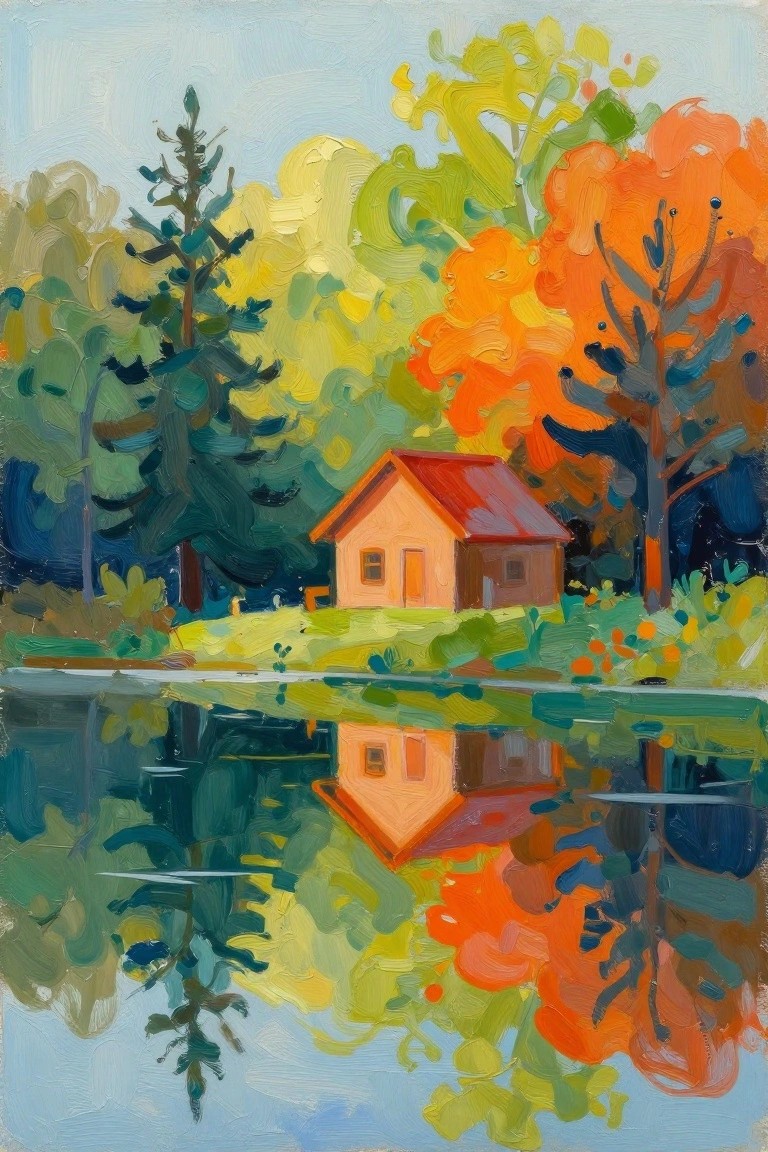
A landscape painting idea built around a small cabin reflected in still water gives beginners a clear focal point that organizes the rest of the scene. The house sits centered with trees on either side, so the composition stays balanced without extra planning. Strong color blocks in the foliage and their mirrored versions in the water make the image read quickly even when details stay loose.
The reflection adds instant depth while giving you an easy way to practice matching shapes and colors. You can simplify the trees into broad strokes or change the season by swapping the leaf palette to whatever paints you already have. This kind of subject works well for wall pieces because the water element makes the whole painting feel finished without needing intricate foreground work.
Stacked Colorful Stones on the Beach
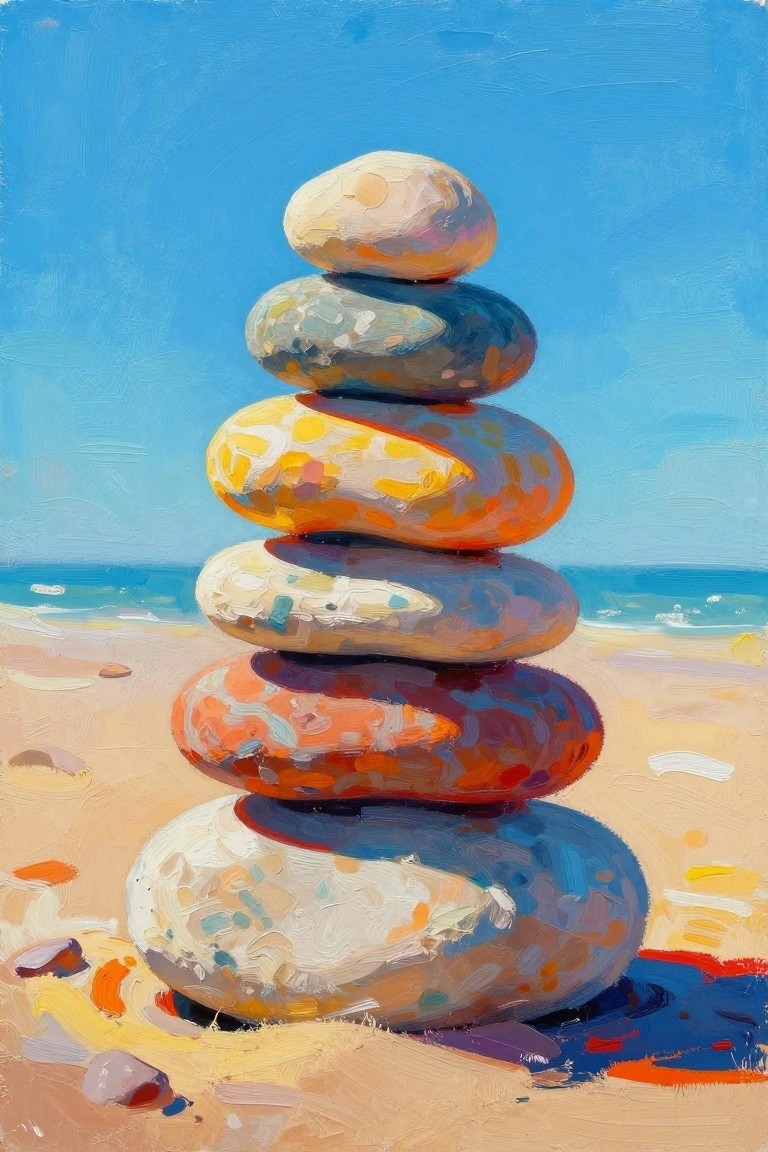
Painting a tower of rounded stones in mixed bright colors creates a simple vertical subject that holds attention against a flat beach and sky. Each stone gets its own blend of hues and visible brush marks, while the overall shape stays balanced through repeating ovals. The idea sits between still life and nature painting since it relies on basic forms rather than fine detail or perspective.
The composition does a lot of the work here because the stacked shapes create height without needing extra elements. You can change the number of stones or swap in any colors from your palette to match what you have on hand. This kind of subject works well for practice since the background stays minimal and the focus stays on building layers and texture. For wall art, the bold shapes also read clearly in smaller sizes or prints.
Cosmic Swirl Moon Canvas
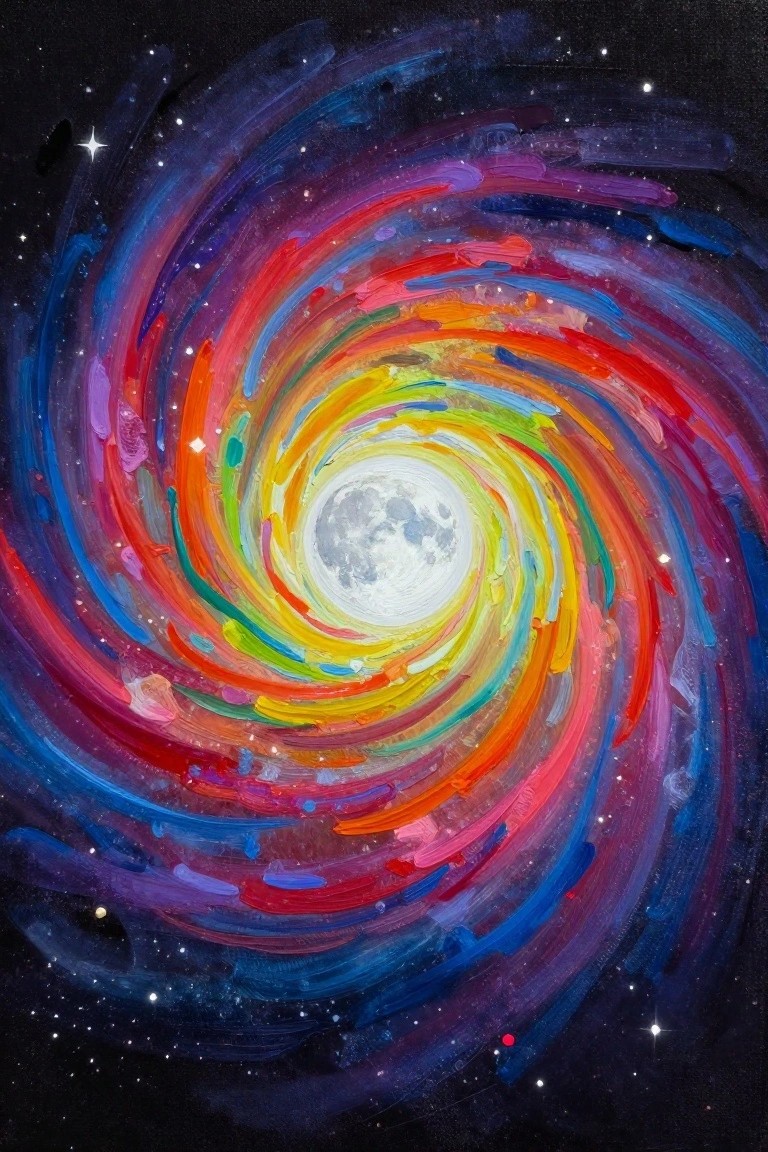
A cosmic moon painting places a detailed full moon at the center of a tight spiral made from broad brushstrokes in bright rainbow colors. The idea works as abstract space art because the swirling bands create movement that pulls the eye inward while the dark background keeps the colors from blending together. The layout stays simple yet bold, using color contrast and circular motion instead of fine details to hold attention.
The composition does a lot of the work here since the spiral shape organizes the colors without extra planning. You can swap the rainbow palette for any bright set you already own or reduce the swirl count to fit a smaller canvas for faster practice. For wall pieces this kind of design shows up well on Pinterest because the high contrast and clear center make it readable even as a thumbnail.
Overlapping Tulips in a Spring Color Palette
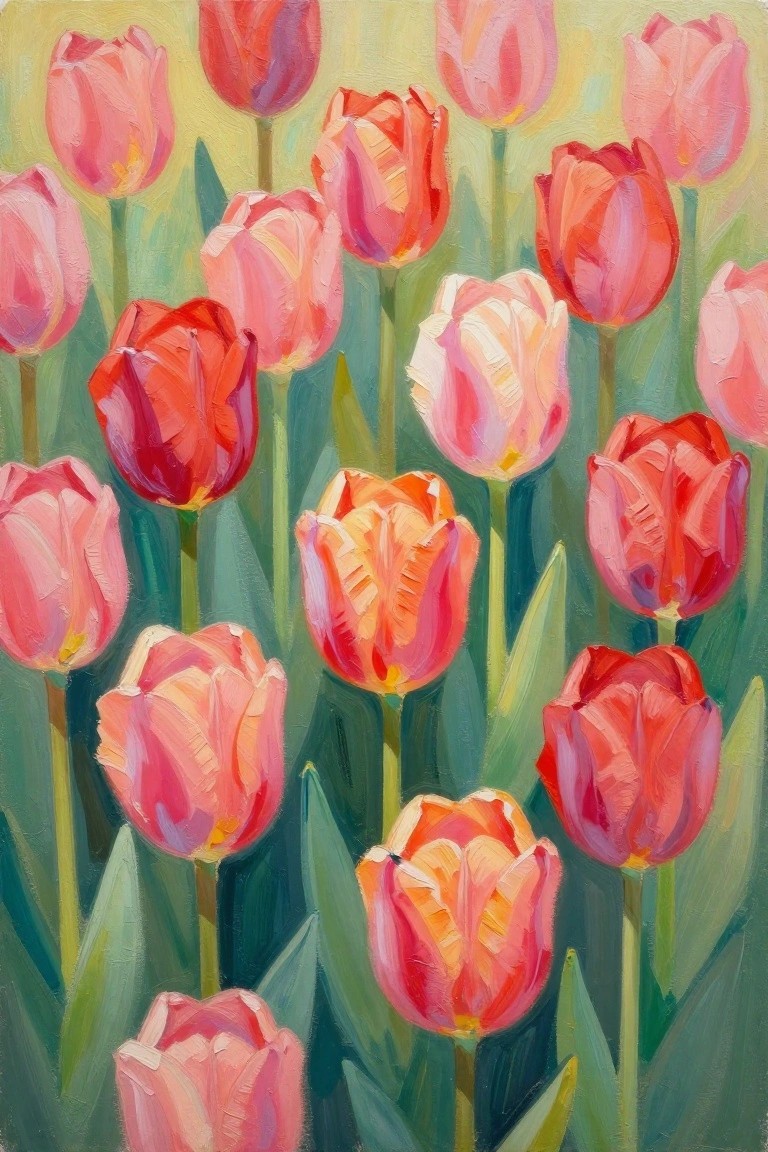
A group of tulips painted from different angles creates a simple yet effective floral idea. The flowers sit close together with stems and leaves filling the spaces between them, using a range of pinks, corals, and reds against a muted green background. This setup lets the color changes and soft edges do most of the work instead of fine detail.
What makes this idea useful is how the repeated shapes let you focus on mixing warm tones and placing strokes without worrying about perfect outlines. You can easily reduce the number of blooms or shift the colors toward cooler pinks if you want a different look for a room. The background keeps attention on the flowers, so the same layout works whether you paint it small for practice or larger for wall decor.
Cliffside Lighthouse with Light Beam
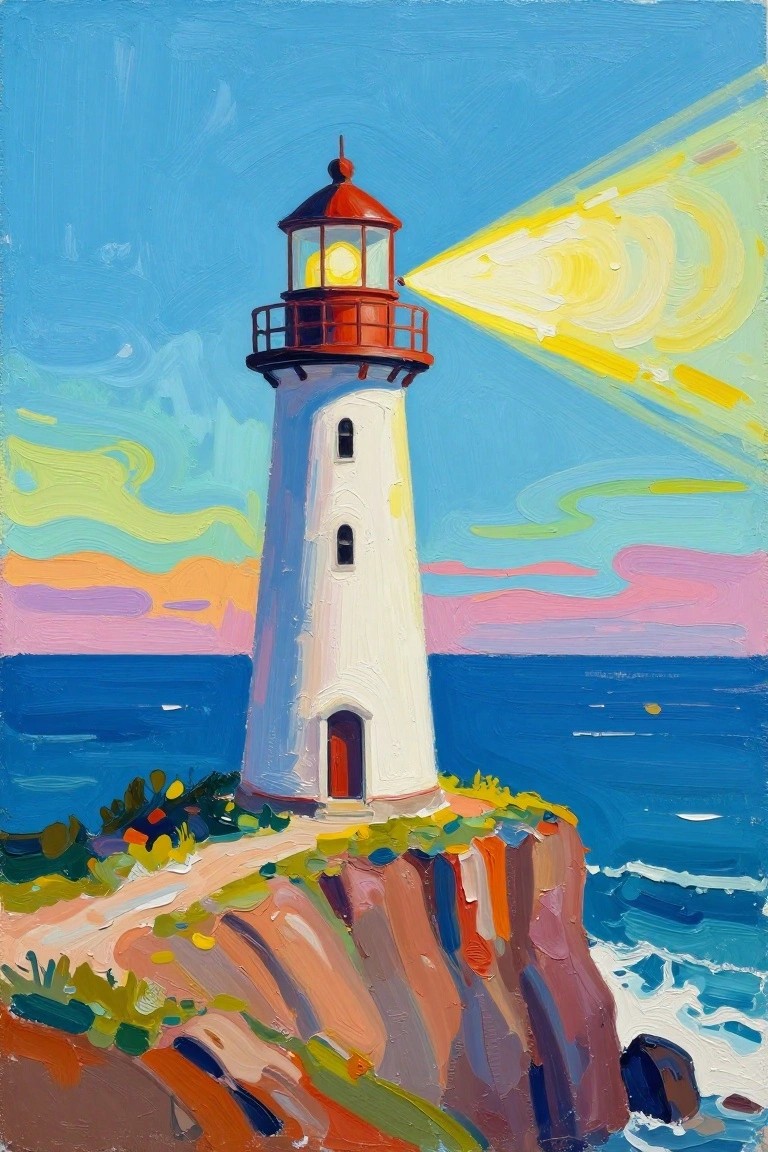
A lighthouse standing on a rocky cliff by the ocean makes a strong landscape subject because the tall vertical shape creates an instant focal point against the water and sky. The idea works through simple layering, with the structure placed slightly off center and the light beam adding a clear directional element that leads the eye across the canvas. Bold blocks of color in the sky and water keep the scene readable even when brushstrokes stay loose.
The composition does a lot of the work here by using the lighthouse as a natural anchor so beginners can focus on shape and color rather than fine detail. The color palette can be swapped for different times of day or simplified by keeping the sky to three main tones. This kind of scene translates well to wall art because the strong vertical format and light beam give it instant visual impact on Pinterest. You could adapt it by changing the cliff height or adjusting how far the beam stretches.
Rainbow Layered Mandala Flower
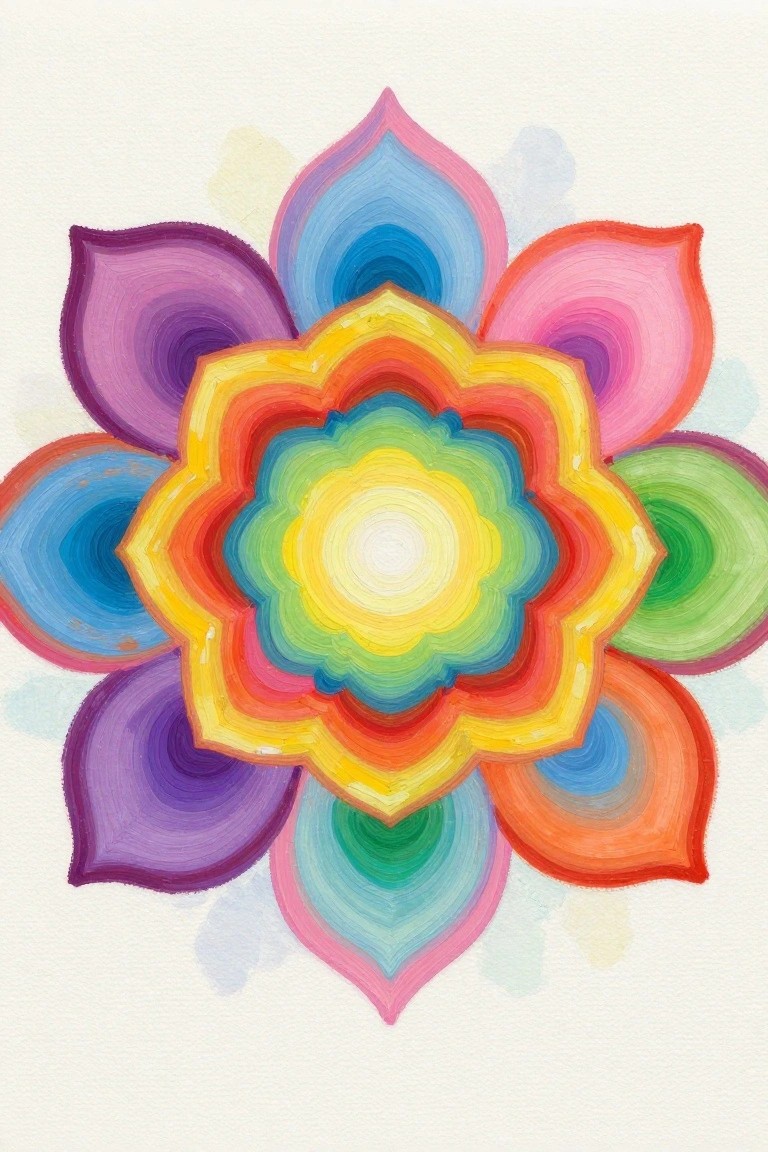
A mandala-style flower built from concentric rings of color that expand outward in smooth gradients, surrounded by eight separate petals in matching hues. The design relies on symmetry and repeated circular shapes to create depth, with the central rings drawing the eye while the outer petals add balance. This approach fits into decorative floral art and works well on canvas because the layers can be added one ring at a time.
The composition does a lot of the work here since the rings guide the placement of each new color band without needing precise drawing skills. You can swap the rainbow sequence for any palette or shrink the outer petals to fit smaller canvases. For practice, this kind of subject helps build control with blending and symmetry while still producing a finished piece that looks intentional on a wall.
Frequently Asked Questions
What supplies do beginners need for these canvas painting ideas? Acrylic paints work best for most of the projects since they dry quickly and offer vibrant colors. Start with a few basic colors plus white and black for mixing, a set of affordable brushes in different sizes, a primed canvas or two, a palette for mixing, and water for cleaning. An old cloth or paper towels helps with quick cleanups, and a simple easel keeps your workspace organized.
How can I make sure my finished paintings look professional? Focus on clean lines and balanced composition by sketching your design lightly in pencil first. Use painter’s tape for sharp edges on geometric ideas, and apply thin layers of paint rather than thick globs to avoid brush marks. Adding a final coat of varnish seals the surface and gives it a gallery style finish that enhances depth and protects the work.
Do these ideas require any special skills or prior experience? No prior experience is needed since the suggestions emphasize simple shapes, color blocking, and repetitive patterns that build confidence fast. Many projects use household items like sponges or cotton swabs for texture instead of advanced brushwork, allowing beginners to achieve polished results in just one or two sessions.
What should I do if I make a mistake during the painting process? Let the area dry completely, then paint over it with a fresh layer of the background color or adjust the design to incorporate the error as a new element. Acrylics are forgiving this way, and keeping a small bottle of the main colors handy makes quick fixes easy without starting over.
How long do these projects usually take from start to finish? Most of the ideas can be completed in one to three hours of active painting time, depending on the complexity and drying periods between layers. Allow extra time overnight for full drying if you plan to add details or varnish, and work in a well ventilated space to keep the process comfortable.