
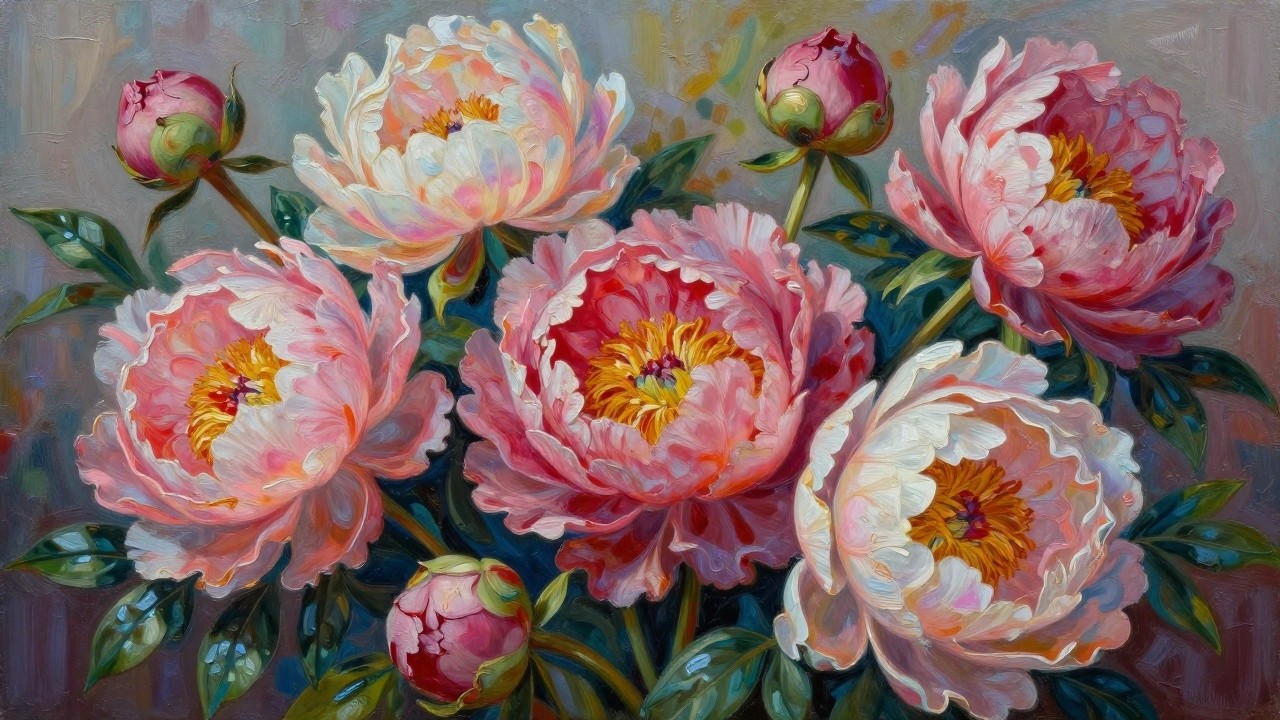
I like painting flowers on canvas because it is a simple way to add something handmade to my walls.
It does not take much in terms of supplies and the results still feel personal.
I have tried a few different approaches over the years and some turn out better than others.
These twenty ideas are ones I think could work for most rooms without looking too fussy.
They are easy enough to adjust if you want to change the colors or size.
Layered Peony Bouquet Still Life
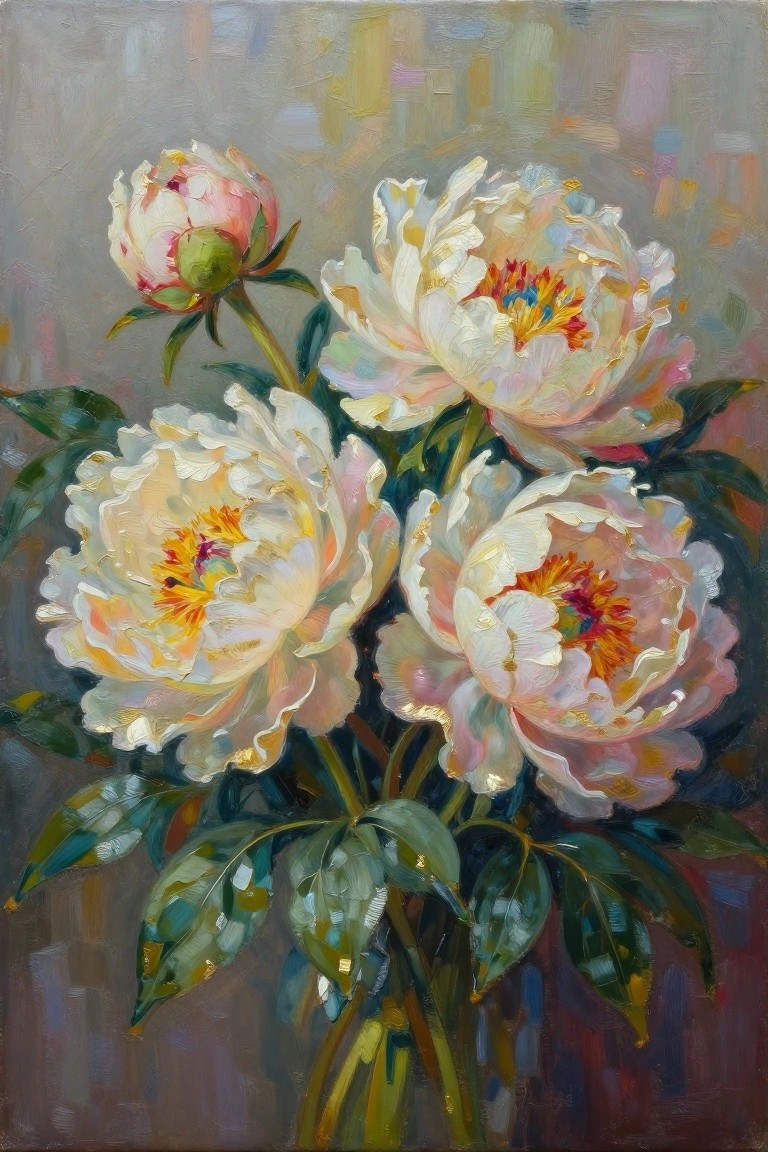
A floral still life built around several large peony blooms in white and pale pink works well as a canvas project. The idea centers on overlapping flower heads at different stages of opening, with one bud included for variety, all arranged in a loose vertical cluster. Soft brushwork on the petals and darker green leaves create depth while the muted background keeps the focus tight on the flowers themselves.
What makes this idea useful is the way the rounded petal shapes naturally guide the eye without requiring precise symmetry. The limited color range of creams, soft pinks, and greens makes it easy to adjust by swapping in warmer yellows or cooler lavenders depending on the room. For wall art the vertical layout fits nicely on a standard portrait canvas and can be scaled down by using only three blooms instead of five. The visible texture from thicker paint areas also gives beginners room to practice without needing perfect blending.
Sunflower Field With Foreground Focus
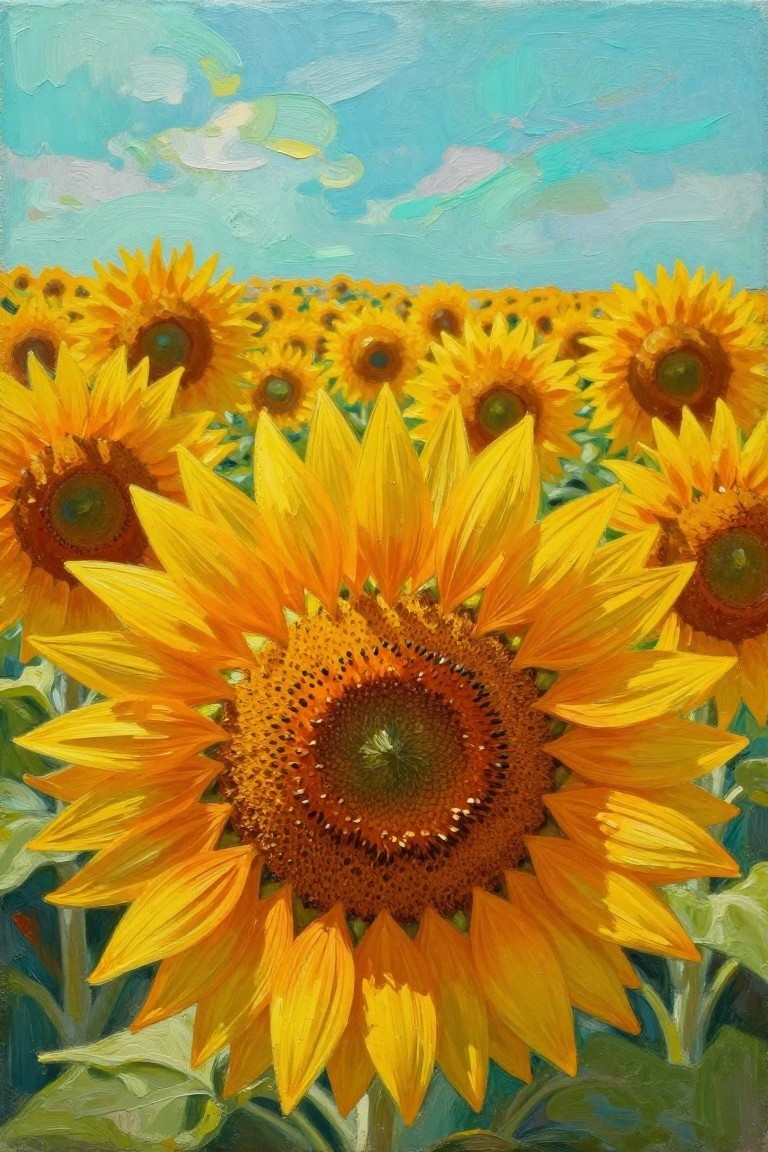
A sunflower field painting works by placing one large bloom in the foreground with rows of smaller flowers receding into the distance. The idea centers on bright yellow petals and a textured dark center set against a simple blue sky, which keeps the composition balanced and easy to follow. This fits the floral landscape category and relies on strong color contrast plus repeating shapes rather than fine detail.
The composition does a lot of the work here by using the oversized front flower to pull the eye in while the background rows create depth without extra effort. You could crop the scene tighter for a smaller canvas or soften the sky colors to fit different wall tones. For practice this subject stays approachable because the petals can be blocked in with broad strokes and the center built up gradually.
Oversized Magnolia Blooms on a Dark Ground
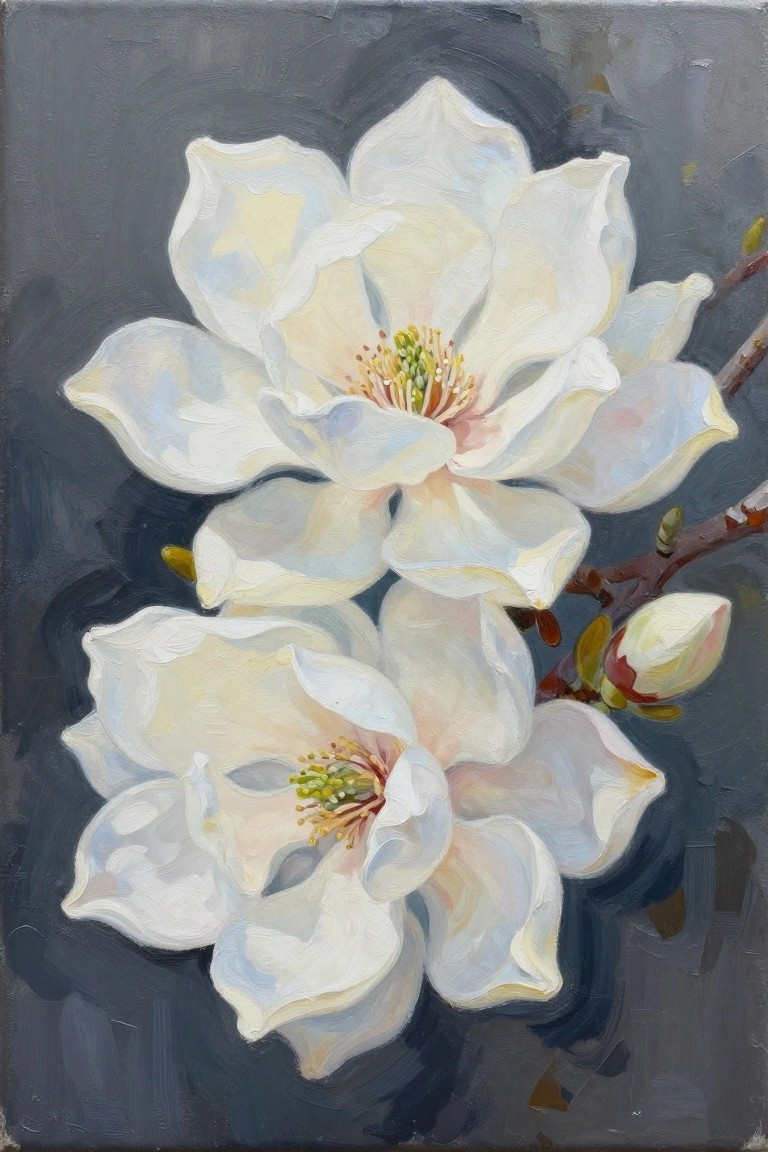
A close-up floral painting of two large white magnolias makes an effective canvas idea because the dark background lets the petals and centers stand out without extra elements. The idea centers on simple overlapping blooms with visible stamen clusters and a few buds on a short branch, keeping the focus on shape and soft color shifts. This approach fits a straightforward still life style that works at any canvas size.
The high contrast between the flowers and background makes the composition easy to adapt by swapping in other large-petaled flowers or adjusting the tone of the ground. You can simplify it further by reducing the number of blooms or keep the layered petal edges as the main point of interest. For wall pieces this kind of subject fills space well without needing intricate details across the whole canvas.
Deep Purple Dahlia Cluster
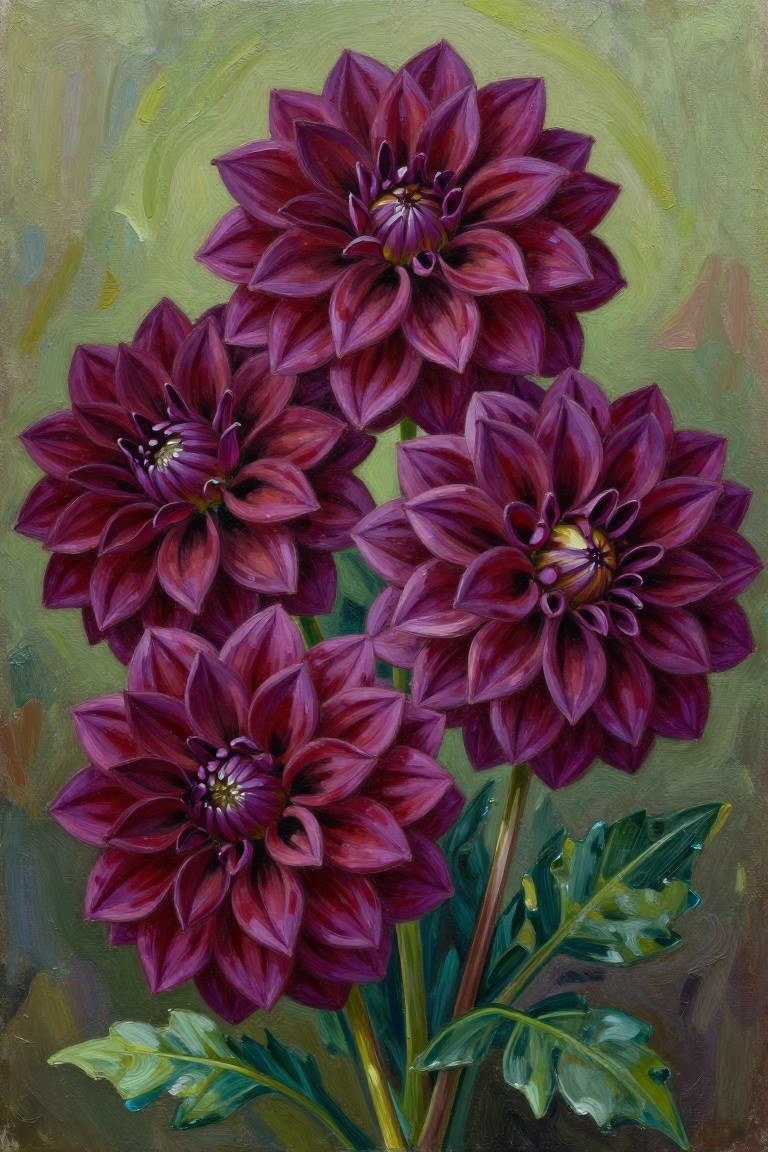
A group of deep purple dahlias painted with layered petals creates a strong floral canvas idea. The composition places several blooms close together on one stem, using overlapping shapes and varied angles to build depth. A muted green background and simple leaf details keep the focus on the flower forms without extra elements.
What makes this idea useful is how the tight grouping of blooms handles most of the visual interest on its own. You can adjust the number of flowers or shift the color slightly warmer or cooler depending on what you want to match in a room. For practice or quick decor pieces, the same layout works on different canvas sizes and stays readable even when simplified.
Vibrant Wildflower Meadow Landscape
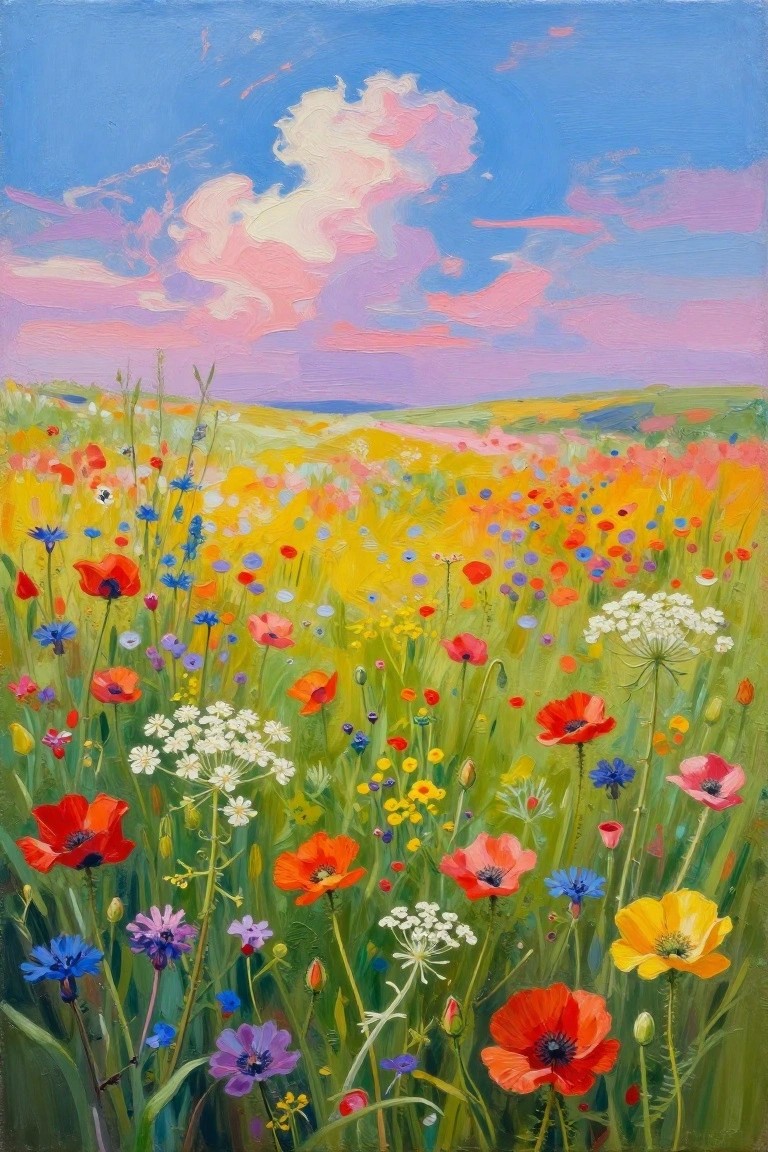
A wildflower meadow painting idea mixes red poppies with yellow, blue, and white blooms across a rolling field. This floral landscape approach uses overlapping layers of color and varying flower heights to build depth while keeping the sky as a simple, bright backdrop. The idea works as a seasonal scene that emphasizes bold color blocks over precise detail.
What makes this idea useful is the way the flowers fill most of the canvas, so you can adjust density without changing the overall layout. The color palette stays consistent enough to swap in different bloom types or shift the sky tones for a new season. For wall art, the mix of tall stems and scattered color creates natural movement that holds attention from a distance. You could simplify the foreground blooms or crop the sky lower if you want a smaller canvas version.
Clustered Pink Roses with Soft Background Patterns
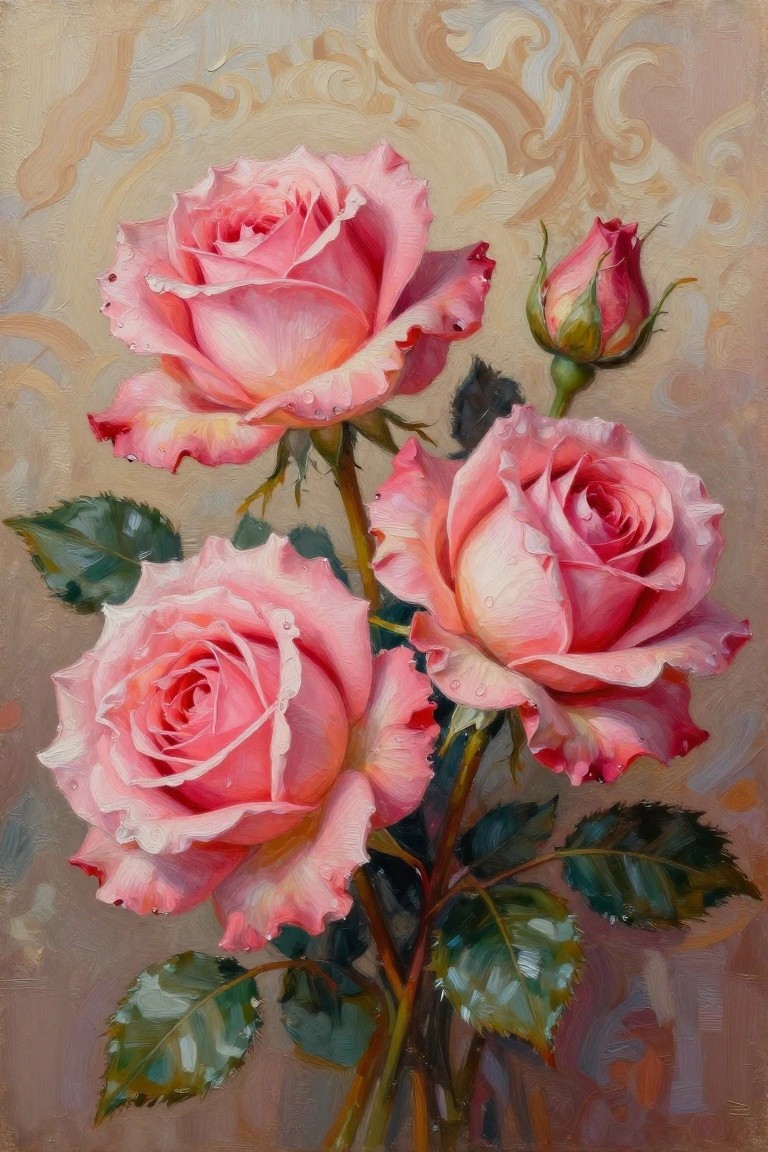
A floral still life built around several open pink roses and a few tight buds creates a balanced arrangement that feels full without crowding the canvas. Overlapping petals and leaves add natural depth while the muted swirling background keeps the focus on the blooms themselves. The idea works as a classic still life category with a limited palette of pinks and greens that stays easy to control.
The composition does a lot of the work here by keeping the roses grouped in the center so the background can stay simple. You can adapt the same layout to a smaller canvas by dropping one bloom or adjust the pink shades toward peach or coral for different decor. For practice, this kind of subject helps with petal layering and soft edges without needing complex perspective. The result stands out on Pinterest because the water droplets and leaf shapes give it a clear, recognizable look that still leaves room for personal color tweaks.
Protea Cluster with Layered Blooms
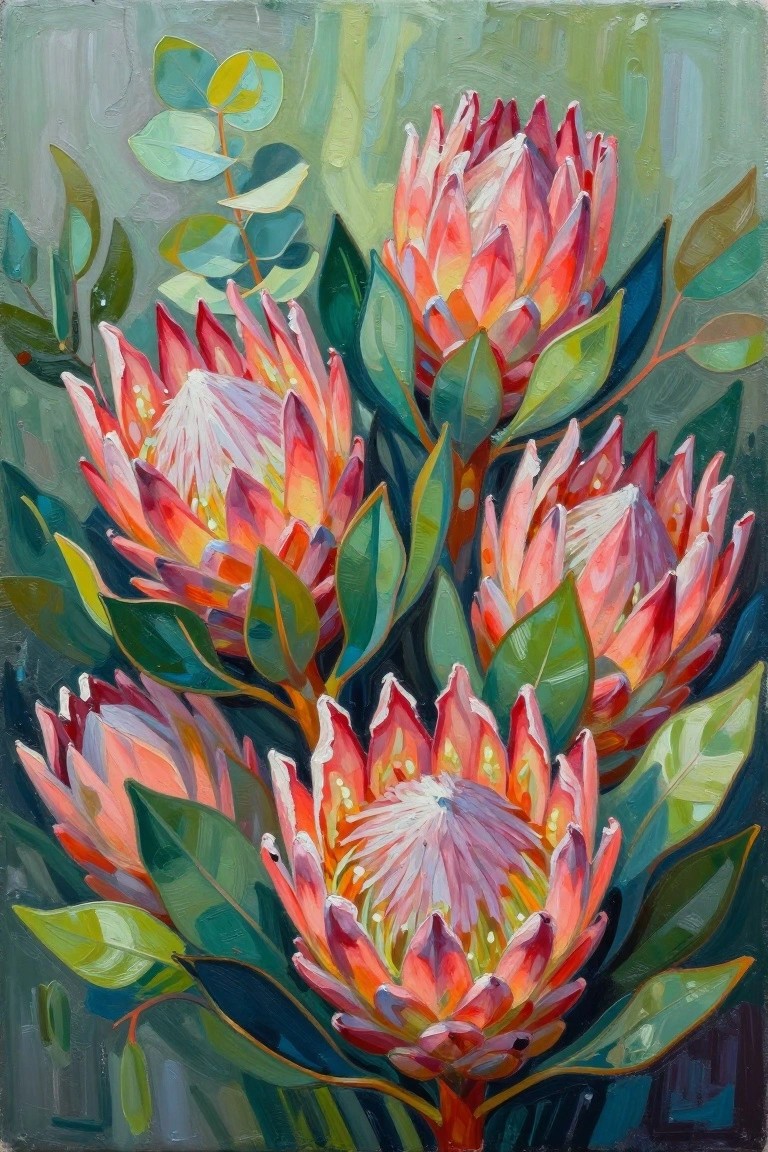
A group of protea flowers forms a solid floral painting idea that focuses on strong petal shapes and a warm color mix of pinks, oranges, and reds. Multiple blooms sit at different heights with leaves tucked around them, which builds depth through overlap rather than scattered placement. This type of composition works well in the floral category because the central flowers stay dominant while the cooler green background keeps the eye from wandering.
What makes this idea useful is the way the repeated flower forms give you clear shapes to follow without needing tiny details everywhere. You can scale it down to fewer blooms or shift the background to a neutral tone if you want a quicker canvas version for a bedroom wall. For practice, the visible brushwork on the petals helps you build texture step by step, and the same layout adapts easily if you swap in other large-petaled flowers like dahlias.
Lush Blue Hydrangea Cluster
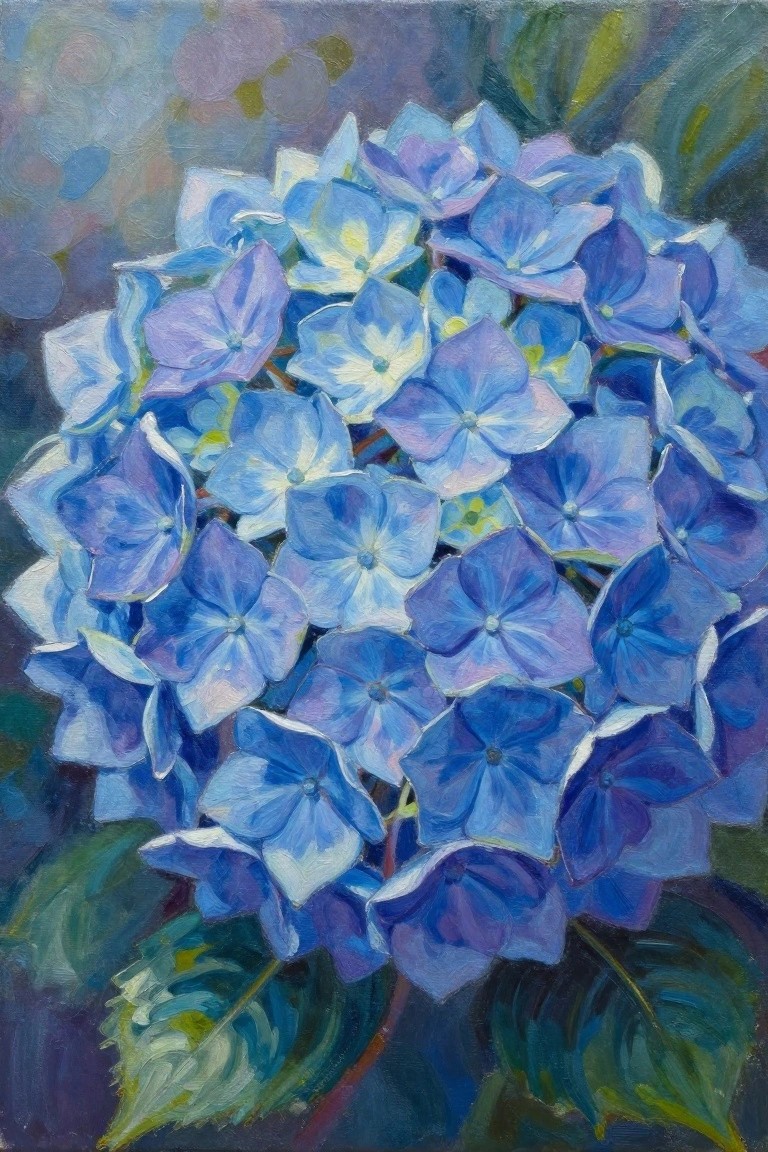
A floral painting built around a tight cluster of hydrangeas fills the canvas effectively by letting the round flower heads overlap and crowd together. The cool palette of blues, purples, and soft whites creates natural depth through layered brushstrokes, while the green leaves at the base anchor the composition without competing for attention. This approach works as a straightforward still life idea because the subject stays centered and the background stays loose.
What makes this idea useful is how the rounded petal shapes can be added in stages without needing perfect symmetry. The cool tones are simple to mix and adjust if you want more purple or softer highlights. For wall art the dense layout fills space nicely on its own, so you can keep the background minimal or swap in different leaf colors. You could also scale it down for practice by painting just a section of the cluster on a smaller canvas.
Water Lilies Floating on a Pond
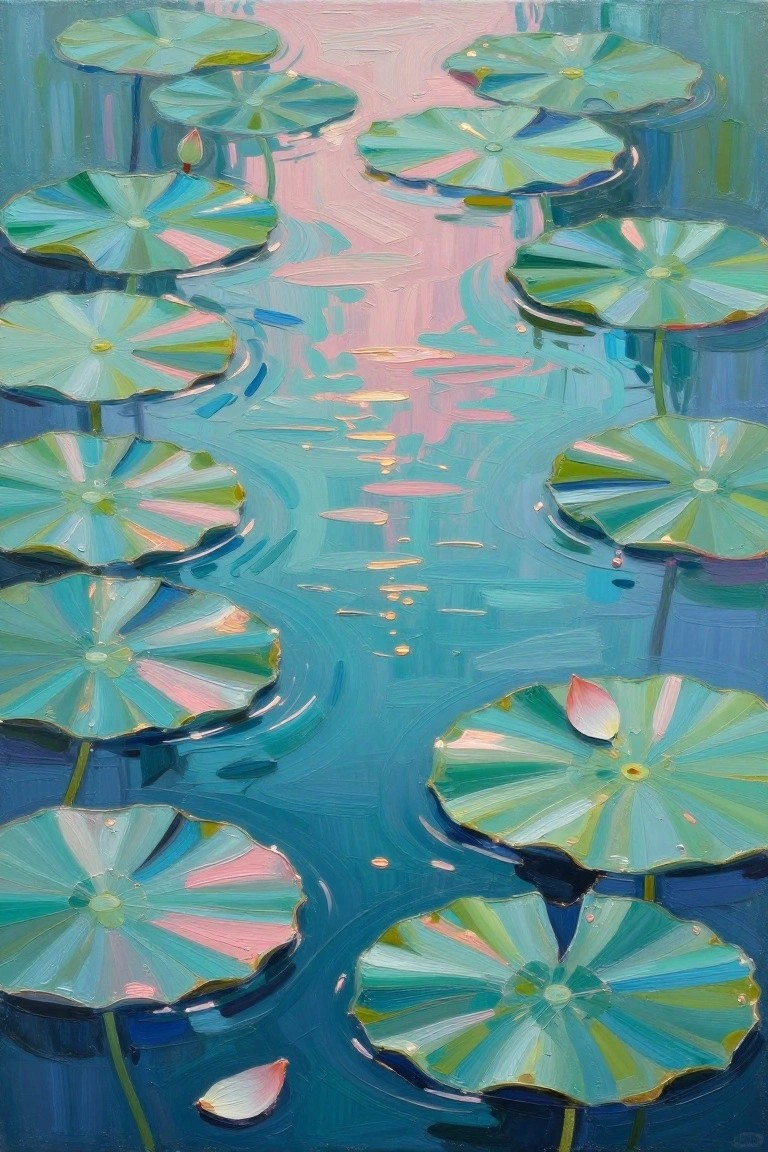
A water lily painting idea centers on circular pads scattered across a pond surface with soft color shifts in the water. The approach fits a floral still life style by using repeated shapes and overlapping layers to create movement without needing complex details. Gentle pink and blue tones in the reflections help the composition feel balanced while keeping the focus on the pads themselves.
The composition does a lot of the work here by repeating simple round forms that stay easy to sketch and fill in. You can swap the pink reflections for warmer tones or change the water color to fit different room styles. This idea works well for wall decor because the subject stays clear even if you simplify the brushwork or adjust the number of pads.
Dramatic Red Poppies on a Dark Canvas
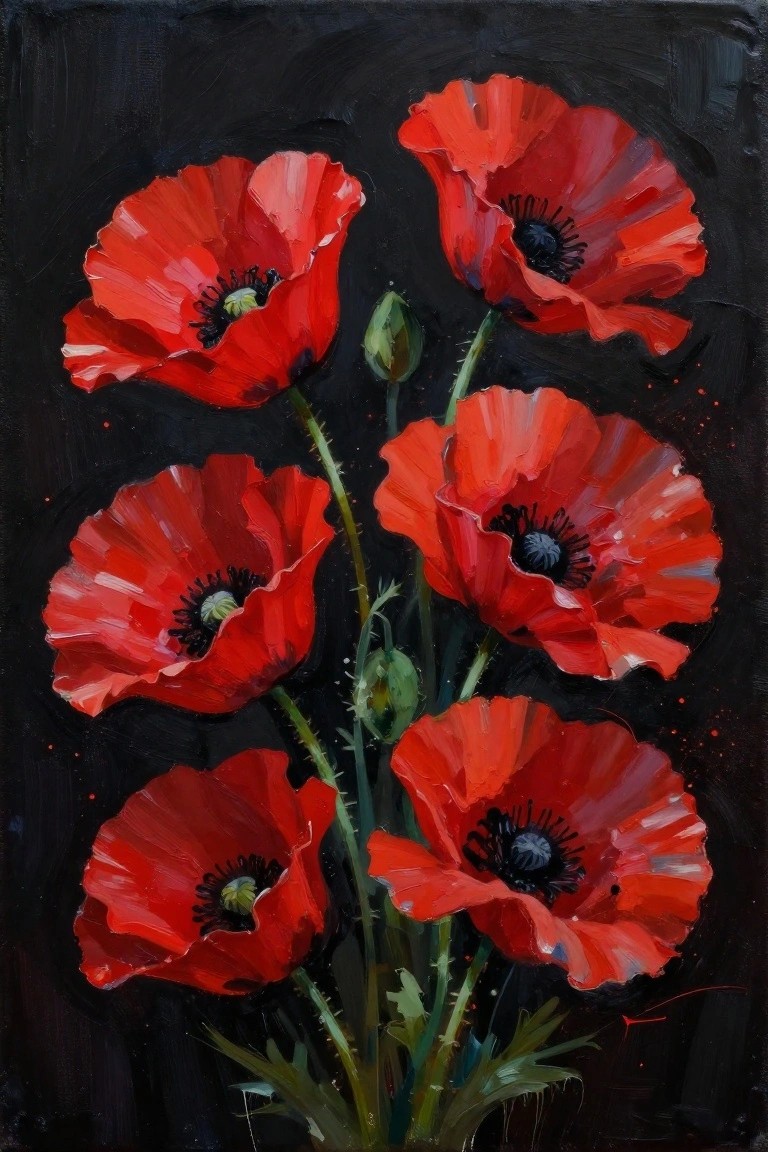
A cluster of red poppies makes a strong focal point for a floral canvas painting. The idea centers on placing several blooms at different heights and angles against a solid dark background so the bright petals stand out immediately. Thick brushstrokes and slight variations in red tones give the flowers dimension without needing fine detail work.
What makes this idea useful is how the dark background does most of the visual work by pushing the flowers forward. You can scale it down to fewer blooms or change the background to deep blue or green if black feels too stark. The loose petal shapes also make it forgiving for practice sessions while still looking finished enough for wall decor or gifts.
Cluster of Ruffled Irises on a Muted Backdrop
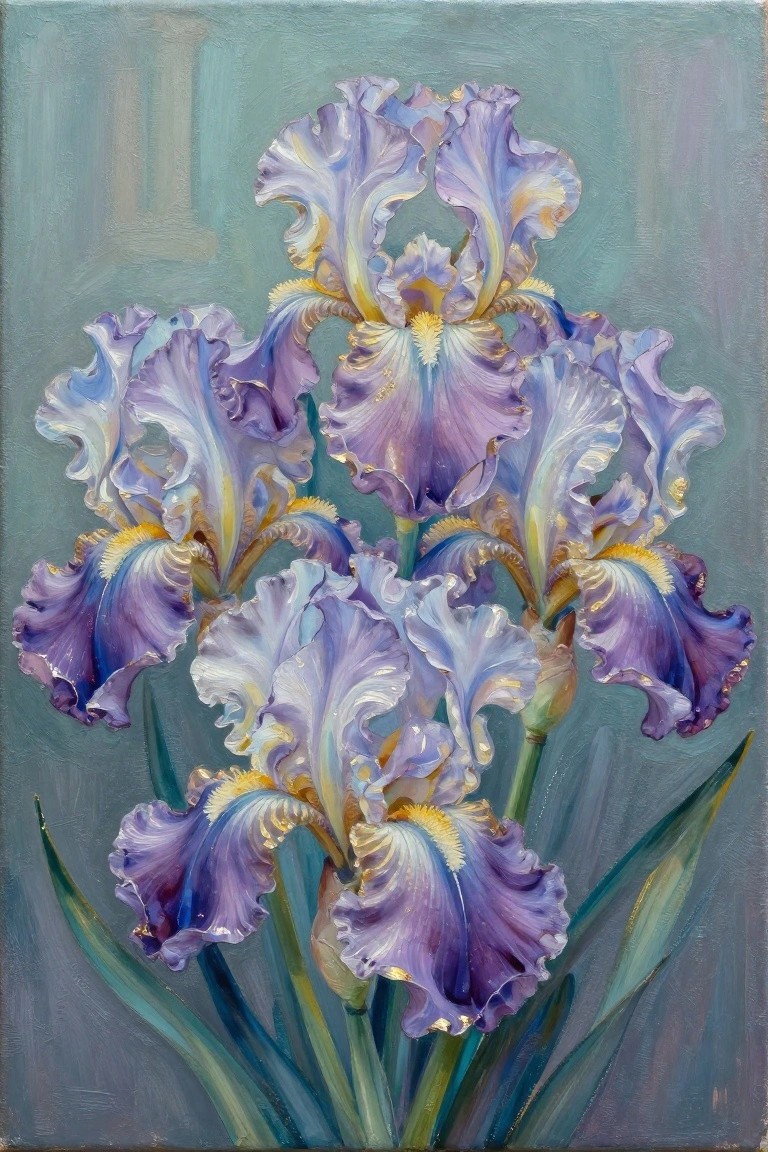
A floral painting idea centered on a group of overlapping irises lets you practice building form through layered petals and soft color shifts. The tall vertical arrangement with blooms at different heights fills the canvas naturally and keeps the eye moving upward through the composition. Cool purples and blues paired with yellow centers create contrast while the plain background keeps attention on the flowers themselves.
What makes this idea useful is how the tight grouping reduces the need for extra elements like vases or scenery. The similar petal shapes repeat across the canvas so you can repeat brushstrokes and build confidence with one subject. You could scale it down to fewer blooms or shift the background to a warmer gray if you want a different look for the same basic layout. For decor pieces, the vertical format fits standard canvas proportions without extra cropping.
Pink Roses in a Grassy Meadow
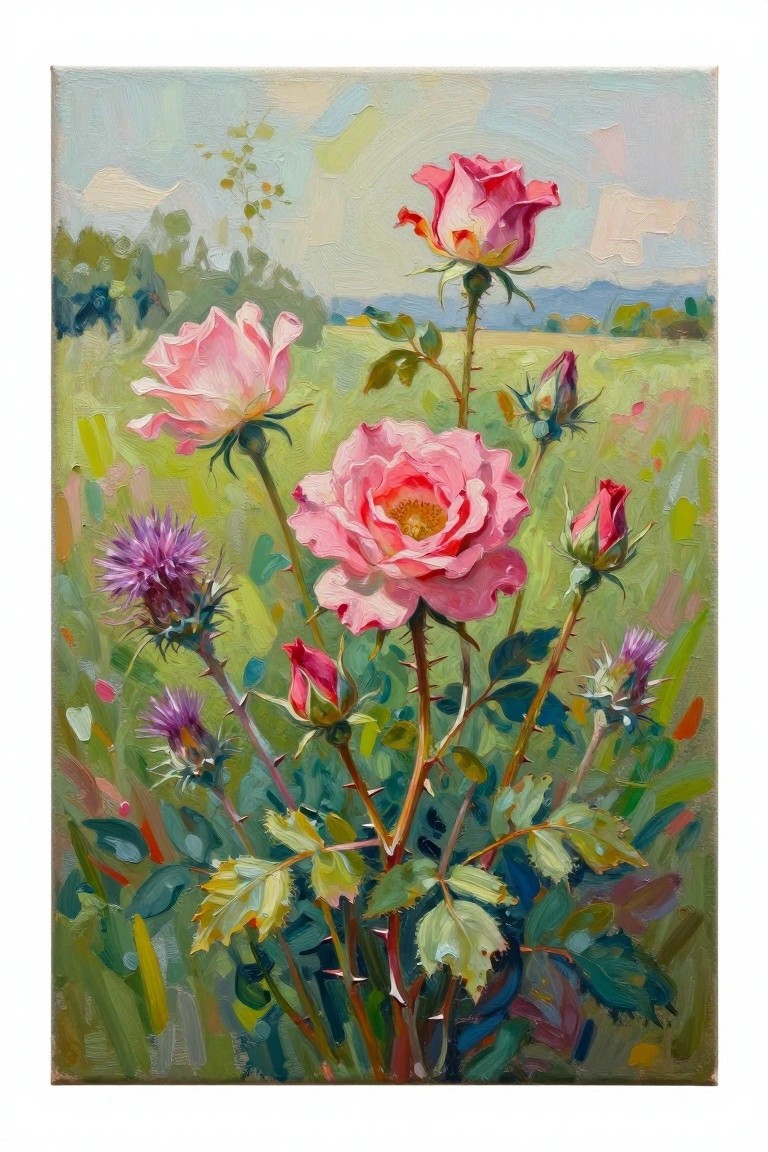
A cluster of pink roses at different stages of bloom makes a strong focal point when placed among tall grass and a few purple wildflowers. This floral idea works because the upright stems and open petals stand out against a soft green field that fades into a pale sky. The scattered buds and side stems add natural variety without pulling attention away from the main flowers.
What makes this idea useful is how easily the same layout can be adjusted for different canvas sizes by moving the tallest rose higher or lower. The color palette stays simple with pinks against greens, so it is straightforward to swap in other flower colors or shorten the stems for a tighter crop. For wall pieces this arrangement keeps the interest in the center while the loose background prevents the painting from feeling too busy.
Oversized Peony with Fern Accents
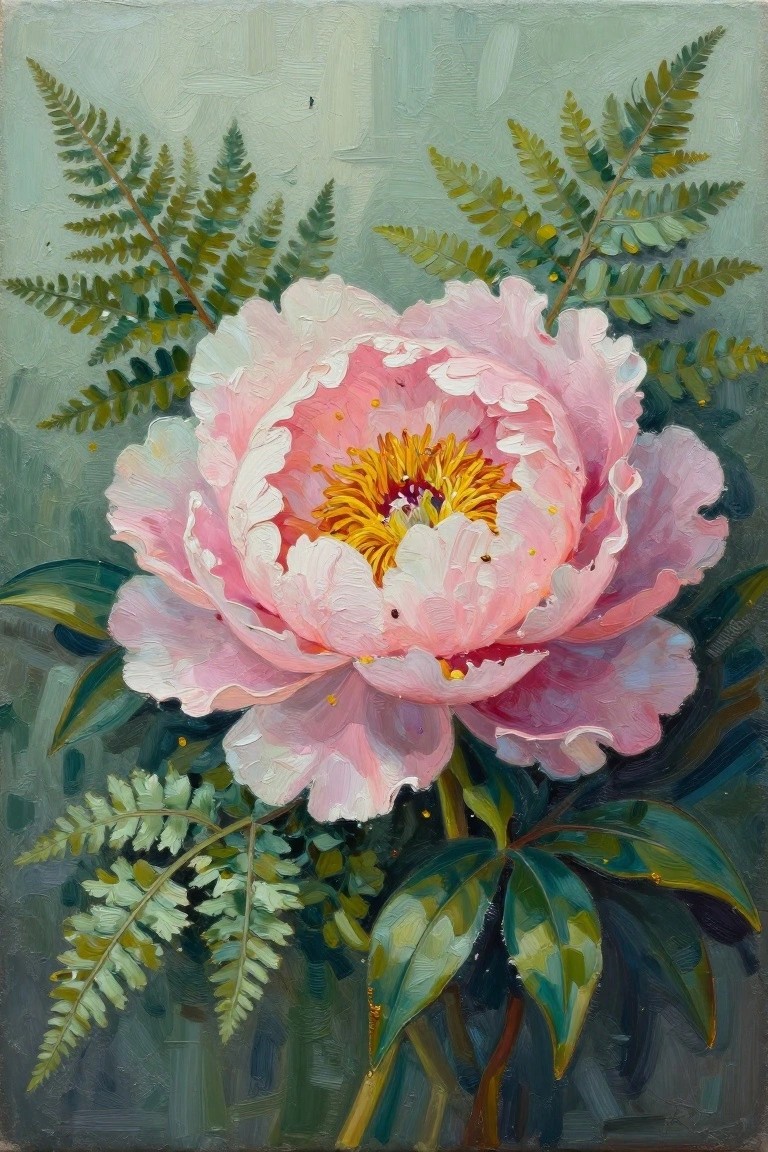
A large single peony as the main subject works well for a floral canvas painting. The idea uses overlapping petals to build the bloom shape and places fern fronds around the edges to frame it without competing for attention. Soft pink tones against a muted green background keep the focus on the flower while the yellow center adds a natural contrast point.
The composition does a lot of the work here by keeping the flower centered and letting the greenery support it. You can adjust the canvas size to make the bloom fill more or less of the space depending on where you plan to hang it. This kind of subject suits practice sessions because the petal layers can be built gradually. For wall art the limited color range makes it simple to match with existing decor.
Lotus Blooms with Cherry Blossoms
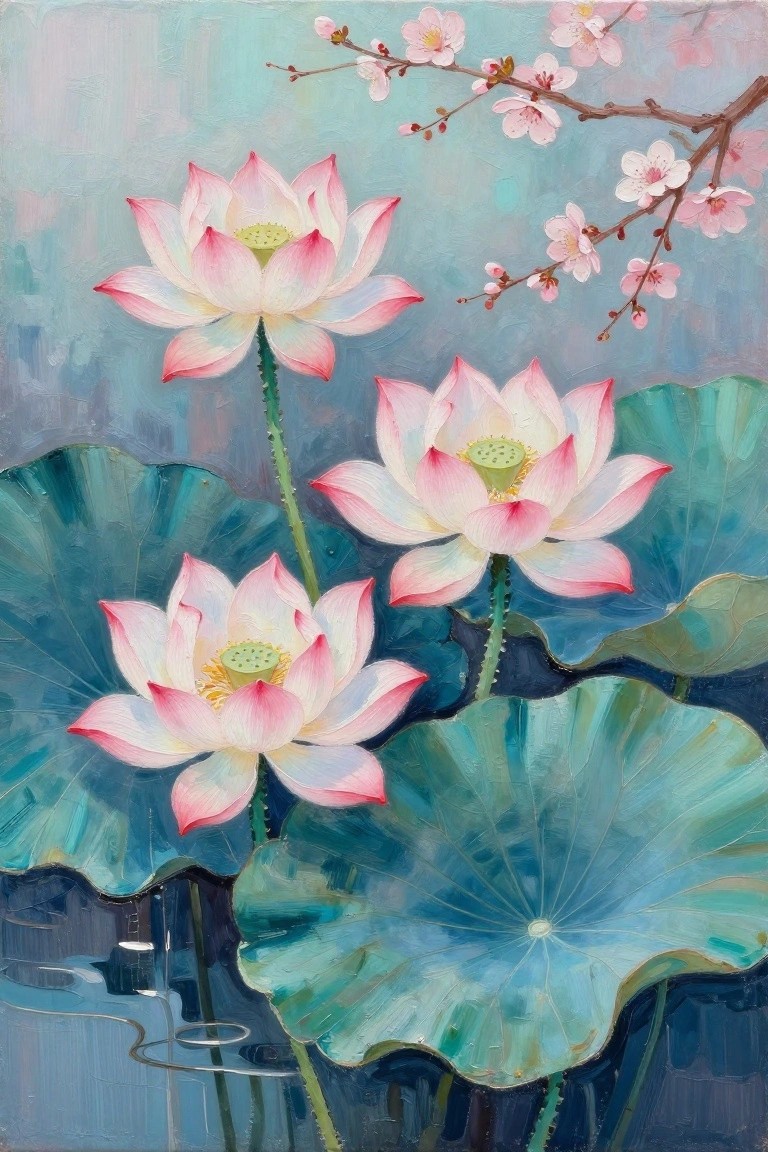
A floral painting idea centered on several open lotus flowers in soft pink and white works well when paired with broad teal leaves and a few cherry blossom branches overhead. The main blooms sit at different heights with one large leaf anchoring the lower section, while the background stays simple in muted blue tones. This setup keeps the composition balanced and lets the rounded petals and leaf veins stand out without extra elements.
The color palette makes this easy to adapt by shifting the leaves toward greens or blues depending on the room. A painting like this works especially well for wall art because the vertical layout fills a canvas nicely without needing complex perspective. You could simplify it to two flowers for a first try or add more leaves if you want extra practice with overlapping shapes.
Radiant Layered Flower Mandala
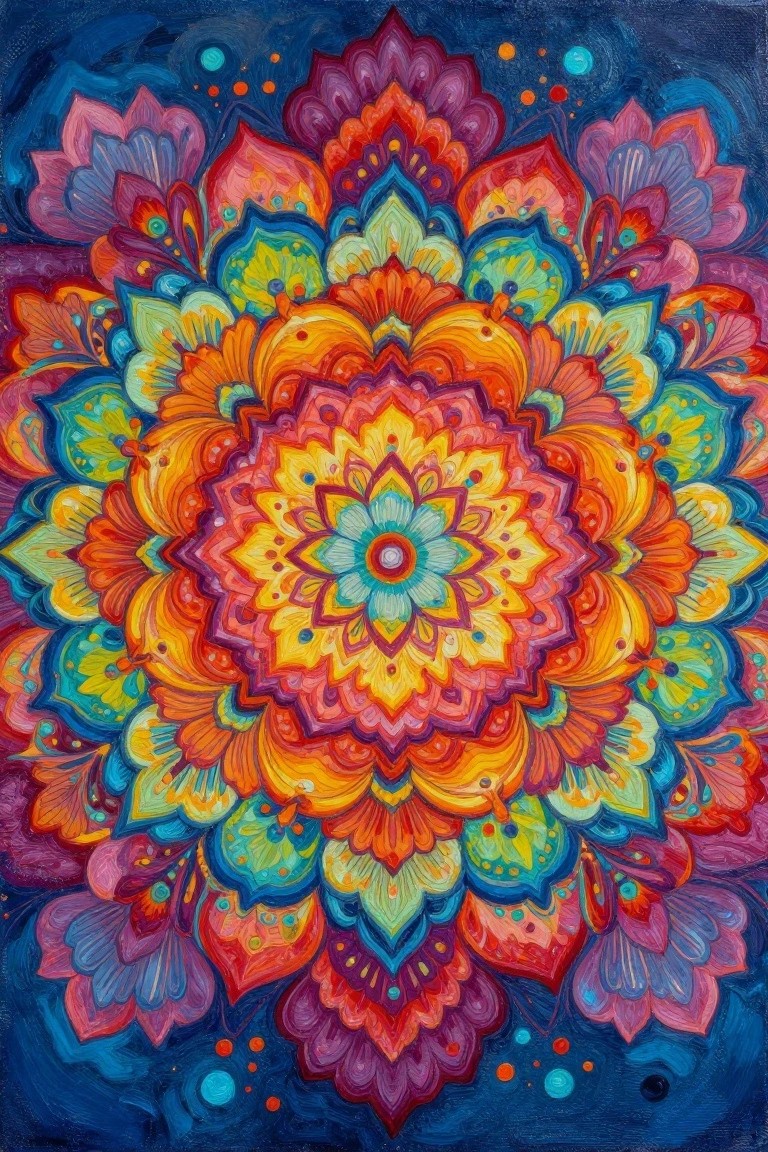
A flower mandala builds outward from a small center using repeated petal shapes that grow larger with each ring. The idea works as decorative floral art because the radial layout keeps every section balanced while the shifting colors create movement across the whole circle. It belongs in the decorative category since the design stays self-contained and does not need extra elements like stems or backgrounds to hold together.
The repeating shapes let you start small and add rings until the canvas feels full, so the same idea fits both quick weekend projects and larger statement pieces. You can change the palette to match a room or drop the outer layers if time is short. The strong center point makes this version easy to spot in a feed and gives it instant impact when hung above furniture.
Lilac Bouquet in a Clear Glass Vase
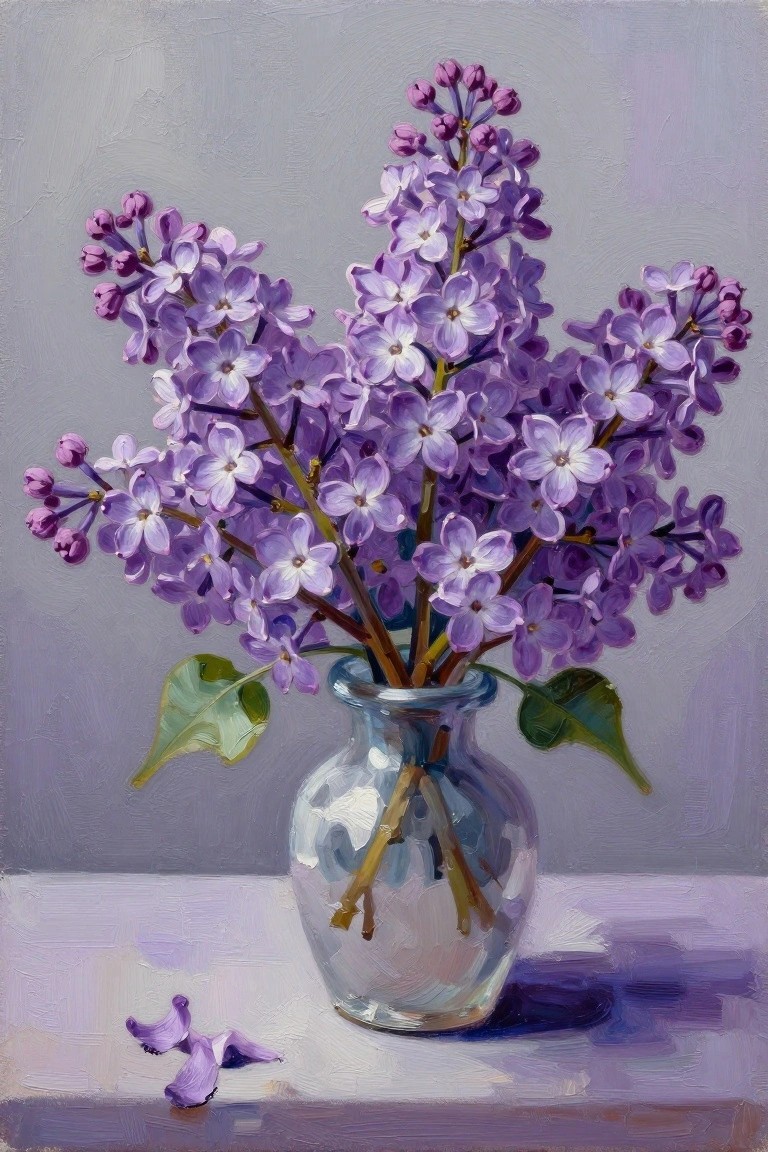
A still life of lilacs in a transparent vase gives you a straightforward floral painting idea that centers on the natural shape of the blooms and the visible stems inside the glass. The composition stays effective because the flowers fill the upper space while the vase sits low on a flat surface, creating balance without crowding the frame. This approach fits the still life category and uses a muted background to keep attention on the color layers in the petals.
What makes this idea useful is how the neutral backdrop lets you swap in other flower types or adjust the vase shape while keeping the same layout. You could paint fewer stems for a faster version or change the purple tones to match a room’s colors. For wall decor, the clear glass detail gives the piece enough realism to stand out on Pinterest without requiring complex techniques.
Bold Abstract Floral Burst
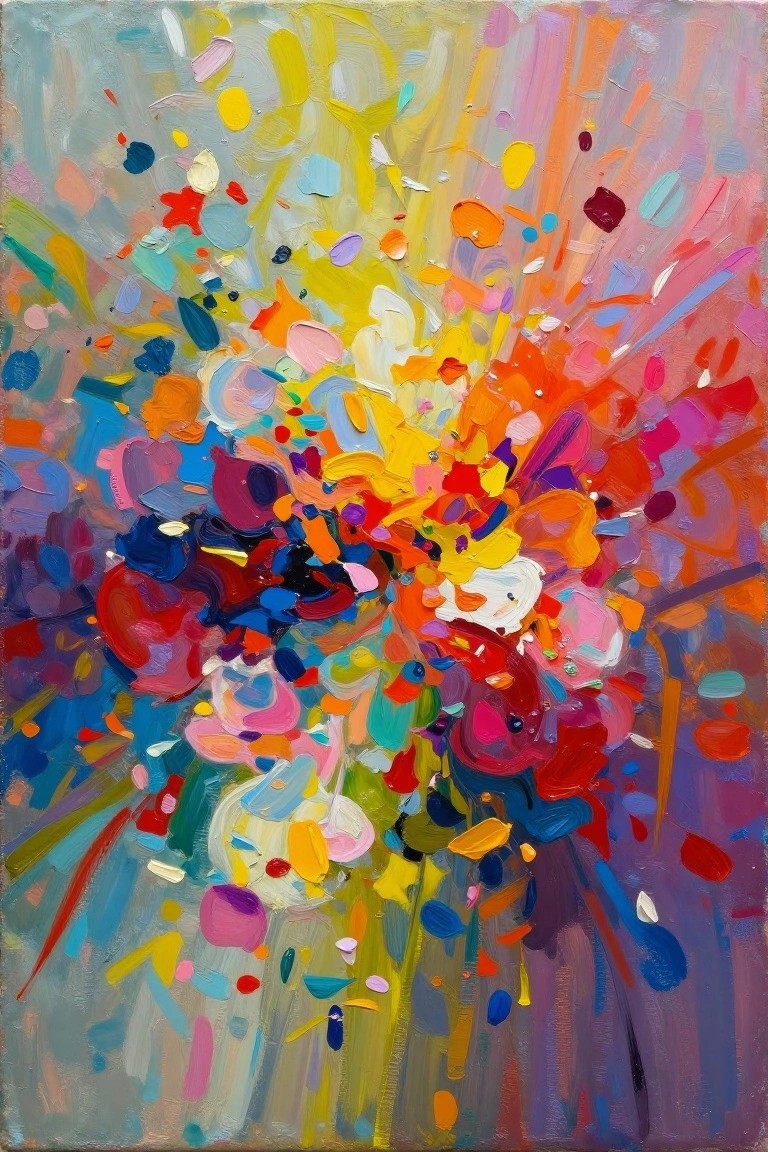
An abstract floral painting idea that places a dense cluster of overlapping petals right in the center, using thick, visible brushstrokes to create movement that radiates outward. The color palette mixes warm yellows, reds, and oranges with cooler blues and purples for strong contrast, while the background stays loose and blended to keep attention on the flowers. This fits the decorative abstract floral category and works because the energetic strokes and layered shapes give the piece depth without requiring precise details.
The composition does a lot of the work here by using a central focus and radiating strokes that make the canvas feel full even with simple shapes. You could easily adapt the size for a smaller canvas or swap in a few different hues to match your existing decor. For practice, this kind of subject lets you experiment with color mixing and texture while still ending up with something bold enough to hang up.
Climbing Roses Along a Wall
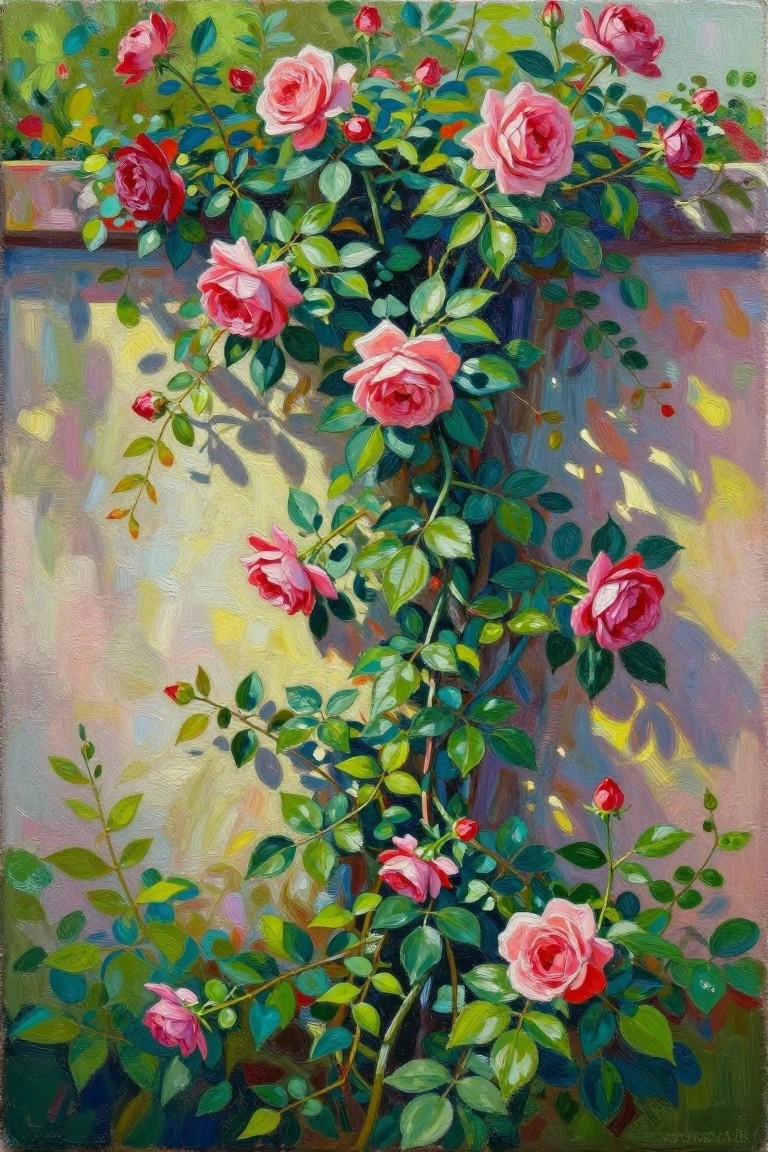
A vertical floral painting built around climbing roses works by letting the vines stretch upward and drape downward across the canvas. The flowers sit at varying heights with leaves filling the gaps, while the background uses loose color blocks to show light hitting a wall behind them. This creates a garden-style piece that stays focused on the natural shape of the plants rather than tight realism.
The composition does a lot of the work here because the wall keeps the background simple and lets the vines guide the eye. You can adapt it by changing the rose colors to match a room or cropping the view to just the middle section for a smaller canvas. For wall art the tall format fits spaces above shelves or doors, and the same idea stays useful if you simplify the leaves into broader shapes.
Layered Bloom with Warm Color Shifts
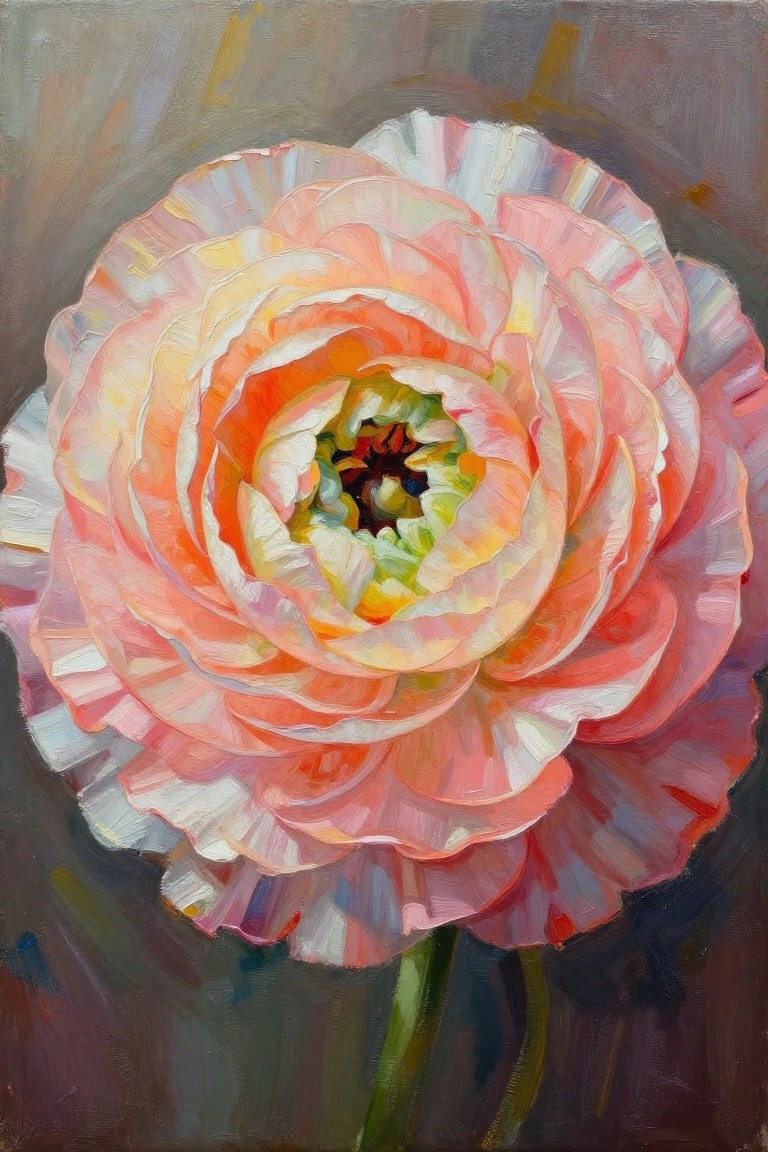
A close-up floral painting built around a single round bloom gives you a simple way to practice petal layering and color blending. The petals curve outward in overlapping rings that shift from cooler edges to warmer centers, creating natural depth without extra background elements. This approach fits the floral still life category and works because the tight crop keeps attention on the gradual color transitions and overlapping shapes.
What makes this idea useful is how the dark background removes the need to invent supporting details or a full scene. You can scale the same framing down for a smaller canvas or swap in different round flowers by changing the petal count and hue range. The composition also translates well to wall art since one strong bloom fills the space without looking sparse. For practice, it helps you focus on building volume through edges and mid-tones rather than outlines.
Moonlit Wildflower Garden Painting
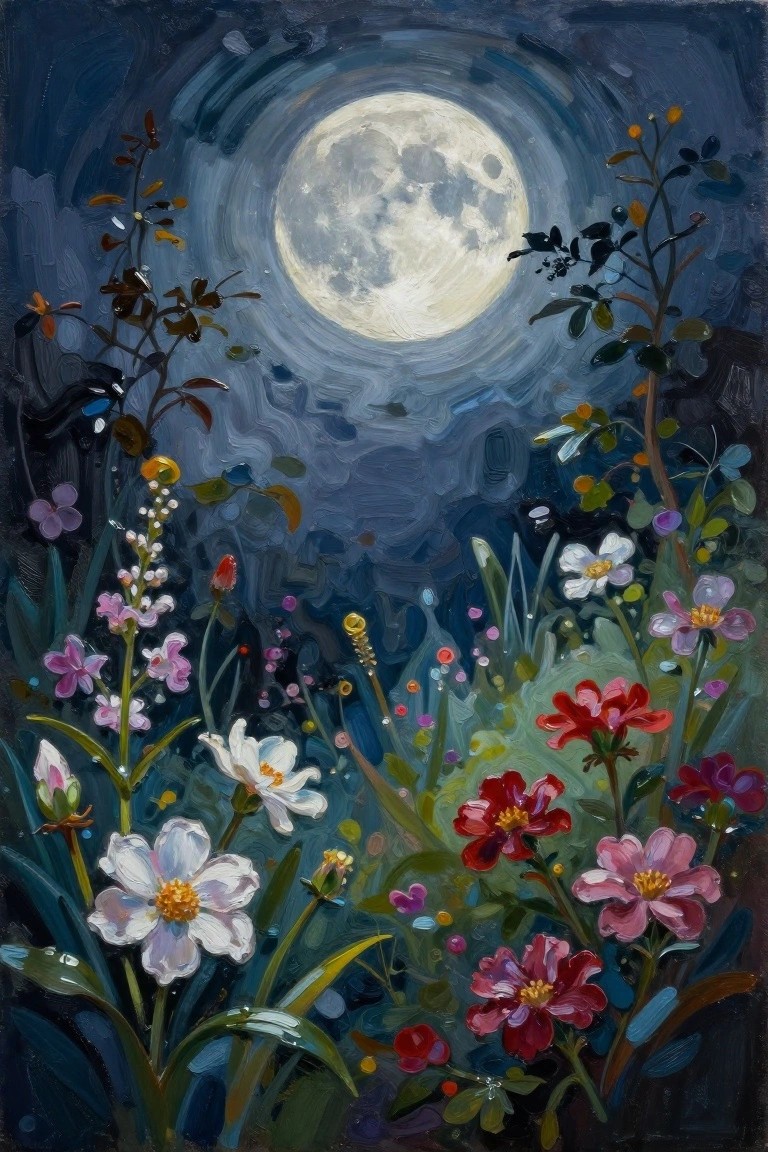
A nighttime scene with a large full moon above a mix of colorful wildflowers creates an effective floral painting idea. The layout keeps the moon as the main focal point while the flowers fill the lower portion with different heights, shapes, and colors against the dark sky. This approach blends a simple landscape element with floral detail to build contrast and depth without needing complex techniques.
The composition does a lot of the work here by using the moon to anchor the view and letting the flowers add variety below it. You can adapt the idea by reducing the number of flower types or switching to a horizontal canvas if you want an easier starting point for practice. The bold color contrast between the bright blooms and deep background also makes this option stand out for wall art or seasonal pieces.
Frequently Asked Questions
What basic supplies will I need to recreate these flower canvas painting ideas at home?
You will need stretched canvases in various sizes, acrylic paints in flower friendly shades like soft pinks, greens, and yellows, a set of brushes including flat, round, and detail sizes, a palette for mixing colors, water cups, paper towels, and optional items such as palette knives for texture or stencils for easier petal shapes. Start with a few practice sketches on paper to map out compositions before applying paint to the canvas.
How can I adapt the flower painting ideas if I am a complete beginner with limited art experience?
Focus on simpler designs from the list such as single large blooms or abstract color washes rather than intricate multi flower arrangements. Use the wet on wet technique by applying a base layer of light color and blending darker shades while it is still damp to create soft petal edges without precise lines. Watch short online tutorials for each specific idea and practice one element like leaves or centers at a time until you feel confident.
What color choices work best to make these paintings match my existing home decor style?
Select a dominant color from your room such as the shade of your curtains or rug and build the flower palette around it using complementary tones like muted blues with warm oranges for contrast or all soft pastels for a calm effect. Test small swatches on scrap canvas under the lighting of the intended display area to ensure the hues look balanced and do not clash with wall colors or furniture.
How do I protect my finished flower canvas paintings so they last for years?
Once the paint is fully dry apply two thin coats of acrylic varnish using a wide soft brush allowing each layer to cure for at least twenty four hours. Avoid hanging the pieces in direct sunlight or high humidity spots like bathrooms to prevent fading and warping. Dust them gently with a microfiber cloth every few months and consider framing behind glass for extra protection if the canvases are small.
Can these DIY flower canvas ideas be turned into group projects or gifts for family and friends?
Yes divide a large canvas into sections and assign each person a different flower element to paint or create multiple smaller canvases that coordinate as a set. For gifts wrap the finished pieces with a handwritten note explaining the inspiration behind the chosen flowers and include care instructions. This approach works well for parties where participants can follow along with one of the simpler ideas using provided templates or color guides.